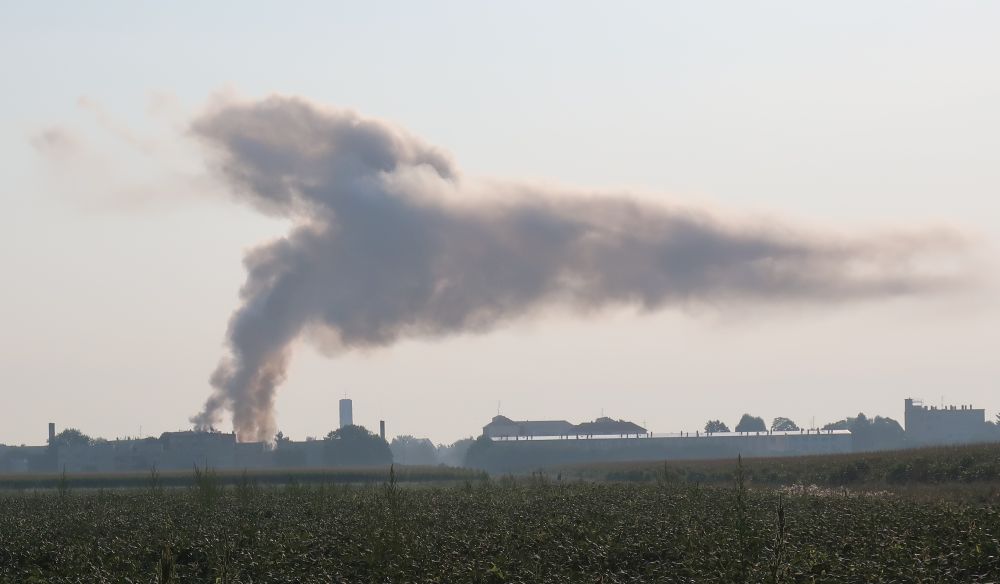
It’s not just in the Amazon! What looks to be coming from a farm in Alsace, the anvil shape of the smoke is a good allegory for how the smoke is violently hammering the climate:
A renaissance man for the twenty-first century!
It’s not just in the Amazon! What looks to be coming from a farm in Alsace, the anvil shape of the smoke is a good allegory for how the smoke is violently hammering the climate:
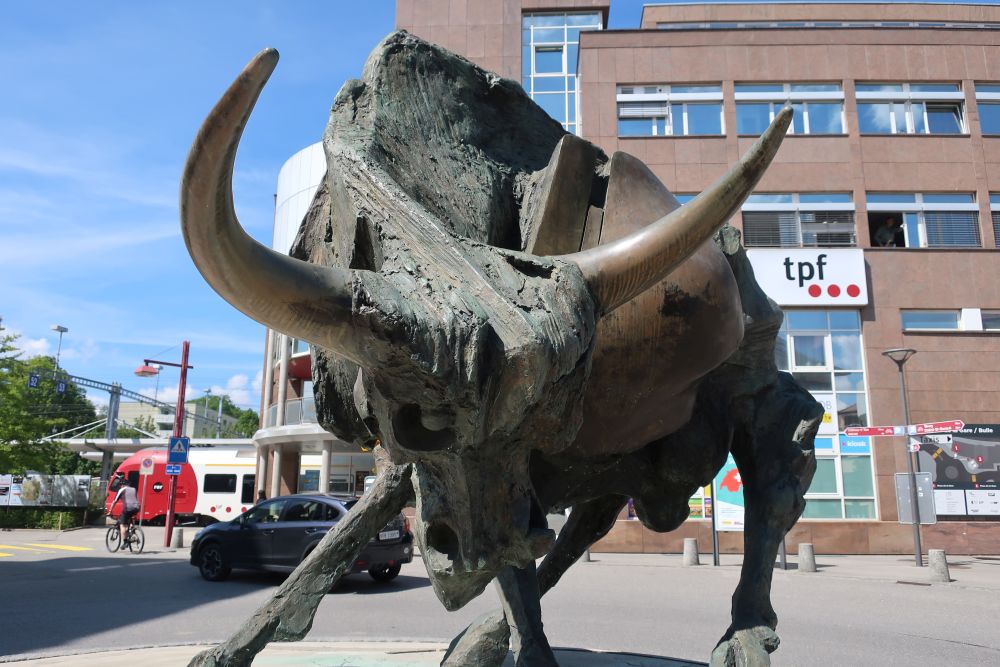
When you step out of the train station in the village of Bulle in the region of Gruyère in the canton of Fribourg in the French speaking Romandie part of Switzerland, this is what you see:
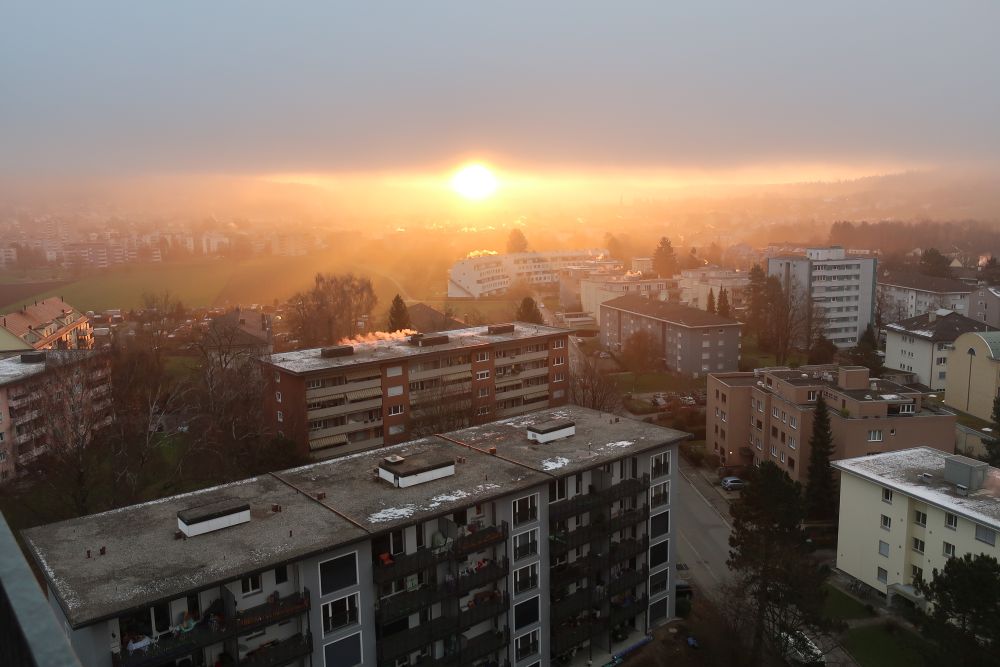
I am really happy with the way this snap out of my apartment window looked in winter. For me it is somehow an emotional scene, in which the warming sunlight is violently tearing through the winter mask enclosing the city:
Not damn, but dam. I took this snap while visiting the Franconian village of Bamberg, in Germany:
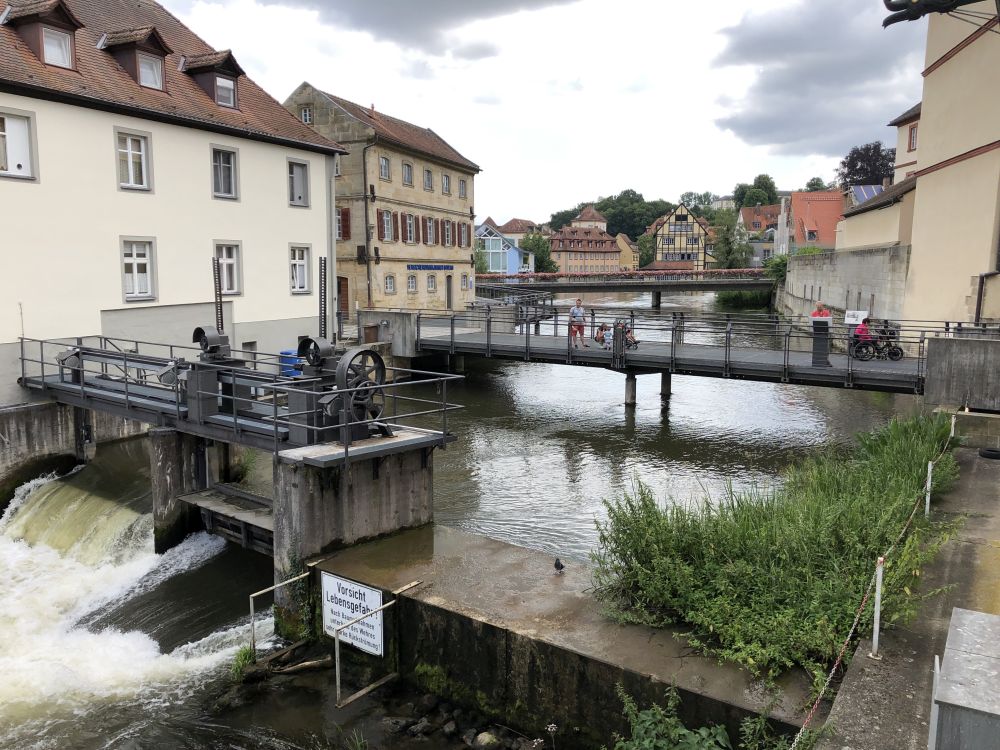
And it reminded me I left the village before exploring what this really was.
The Rhine-Danube canal flows through the city of Bamberg, and the Rhine-Danube canal has plenty of locks. But this is not one of them, and I am not sure why they need to regulate the flow of the river here. It doesn’t look like the water is used for any purposes, such as an historic mill or modern power generation.
It’s on my to-do list to come back one day and figure this out!
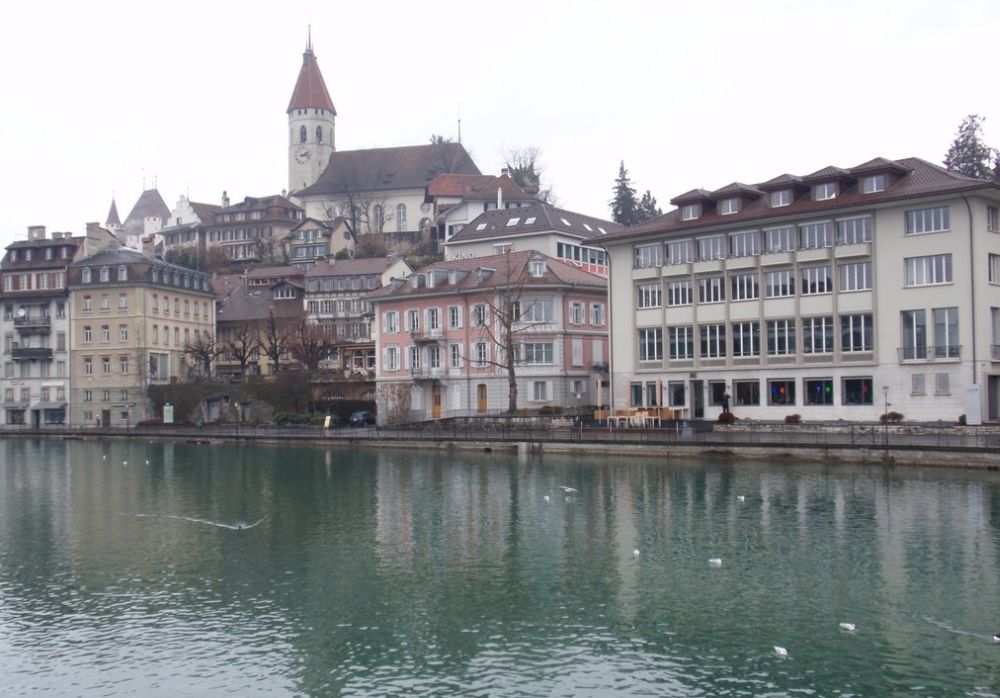
A nice shot of downtown Thun in the winter:
This little island in the Italian Laggo Maggiori has a population of 25:

The little banjo below on the left is my newest acquisition!
My Deering Calico (on the right) is a professional level instrument, but it‘s loud and weighs in at around 5 kg. In fact, most non-experts are always surprised at the weight, but a banjo like this sports a so-called tone ring – a huge doughnut piece of bell metal that weighs several kgs and that gives the banjo its unique banjo twang.
My new Deering Artisan (on the left) lacks the tone ring and a few other components, so it weighs in at just less than 1 kg.

The main reason for the acquisition is two-fold: For a long time I have wanted a little travel banjo that I could take with me more easily. And this style of banjo is used for a very unique – but extremely challenging – style of banjo music known as clawhammer or frailing, and I thought it was finally time for me to learn!
Continuing the series, this is Marvin the Martian:

Children today might not recognize him as easily as I do, having grown up watching Looney-Tunes cartoons on television. He dates back to 1948.
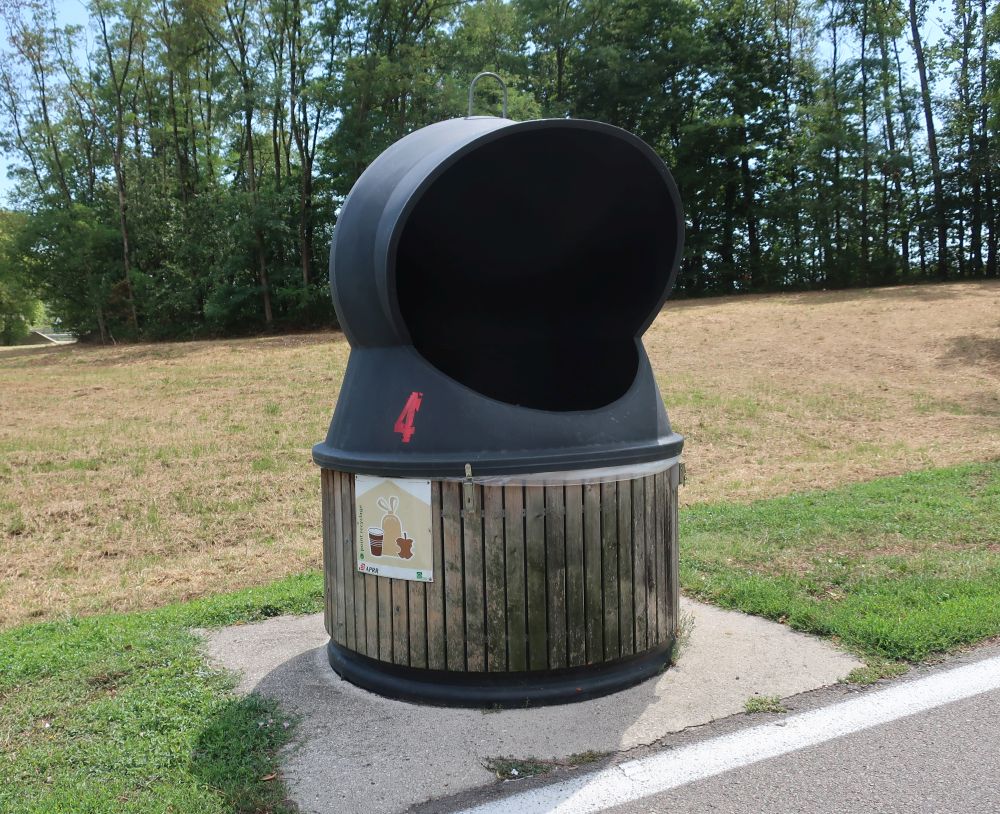
And Marvin-the-Martian is what I always think about when I see these garbage receptacles at the rest areas of the autoroutes in France:
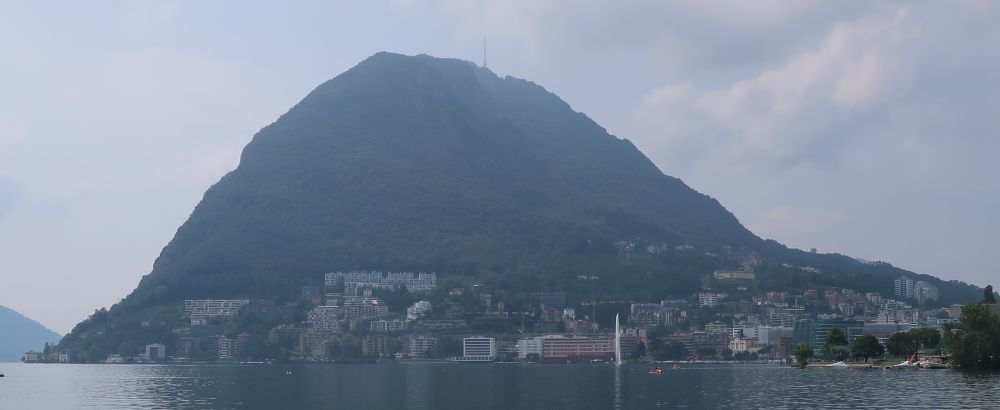
This is not Lugano, per se, but rather looking out from Lugano, on the northern coast of Lake Lugano:
I captured this breathtaking snap of wind turbines nestled deep within the Bourgogne countryside of France. It is a bit misleading, because when you get up close you realize how truly large and monstrous these wind turbines are:
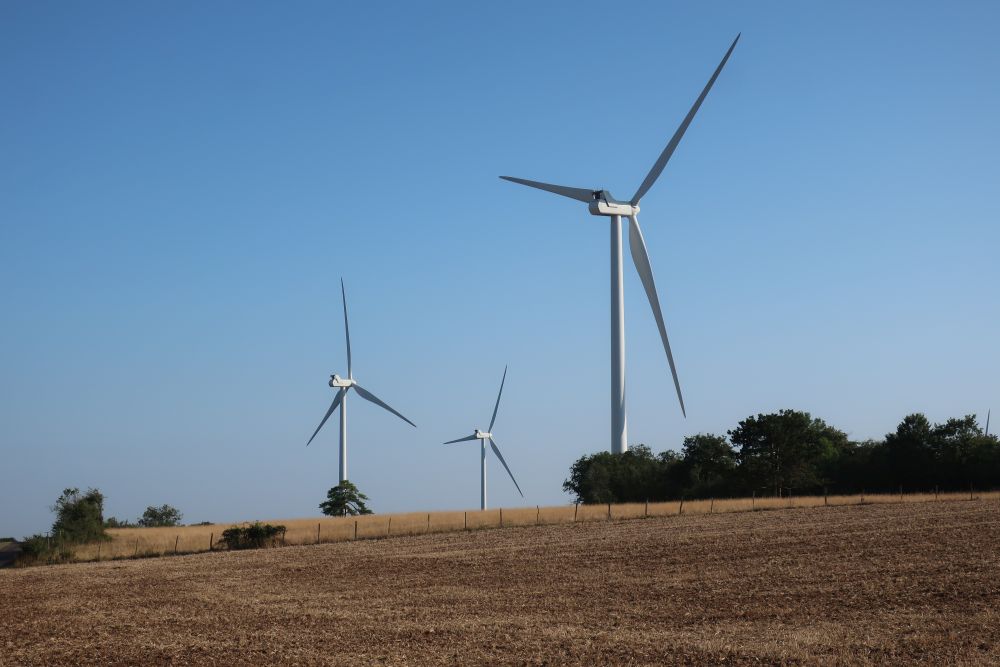
If you’ve been to France, then you know how it is. There are literally thousands of wind turbines all over the country. I could not find the data for 2019, but in 2015 France had a total of 5’956 turbines.
A lot of people I know call it Arth-Goldau, but I think technically that’s the name of the railway station! The village in this snap below is Goldau, and it is pretty much smack dab in the center of a region called Arth.
Regardless or irregardless, it’s the Swiss countryside at its summertime best!

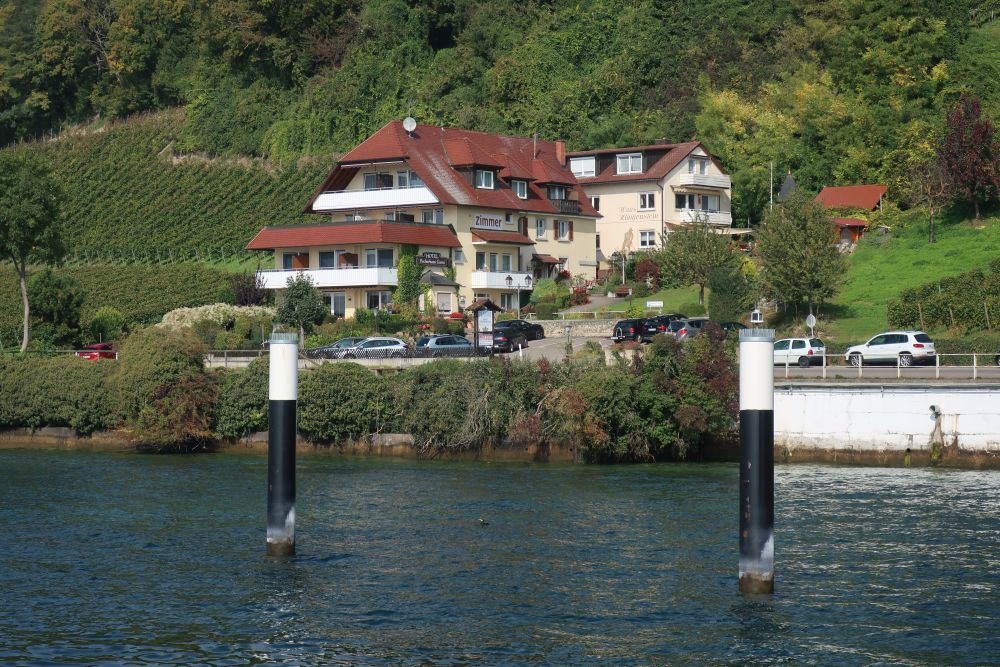
Lake Constance – or the Bodensee, in German – is really a lopsided place. It separates Germany (in the north) from Switzerland (in the south). Because Germany generally lacks big lakes, the North Shore of the Bodensee has become a quite affluent area for Germans. But because Switzerland generally has spectacular lakes (and the Bodensee is not one of them), the South Shore of the Bodensee is not only undeveloped but in fact real estate here is comparatively inexpensive for Switzerland. Here is a view of the north coast:
A yak concludes his busy day of work in the Northern India village of Udaipur with a few stolen minutes of gentle contemplation:

For this next attraction you have to go deep into Winterthur – very deep indeed, to a part of Winterthur that I think few tourists have ever seen or likely ever will.
With the Swiss being very proud – and rightfully so – of their thousands upon thousands of fountains that provide fresh spring drinking water, it is surprising you don’t see more things like this:
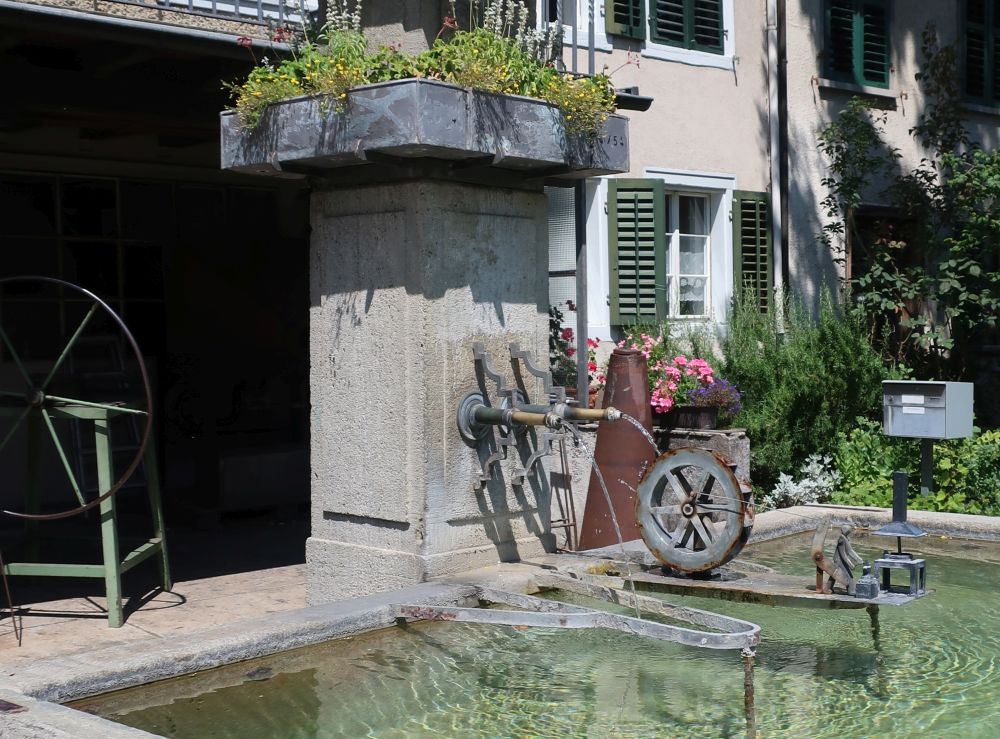
There is a small wheel that is turned by the water, causing the little metal blacksmith to bend back and forth and – believe it or not – hit his hammer on an anvil, giving a nice little chime.
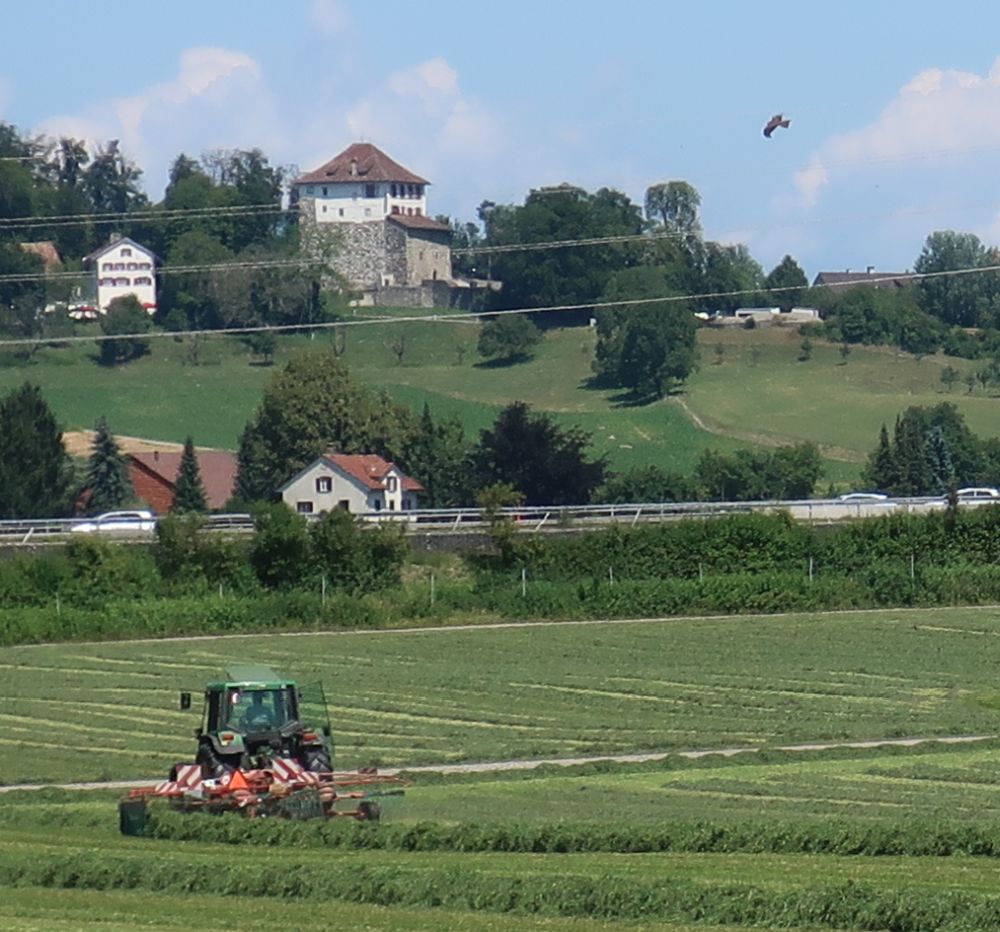
Continuing the series, here a huge red kite is looking for a quick snack high over a farmer turning his cut grass with a rotary rake:
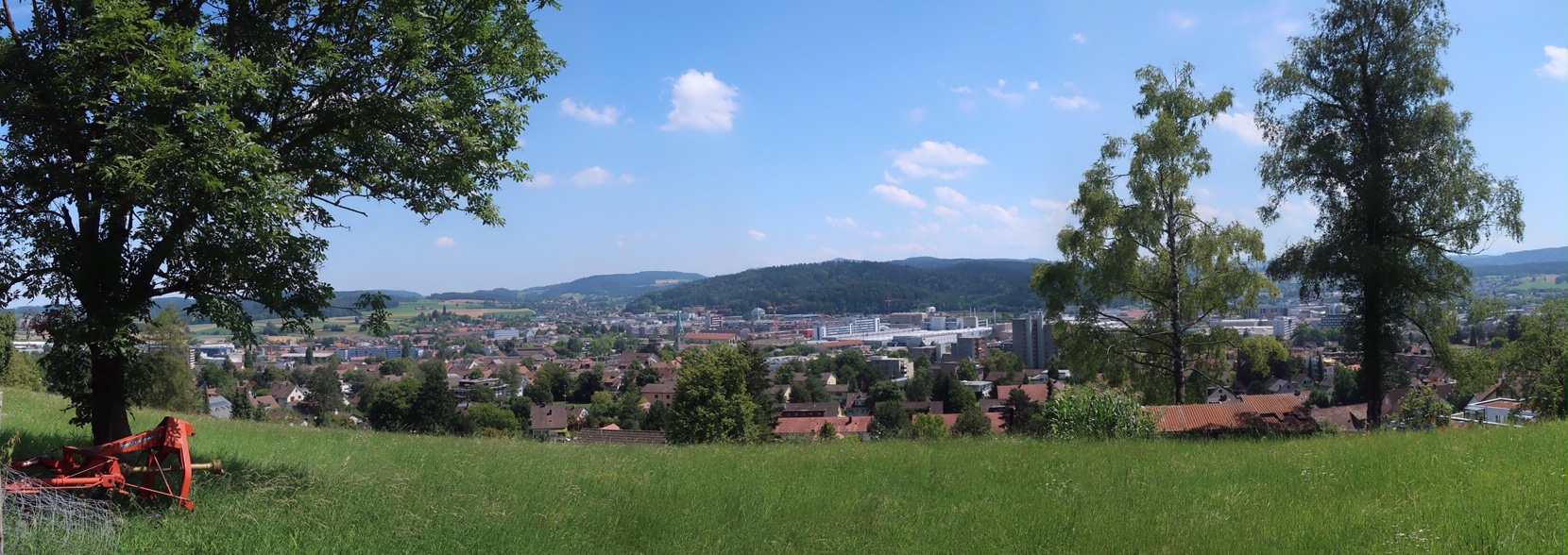
I took this magnificent panaroma snap from an area high on a hill in Winterthur, called the Goldenberg:
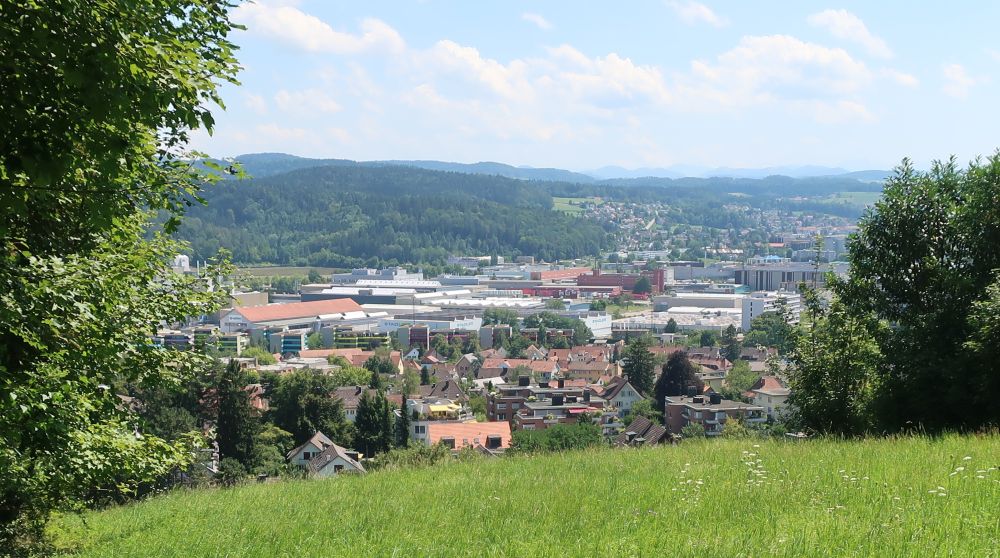
Here is a slightly different view, showing the incredible city far below:
Just a snap that I thought was pretty, with ladies dying the long fabric that the men of Rajasthan wrap into large turbans:
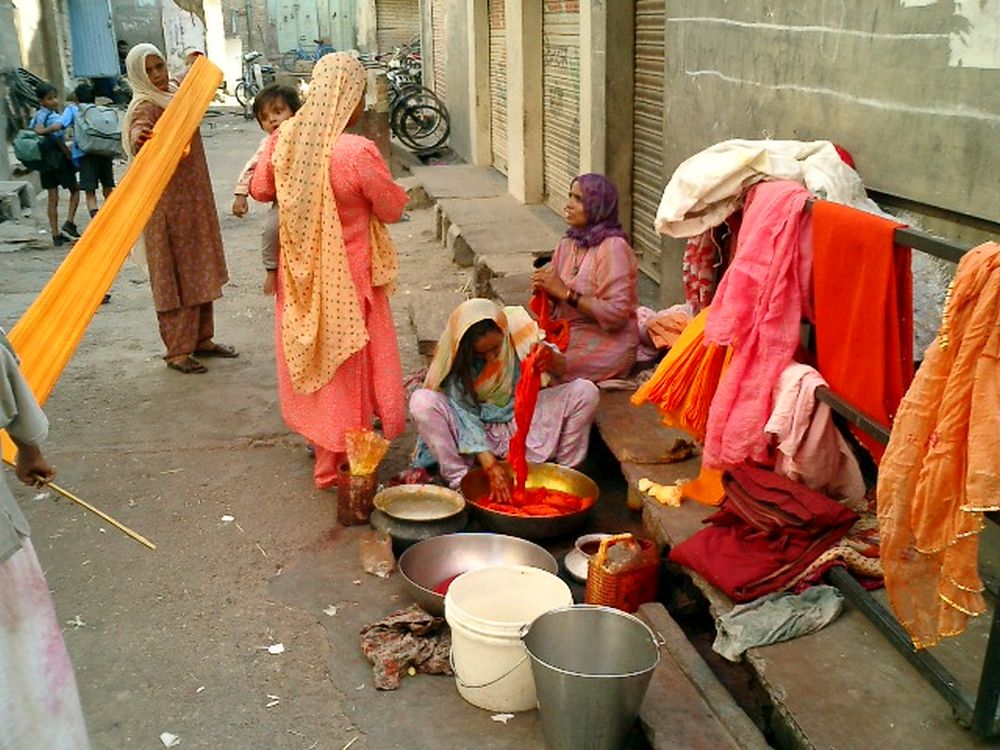
I’ve seen sights like this all over Rajasthan, and what I always find amazing is that neither the streets nor the ladies clothes are covered with red dye, so they must carry out this work with an abundance of talent.
One of my all time favorite movies is the 1959 Journey to the Center of the Earth, starring Pat Boone and James Mason, based on the book by Jules Vernes:

My recent Journey to the Center of Lugano could not be compared to this at all!
Lugano is a wonderful city on a pretty lake in the Italian speaking part of Switzerland known as Ticino.
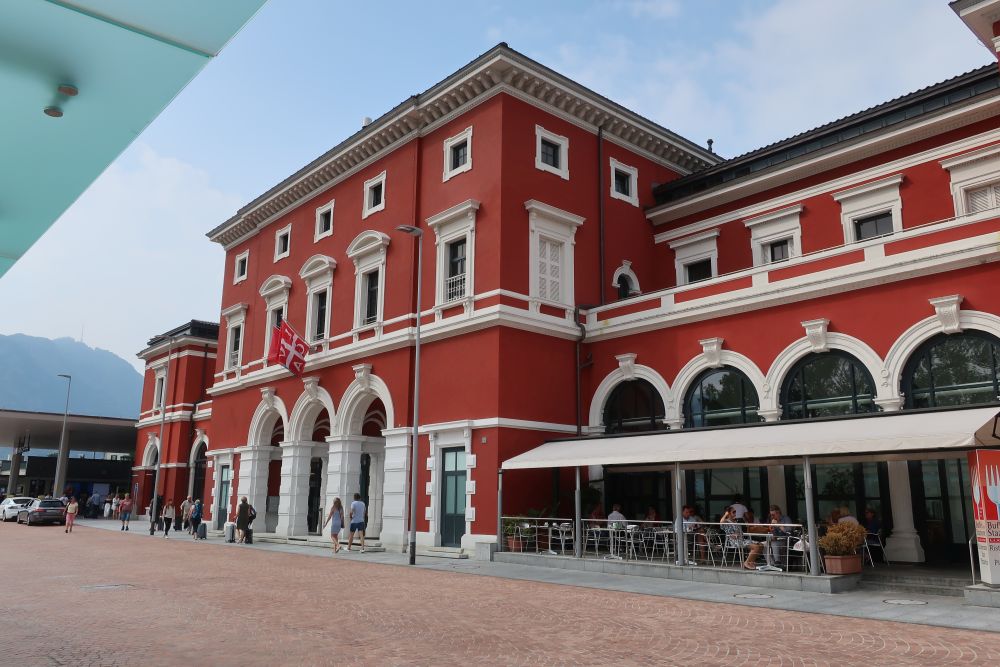
When you come to Lugano by train, you’ll either alight (if you are British) or get off (if you are American) at this incredible train station:
Then you’ll immediately walk outside, at which time, upon realizing that you, in actual fact, are hundreds of meters high above the city, you will either say “My word!” (if you are British) or “My goodness!” (if you are American):
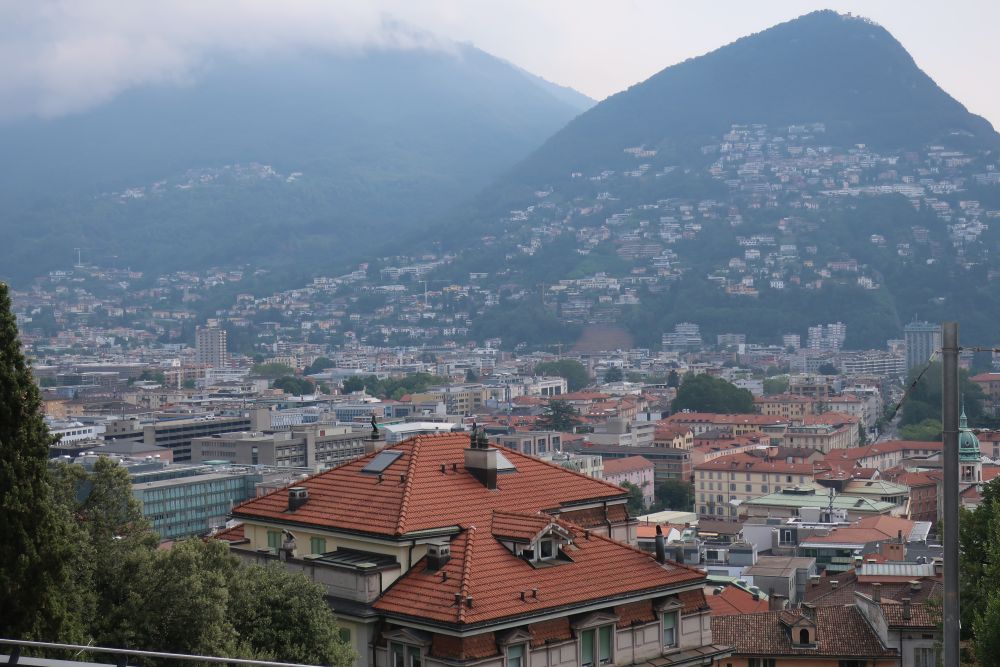
At this point it will dawn on you: you are way up here, and the city is way down there. Arithmetically, you have to add the two ways, and that is a loooong way!
So to get ready for this loooong way, in time you’ll either gird your loins (if you are British) or get ready (if you are American) and start the long, long trek down into the city.
Well, that’s what I used to do, many many times – until I made a stunning discovery! Even though I am an American, I am a loin girder, and to properly gird my loins for the long, long journey down I decided to walk back into the train station to buy a bottle of acqua in bottiglia.
And you can imagine my surprise when I saw this stunning sight!
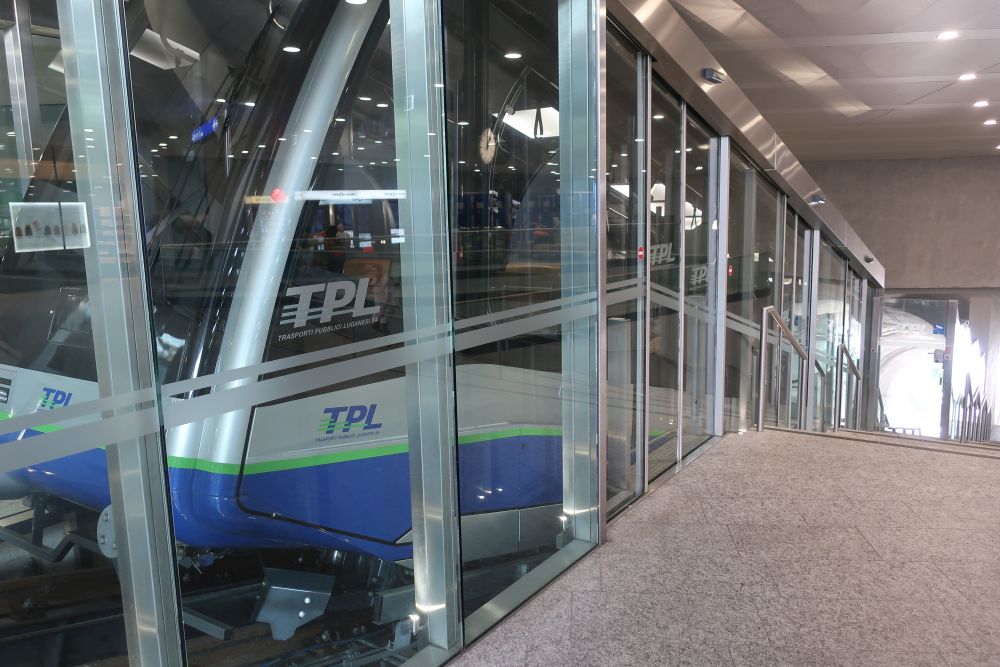
Yes, it’s a contraption! But not just any contraption, this is a people-mover of sort of contraption that shuttles people up and down the mountain!
It was a beautiful day, I felt fit and strong, I needed a good walk – but I decided to throw caution to the wind and try out this contraption. What use is a contraption that nobody uses!
Well, here is a shot of what it looked like as this fully automated contraption was lowered down the mountain on railroad tracks but tied to a huge cable underneath:
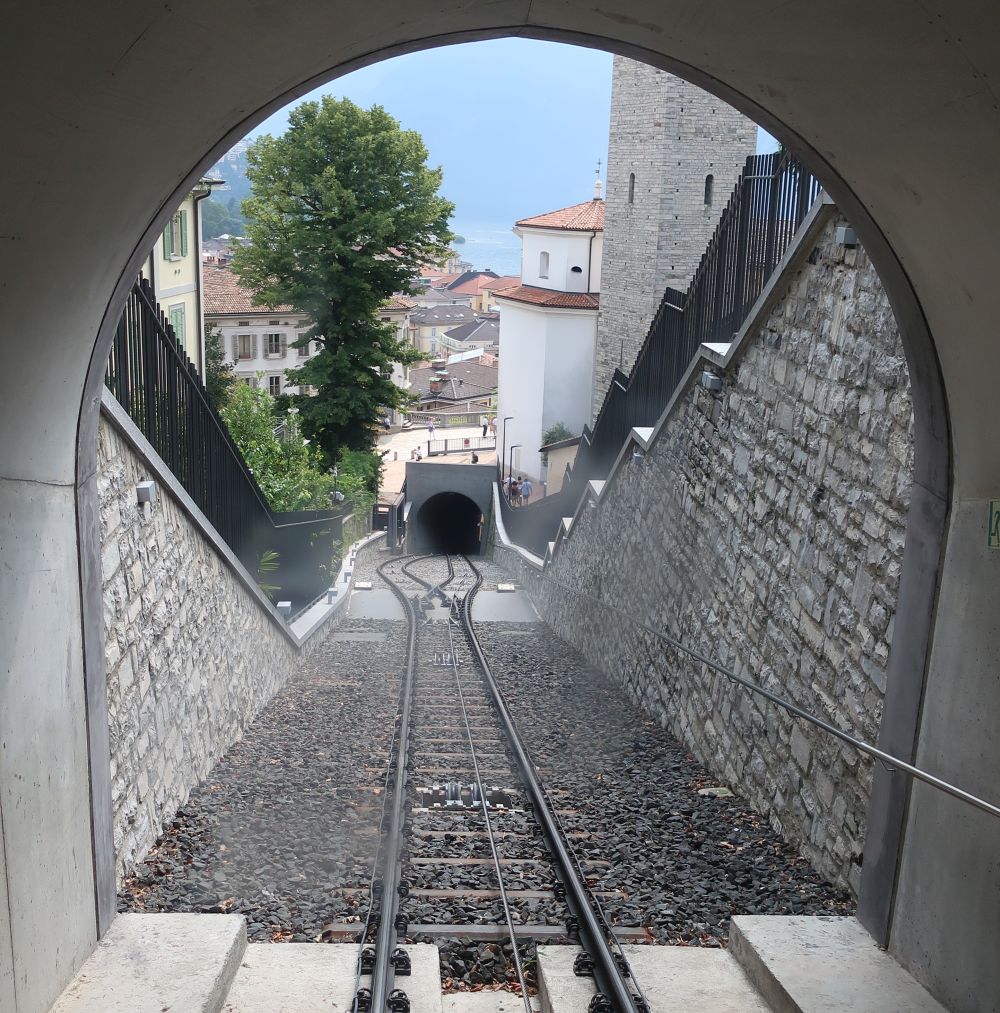
Now, I have been on contraptions like this all across Switzerland, so I was ready – I was prepared – I knew exactly what to expect. A very important principle in experiemental physics is this: opportunity favors the prepared mind.
So I had my little point-and-shoot camera out, and I was ready for what I knew what would come next!
But in case you don’t know, in fact these contraptions have two cars that are each at opposite ends of a very long cable, so that as your car is lowered down, another car is raised up:

The rest, as they say, is history. Despite being am American loin girder I did not alight at the bottom but rather got out and continued on my way.
Here’s a nice shot of what the shoreline of Lugano more or less looks like:
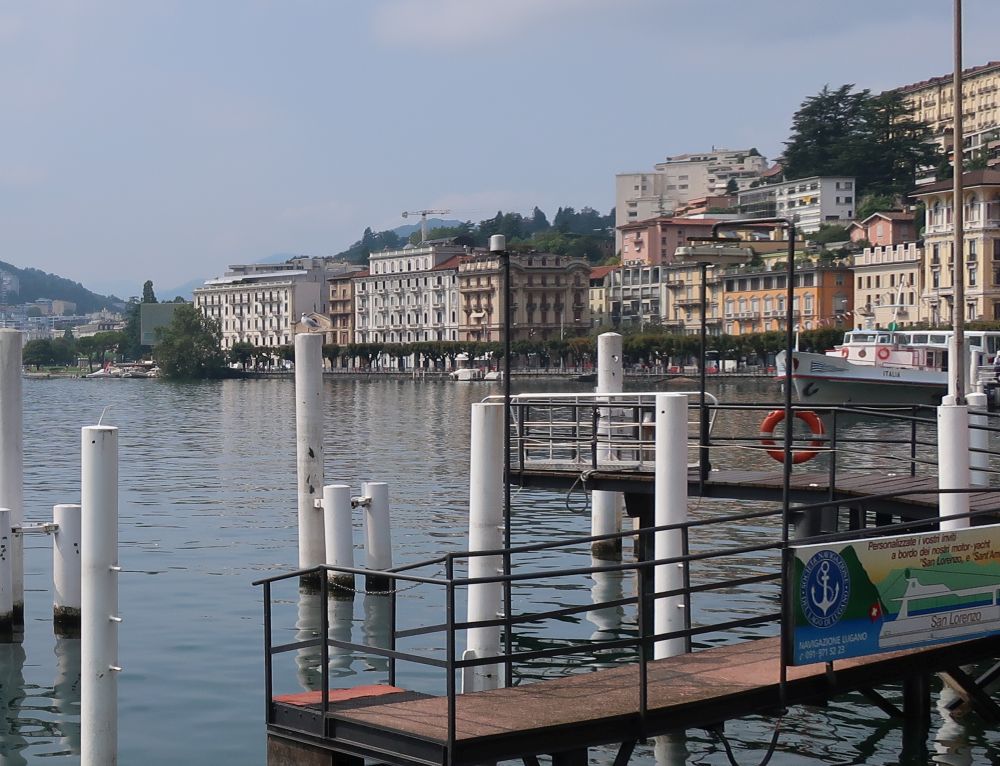
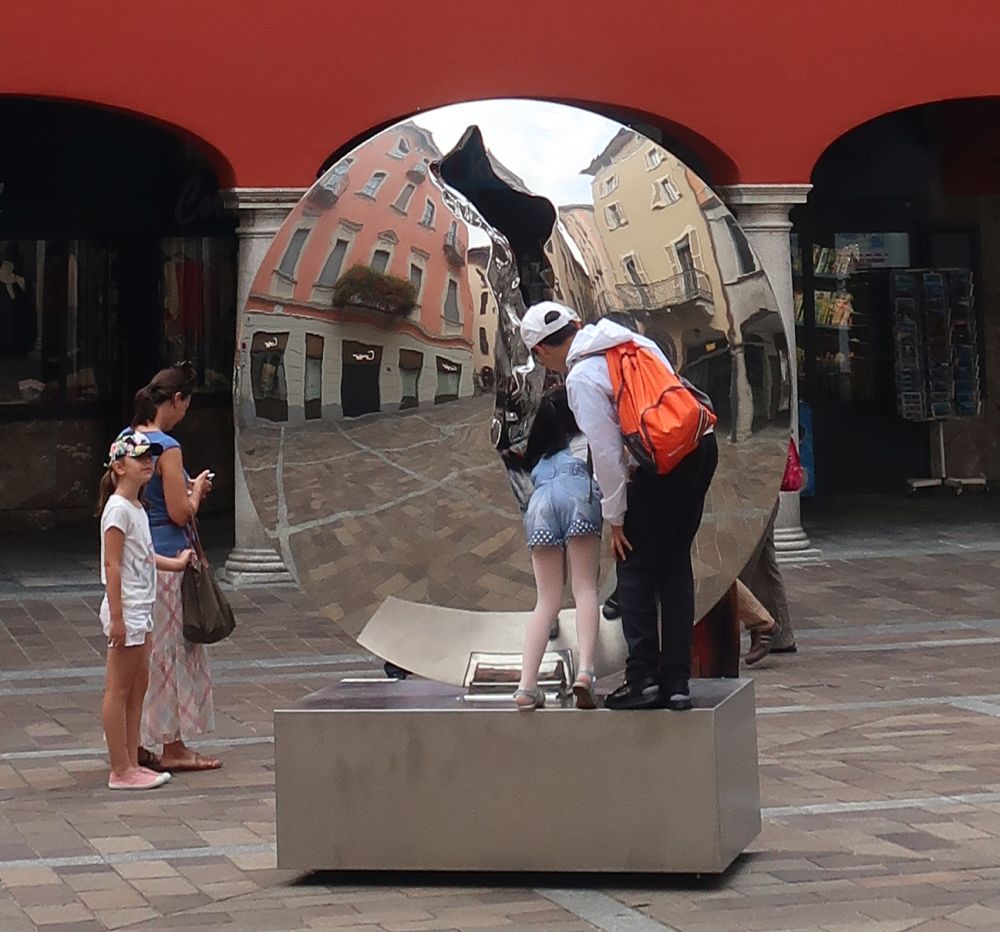
And when I was there the city was filled with shiny metallic works of art, such as this one below that, at first glance, looks like a hole in the fabric of space and time:
Continuing the series, here are more flowers I spotted while walking around the medieval village of Châteauneuf-en-Auxois deep within in the Burgundy country of France.
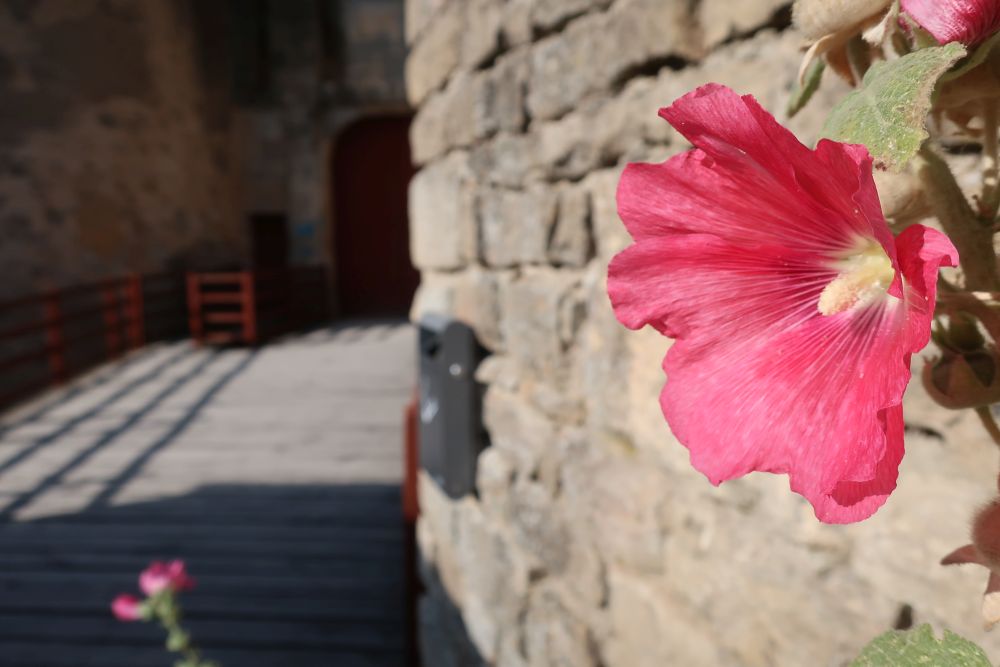
When I see a sight like this – something very pretty adorning what was once a military fortification, it always drives me crazy! I incessantly wonder when and how something militaristic was transformed into something nice, and whether the transformation came suddenly or rather just little by little. A good example is my blog post entitled From war to peace.
There’s a very famous French saying, and in fact it is so famous the the young French schoolchildren memorize this from a very early age: Vous ne pouvez pas prendre une mauvaise photo d’une bonne vache.
I caught made this snap while driving deep, deep within the Doubs countryside of France:

Continuing the series, here are some stunning waste receptacles that I spotted in the southern Swiss city of Lugano,
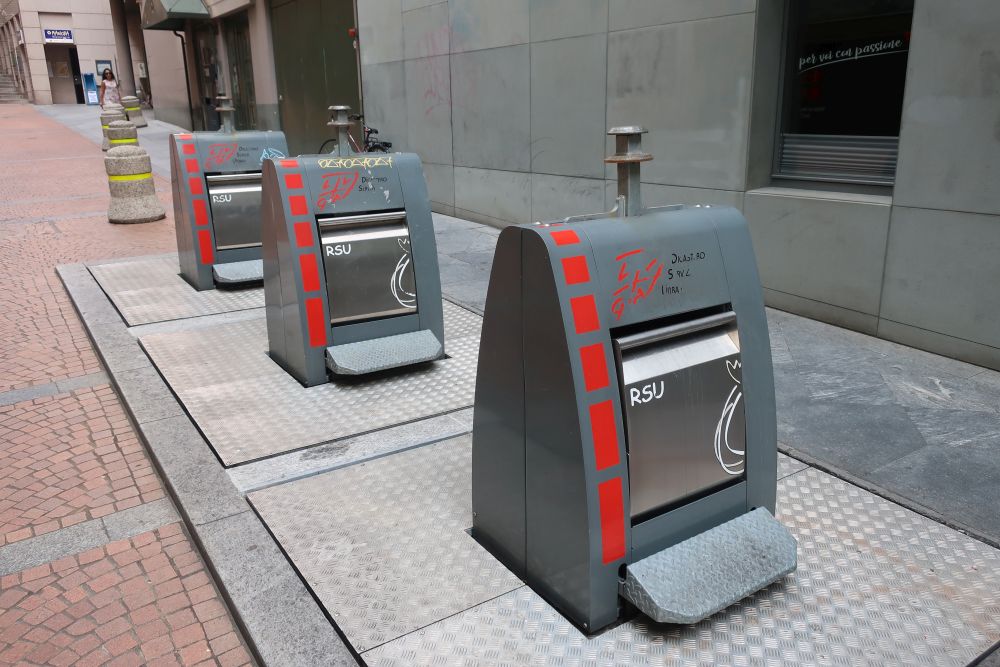
One of the first reactions I have is buck the trend. There is a trend in the world today – and for some time – to replace well-built, long-lasting products with cheap and disposable ones. You see this trend in almost every aspect of life. So when you see this new trend to replace short-lived garbage receptacles with better built and more longer lasting fixtures, it is a step in the right direction!
Continuing the series, here are more flowers I spotted while walking around the medieval village of Châteauneuf-en-Auxois deep within in the Burgundy country of France.
I took this snap early in the morning, literally laying on my stomach on the ground. I probably would not have tried that later in the day with more people around, or they might mistake me for a real photographer!

The Burgundy countryside of Bourgogne in France is an incredible, is an amazing, incredible place. You’ll find many dozens of kilometers of walls of stone, like this one:

Since there isn’t a lot of square stones laying around on the ground, it really begs the question of the absolutely tremendous effort it took to quarry the stone and transport it to create the walls.
Continuing the series, as part of a large IT transformation that I helped drive, it was necessary for us to hire 20+ talented IT professionals. And add to that around 30 mostly Indian colleagues that were to join us to run the Transition and Transformation (T&T) program. And add to that at least two other large IT teams we wanAnd because we had so many people, it was necessary for us to locate and rent a building dedicated to IT. So I had a once-in-a-lifetime opportunity to take off my IT transformation hat and put on my facilities management hat.
This blog series recollects a bit of the journey before too much time passes and I forget some of the more interesting details.
I’ve worn a few different hats in my life: cook in a restaurant, forklift truck driver, landscape gardener, and professional housepainter to name just a few of the most important ones. So it is not only fun but a privilege when life gives me the chance to establish working relationships with people in varied trades.
One of the most fun people I dealt with was the head of the cleaning service company we contracted. I won’t mention her name here, but anyway she is retired. She was around six-foot five feet tall, and when she first shook my hand she literally crushed it (no kidding, I could not play the banjo that day!). She was from Stuttgart – and I lived many years in Stuttgart – and if you know anything about the passions of the people Schwabia – and I am saying this because they are great people – then you know that quite probably cleaning is the only topic more important on their scale of life than finance or even religion!
I learned a few things about cleaning.
One thing I learned, the cleaning contract is built around a very specific checklist or work to be done (wipe desk tops with damp cloth, clean outside of refrigerator, complete vacuum of carpet, spot vacuum of carpet for visible dirt, etc.) and how often each step is to be done (daily, weekly, monthly, on demand) and when (e.g. after working hours).
I also learned that after the contract was signed, at least in my case, the cleaning company assigned a dedicated resource to handle our cleaning needs. I hardly ever saw her, because she I don’t think she came to building until around midnight. And I also learned that she took a lot of pride in her work and very often cleaned up even when it was not clearly written in the contract.
I also learned that we had an obligation to provide a rather large room to store the cleaning materials (I never consider this when I did my original planning!). Think about it: vacuum and mop. But you’ll need a huge shelf space for the cleaning products and chemicals, as well as the consumables. Believe me, there are many, many more consumables than you might first think about!
And finally, the little stuff. Like most people, I’ve used toilets all my life, maybe not always exclusively, but usually when I had the chance and the need! Also living in Asia I became rather proficient at Asian style squat toilets.
But in addition to my role to help drive the IT Transformation, I was as a facilities manager now, the and toilets were my responsibility, and this means all of them, both men’s and women’s (and the shower).
Now here are a few things you might not think about in this snap:
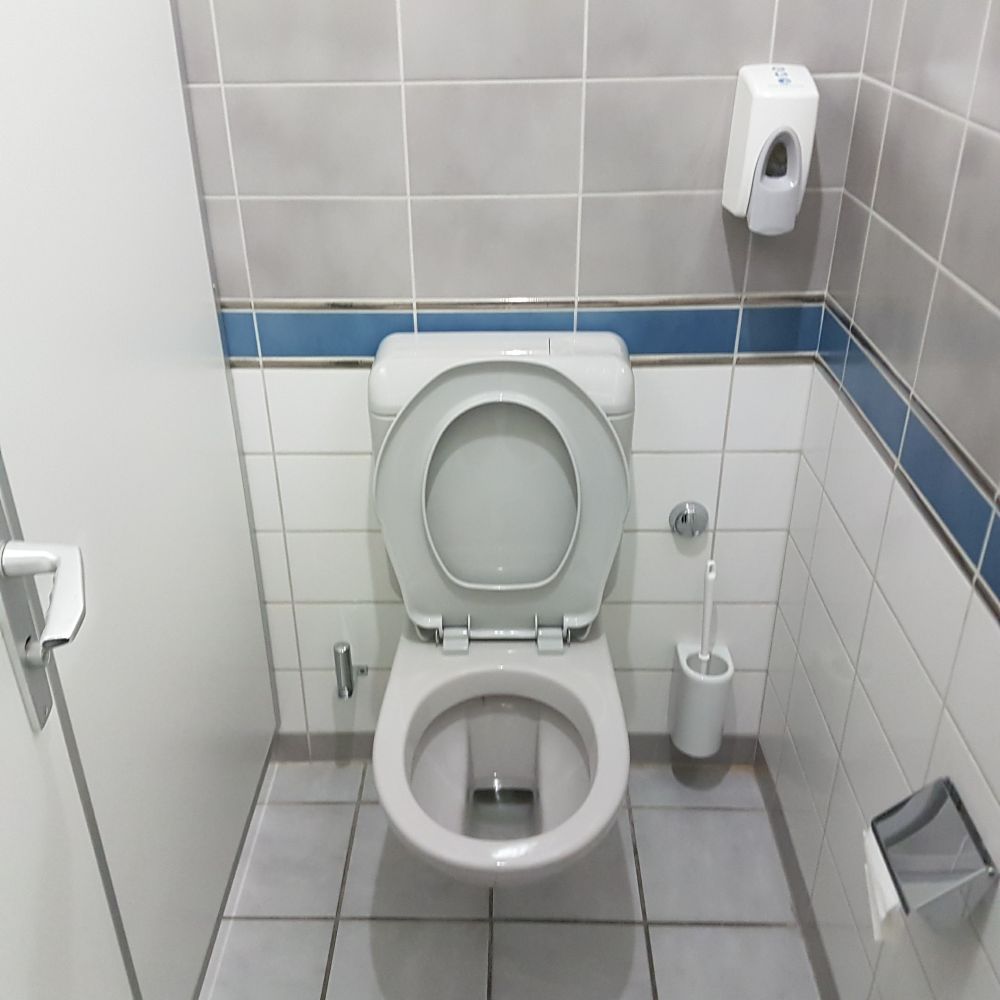
Think a little bit about the consumables. The little white dispenser is for alcohol – this needs to be discussed with the cleaning company, and you’ll need a part in your contract about how often its checked. And the other consumables – and there are more of them than you think: sanitary products, bags, toilet paper, soap, paper for drying your hands, bags to line the towel basket, bags to line the waste basket – and a few more I’ll let you figure out yourself!
And although it’s not shown here, the restrooms contained a spray bottle of a scented fragrance that periodically (few times a day) shot a burst of fresh scent into the room: which scent would you like? How often should it be checked? How often should it spray? Who checks that it sprays and who replaces the little battery when it‘s needed?
These were just a few of the challenges you face when you are a facilities manager! It’s a bit overwhelming at first, but as time goes on you start to take these things in your stride!
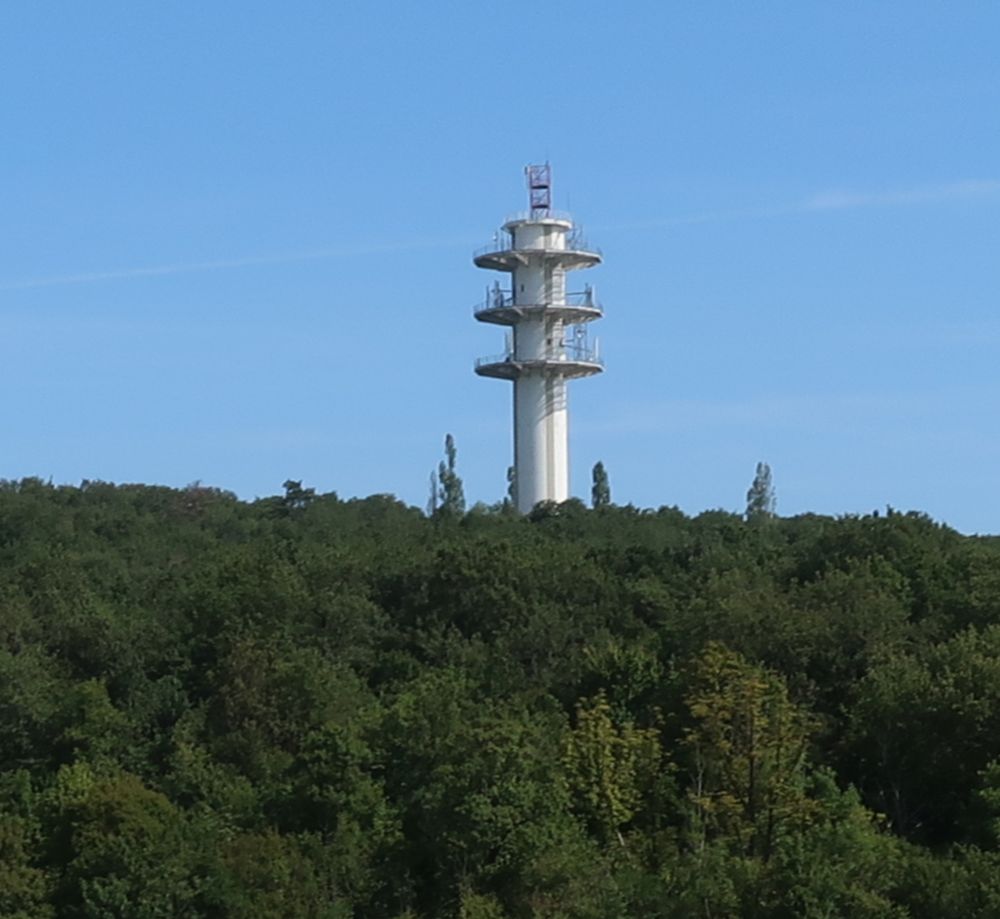
Well, I don’t know how incredible they really are.
But I do know it drives me absolutely nuts to see an almost identical set of towers all over the French countryside, and yet not know where to get the details. Are they for radio – or television – or both? Why are there three platforms? Why is the central pillar so large?