Rådhuspladsen

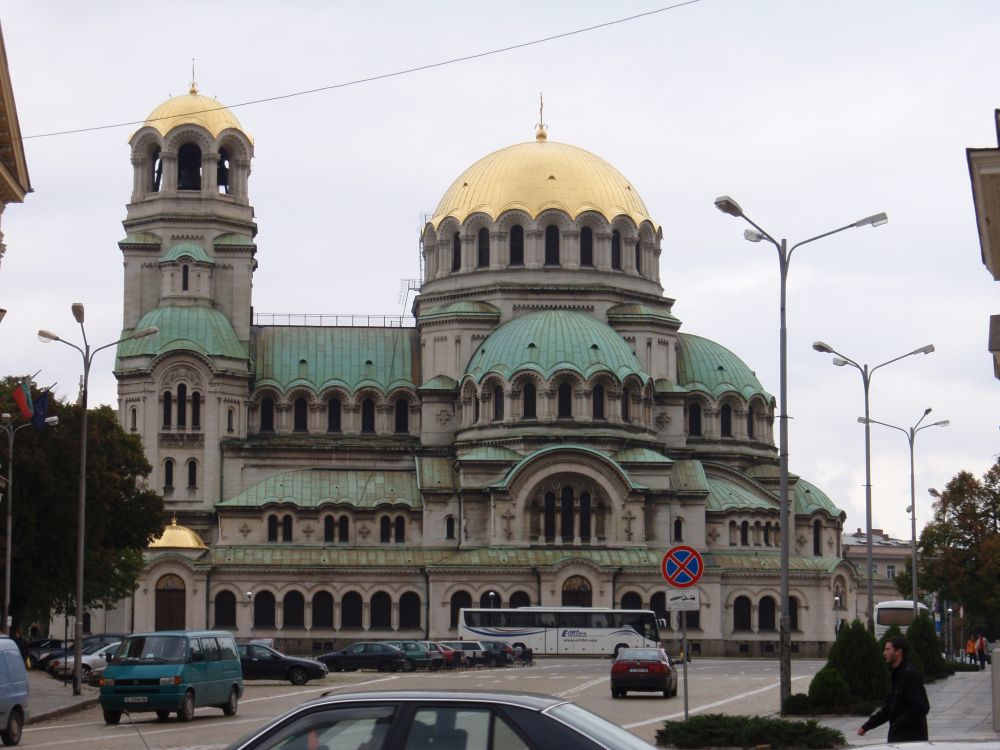
Copenhagen is an incredible city – or so I’ve heard. I spent a whopping ten hours here, between flights – and I was so jetlagged I spent at least six hours sleeping in the sun on a park bench here in the Rådhuspladsen.

I have to give the city and its people a lot of credit. I slept on a park bench very enjoyably during the middle of the day, and nobody disturbed me!

Anyone else tried this?

A friend of mine from the U.K. gave me a jar of famous “Jelly Babies.”  Americans have probably never heard of them, but they are essentially fruit flavored glycerin candy, in the shape of little babies.
What I don’t understand: the container is made of a heavy, nearly indestructable plastic. Why?  Are jelly babies so dangerous they need to be imprisoned in thick plastic? Are they so sensitive they need to be protected?

Anyway, it seemed to me the container would make an ideal piggy bank:

However, the only way for me to cut a slot into the hard plastic was using my high speed abrasive grinder!

The central question remains: why would Brits over-engineer something like this?

When backs are better than fronts – 4

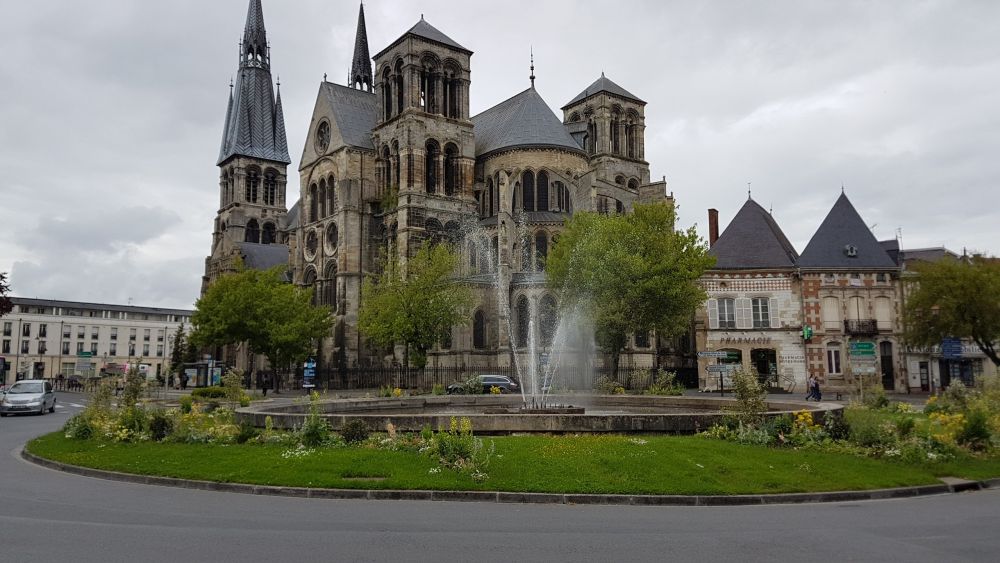
Continuing the series, European cathedrals seem really to be excellent candidates for having backs that are better than fronts.

This is Saint Étienne, also known in English as Saint Stephen:

And here’s the church Église Saint-Étienne in Mulhouse, Alsace. As with many churches, the front is really nothing special to see:

But walk around to the back of the cathedral, and you’ll find a real architectural wonder:


Where Einstein was born

Happenstance is amazing!  I’ve visited the Einstein Museum, in Bern. And I’ve visited Einstein’s apartment, in Bern.

I know that Einstein was born in Ulm, Germany, and for a long time it’s been on my bucket list to visit where he was born.

Unfortunately, that house no longer exists. But fortunately, and quite by accident, a stumbled across this strange looking monument on a recent trip to Ulm:

And you can see by the inscription, this is where his birth house originally stood:

What is most amazing are the cobblestones in the streets. As you can see in the first picture above, the statue itself is surrounded by the old pattern of cobblestones.  But those are up against a much newer (and easier to lay down, so presumably less expensive) set of cobblestones.

Were medieval cities planned?

It seems unreasonable to think that the streets in medieval cities were somehow planned. But when I travel through medieval cities, I can’t help but notice the large number of small streets that are optimally laid out to frame a view of the large, central cathedral.

This one is Santiago de Compostella, in Spain (from which you can see the Cathedral of St. XXX):

This one is Mulhouse, in Alsace, France (from which you can see the Cathedral of St. Etienne):


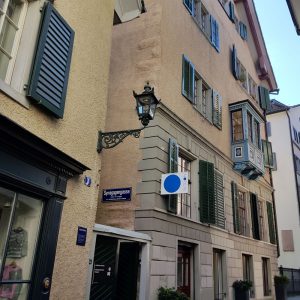
And this one is Paradeplatz, in Zurich, Switzerland (from which you can see both the Grossmünster and Frauenmünster cathedrals):

Is this just coincidence – or are these cathedrals and towers visible because they were designed to be visible?

Sheep, heath, gorse, moors – and high-tech radar!

Recently a friend took me on a tour of Yorkshire, England, including the famous Yorkshire Moors.   But the most stunning part of the landscape was a huge radar installation, operated as part of a giant system deployed in the Cold War to protect the U.S. against nuclear missles:

At first, it was a bit difficult for me to understand why a radar installation in northern England would be much use to safeguard the U.S.  But when you look at how the different systems overlap, it becomes quite clear:


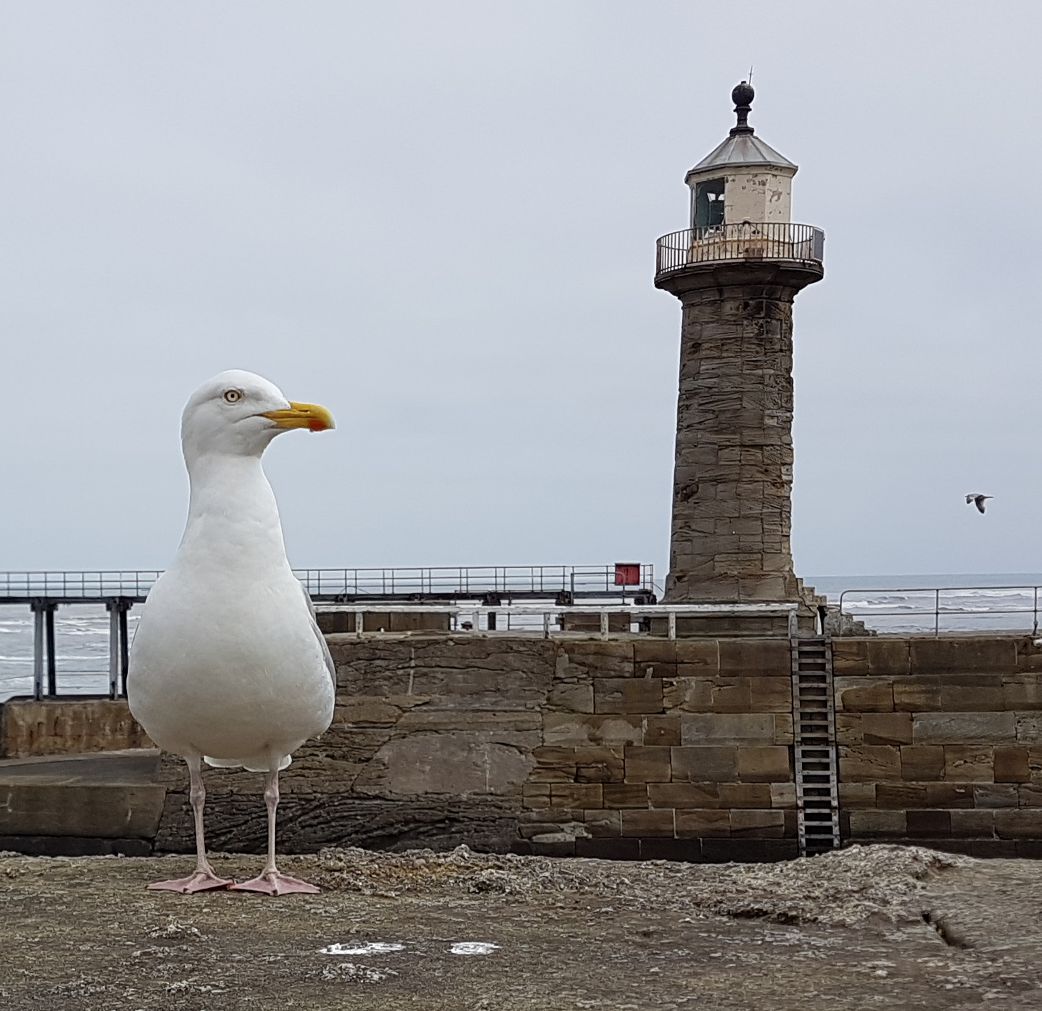
Solothurn Seagull

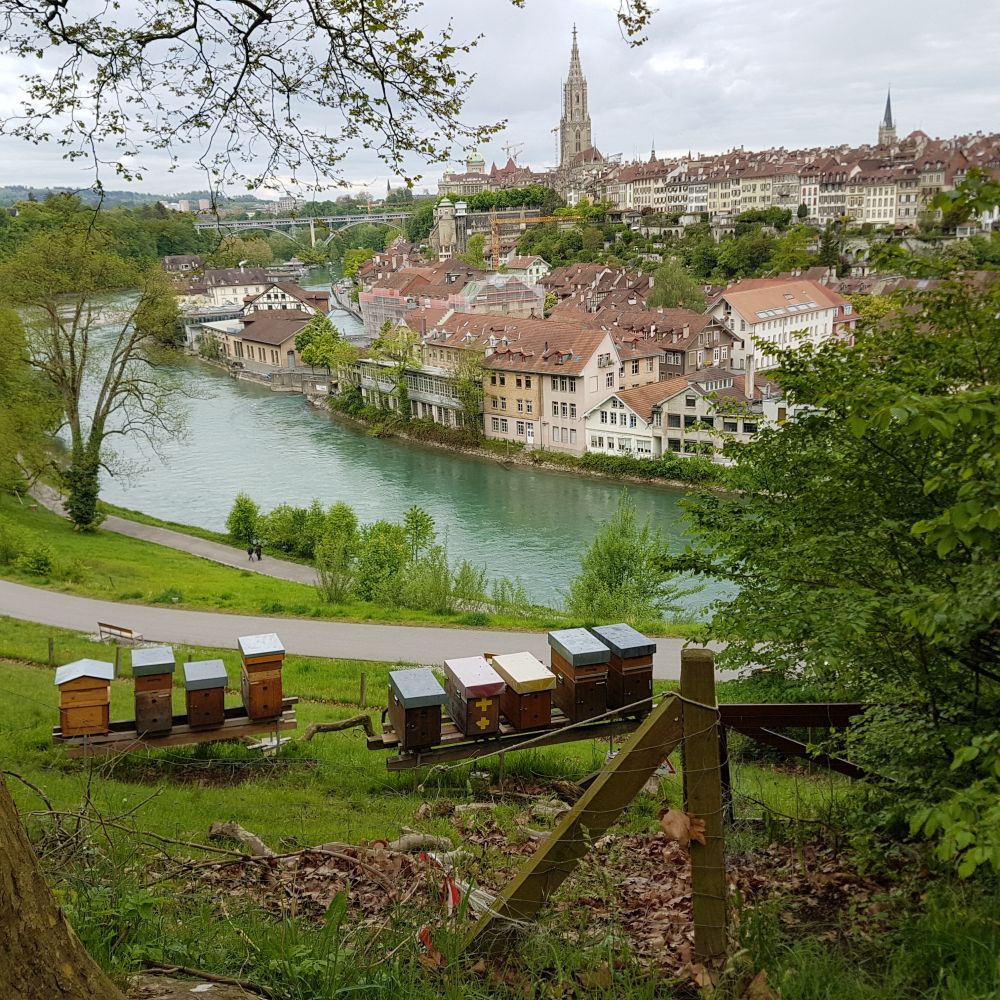
A seagull cruises the Aare River in Solothurn. In the background you can see the the St.-Ursen-Kathedrale:

Solothurn is both a village AND a canton (national state) in Switzerland, and it’s name dates back to around the year 0 AD, where it was known by the Romans as Solodurum – so it is amazing how things like names can persist over thousands of years!  And you won’t find many German speakers here: like most areas in this part of Switzerland, the locals speak the Bernese version of Alemannic (a more advanced, evolved version of high German).

World’s most amazing church?

This is one of my favorite photographs that I took of a church in the Christian Quarter of Jerusalem. But this is no ordinary church. This is the Church of the Holy Sepulchre:

There are so many amazing things associated with this church – my blog is too small to hold them all!  Top of the list: Christians will immediate cite this as the location where Jesus was crucified, and where his empty tomb was discovered.

By my favorite fact is an historical one, not a religious one.  The Church is locked in the evening and opened again in the morning, and the holders of the key (the lockers / unlockers, if you will) have come from the same family (the Nusaybah family) and have been doing this job since the seventh century. Amazing!  I’ve found the best place to read more details about this amazing story is the wonderful book by Simon Montefiori, entitles Jerusalem: the Biography.


Indian Aqueduct

If there is one thing that India has done longer and better than just about any other country, it is innovative aqueducts.  Some of the most famous aqueducts are centuries old, such as in the historical city of Hampi; others are still intact after hundreds of years, dotting the rural Indian countryside.

And some of them are quite modern, such as the Varasun Aqueduct:

Helping to provide valuable water from the Kaveri River to farmers as part of a much longer (135 km) canal, the aqueduct is 1.8 kilometers long and towering at an unbelievable height of 16 m.

A True World Wonder – ಶ್ರವಣಬೆಳಗೊಳ

In my opinion, the 60-foot-tall statute of the Indian god Bahubali (sometimes called Gommateshwara), carved out of a single piece of granite and located high on a mountain, is without doubt one of the most amazing things I’ve ever seen.

Here’s the top part of his body – and if you look closely, you can see the visitors on the tower just above his head:

Here is the lower part of his body – and again, be sure to look at the size of the people near his toes:

But if you want to visit ಶ್ರವಣಬೆಳಗೊಳ, also known as Shravanabelagola, it won’t look like these pictures.  I was VERY fortunate and priviledged to be able to visit during the Jain religious ceremony called Mahamastakabhisheka, which is only held every 12 years!

Unfortunately, there is so much about this holy site that I do not know. I’ve never been able to find any documentation about who created the statute and why, how long it took, and how they managed to transport it intact up a very high and very steep mountain.

Prime Meridian in Spain

The Prime Meridian is the universal definition of 0-degrees longitude  – but did you know that until recently, there were different prime meridians in use, such as the Greenwich PM and the Paris PM?  I only learned this a few minutes ago, when posting this picture I took on the AP-2 highway, near Candasnos Spain between Zaragoza and Barcelona:

You can see the Cypress trees on both side of the arch, which are a well known sight in southern Europe.

It is wonderful that the Spanish would build an arch – but it is a bit sad they didn’t also add a turnoff, so that you could stop and enjoy the moment less fleetingly.