Gruyères – What’s up with the “s”?

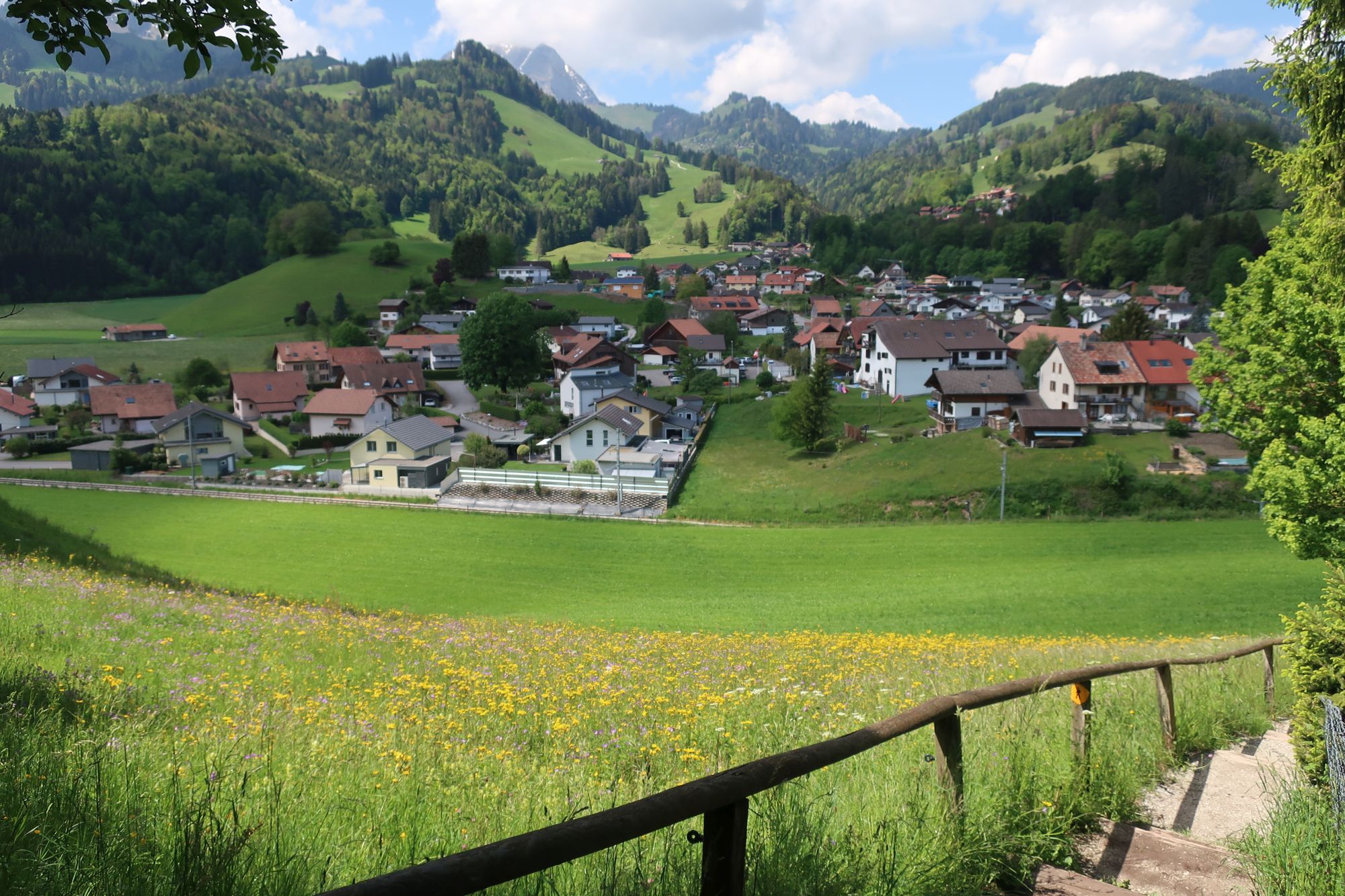
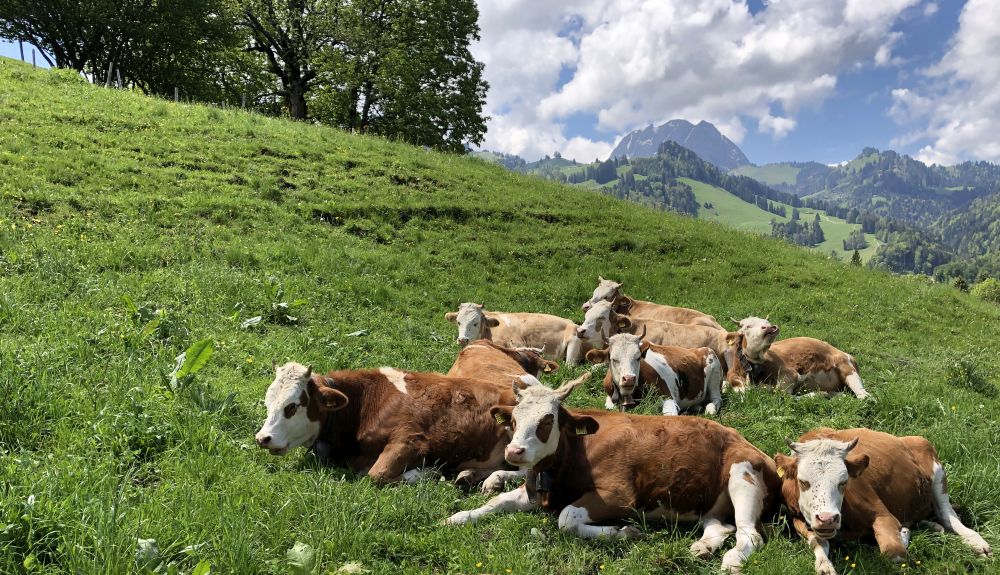
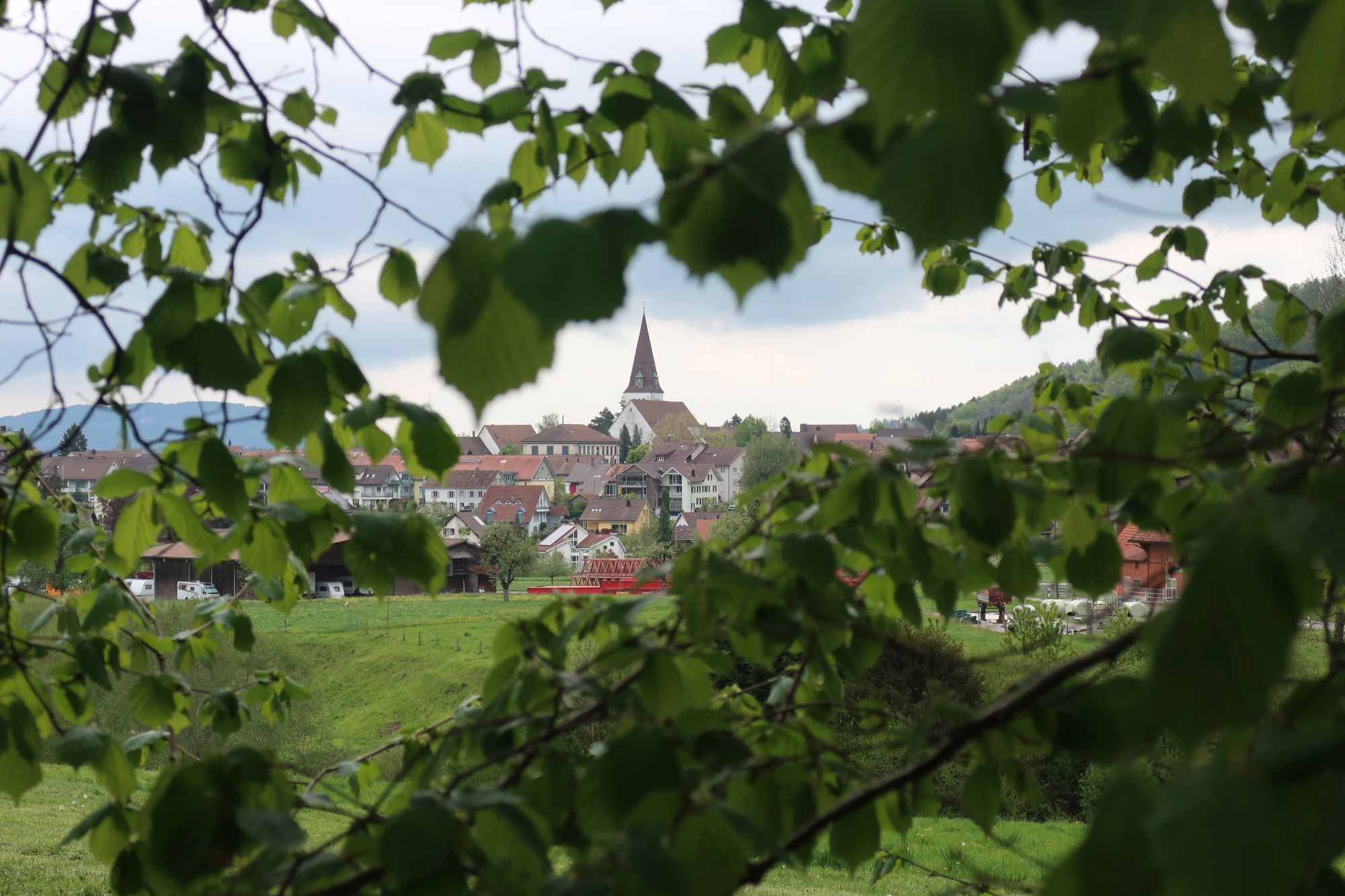
This is a snap of some houses outside of the medieval village of Gruyères:

The “s” at the end always confused me, so I finally looked it up. The village is named Gruyères, with an “s.” But it is located in a district called La Gruyère, no “s” in the Swiss canton of Freibourg.

The snow covered peak in the background is La Moléson, sort of a mini version of the more famous Matterhorn, reaching just over 2000 meters in height.

Olten Train Station – In the danger zone

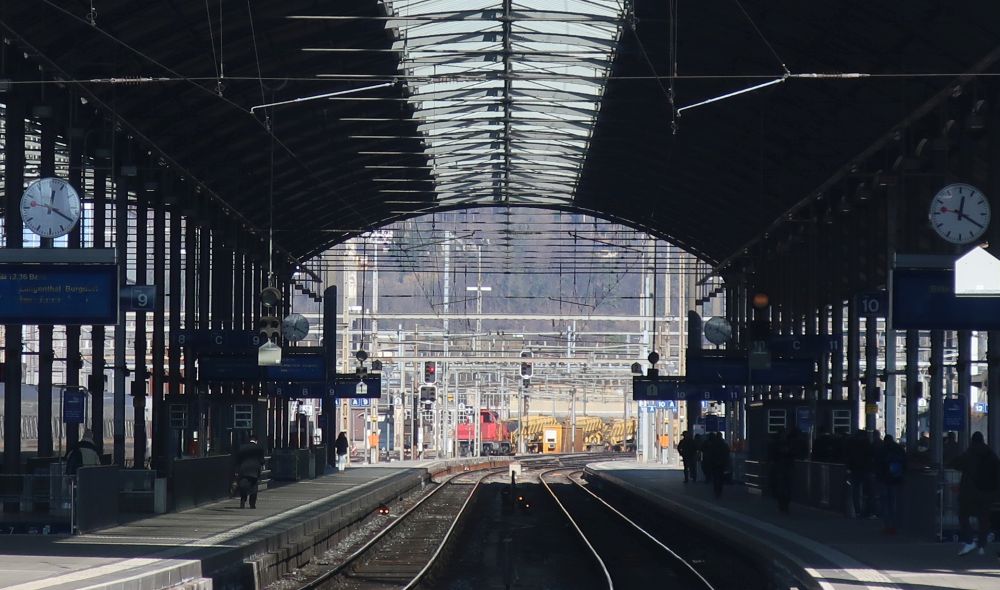
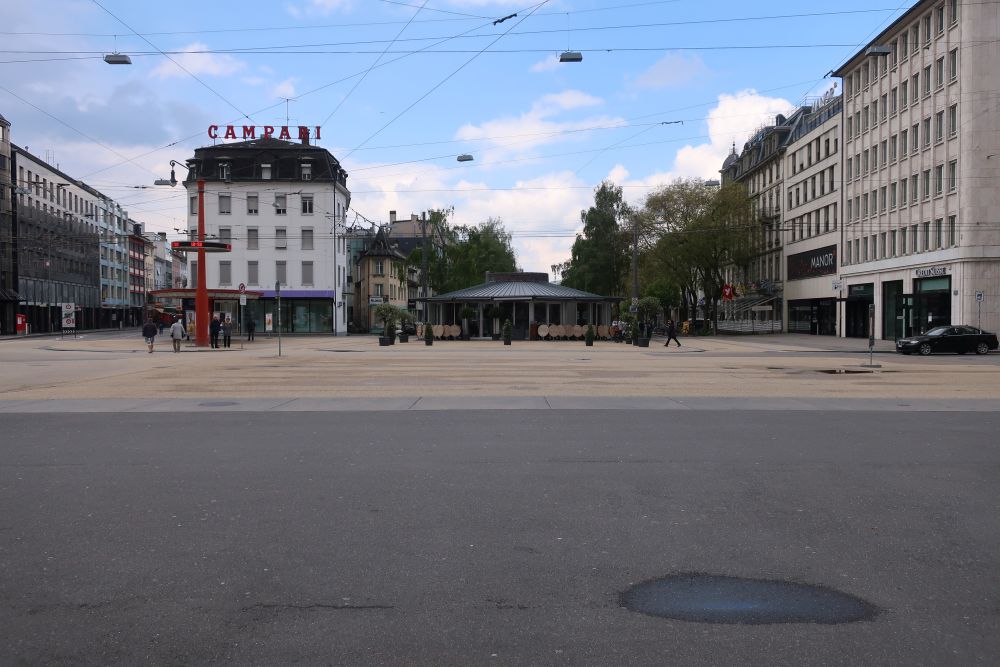
It looks like I’ve climbed down between the railway tracks to take this stunning shot of the railway station at Olten, in Switzerland, meaning there would be mere seconds before a ultra high speed train crashed into me:

Allemanic is the more evolved form of High German spoken in Southern Germany and Switzerland, and many people consider Olten to lie on a language boundary that separates the Zürich form of Allemanic from the Bern form.

Funny story – but true: there is a train conductor for the Swiss Federal Railways that has the route from Zurich to Geneva. Between Zurich and Olten he greets the passengers with the Züridüütsch greeting “Grüezi wohl.” Between Olten and Freibug he switches dialects and greets the passengers with the Bäärndüütsch greeting “Grüessech wohl.” And between Freiburg und Geneva he switches languages completely and speaks French, “Bonjour Madams, Monsieurs.”

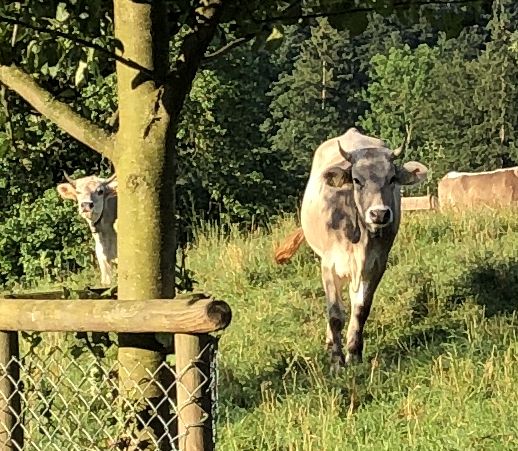
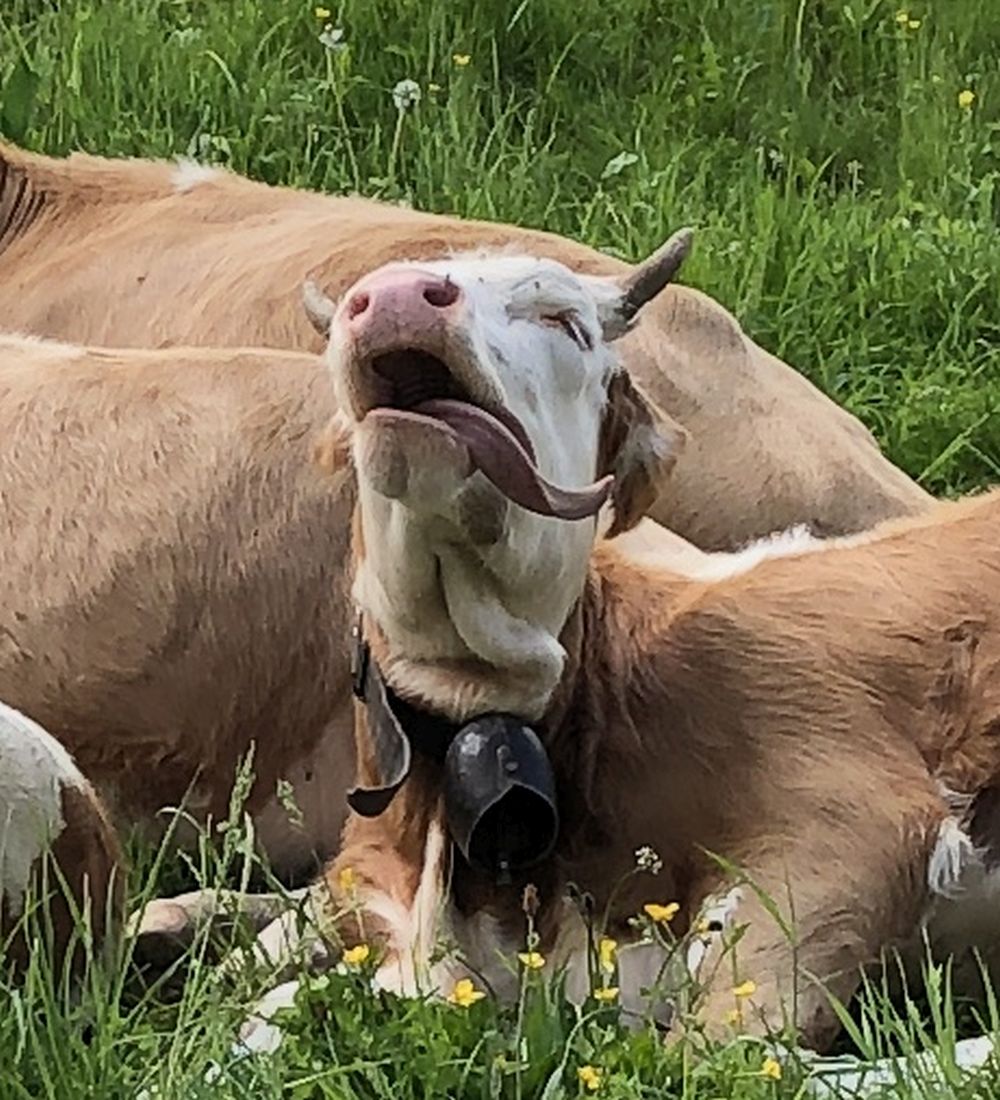
Gruyères cow

A mathematician would say it like this: If C is the set of all good cows, and B is the set of all bad photographs, then the intersection of C and B is the empty set.  But it is easier to just look and see, as I tried to catch the combined emotions of satisfaction and self-indulgence in this cow, just freshening up after a busy day of chomping on fresh, Gruyères grass shows:

Swiss Grass

Switzerland is the land of cheese – well, it is the land of plenty more things than just cheese, too, but you have to give the Swiss a lot of credit for their cheese. And to take a lot of credit for their cheese, they need a lot of cows. And to keep a lot of cows well fed in the winter, they need a lot of grass.

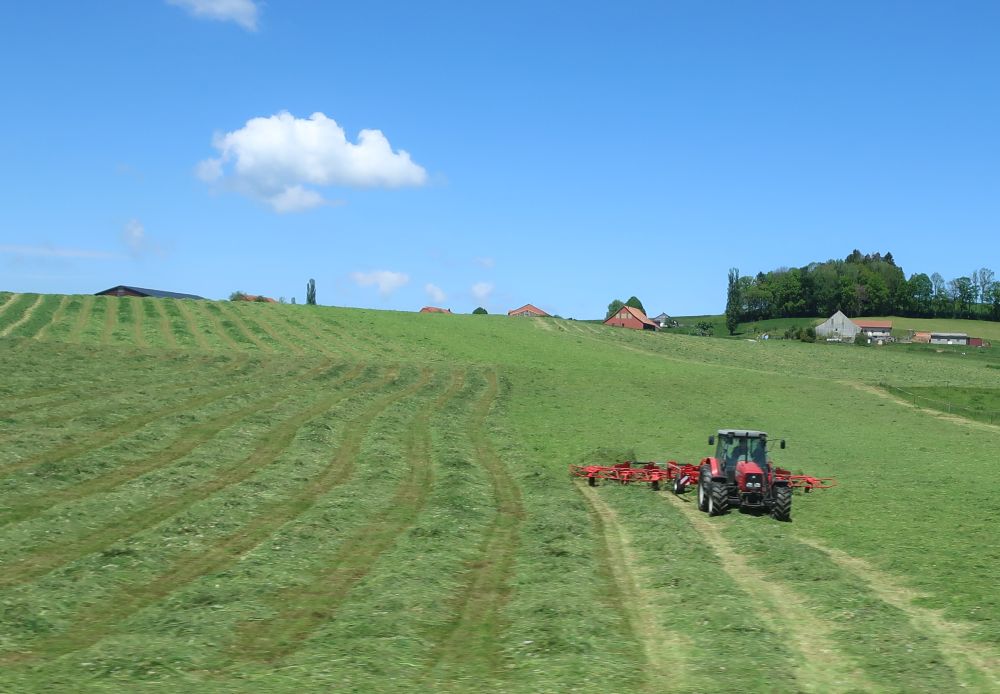
So sights like this are a common one all over Switzerland in the warm summer months, as the farmers ensure their clipped grass dries thoroughly in the sun:

Tractors themselves are amazing, amazing things, and there are literally hundreds of different attachments that farmers can buy. Because I lived for nearly a decade in America’s farm land, I knew many farmers and I got to know a thing or two about tractors: this tractor above is pulling a so-called rotary rake. I’m afraid I don’t know what it’s called in German.

Hidden canals #5: Spanning the Röstigraben

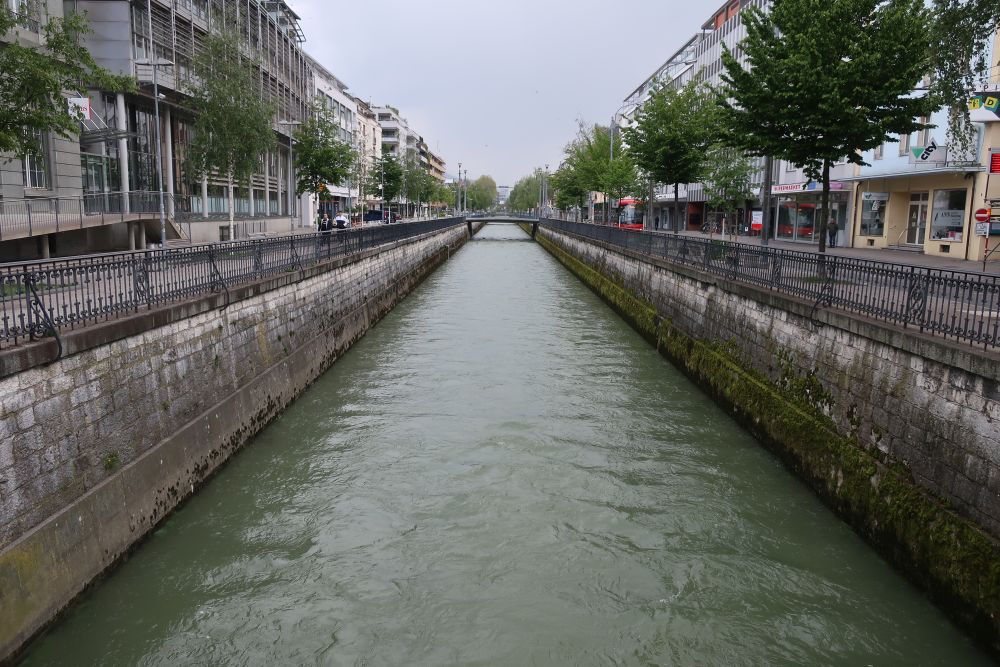
Continuing the series, this is a very interesting snap for two reasons and three directions!  The first reason, direction to the left, denotes where the German speaking half of Switzerland begins. The first reason, but direction to the right, denotes where the French speaking half of Switzerland begins.  And the second reason, direction down under, is a hidden canal you cannot see!

But to prove there is really a canal here, as is my usual custom, I simply turn 180 degrees and take the following snap:

The boundary between the German speaking and French speaking sections of Switzerland is often known as the Röstigraben. Rösti (the Swiss version of American hash browns) is a famous dish in the German section of Switzerland, and Graben is a very old German word meaning moat.

It’s not about the Albanian’s!

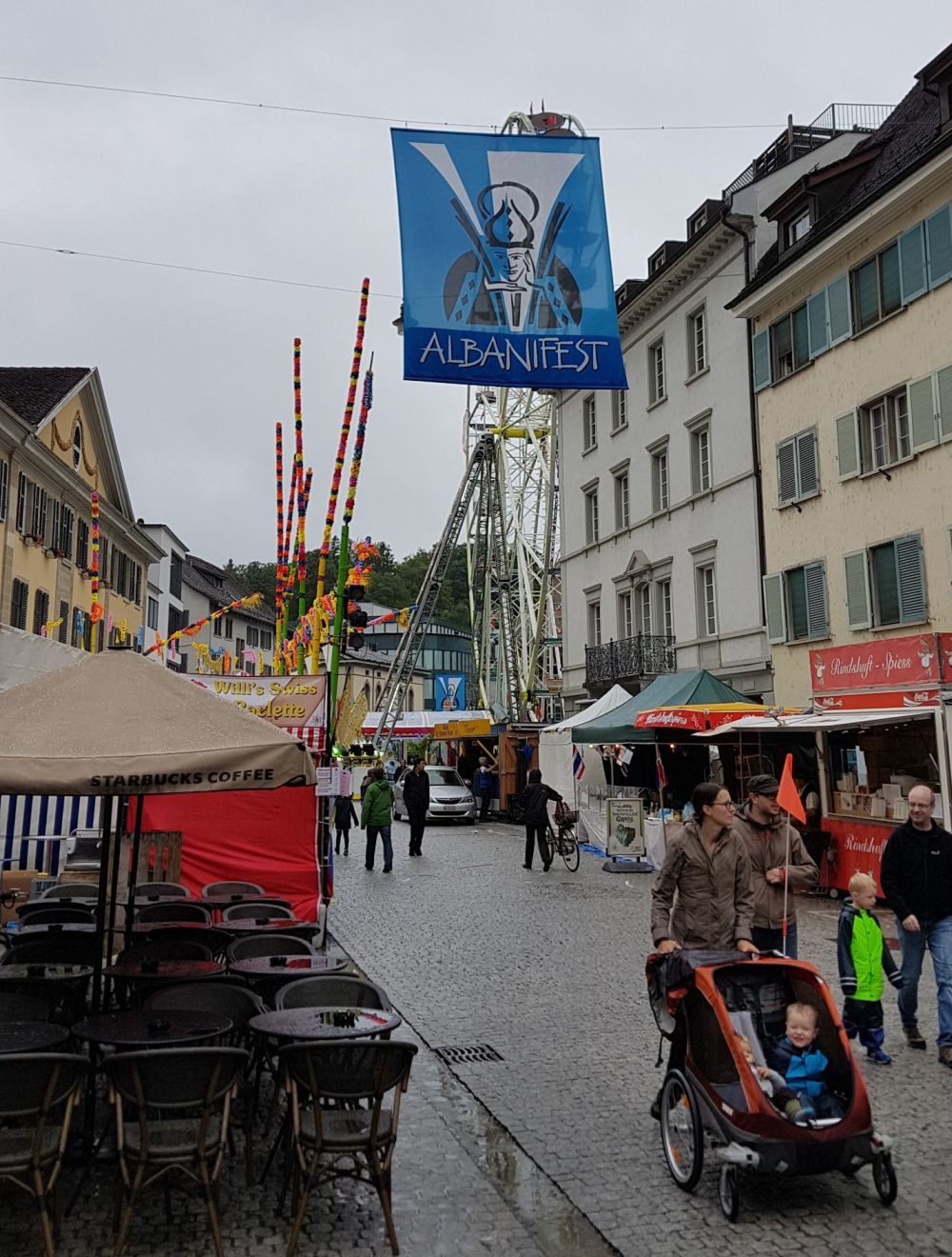
Every year there is a street festival in Winterthur called the Albanifest. Here’s a snap, but it really doesn’t do the festival justice:

In fact, the Albanifest is the largest yearly street festival in all of Europe! There are well over 100 stands from local restaurants, dozens and dozens of temporary halls for music and dancing, and it’s visited by well over 100,000 people!

Interestingly, I originally thought this festival was to honor the population of Albanians who live in Switzerland. In fact, it’s name honors this fellow:

That’s St. Alban, one of the patron saints of the city of Winterthur!

No excuses – just plain ugly

I love Switzerland!  I moved here years ago, and I’ve never looked back. The people – the culture – the various dialects of a language known as Alemannic (a more evolved version of High German) – there are a lot of things to love!

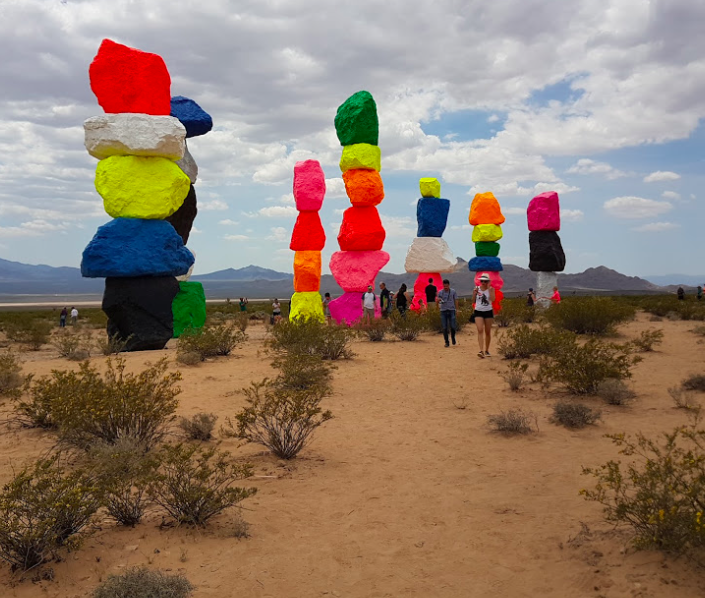
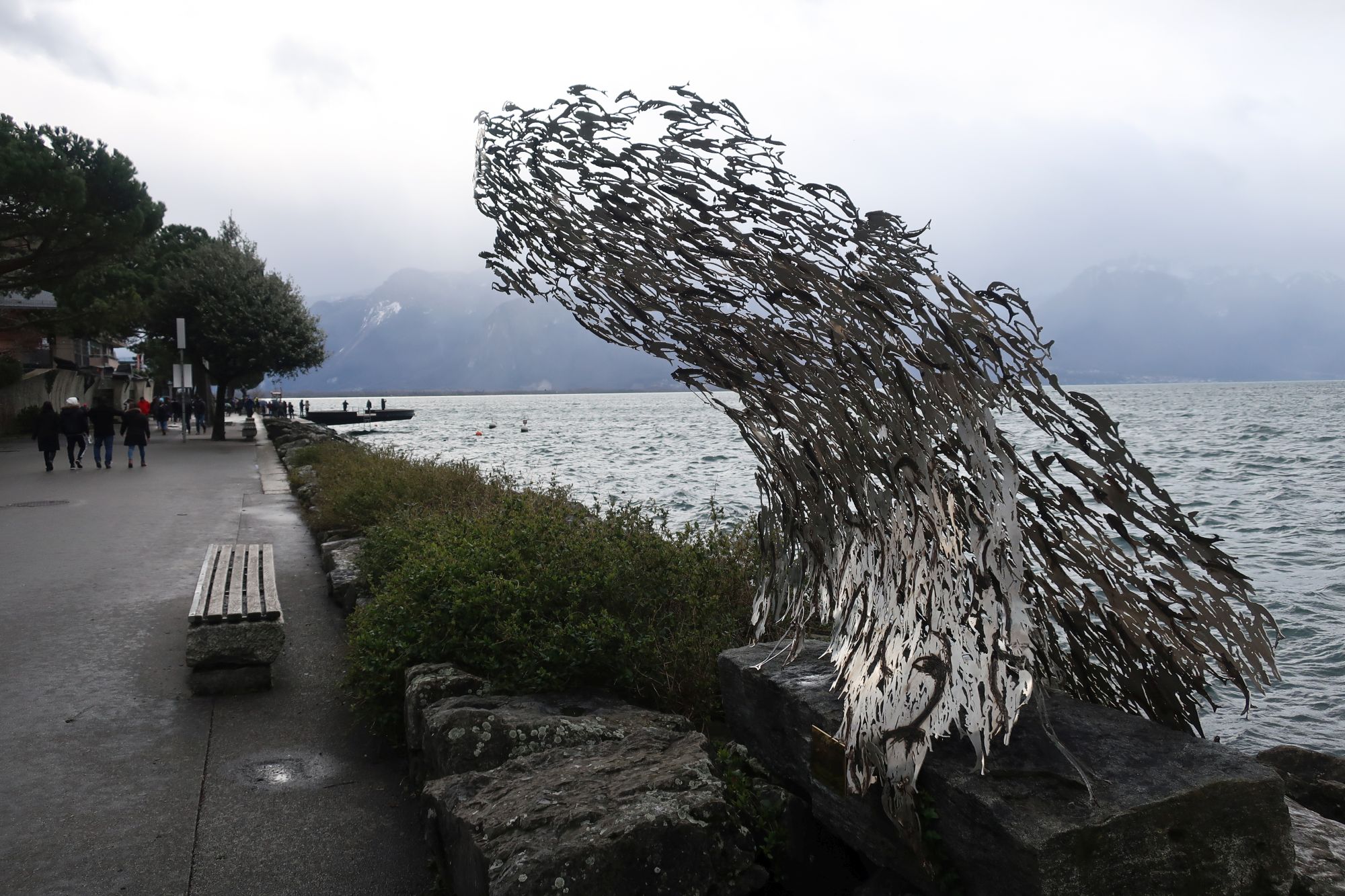
I’ve also tried my best in this blog to showcase Swiss artists, such as this blog of Seven Magic Mountains shows:

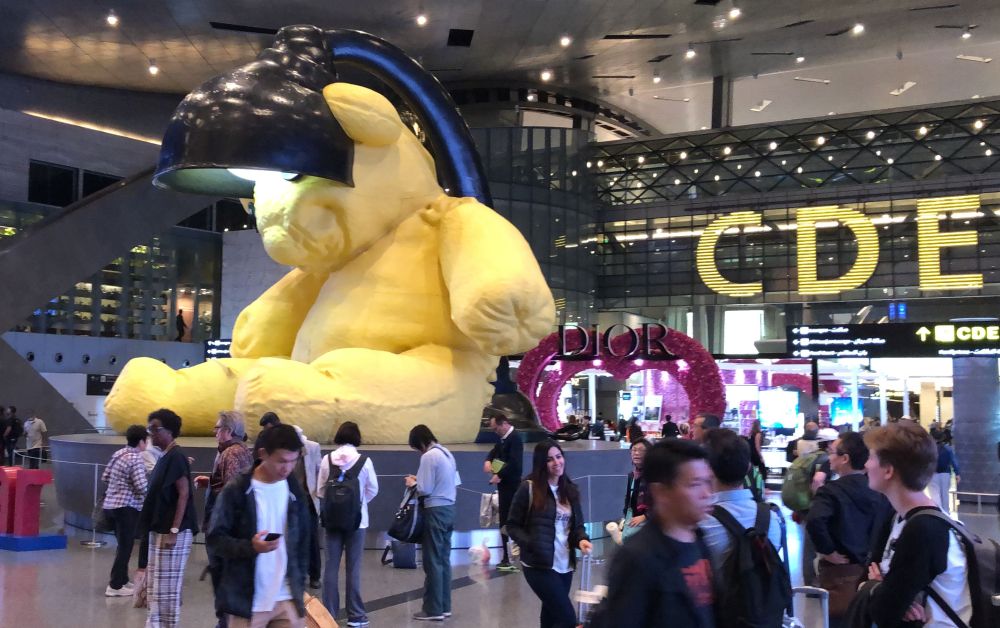
Well, some things I’m not going to defend – or even try. Visitors from long haul flights arrival in Qatar tired and cramped and jet-lagged, and as they de-plane the last vestiges of their good spirits and energy are violently exterminated by a hideously ugly monstrosity that awaits them – a work of art so grotesque that it is worse (if you can believe it!) than the many cases of French bubble architecture:

This hideous monstrosity is called the Lamp Bear, and its the creation of a Swiss artist, whose name I will not mention to protect his reputation. After all – perhaps this was the result if his patrons refused to properly remunerate him.

The amazing thing is that this artist’s website is full of truly incredible visual art. Which perhaps goes to show you: unless you are Michaelangelo (and you probably aren’t because he is dead) then if you are a visual artist please don’t dabble in sculpture, much less Statue-of-Liberty scale sculpture.


Basel Badischer Bahnhof

The Swiss city of Basel is something of an international enigma, since it sits within walking distance to no less than two countries (France and Germany) and a confederation (Switzerland).  Here you will find not one train station, but two: the Swiss main train station operated by my former employer, the Swiss Federal Railways; and the Basel Badischer Bahnhof, opened in 1855 and operated by the German Federal Railways.

Lake Geneva

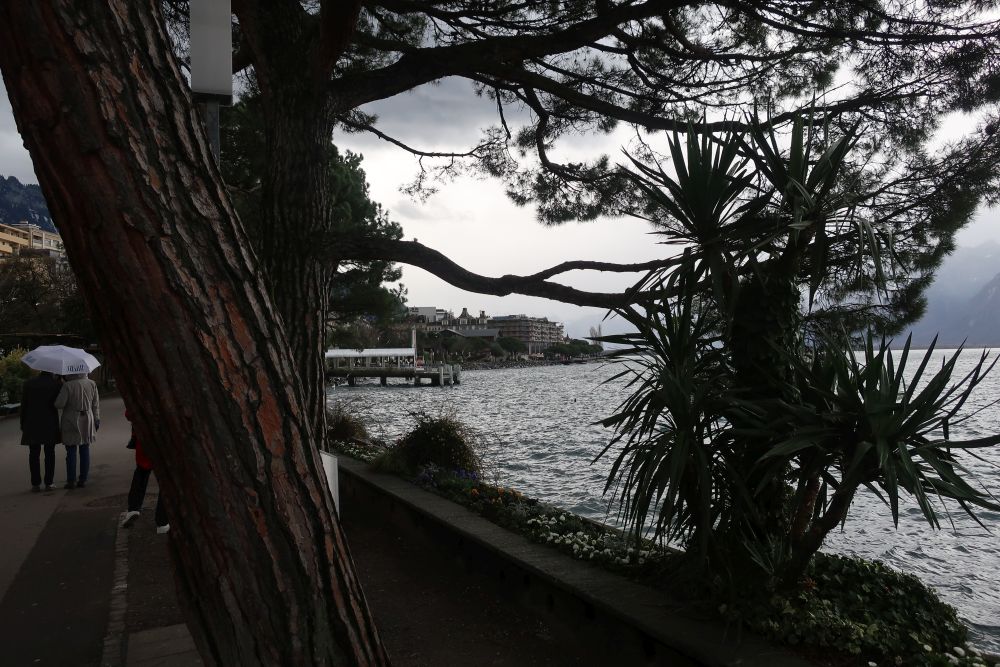
To me, Lake Geneva is the most spectacular and breathtaking of all the Swiss lakes. It’s truly massive in size, and at least looking south into France from Switzerland it’s backstopped by some of the most awe inspiring Alps you can imagine.

Here is a panoramic shot of Lake Geneva, just north of Montreux and looking south:

Super Moon Trifecta! Wolf, snow, and worm

Many people don’t know this, but each full moon in a year has a unique name.  The full moons in January, February, and March are known as the Wolf Full Moon, Snow Full Moon, and Worm Full Moon, respectively.

Well, for the last time in zillions of years the first three full moon’s of 2019 are also so-called super full moons, when the moon approaches so close to the earth that even the International Space Station is in danger of a collision!

I was privileged to have the accident of catching all three Super Full Moons on film for 2019. This is the January Super Wolf Full Moon,

This is the February Super Snow Full Moon, snapped from my apartment:

And this is the March Super Worm Full Moon, snapped from downtown Winterthur:

Old Timer Tram – is that really what it’s called?

The big cities in Switzerland like Zürich and Bern keep a small number of their old, antiquated street cars in good functioning order, then from time to time put them into limited use.

This is a snap of the “Old Timer” tram in Basel – and it raises a very good question:

Is there no phrase in German – or in the more advanced, evolved language of Basel (know as Alemannic) – besides “Old Timer?”

The amazing SUPER MOON – one month later

Continuing the series, I was lucky enough to accidentally capture not only the first full moon of 2019 over Saigon (called the Wolf Moon) – but in fact, it was a super moon.

Well, one month later there was another super moon, as you’ll see in the snap below. But . . . let me put this into perspective for you. I took this snap in the early afternoon, and in normal circumstances it would be so faint as to be invisible in the sky.  Being a super moon, this was was nearly blinding!

Not top secret – but very few people have seen this or ever will

This is the highly restricted “operations” building at Zürich airport (ZRH), where pilots brief their crews and certain nameless government protection organizations carry out certain unmentionable tasks

As part of my job at Swissport I was involved in a complicated IT transformation project that impacted the IT infrastructure at the airport – so I would come here regularly for meetings.