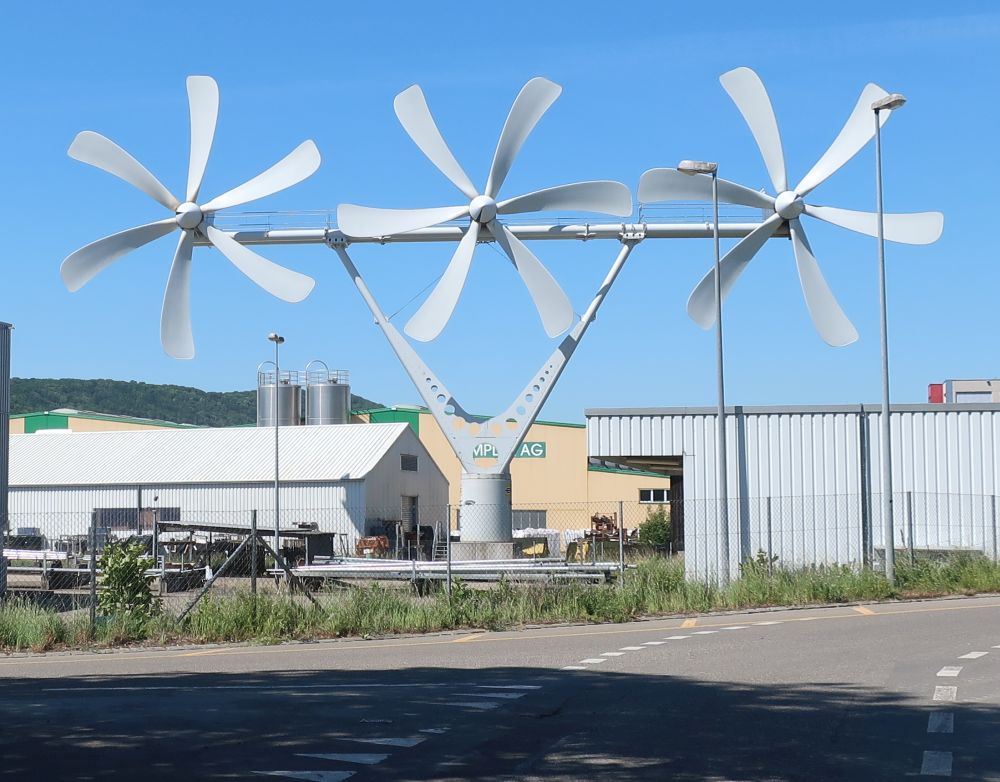
That’s the Rhein River, just behind that line of trees. And Germany’s Black Forest, the hills just behind that.

A renaissance man for the twenty-first century!
That’s the Rhein River, just behind that line of trees. And Germany’s Black Forest, the hills just behind that.
Continuing the series, here’s a shot looking down the long street towards the main medival gate,
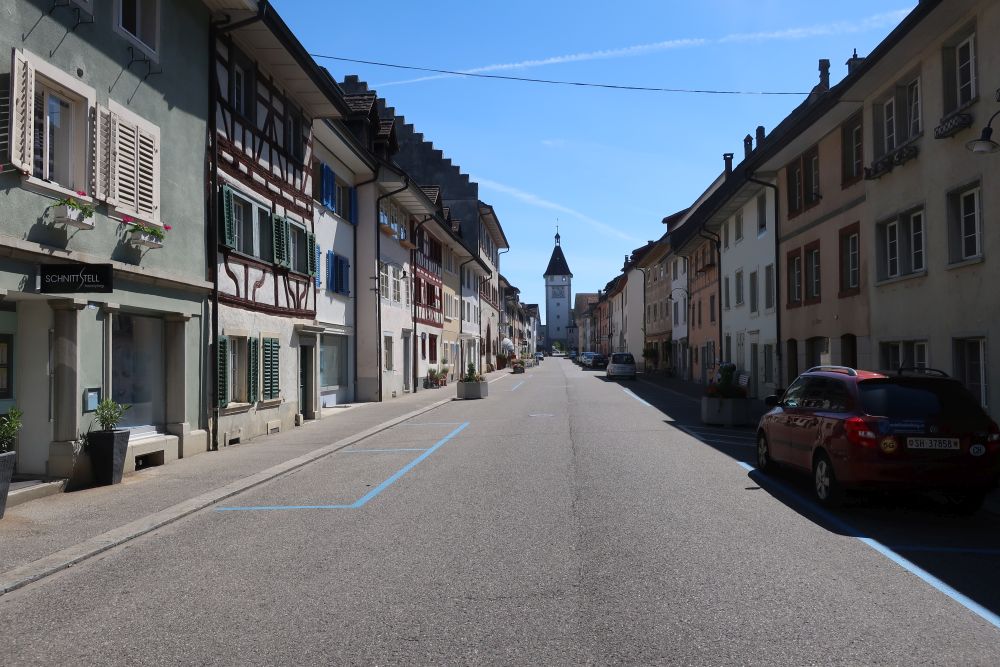
The timing and location of the sun were almost perfect, as the shadow very neatly runs exactly down the line of buildings!
It’s not Winterthur – sorry about that – but one of the dozens and dozens of small villages that surround Winterthur and whose names are too numerous to mention: Elsau, Seuzach, Rätterchen . . . I’ve been to all of them so many times that their names and their sights blend into homogenous obscurity. Some of them were named in a time when people had no education – such as the Swiss Dorf named, appropriately enough, Dorf . And some of them dating back eons, when Switzerland was home to enclaves of Neanderthal humans with their massive jaws and presumably unique language, and the names of the villages are linguistic remnants of that pre-paleolithic time gone by – such as the village named Thaa.
This one is a bit different:
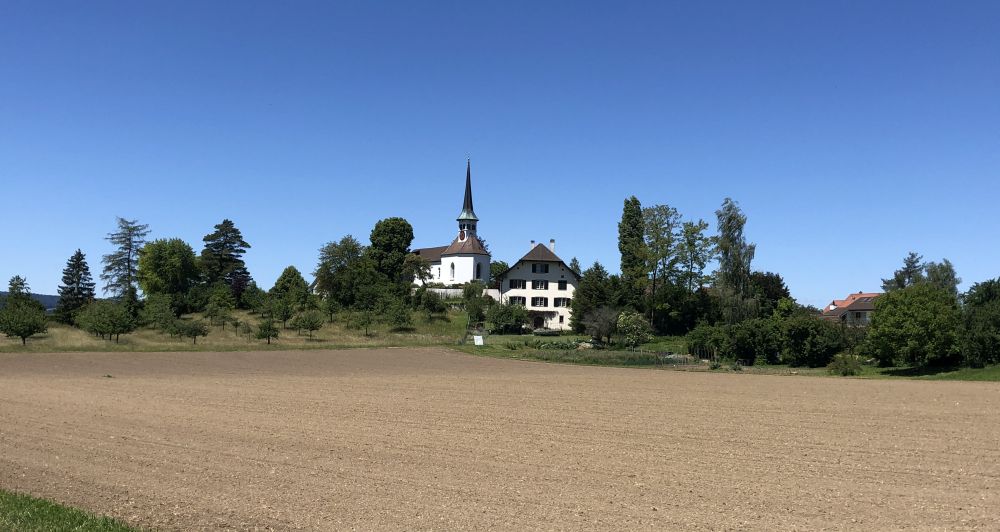
It’s different because the clockface on the church is red, not blue. I have a theory – unconfirmed until now – that the overwhelming majority of churches in North Central Switzerland were outfitted with new – and blue – clockfaces at about the same time. Clockfaces on churches that are demonstrably older are universally orange-red in color.
This is what I did to one of my snaps of a stone column adorning the window of a house in the Alsatian village of Colmar:
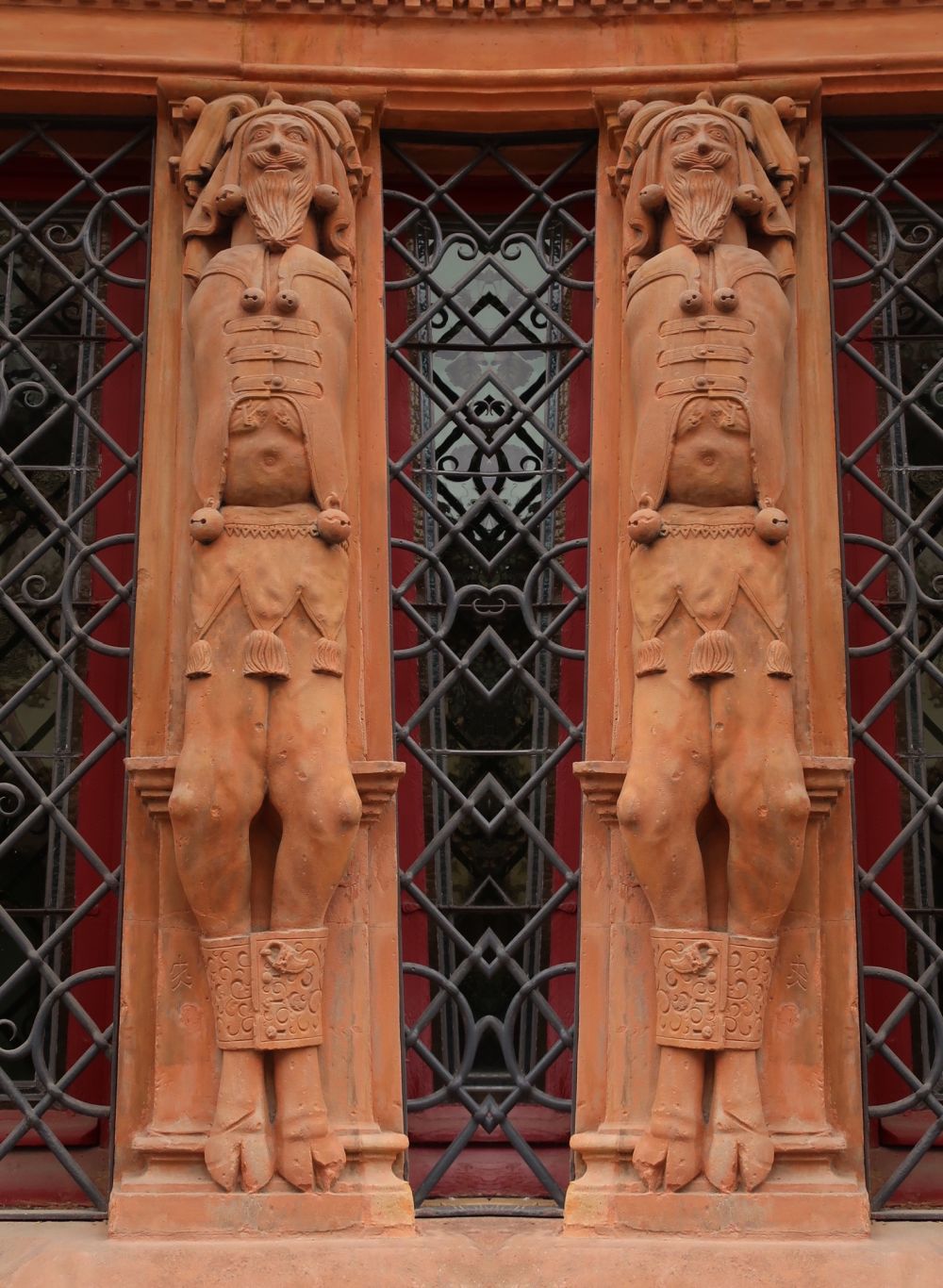
Just for the record: the photos I post are never in any way retouched or enhanced or changed – except for cropping.
But in this series of blog posts entitled FAKE I publish some rather interesting images I have enhanced in some way.
Continuing the series, a wonderful fountain next to a pond in front of a mighty California Giant Sequoia tree,
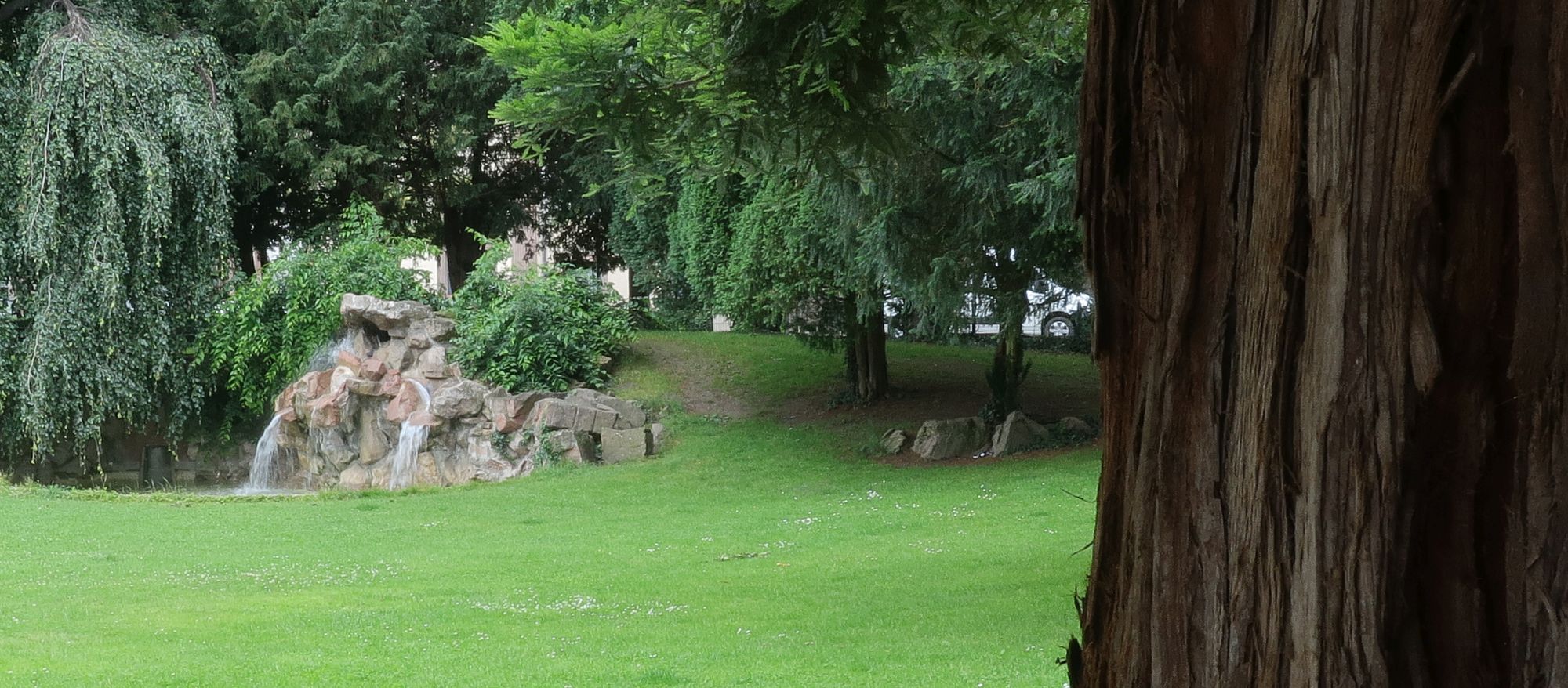
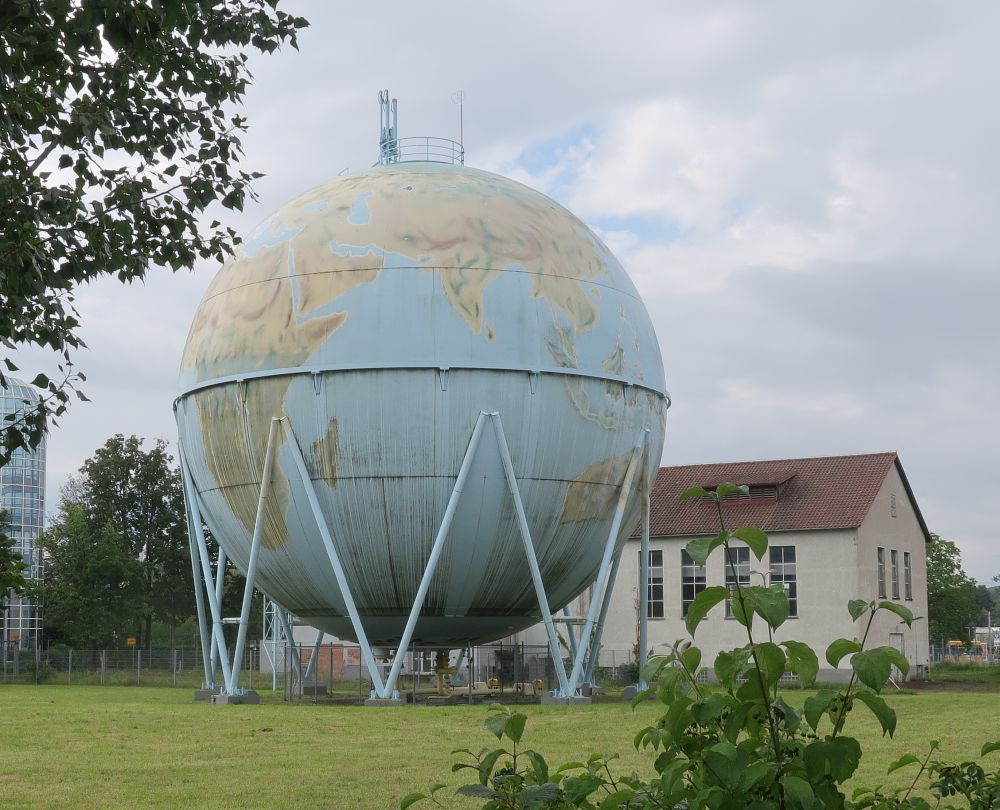
I spotted this in the Southern German town of Stuttgart-Vaihingen,
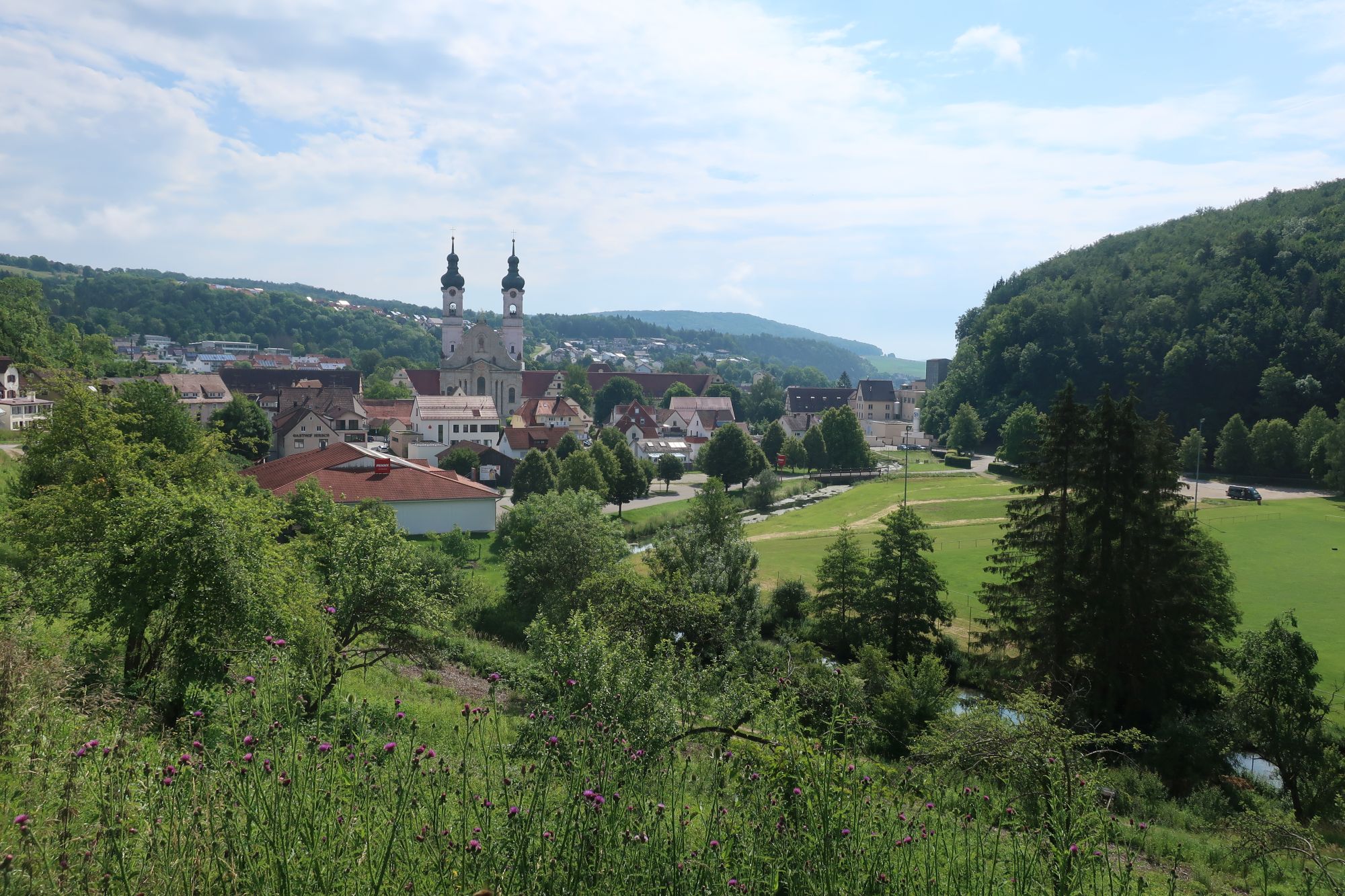
Yes, that’s Zwiefalten – not Zweifalten – and you can see some earlier snaps of this mind-blowing Southern German monastery that I took here. In fact, even the insects surrounding this place must soak up the goodness, because on a recent trip I spotted an insect almost as big as a man’s head. I also spotted a fish in a small brook that was almost the size of an American alligator.
If you step inside, there is a very real risk your brain will explode. And as you can see from the outside, the stunning sights are hardly less interesting:

As impressive a snap as I thought I could take of the magnificent Zwiefalten Monastery nestled deep in the South German Baroque village of the same name:
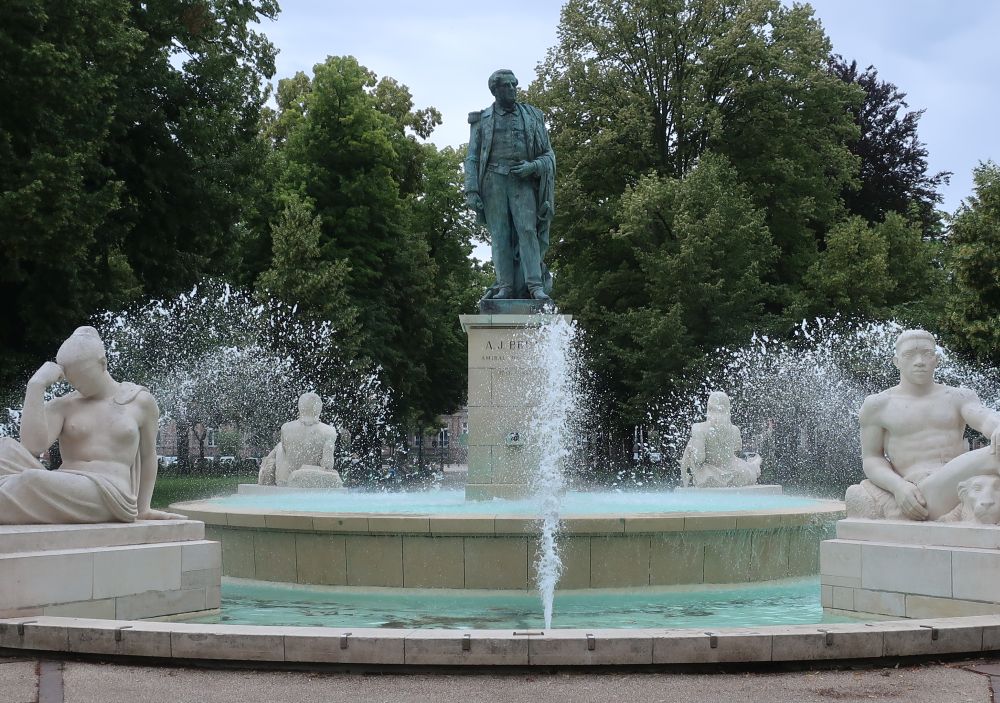
Continuing the series, the Parc has a nice fountain:
Continuing the series . . . It’s amazing – I’ve lived in Europe for over 20 years, never really paying much attention to whether you can find the mighty Califormia Giant Sequoia trees here or not – but, once I spotted one, it seems I am spotting them all over the place!
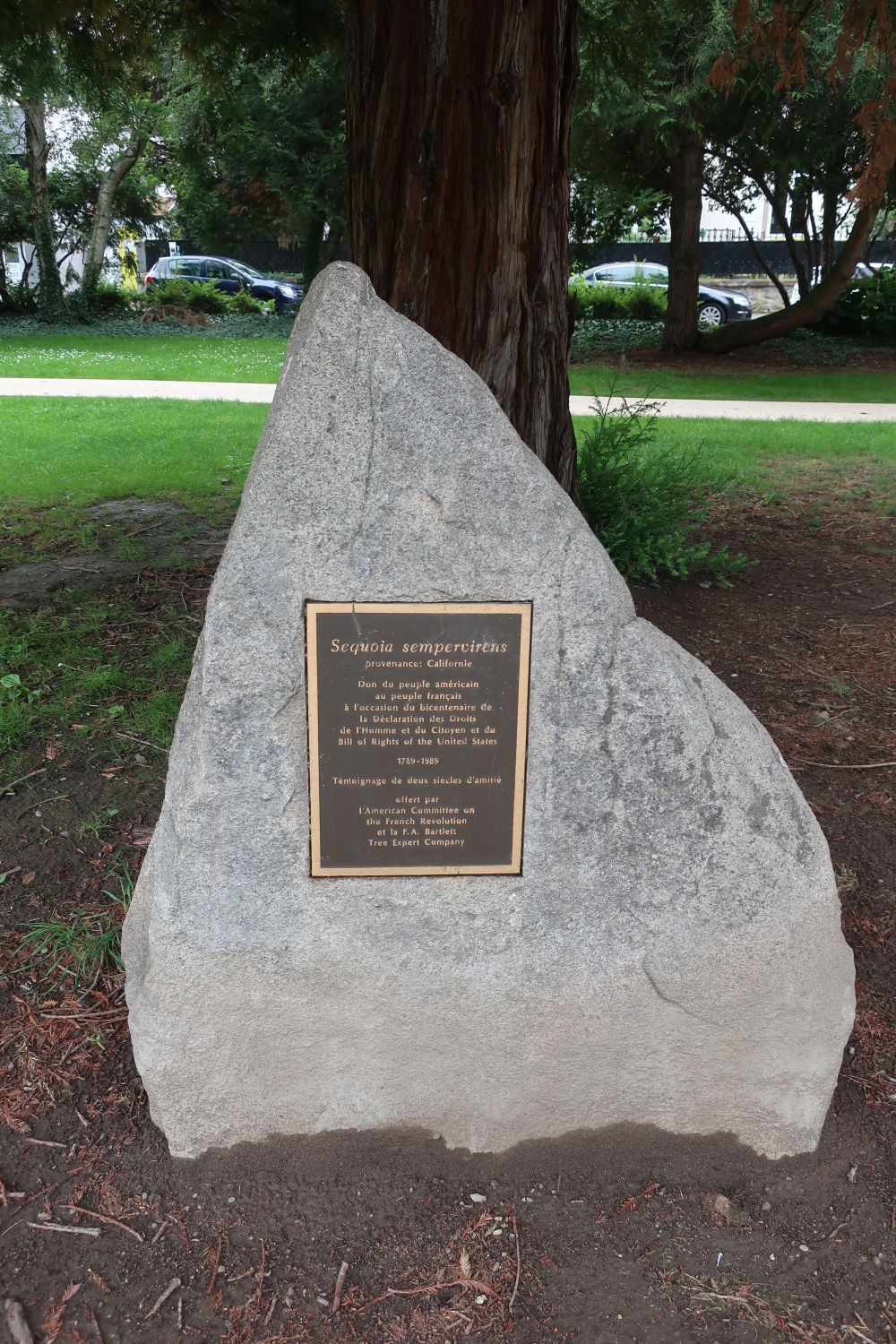
Here is an example of a Giant Sequoia tree I spotted in the Parc du Champ de Mars in Colmar, in Eastern France:

There is a small plaque beneath this behemoth, which reads
Sequoia Sempervirens
provenance: California
Don du peuple americain
au peuple francais,
a l’occasion de bi-centairre de
la Declaration des Droits de l’Homme et du Citoyen et du
Bill of Rights of the United States
1789-1989
Colmar is an interesting city on the border between France and Germany. As you can see from this snap – and indeed, as you can see from just about anywhere in Colmar – there was significant damage from centuries of war that leaves ancient buildings standing next to new ones:

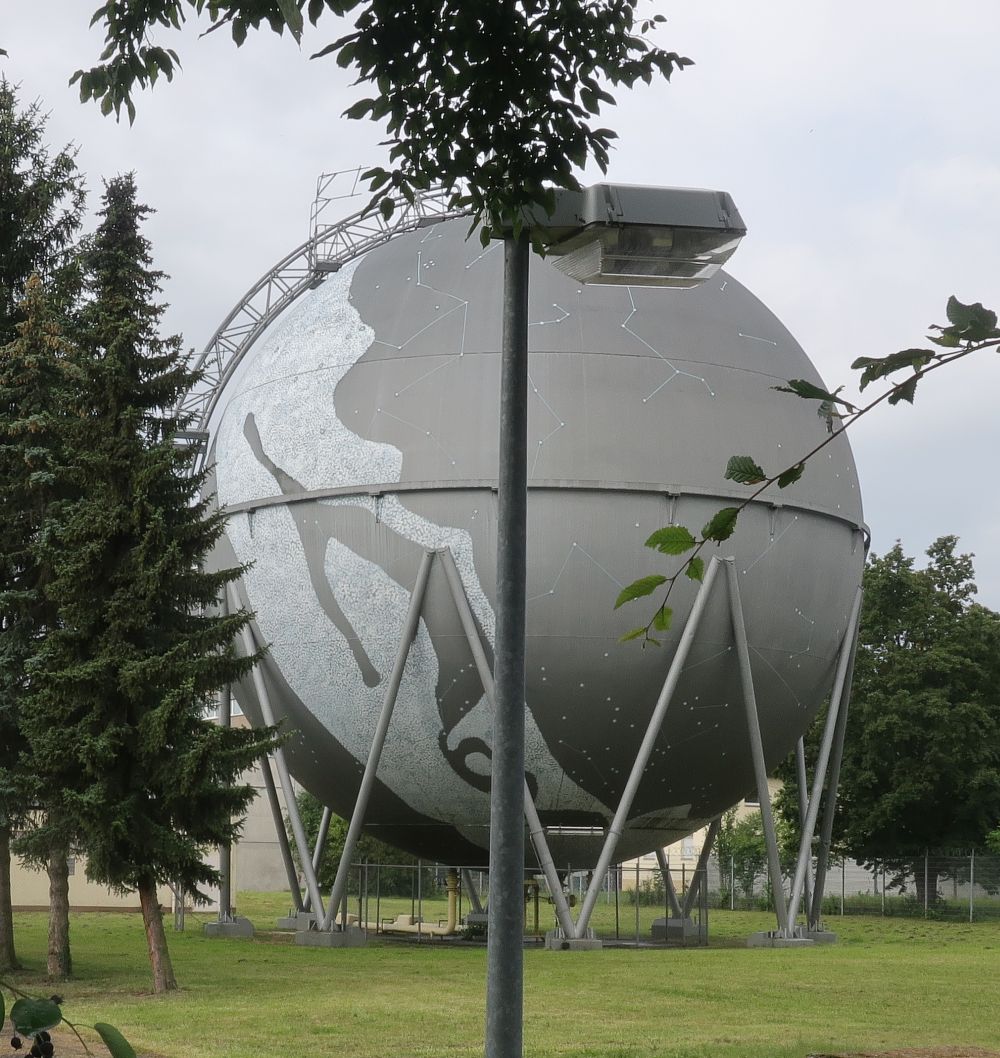
Just like it’s brother the Globe, I spotted this in the Southern German village of Stuttgart-Vaihingen,
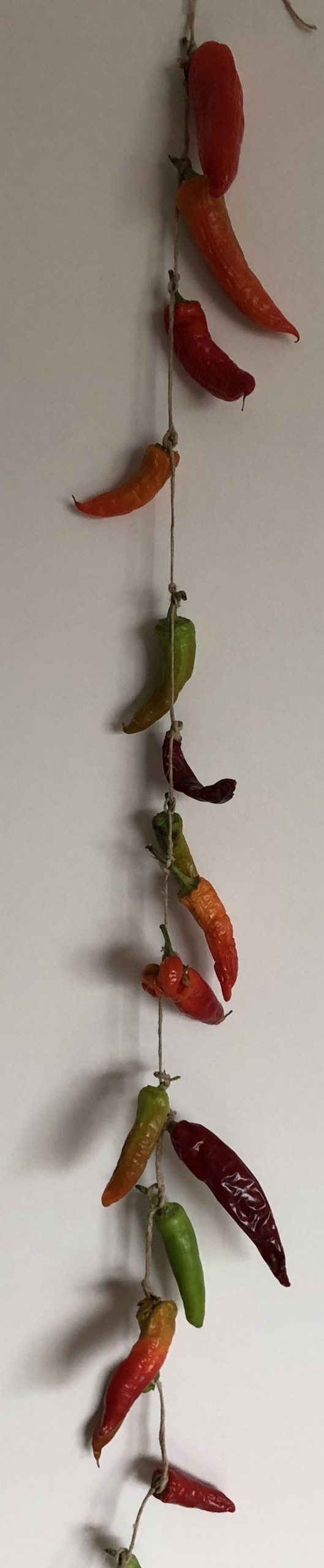
Idea from a friend of mine in the UK: chicken breast (Poulet) that I butterflied and pounded even thinner, wrapped around a tiny piece of sausage (Nürnberger Bratwurst) and including thin slices of cheese (Emmenthaler Käse) in the roll (Roulade), finally wrapped with slices of ham (Vorderschinken). I then wrapped it very tightly in aluminum foil, and baked at 220 C for 30 minutes:

The amazing thing is that, after baking, it retains it shape very firmly, almost like the more well-known Fleischkäse.
Well, a statue of one anyway, in a rather quiet, unfrequented area of Stuttgart:

Not sure how the pro’s do it, but this seems like a common sense way to me:
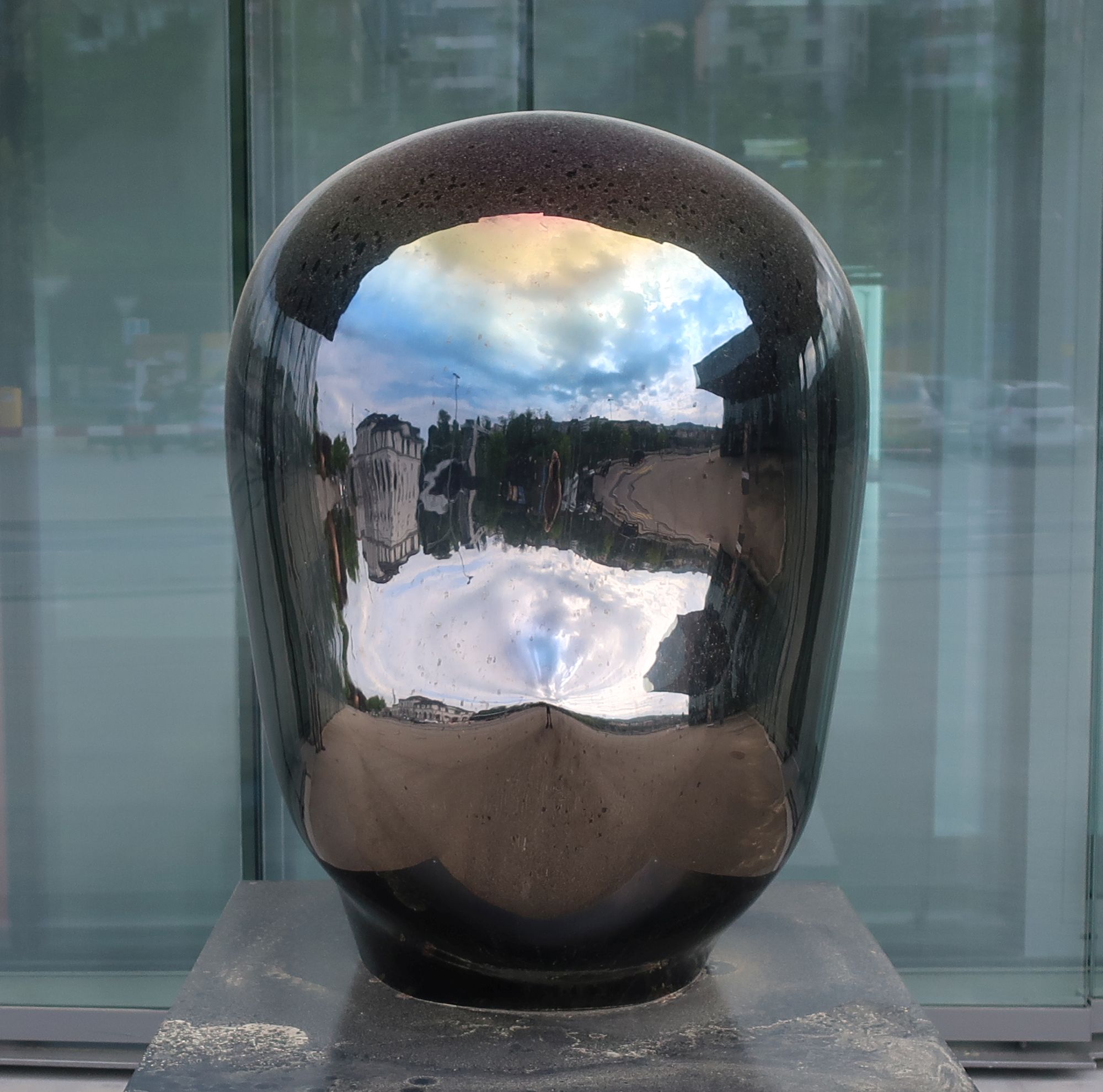
I call it the Gort head, because it reminds me of the head of the famous robot, Gort. What the artist calls it, I don’t know.
An artistic a snap as I thought I could take of the Gort-Head, in the north central Swiss village near Romanshorn,
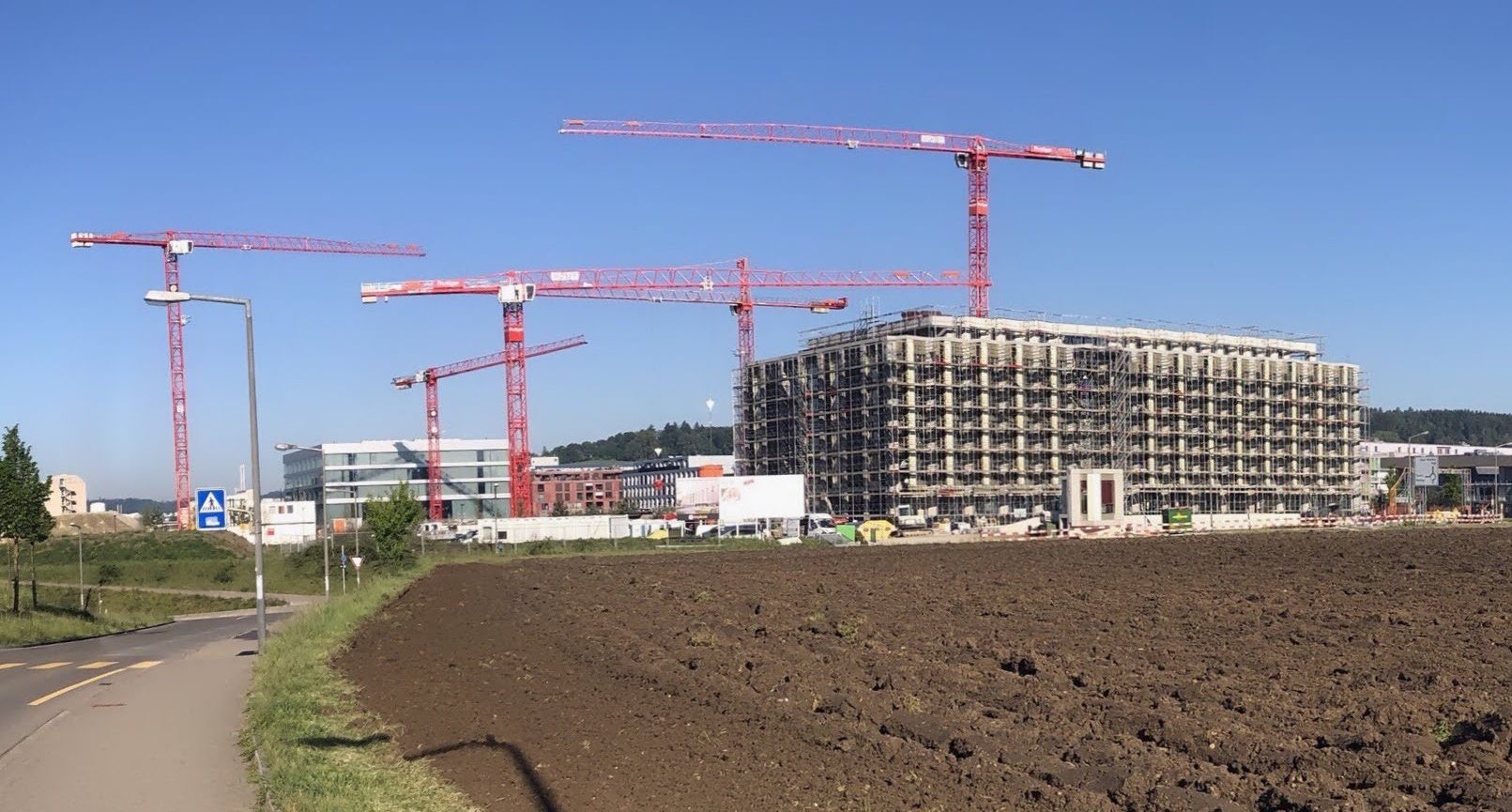
I live in an area that has been surrounded by dozens if not hundreds of acres of open fields.
Today there is nary a field that does not have a large construction project, as this snap shows:
As artistic a snap I thought I could take of an ivy-covered lamppost in Zürich,
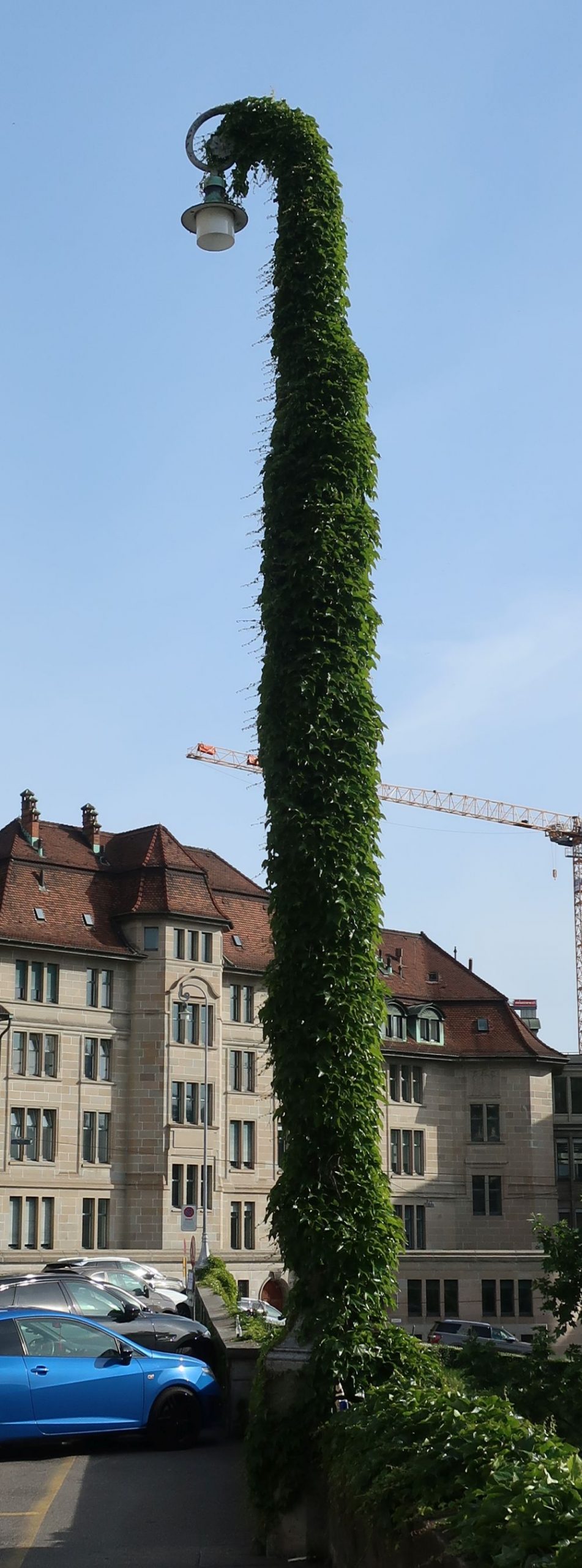
If you look closely, you’ll see the new shoots all growing to one side!
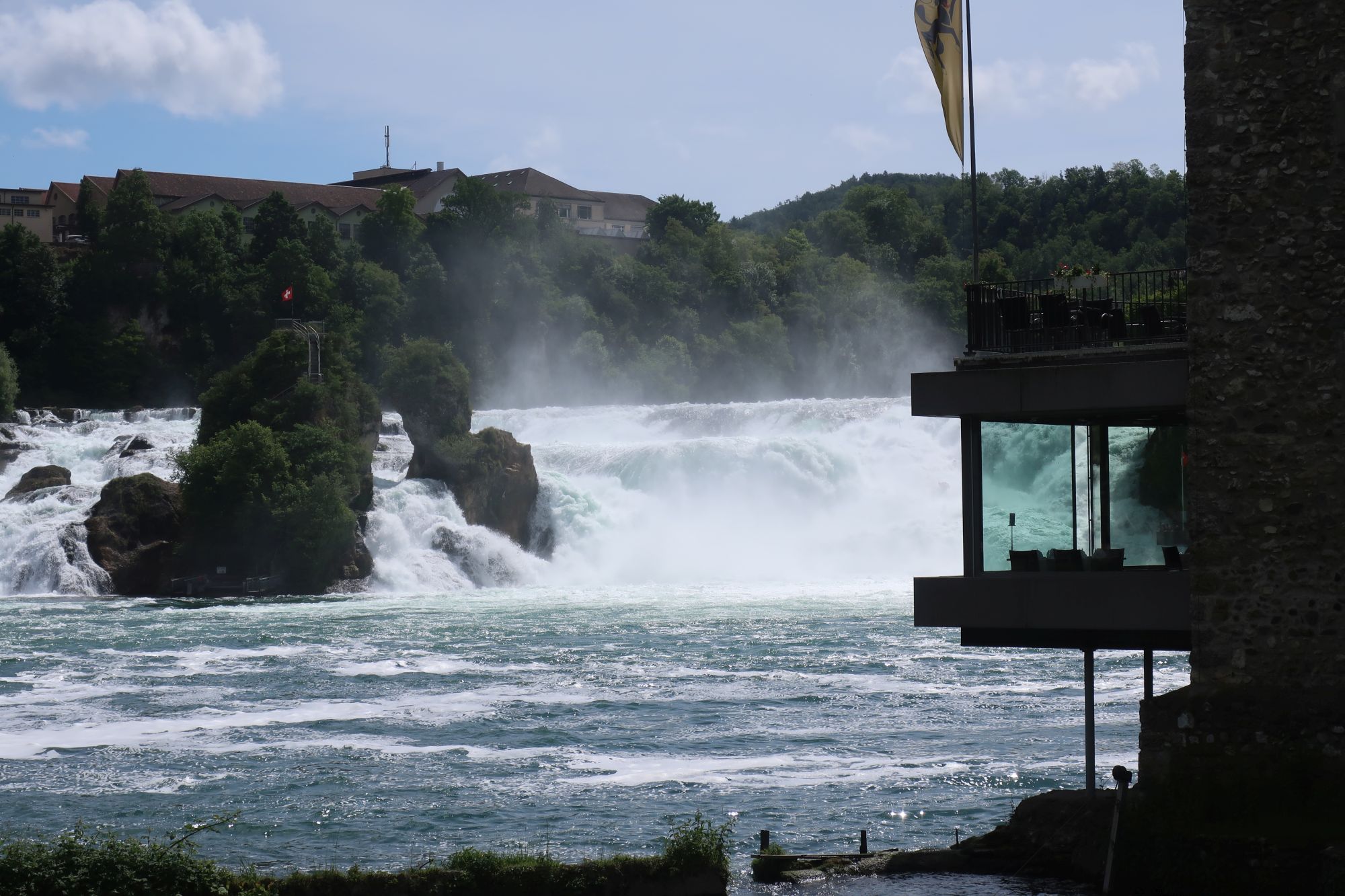
I don’t know if it is or it isn’t – by volume? By height? By number of fish killed as they spill over and are crushed in the turbulence?
But regardless it is something nice to look at!
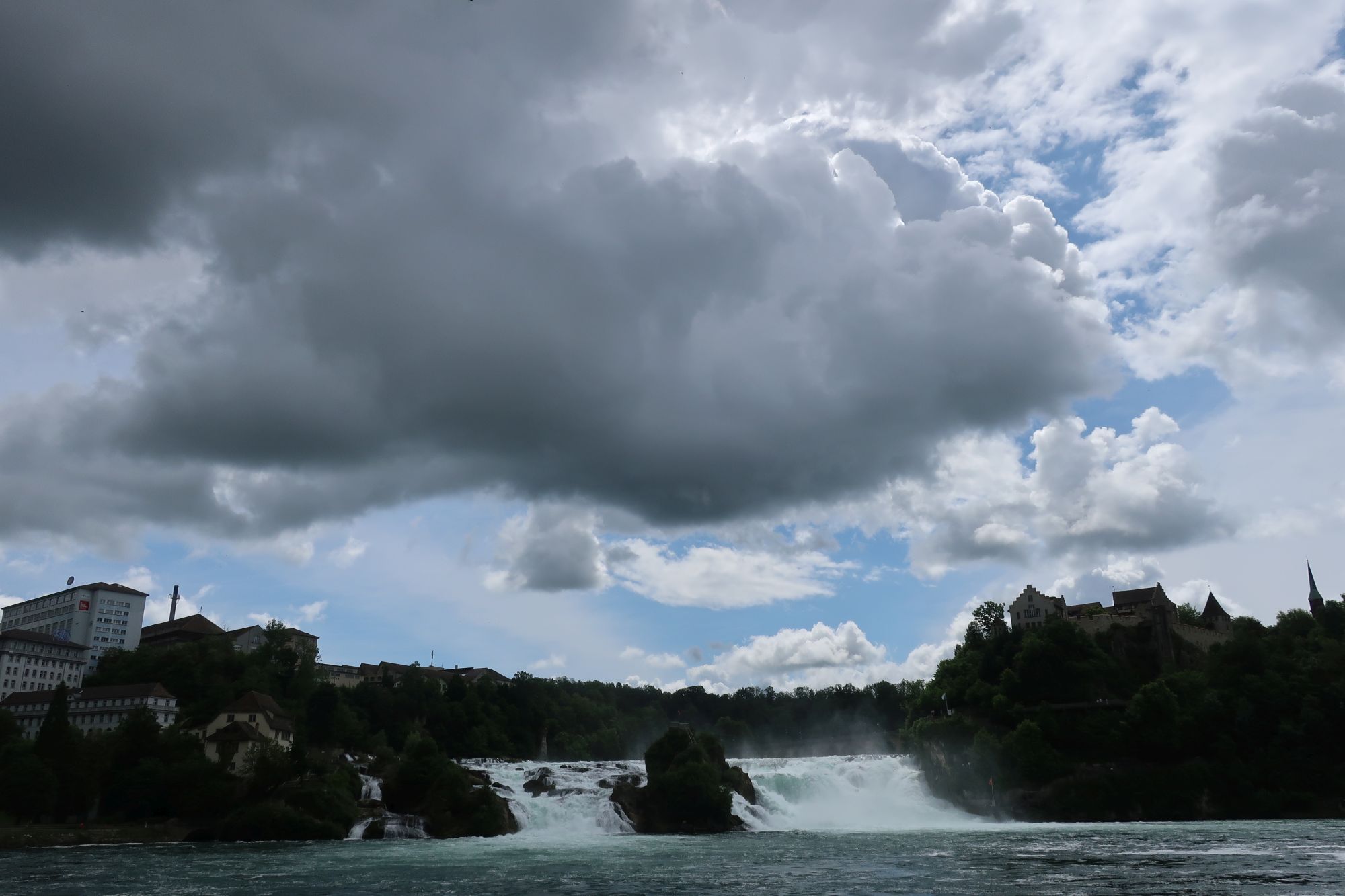
As artistic a snap as I thought I could take of some violent, angry storm clouds threatening Europe’s largest waterfall,
Continuing the series, I spotted this sundial at exactly 10.58 AM in the medieval walled village of Neuenkirch,

The date listed as 1863, but I wonder if the current sundial really dates back to that time?
Although there are probably other countrie in Germany that have more, nevertheless Switzerland has its fair share. Here is a snap of the medeival walled village of Neuenkirch, just a few miles from where I live:
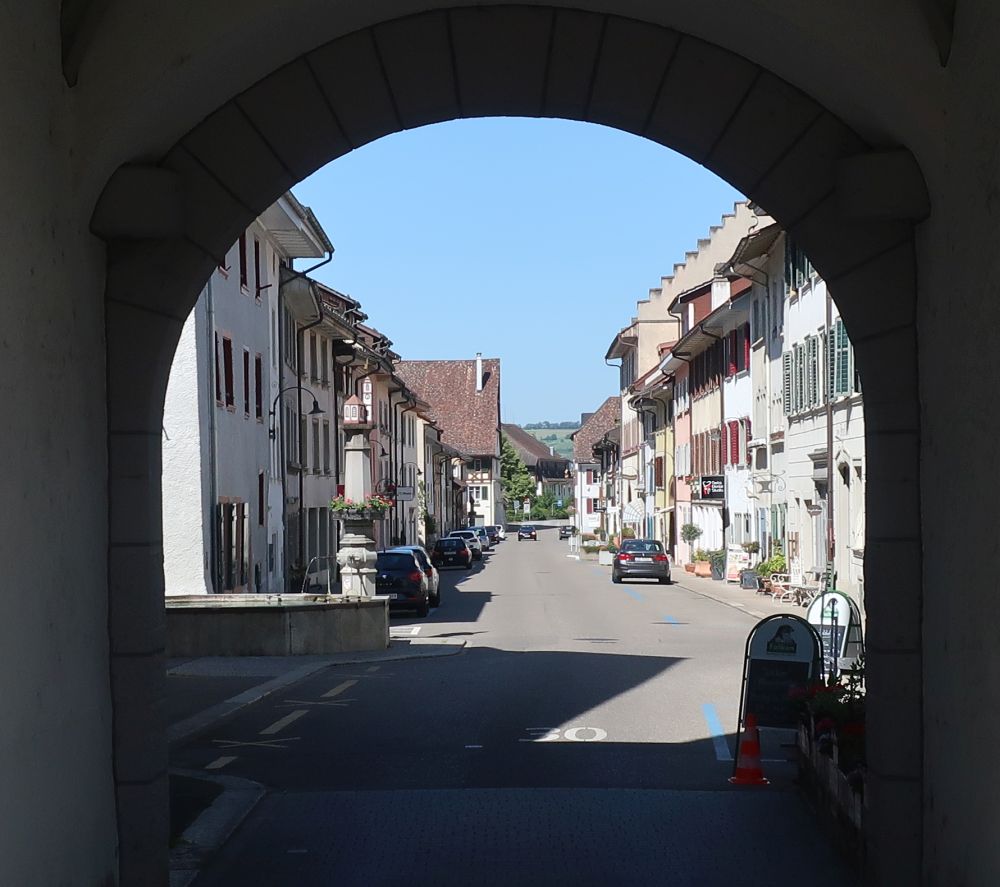
This is what it looks like when you peer through one of the gates to the village, and here is a plaque that shows the gate was built about a generation before Christopher Columbus ever set out for America:

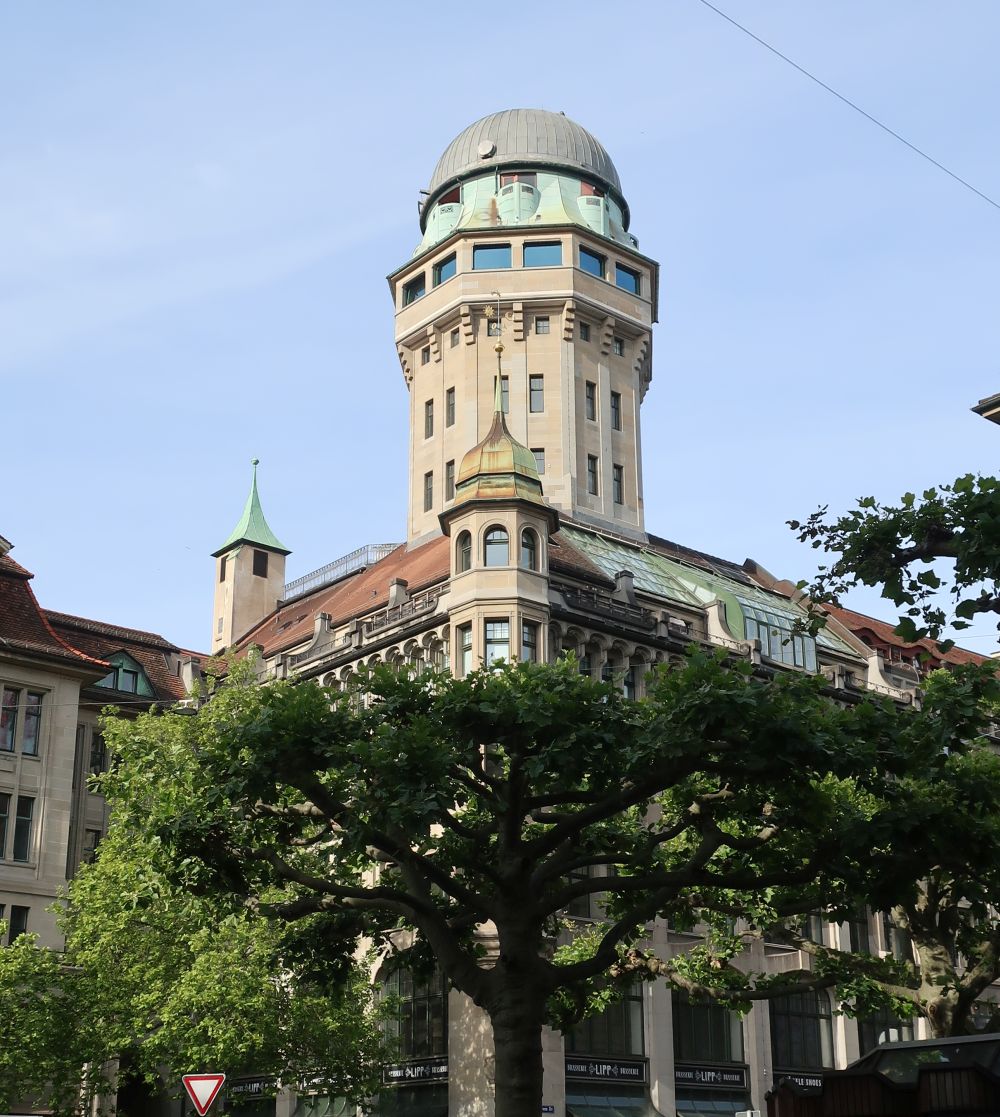
As an artistic a shot as I thought I could get of this landmark building in downtown Zürich, just a few steps away from Bahnhofstrasse,
I see this view every morning on my daily 15 km Nordic Walk through the forests of north central Switzerland,
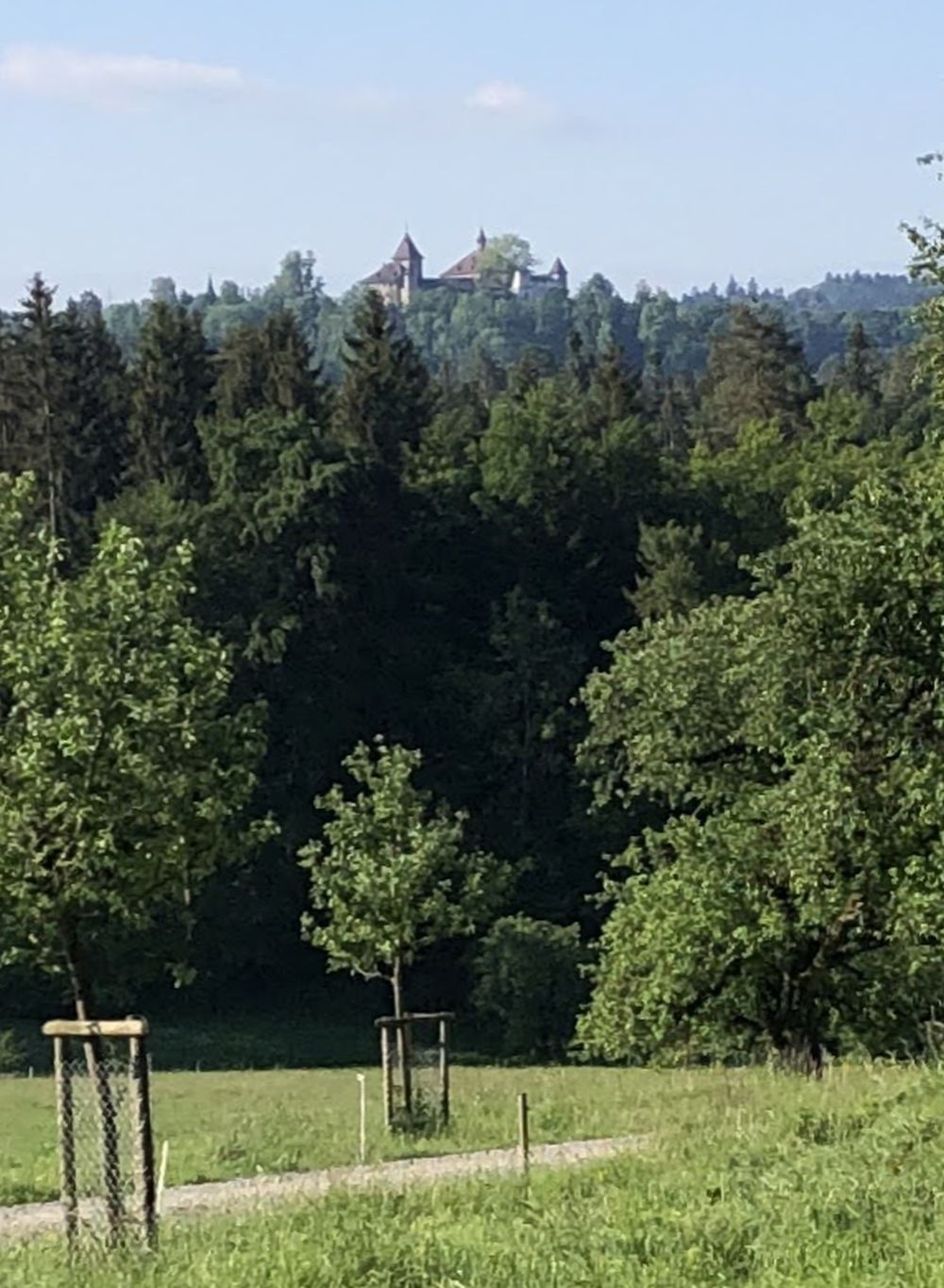
It harkens back to a time when life was influenced strongly by famous family dynasty, such as the Hapsburgs, Kyburzs, and others. These families may have faded into history, but we are every much as bit influenced and controlled by other famous family dynasties today, such as the Kochs and Waltons.
Be careful – once you see this incredible sight, you will never be able to unsee it!