Amazing Ants

There is something quite frustrating about some local South Indian farmers I’ve met.

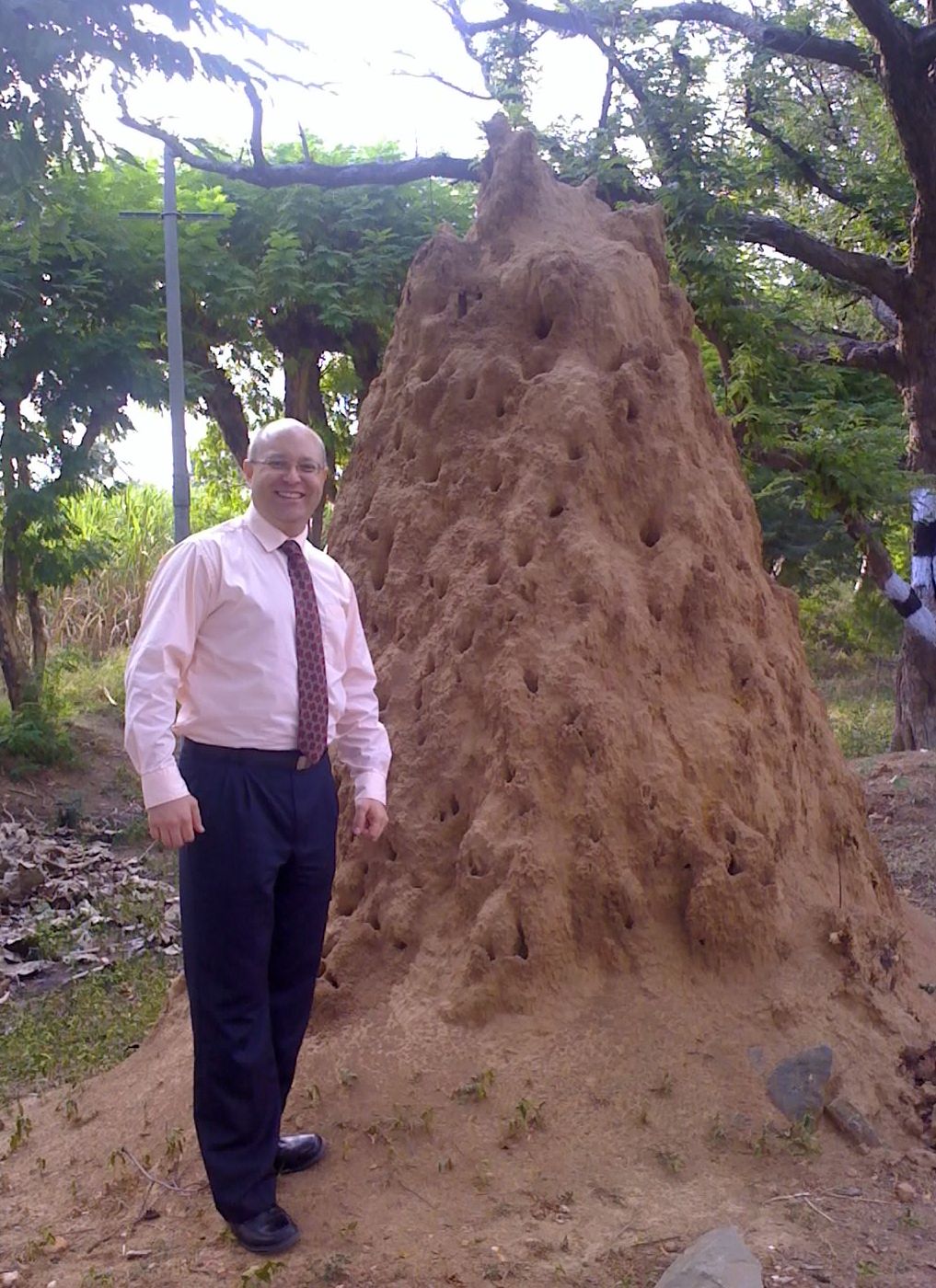
But first, this is the largest ant mound I’ve seen in India (or anywhere else for that matter):

amazing-ant

I spotted this one just outside of Tiruchappalli (or more commonly called Trichy, as the locals call it). If you don’t know it, Trichy is famous for its white rice – and the locals say the taste is so good because of the special properties of the soil.  So, I guess it would only be natural that the ants enjoy this great soil and build super-mounds like this one!

But what’s so frustrating about some local South Indian farmers?  I could never find any farmers (or locals for that matter) who referred to these as “ant mounds” or “termite mounds.”  If you ask the locals, they will always tell you they are “snake houses.”  OK, probably they make nice homes for snakes – I don’t dispute that.  But it always makes me wonder if they know who the builder was, not just some of the tenants!

You can see my other Amazing Ants photographs here:

A German bunker in France?

While driving through Lorraine, France, I discovered many, many bunkers that looked identical, like this:

luneville-bunker-small

But as you may know, Lorraine is quite far from the German border and the famous Maginot Line, which was a series of bunkers to defend France against the German army in World War II.

So what are these bunkers, and why were they built?

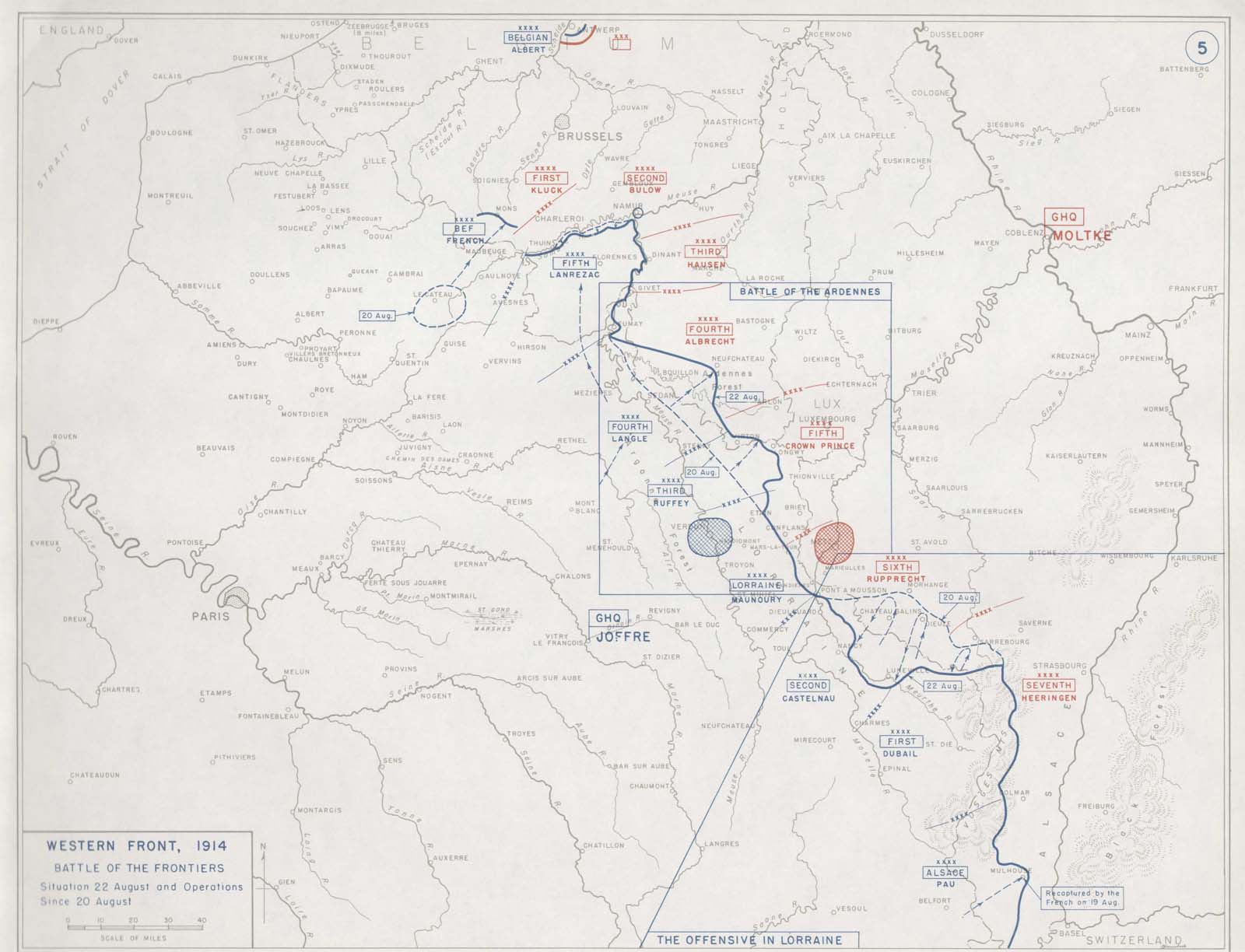
After a bit of Internet research, I discovered that this area in Lorraine was the previous boundary between France and Germany, dating back the FIRST world war, World War I.  In fact, France invaded Germany here, and the Germans built a series of fortifications to defend against the French.  The previous link shows a terrific map of the border:
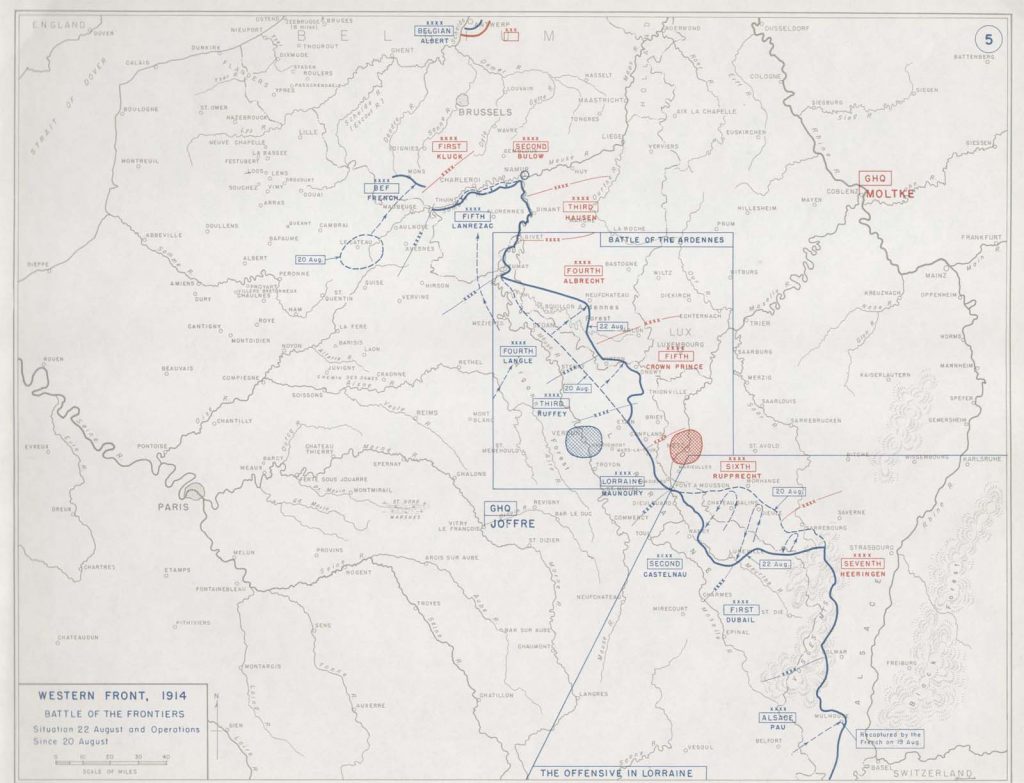
battle-of-lorraine

On the one hand, it is too bad that historical artifacts like the ones I saw are not labelled, so visitors can learn why they are there.  But on the other hand, with the help of the Internet a little “amateur archeology” is fun . . . and I didn’t have to dig a test pit or extend the trench.

(PS. There are still some interesting mysteries. For example, why were all the bunkers identical?  Probably to make building them fast and easy – but did the German army have a “bunker kit” that distributed the materials to the various construction sites? Or, were the bunkers all built by the same team?)


 

Amazing Ants

ken-ant-1

Well, technically termites, not ants – and despite having lived a few years in Southern India, I still never learned much about the various species – but you can generally recognize them by the shape of their mounds.  I discovered this one somewhere between Bangalore and Shravanabelagola.

I remember reading somewhere that these mounds grow on average as little as 1 cm per year – and if that’s true, these are very old mounds.

You can see my other Amazing Ants photographs here:

MyPost24: The Swiss innovation hasn’t stopped yet!

For more than I year I’ve been a big fan and user of the Swiss postal system’s electronic portal for snail mail.  Any snail mail you get is not delivered to you directly, but instead it is re-routed to a special post office where it is opened and scanned.  You are notified about any new snail mail via email – and you can look at your mail, delete it, or chose to have it snail mailed to you or anyone else.

mypost24

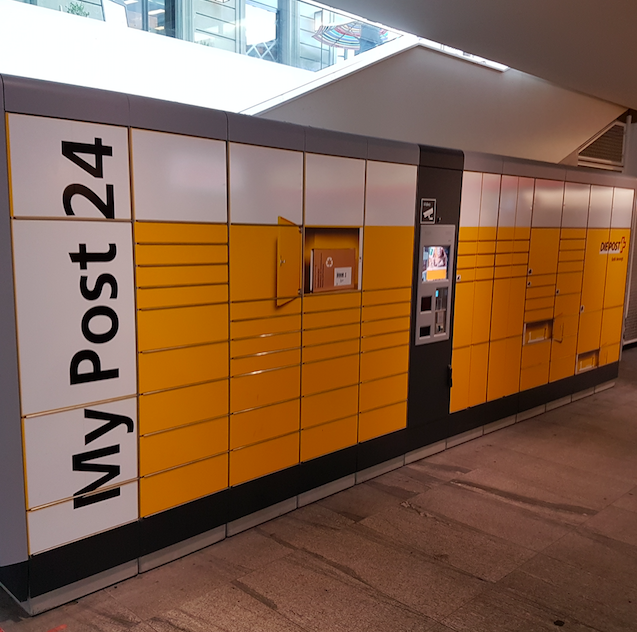
Just when you think it can’t get any more innovative: MyPost24!  This is an automated post office.  It is a standalone collection of lockers – and with this system, you can receive packages or snail mail, or you can send packages or snail mail.

I can imagine they have systems like this in other countries . . . but it is wonderful to see how the Swiss are among the first adopters of new and innovative technologies!

Test Tower

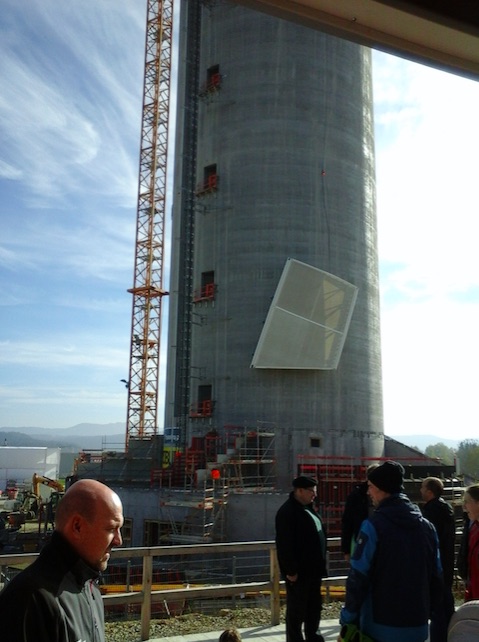
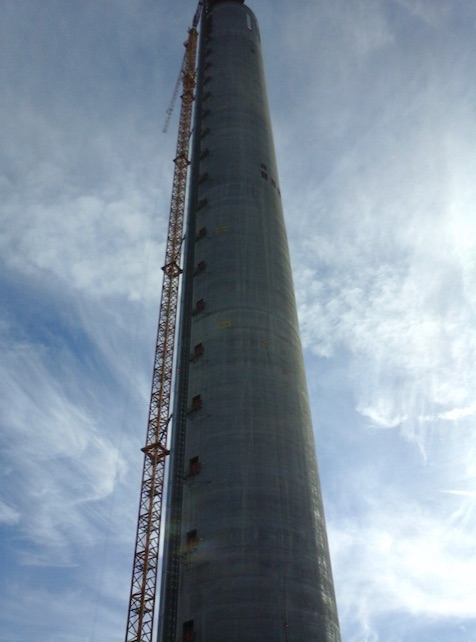
The Thyssen Krupp test tower is just amazing.

TKTurm

TKTurm2

The importance of elevators takes on a whole new meaning when you read the blurb from Thyssen Krupp’s website,

Over 70 percent of the world’s population will live in cities by 2050. . . . A report from the McKinsey Global Institute estimates that cities will need to construct floor space equivalent to 85 percent of all of today’s residential and commercial building stock by 2025, making this one of the greatest challenges of our time.

Hidden canals #2: Canal du Rhône au Rhin

Here’s why I find canals so fascinating: they were massive, transformational public works projects, still visible today, but whose need and impact to society have all but left our cultural awareness.

And here’s why I find hidden canals so fascinating: out-of-sight, out-of-mind. Dismantling sections of a canal, or covering them over, or filling them in, is the the first step in their disappearance from public knowledge and their relegation to archeology. Ask anyone about a hidden canal, and they will tell you they vaguely remember something but usually can’t quite put their finger on what they remember.

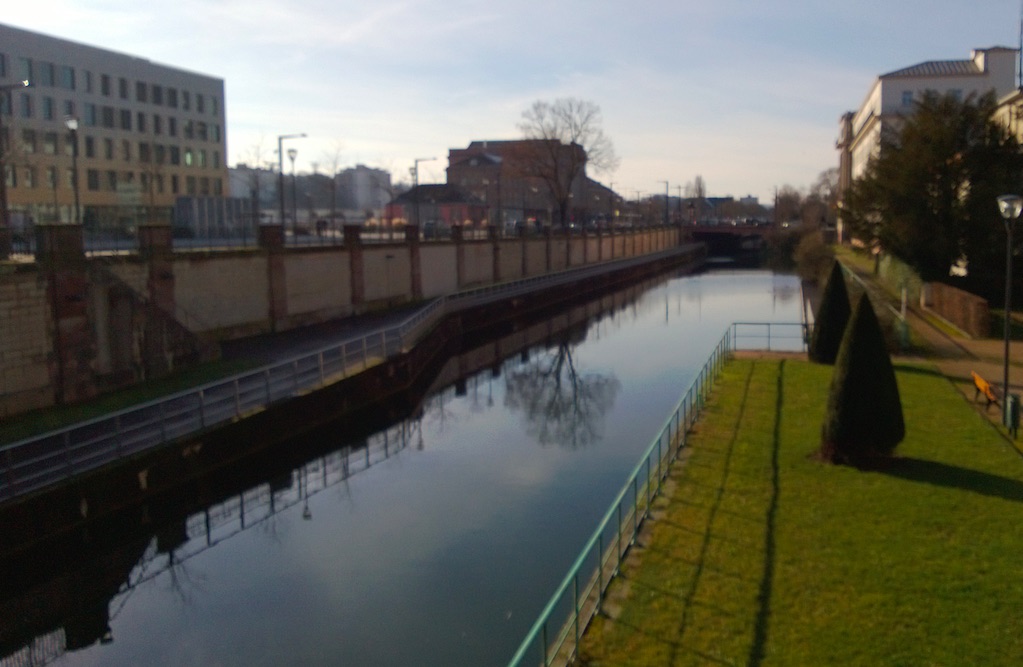
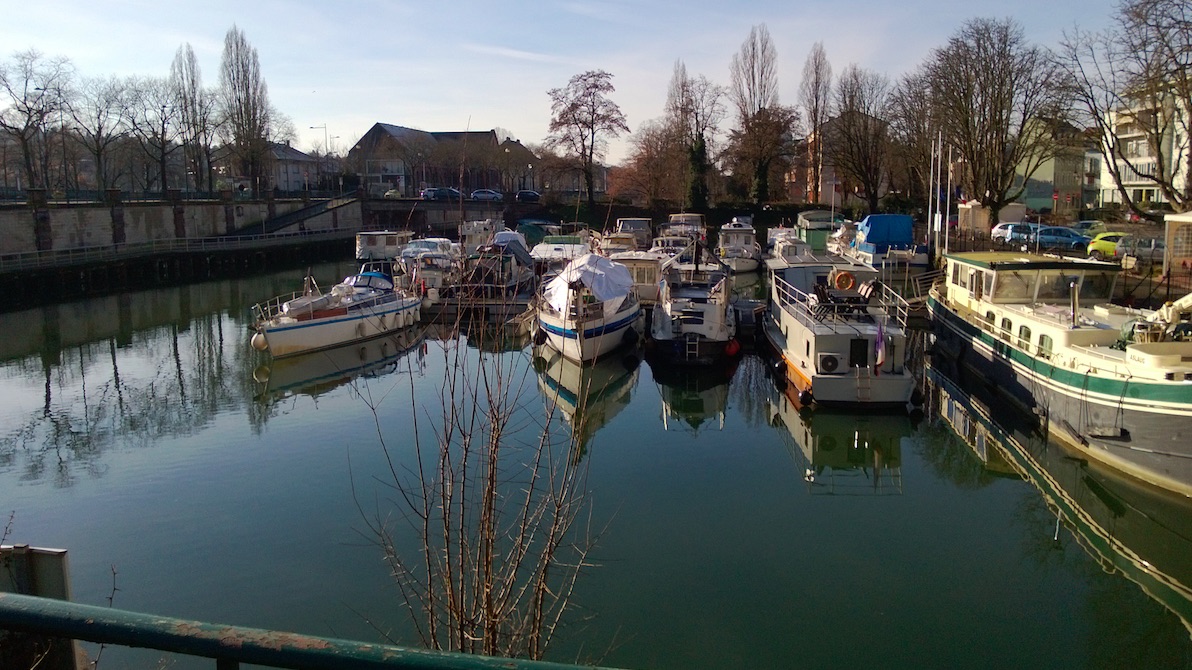
Continuing the series, this is a section of the Canal du Rhône au Rhin in village of Mulhouse, in the eastern part of France:

Mulhouse3

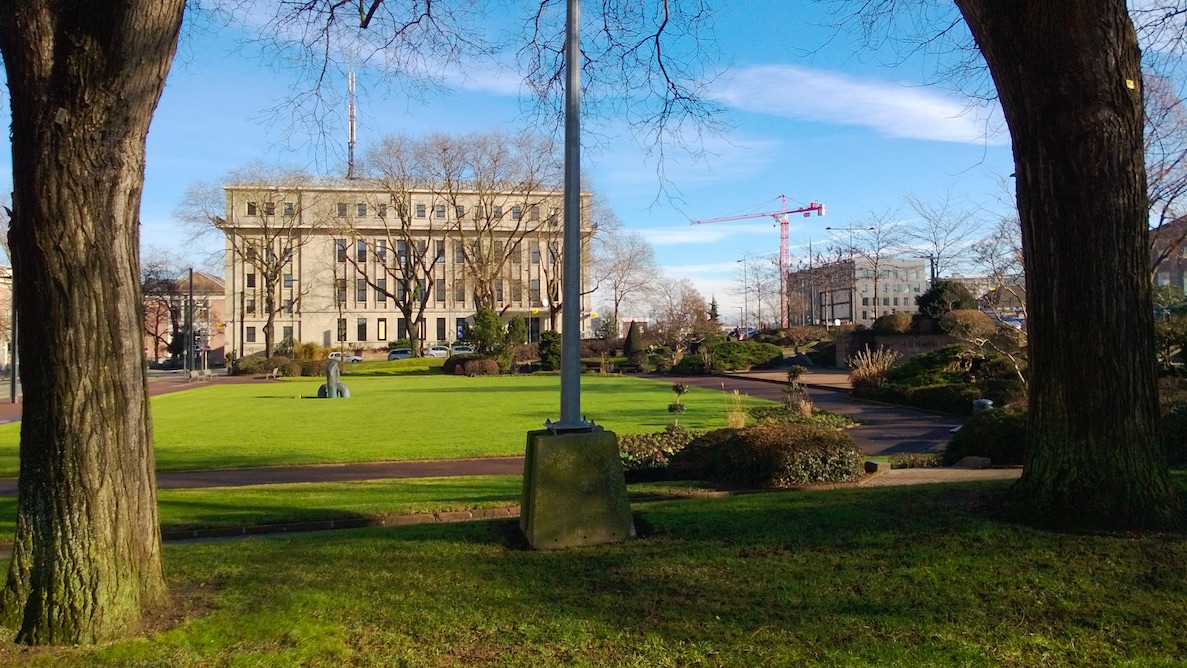
And here is the bit that is now hidden, covered over by a park and a busstop:

Mulhouse1

Just to prove a canal is truly hidden here, I simply turn 180-degrees to get this view:

Mulhouse2

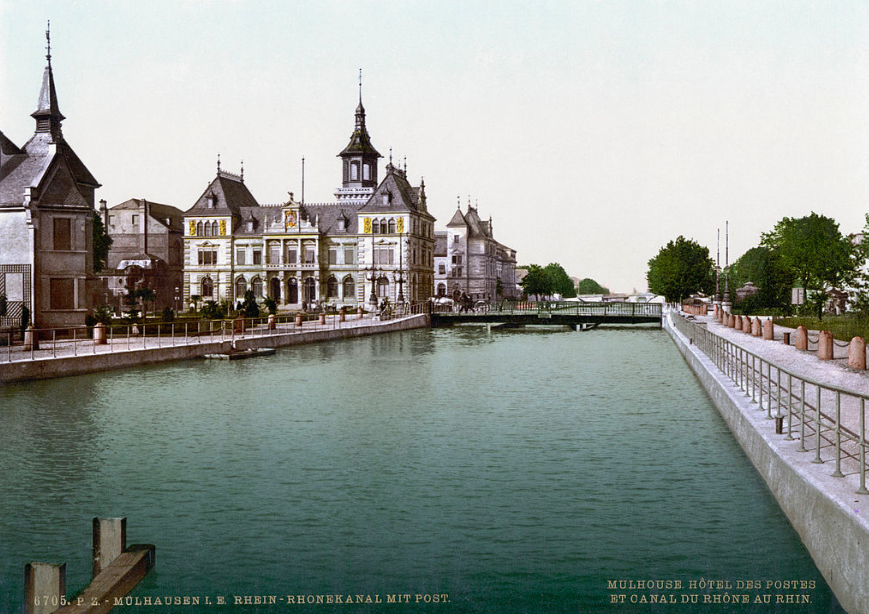
And here is a historical photograph. Next time I get to Mulhouse I’ll have a look if I can find any of these old buildings. But you’ll see immediately from this picture how prominently this canal was incorporated into the landscape architecture : the city was proud the canal ran through it, and the integration (both landscape and cultural) was tight.

Mulhouse5

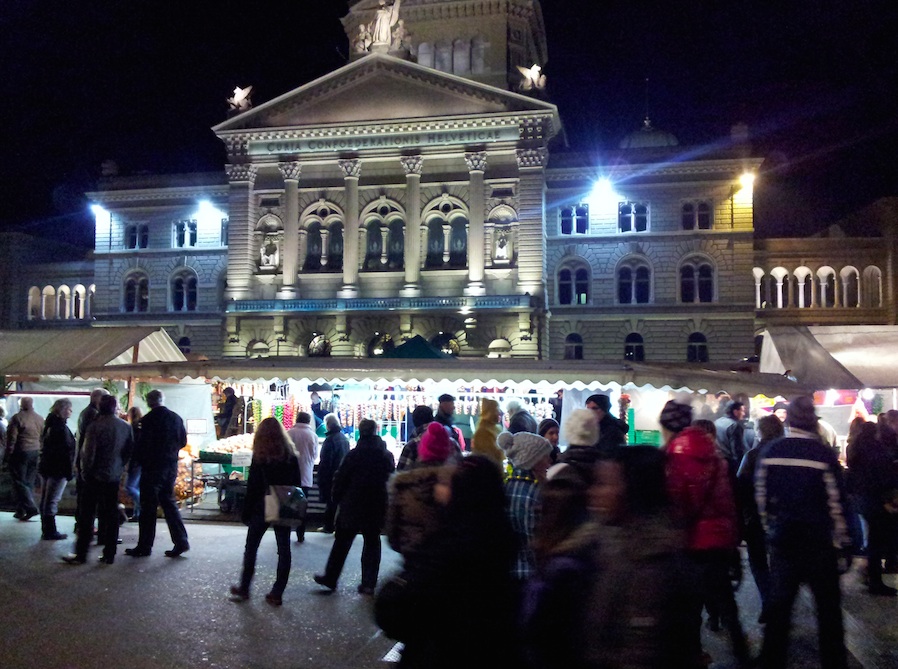
Zibelemärit: the most strange and unusual market you’ll ever see!

Zwiebelmärit

The Zibilemärit is held on the fourth Monday of every November. It is a huge, world-class, one-day-only street market in the UNESCO city of Bern, Switzerland.  What is so unusual about the market: it opens at 3:00 AM, by 4:00 AM the market is already full of many thousands of visitors, transported here from all over Switzerland by special trains that the Swiss Federal Railways schedule.

And aside from beer and wine, the only product that is sold at the dozens and dozens of stands and vendors: onions and garlic.  The best part is all the hot food you can eat: garlic soup, onion soup, garlic bread, onion cookies, you-name-it-with-garlic-and-onion!

The history of the market dates back over 650 years: after a fire destroyed much of Bern, the villagers in the neighboring village of Freibourg volunteered to help rebuild the city. In exchange for this kindness, the Fribourgers were allowed to sell their goods in Bern, free of taxes.

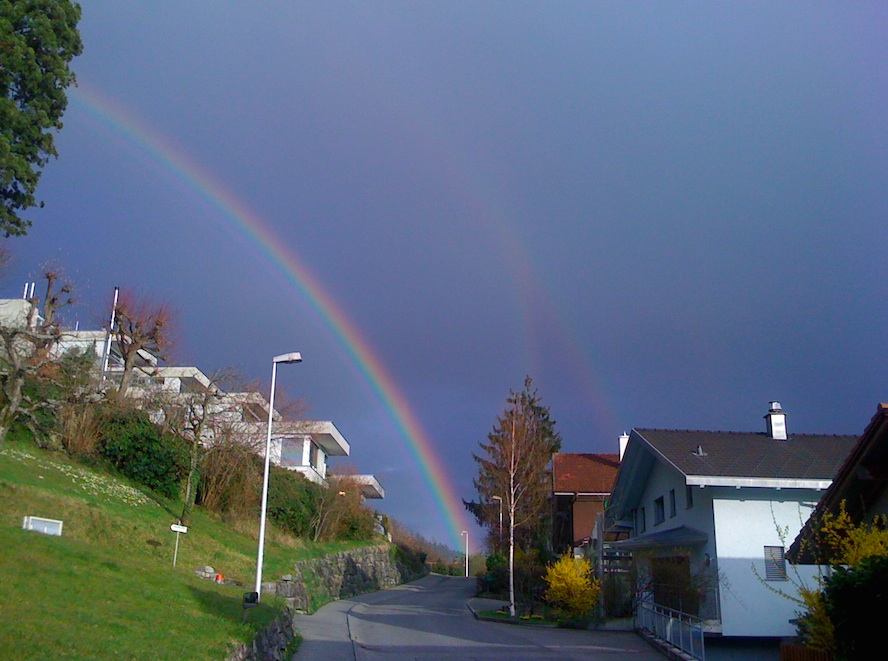
When rainbows collide

Rainbow


Here’s something you don’t see every day: almost every rainbow attribute in just one photograph, taken just outside my apartment on Lake Thun, in Switzerland. Clearly visible are a primary rainbow, a secondary rainbow, supernumerary rainbows, a reflected rainbow – as well as two clear dark areas known as Alexander’s bands. The region between the secondary and reflected rainbow is especially dark, and that is very rare to observe.


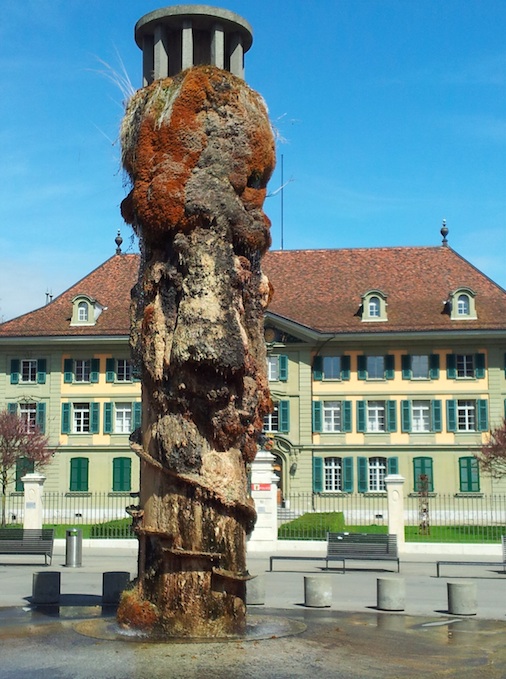
Pillar of moss and slime – 1

PillOfMossAndSlimeBern

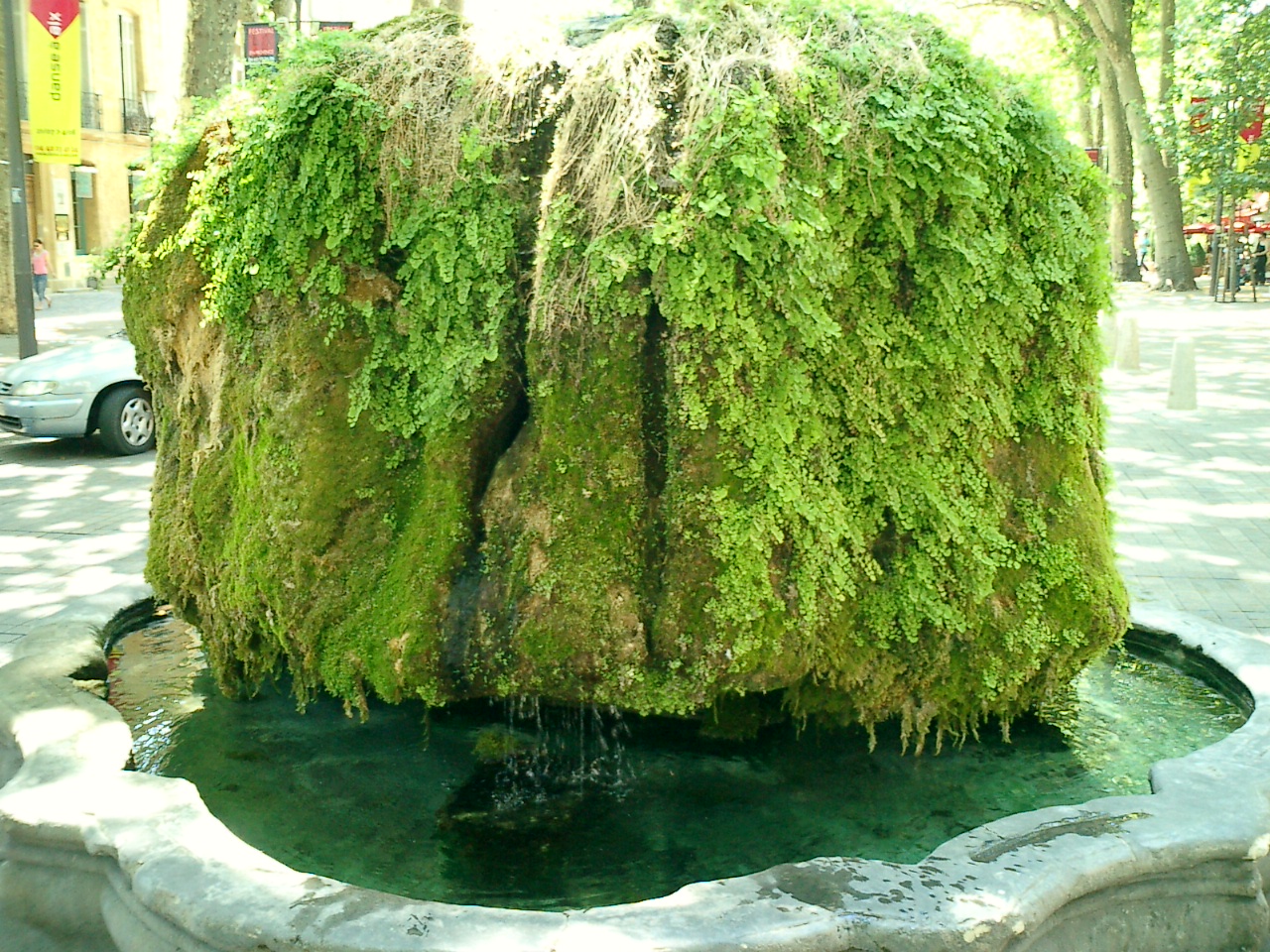
If anyone knows what these things are really called, please let me know. I call them “pillars of moss and slime.” It is a column over which water slowly and continuously trickles. And because of this, the column is host to a variety of natural molds, slimes, algae, moss, and grass – growing in different areas on the column, depending on the ambient light, wind direction, and time of year.

This pillar of moss and slime is located in Bern. I’ve seen similar structures scattered throughout western Switzerland (Bern, Zürich, Lausanne, Geneva, Montreux) as well as southern France. I’ll post further pictures as time permits.

Hidden canals #1: Rue de Zürich

PlaceDeZurich

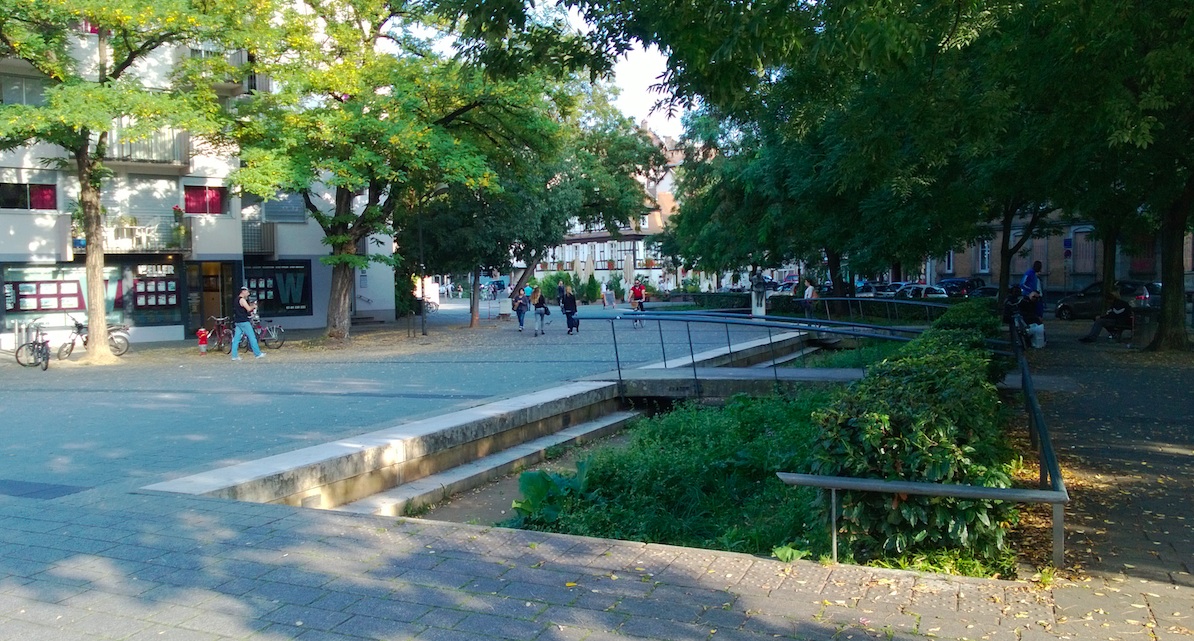
It looks like an unkempt street fountain in the shape of a canal, here at the Place de Zürich, on the Rue de Zürich in the neighborhood of Krutenau, in Strasbourg. And that’s probably what most people would think it is. But they’d be wrong.

Strasbourg is a medieval city, many of whose streets date back 6 or 7 centuries. But the Rue de Zürich is a relatively modern street, created in 1872 by filling in the Rheingiessen Canal. I have not been able to find out exactly why they chose to eliminate this canal, but the timing corresponds to other major canal building efforts in France, most notably the Canal du Marne au Rhein.

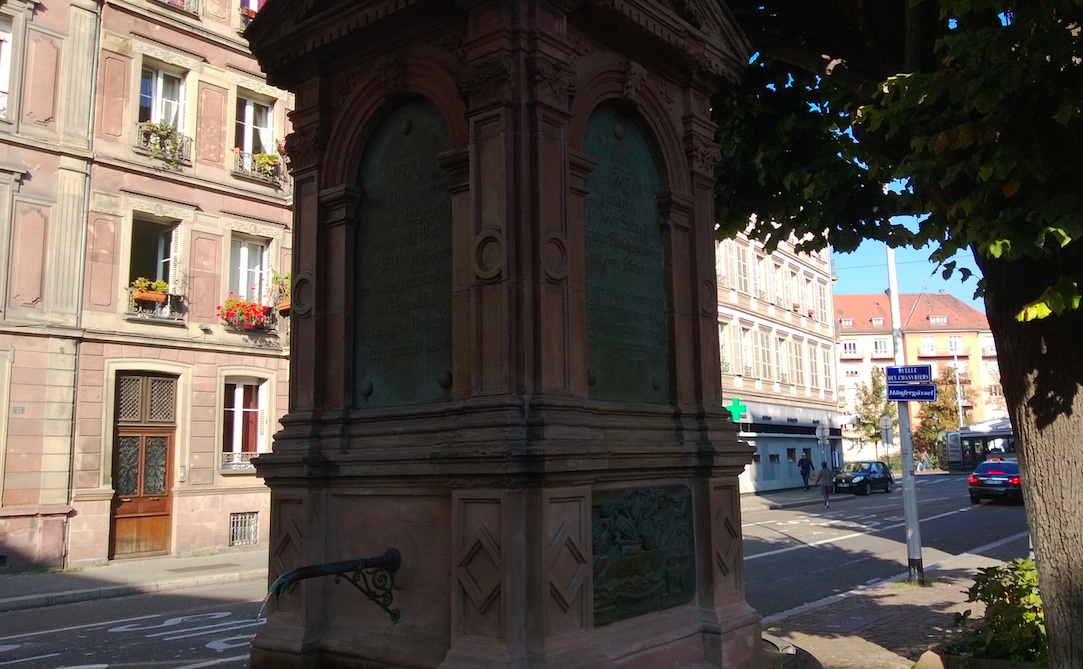
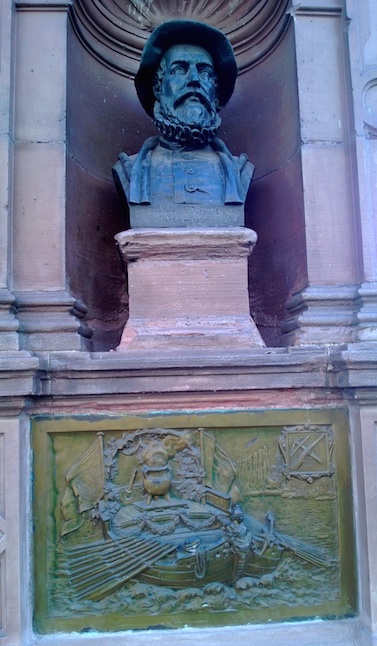
Interestingly, there is a fountain just up the street, which celebrates the landing of a group of Swiss in the year 1576. Surely anyone who sees that fountain must be confused (well, I was, until I found out about the ancient canal), because there is otherwise no other indication that Rue de Zürich was once a famous canal!

There are a few other interesting examples of “hidden canals” I hope to share in the near future.


ZurichFountain2 ZurichFountain1