A Texas Safari

A guest blog, by Charles Ritley

South Texas, East of San Antonio, is a giant cattle ranch: grassland chock full of quail and deer—and those who hunt them. While Californians discuss ways to save endangered species, Texans swap recipes for cooking them.

But hunting, like golf, is a socio-drinking experience. Guys form clubs that sub-lease tracts on the large ranches—-and build fancy clubhouses, with overnight accommodations, air conditioning, and satellite dishes. They co-exist well with the cattle, it’s extra income for the rancher, and the basic ground rules are: OK to shoot quail, OK to shoot deer, not OK to shoot cow. (But after you pay the rancher, you may keep the cow.)

Now, I don’t hunt. I did hunt when I was a kid, because everyone did. I was a trap shooter for many years and president of a trap club —- but in my later years I chose not to kill things.

But I had a client who wanted to go hunting. I knew a local business who had part of a game lease, and asked them to help. They set up a quail hunt on a big ranch, and I went along as my client’s bodyguard.

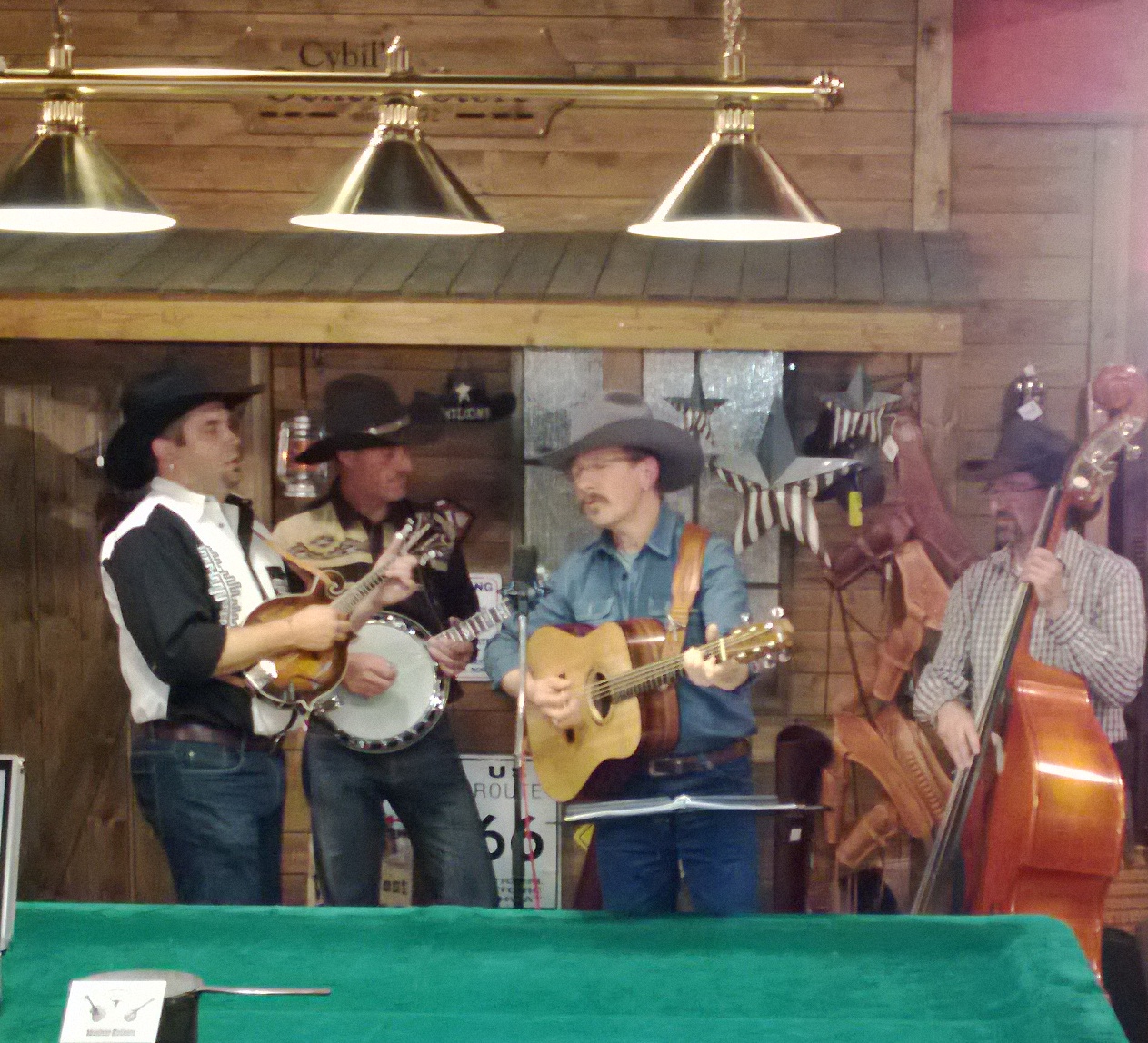
QuailThis hunt was a circus. They had a large 4-wheel drive truck with two chairs bolted to the front, where hunters sat, and two bolted to the sides. In the bed of the truck: extra passengers, the dogs, and their handler. Plus, it held 4 people in the cab. Periodically, when they passed a likely spot, the truck stopped, everyone dismounted, and the dogs were set loose to sniff out and flush quail.

(Now this whole thing made no sense to me. I grew up hunting birds. They have a very sharp sense of hearing. A quail can hear a truck this size when it’s two miles away. But, I withheld my advice. I was just another outsider.)

Eventually, the dogs would flush something, birds would scatter through the sky in all directions, and everyone would start blasting away. (Like London in 1940, but without the sirens and searchlights.)

GinThen everyone would pile back into the truck, where they had: 2 liters of gin, a large bag of limes, and a couple of jugs of tonic water, and proceed to make a round of Gin and Tonics. (One part gin, two parts tonic, one slice of lime.)

After several stops, about a hundred rounds were fired, no birds were harmed, and everyone had consumed at least one G-and-T per stop. At this point, my client—-a nice guy and a close friend—-said he wanted to come because he once sold shotguns but had never been hunting. But now he had enough. In fact, he was scared – really scared. So, I had a conversation with our hosts, but their engines were running, and they weren’t about to stop. So, the client and I just stayed close to the truck and out of what we believed to be the line of fire.

But then another problem arose: when the guys climbed back into the truck, some were full of gin and didn’t bother unloading their shotguns. Now, trust me, you do not want to be bouncing along a pot-holed trail in a 4-wheel drive truck in compound low, crammed into a cab with 4 guys full of gin and 4 loaded shotguns. You really, really, really don’t. So the client and I—-claiming we wanted a better view, jumped up into the bed of the truck with the dogs. The dogs, at least, were stone sober. And unarmed.

Shells

They got a few quail that day, and as I recall they were thrown away. Quail are good to eat, if you pick out the shot, and no one would do that. Eventually, the gin ran out and we headed home. The client and I fired a few rounds into the air, just to act like good ole boys, but I managed to do no harm to anything or anyone. The client, however, did manage to hit–quite by accident–some kind of little wild canary. It kind of exploded in this yellow poof. He felt rather bad about it.


This guest blog was submitted by Charles Ritley, an adjunct professor of computer science with several major universities in the San Antonio area.


When backs are better than fronts – 3

PadreIsland1

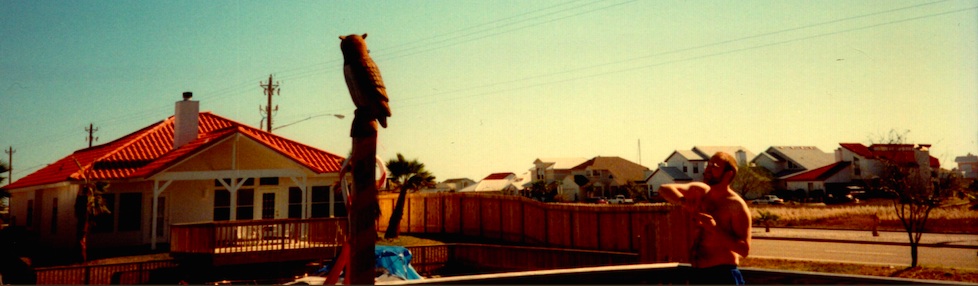
Continuing Part 2 of the series, the neighborhood is called “The Island,” it’s built on North Padre Island (a barrier island off the coast of Texas) – and it is arguably the ugliest neighborhood in the United States, or anywhere. As you can see over my shoulder in the photo above, most of the houses have no landscaping – just ugly, bare sand.

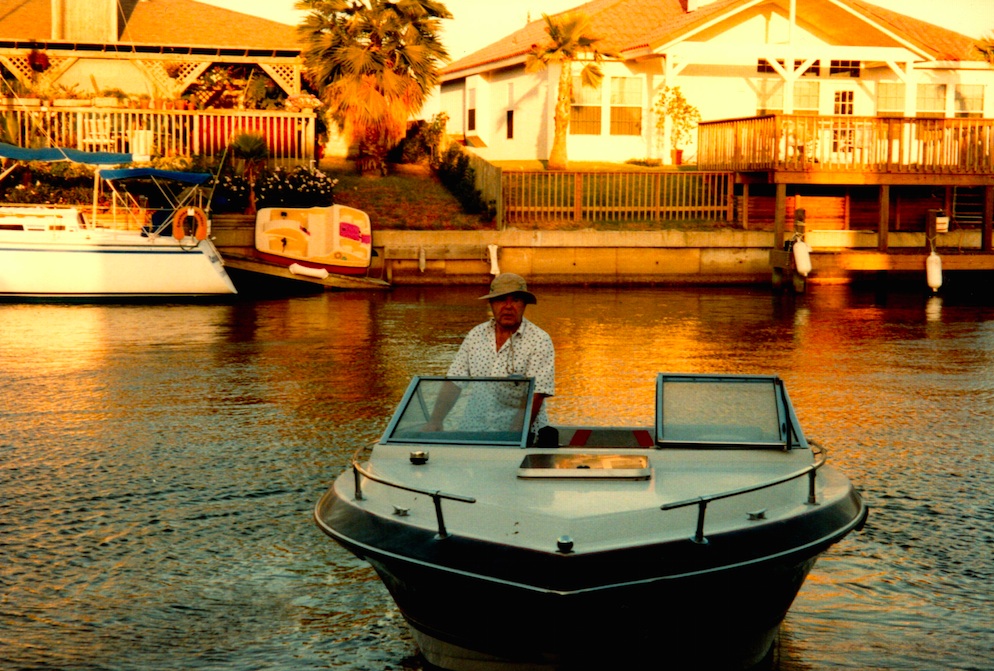
Well, more precisely, the fronts of the houses are ugly.  The backs of the houses are a different story, as you can see behind my father, who is bringing in his boat to the boat dock built onto his house.

PadreIsland3

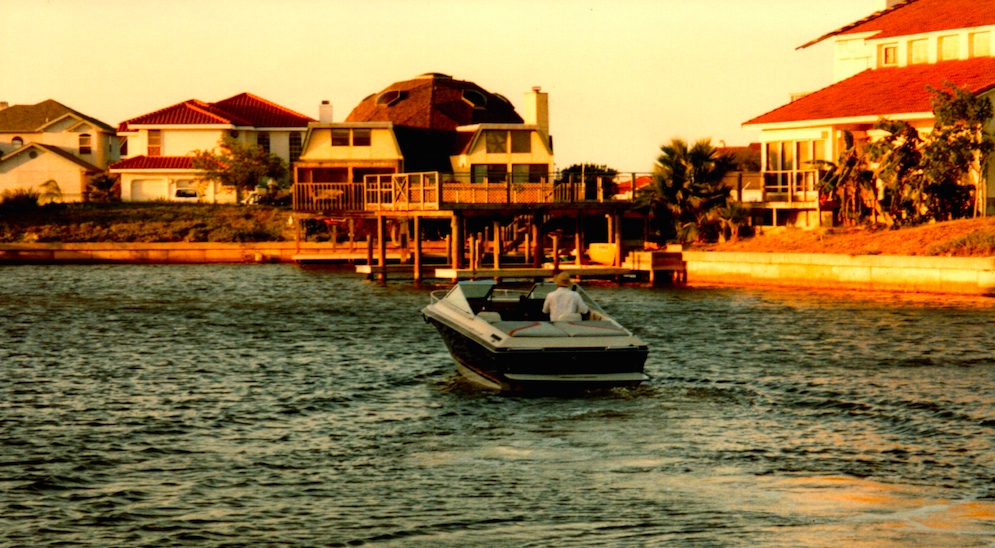
The Island is carved into dozens and dozens of canals, just like Venice only much bigger, and each house is built directly on a canal.  So instead of making the fronts of the houses look pretty, it is their backs, facing the canals, that look spectacular.

PadreIsland2

Because the canals all lead to the Gulf of Texas, they are filled with saltwater fish – making it one of the few places in Texas that you can do saltwater fishing directly from the dock on your house!

Hidden canals #1: Rue de Zürich

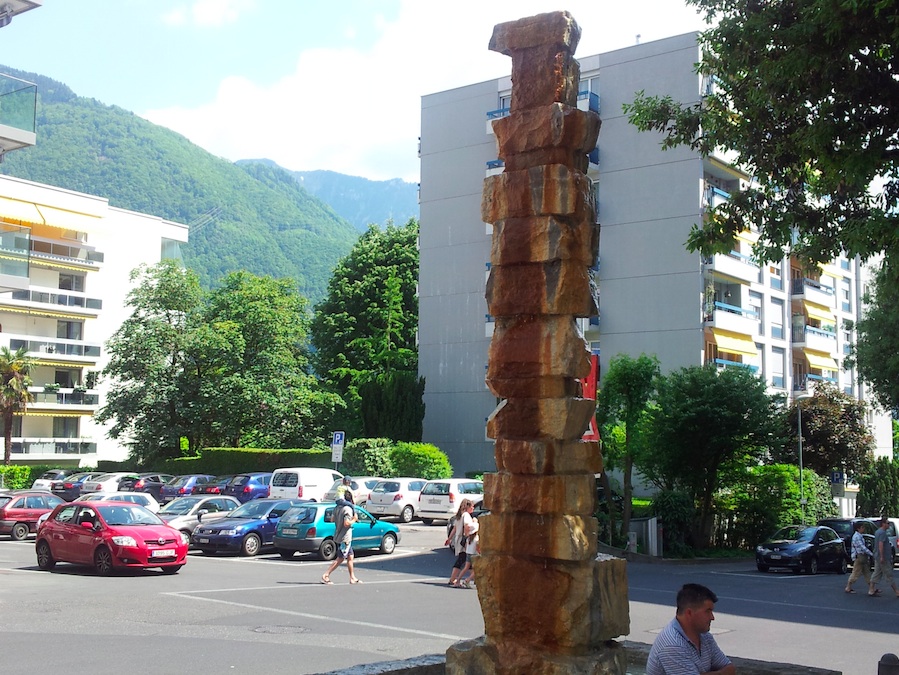
PlaceDeZurich

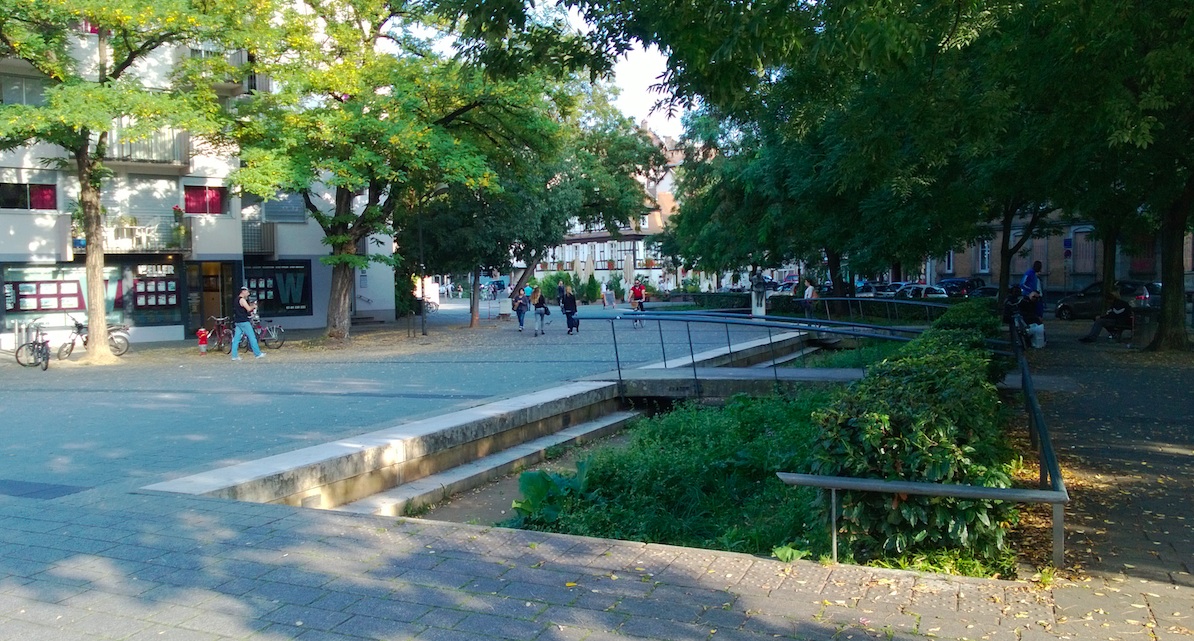
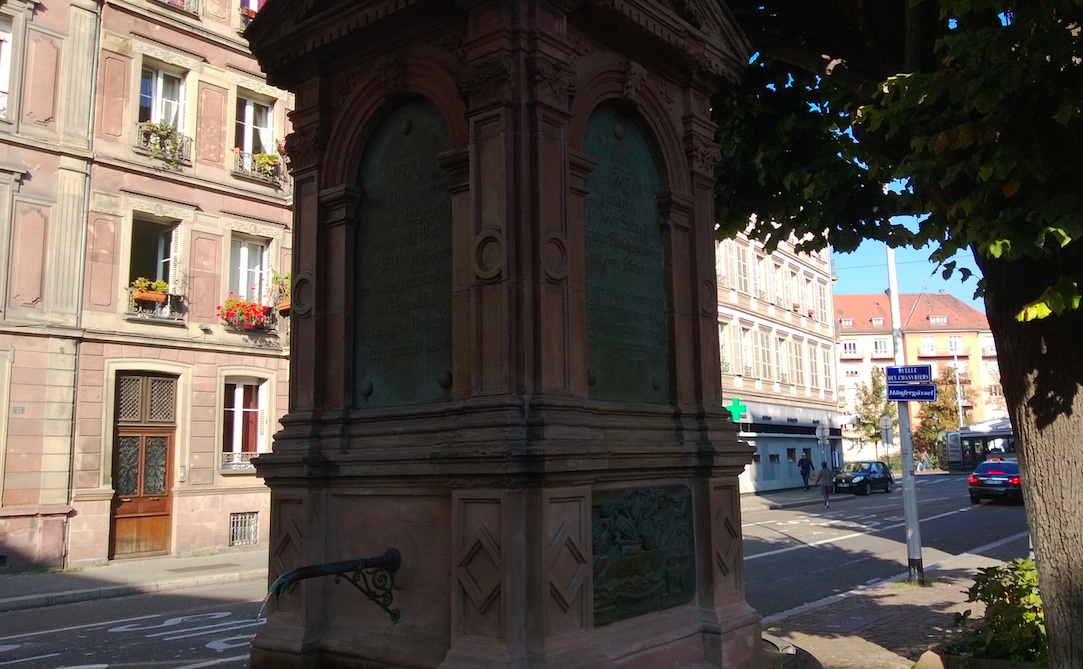
It looks like an unkempt street fountain in the shape of a canal, here at the Place de Zürich, on the Rue de Zürich in the neighborhood of Krutenau, in Strasbourg. And that’s probably what most people would think it is. But they’d be wrong.

Strasbourg is a medieval city, many of whose streets date back 6 or 7 centuries. But the Rue de Zürich is a relatively modern street, created in 1872 by filling in the Rheingiessen Canal. I have not been able to find out exactly why they chose to eliminate this canal, but the timing corresponds to other major canal building efforts in France, most notably the Canal du Marne au Rhein.

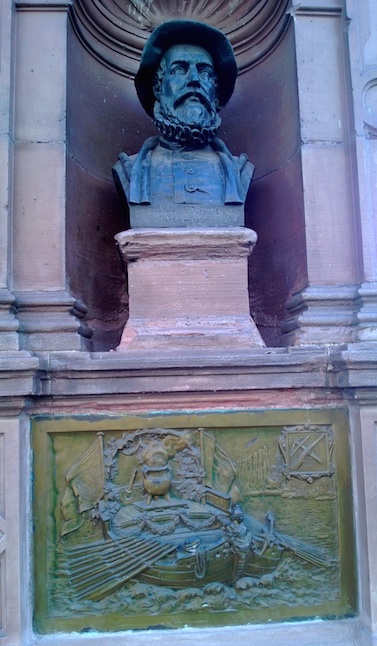
Interestingly, there is a fountain just up the street, which celebrates the landing of a group of Swiss in the year 1576. Surely anyone who sees that fountain must be confused (well, I was, until I found out about the ancient canal), because there is otherwise no other indication that Rue de Zürich was once a famous canal!

There are a few other interesting examples of “hidden canals” I hope to share in the near future.


ZurichFountain2 ZurichFountain1


Hilton Head

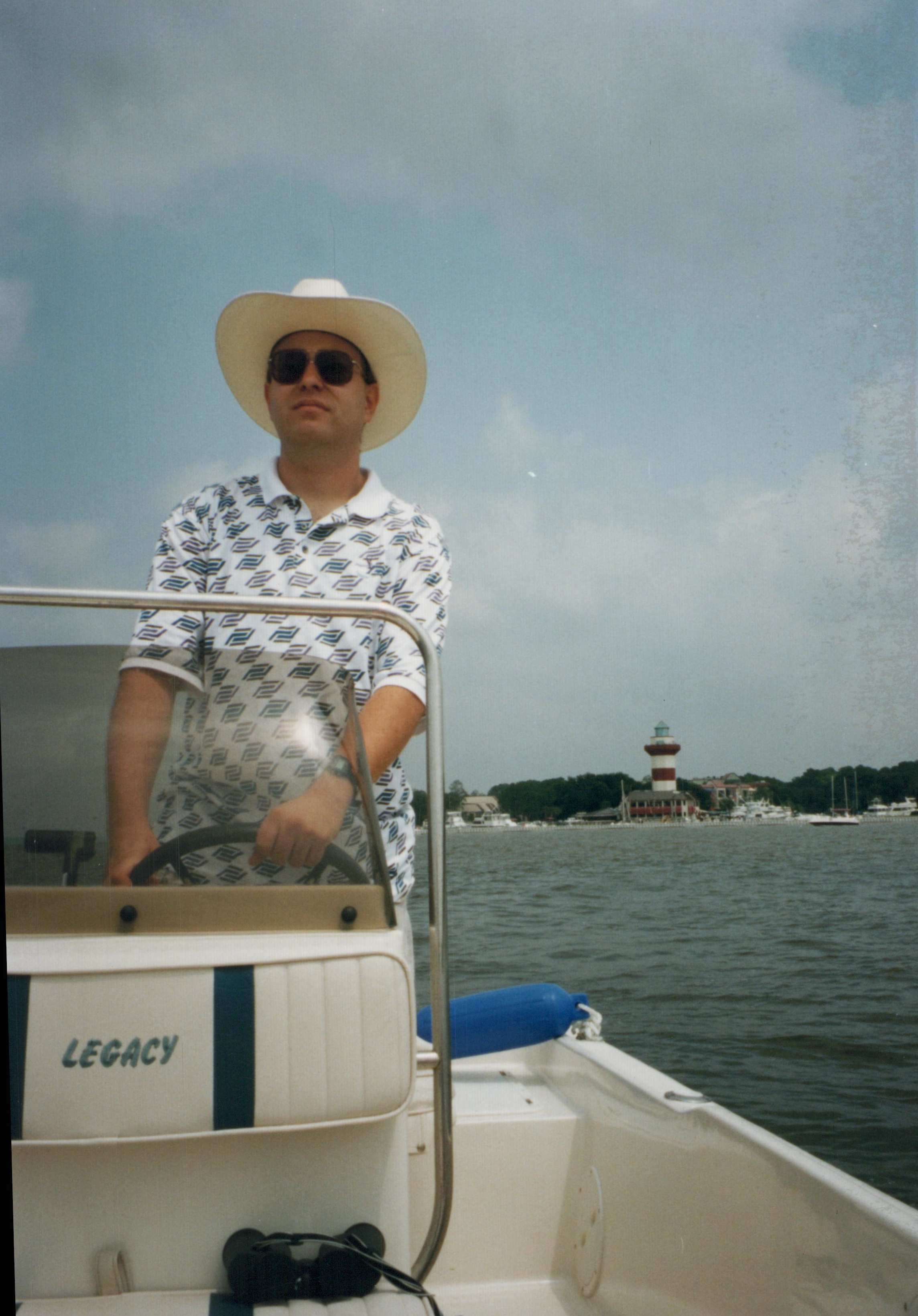
HH1

Hilton Head Island – the “low country” home of the famous movie stars, vacation retreat of U.S. Presidents – but I shall always remember it as the place where the police tried to arrest me for driving a Honda in a neighborhood where there are only supposed to be Mercedes.

This has happened to me now twice: in HH, and in the Hamptons on Long Island – an occupational hazard of having friends who number among the mega-wealthy!

From war to peace

Bellinzona3

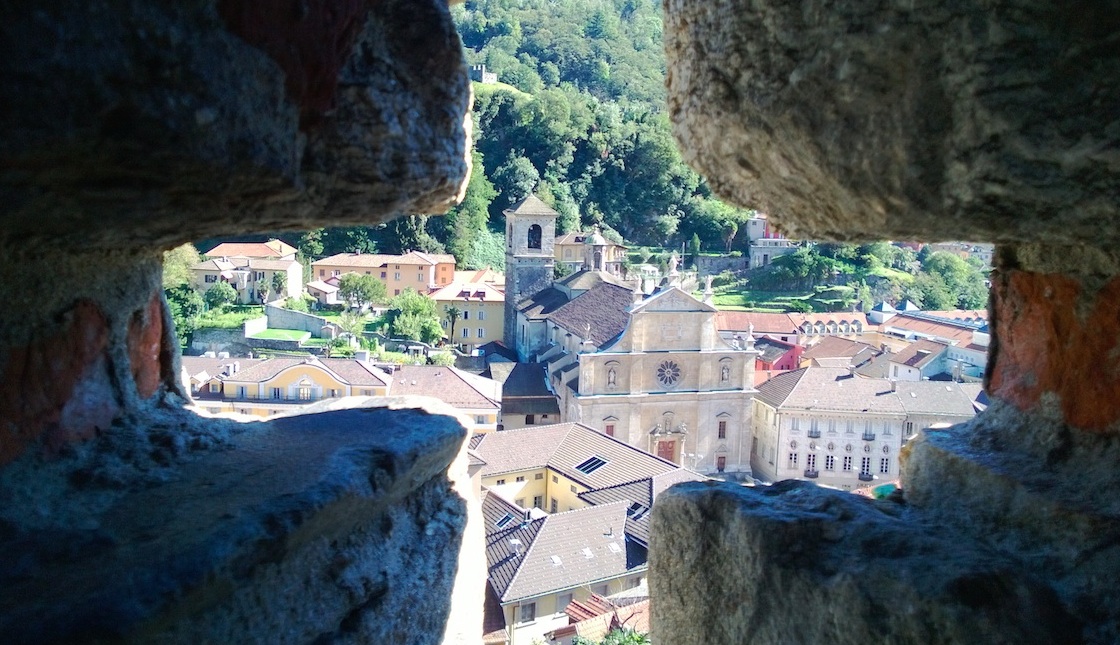
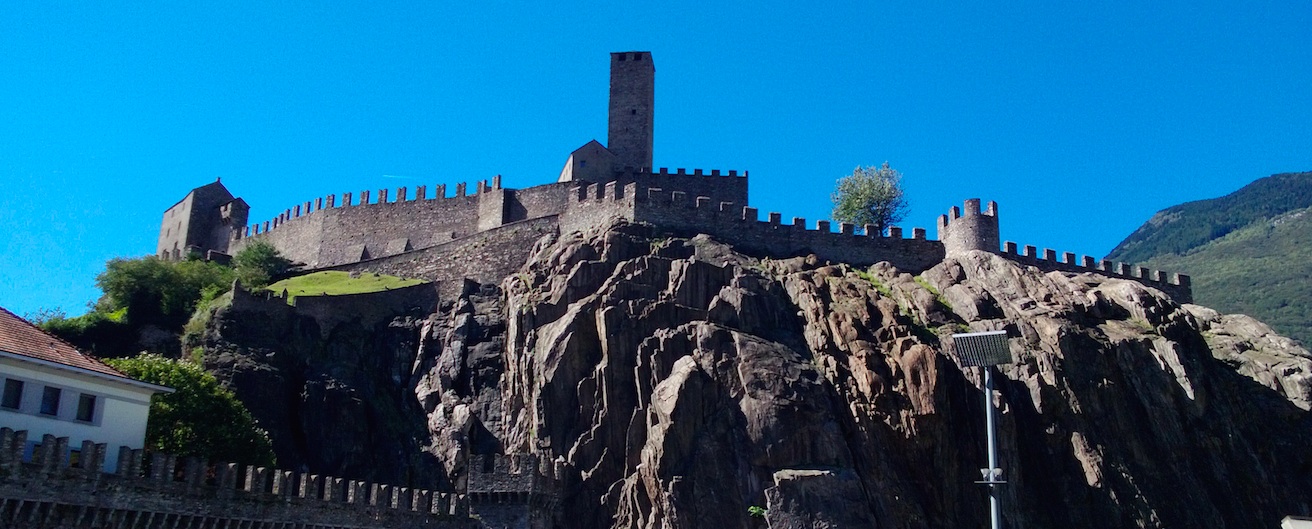
I’ve often wondered when and how historical military structures transition from things of war to things of tourism.  Maybe the border between Pakistan and India, or between North and South Korea, are examples of this today?  Still military in nature, but increasingly visited by tourists.

At any rate, the Castlegrande in Bellinzona has long since passed over into the tourist realm, as the grassy ramparts below show.

Bellinzona_2

Bellinzona_1

India’s glimpse into Europe’s past: the “Little France” of Mumbai

Dhobi

One reason I love India so much: India provides an amazing glimpse into the history of Europe.

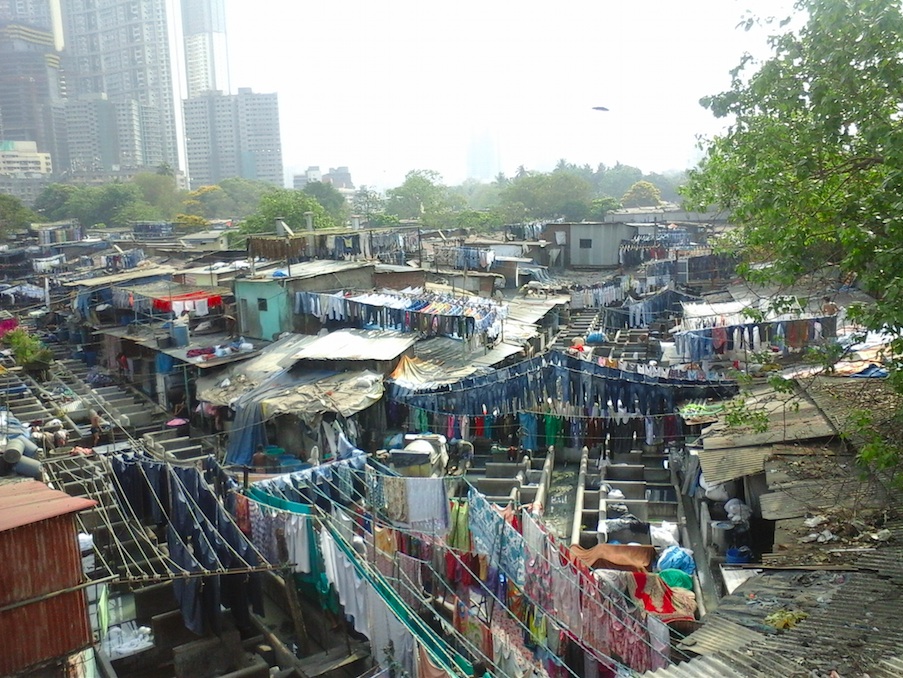
Shown here are the Dhobi Ghats, or clothes washing area, of Mumbai. What 99.99% of most tourists don’t realize is that Europe had these places, too, and you can find a picture of one in my recent blog about Petite-France. Today, the washing area in Petite-France is covered in flowers and lined with street cafés; but a few hundred years ago, clothes were washed in segments along the river: the clothes for the rich people upstream, and the clothes for the lesser privileged downstream. So what you see above is likely much cleaner and nicer than what it would have looked like in France!

My biggest gripe: Europe evolved slowly, and these old places were slowly transformed and retained. In India as in the U.S., the high-speed of big urbanization means that interesting cultural places (such as the Dhobi Ghats) are often developed right out of existence.


Indian Tales 1: Shopping in Dehli with an Auto Wallah

AutoDriver

During my first trip to Dehli, in the middle of the hot summer, an auto rickshaw driver was surprisingly honest with me: he asked if he could drive me to a store for tourists, because he would receive a 100 Rs “commission” from the owners for each tourist he delivered there. It was the “off season,” he said, and he needed the extra money for his family.

I have NEVER seen such honesty and openness from an auto wallah before!

So I made a deal with him: he would drive me to as many of these tourists stores as he could: I’d shop for a few minutes then buy nothing and leave, he’d collect 100 Rs from each store we visited — and at the end of the day, we would split the proceeds 50%/50%.

After a few hours we hit nearly 15 different stores, my voice was hoarse from 15 repetitions of the question “Do you have any little paper maché elephants made in Kashmir?” and his pockets were full of money!  Because I didn’t need the money but wanted the fun, I then told him he could keep it all, because he was so honest and open.

He was really happy with this, and we spent another 2 hours in which he took me on the best auto tour of Dehli anyone is ever likely to get, even stopping to drink tea with his other auto wallah friends near this great big stone arch-thing.

Motto: The people who want to take advantage of you can often turn out to be very nice people – and sometimes you can have a lot of fun by turning the tables and taking advantage of the system itself!

When backs are better than fronts – 2

Rheinbrücke

Continuing Part 1 of the series, this is the Rheinbrücke Konstanz (or Rhein Bridge at Constance).  Today nobody gives this bridge much thought  – but hundreds of years ago, after you paid a sizable toll, this would have been your gateway from a dangerous, lawless outside to the safe and Disney-Land-like city of Konstanz.

The armies of tourists that descend upon Konstanz rarely if ever cross or even see this bridge, much less the best part: a hidden alleyway underneath the far side of the bridge (just visible in the top picture), where there is a collection of stunning graffiti artwork painted on the walls.

RB1 RB2 RB3
RB4 RB5


The Grande Île of Petite-France

GI-S

This is a different view of the island in a recent blog post, but taken from a different angle.  An interesting bit of trivia is that the various bridges (only one is shown here) are known as the pont couverts (which is French for “covered bridge”), even though the covering has been gone for quite some time.

I don’t want to violate any copyrights or trademarks, but if you want to see a really impressive set of photographs of this area, just click here.

Église Saint-Paul de Strasbourg

StrasbourgChurch

If you’ve been to Strasbourg, then you know how it is. The cathedral is big and imposing and it stands in the center of the city and you can visit it. It’s surrounded by outdoor coffee shops where you can sit and look up at it, and if you can manage to hail a waiter you can drink coffee and smell the strong cigarette smell coming from other patrons who sit and drink coffee and smoke cigarettes. But you can’t watch the carabinieri stroll by because this is France not Italy.

OK, I’m not Hemingway, and this is not that cathedral. This is the Church of St. Paul. In any other city, this would would be the cathedral – but here it lives among the ranks of the SCHNN (smaller churches hardly nobody notices) because it is eclipsed by the much bigger cathedral.


The Grande Île of Petite-France in Strasbourg

PetitFrance_Strasbourg

This is a picture of a Strasbourg canal, taken from the Grande Île in the Petite-France neighborhood. With all the bridges and blacktop you’d never realize this was an island – and I never realized it either until I looked it up on Wikipedia.

This is also a “best kept secret” of Strasbourg, since it is only just a few blocks from the main train station (Gare Central) in Strasbourg, but in a direction opposite to where most tourists head when they descend upon the city. It is amazing what things you can miss – or find – by simply walking in the wrong direction.


Vacations when nobody else wants to

TM

I think it is known as “the shot” of the Taj Mahal, which I took in high summer. You can’t see it here, but it was over 40 C (100 F), and this was the time of year that tourists stay away.

Whether it is the desert in mid-summer or Warsaw in mid-Winter . . . you don’t just save money, but also you get an interesting (or even better) view of touristy places when you travel during the off-season.

The Zen of Polished Chrome

A guest blog, by Arlene Ritley

We all want to be rich.  Being rich means living the good life.  Being rich gives us the freedom to go where we want to go and buy what we want to buy.  Being rich can and often does create a feeling of happiness or euphoria.

Sooner or later, however, we come to realize, whether consciously or subconsciously, that happiness and contentment is fleeting.  Happiness doesn’t last long.  We want this feeling to last a life-time but it truly is short lived.

Pearl S. Buck once said, “Many people lose the small joys in the hope for big happiness”.  How true.

I have found the small joy in my life that brings me continual happiness.

You are probably sitting on the edge of your seat, waiting to read what this small joy is.

I will gladly share it with you now.

New Faucets

IMG_0604[2]

You laugh.  You think I am a crazy old woman.  How can you find happiness in a new faucet?  But I do!

Keep in mind the last thing I see before going to bed is my new faucet.  I stand there admiring the newness, the shine and the sleek sensual look.  My spirits soar, joy bubbles up, and my outlook for tomorrow becomes positive.  I go to bed knowing that in the morning my friend the faucet will still be there shining light on a new day.

Day after day, night after night, for a short period of time I’ll feel rich and, yes, happy.


This guest blog was submitted by Arlene Ritley, an editor with the Island Moon Newspaper – one of South Texas’s largest community newspapers.


Barry Eisler was here

BarryEisler

This is the restaurant Auberge de la Reine Blanche (or White Queen’s Hotel) on the Île Saint-Louis in Paris, the location of the terrific short story “Paris is a Bitch” by Barry Eisler.  Of all Eisler’s books, I always thought this story was very aptly named as a double or even triple entendre: it concerns the unrelated trouble and violence encountered in Paris by an assassin, just prior to him terminating a long-time romance.

When backs are better than fronts

NotreDame

We take it for granted that buildings have frontsides – and that the front façades are somehow meant to be the most impressive.  But this is the backside of the Cathedral of Notre Dame in Paris, and in my opinion it is far more impressive and enjoyable to look at than the front side.  And what’s more: this great view is perhaps rarely seen or enjoyed by the armies of tourists that stop briefly to visit then move on.

I have a few more examples where the hidden backsides of things are more stunning than the visible front sides, which I’ll post as time permits.