The amazing history of the Jews in Switzerland – 2
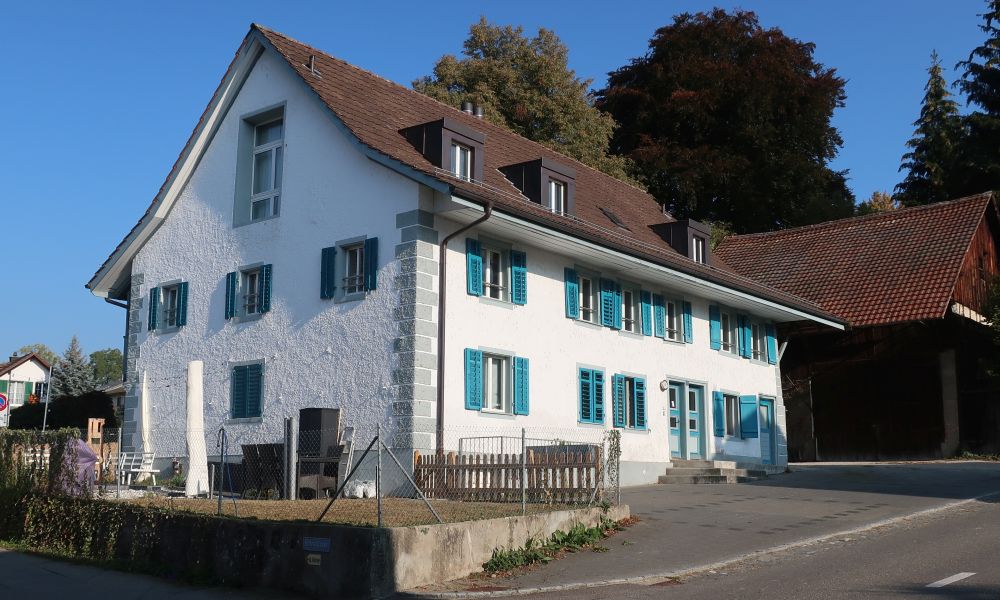
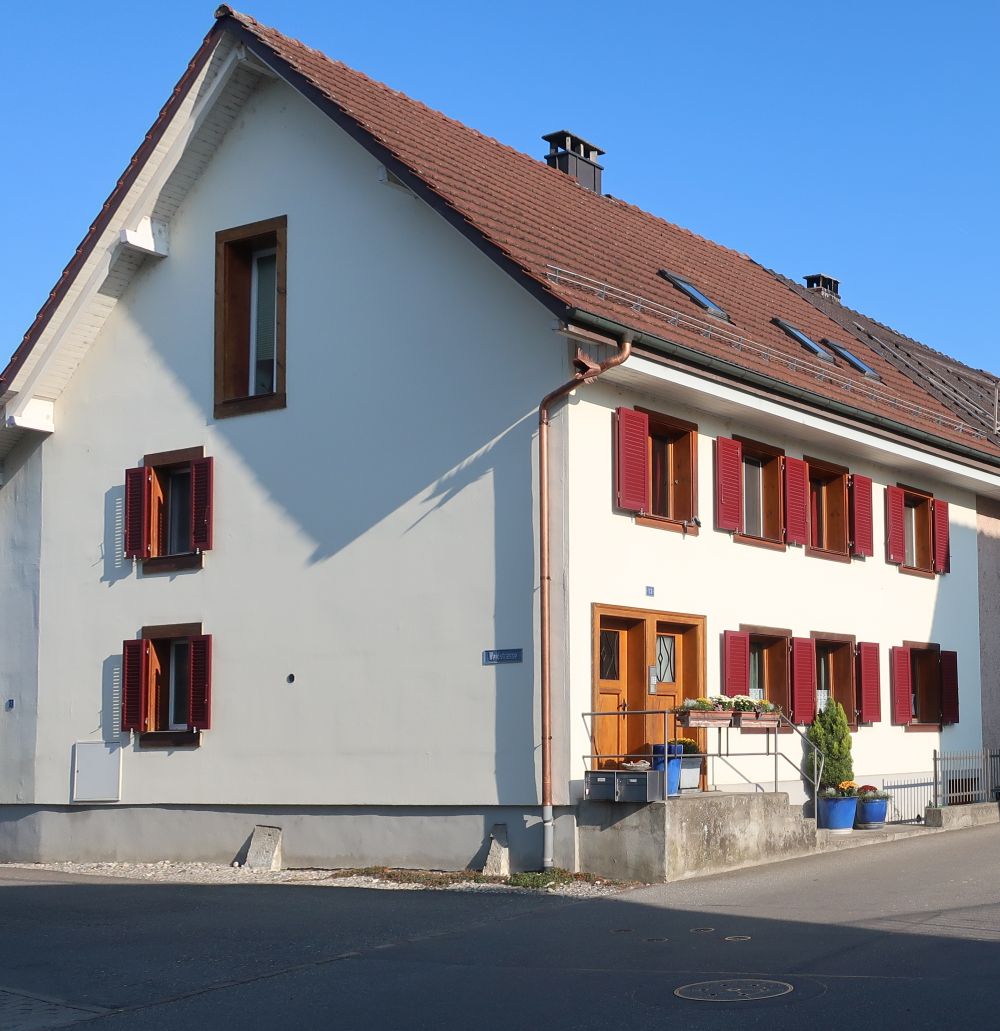
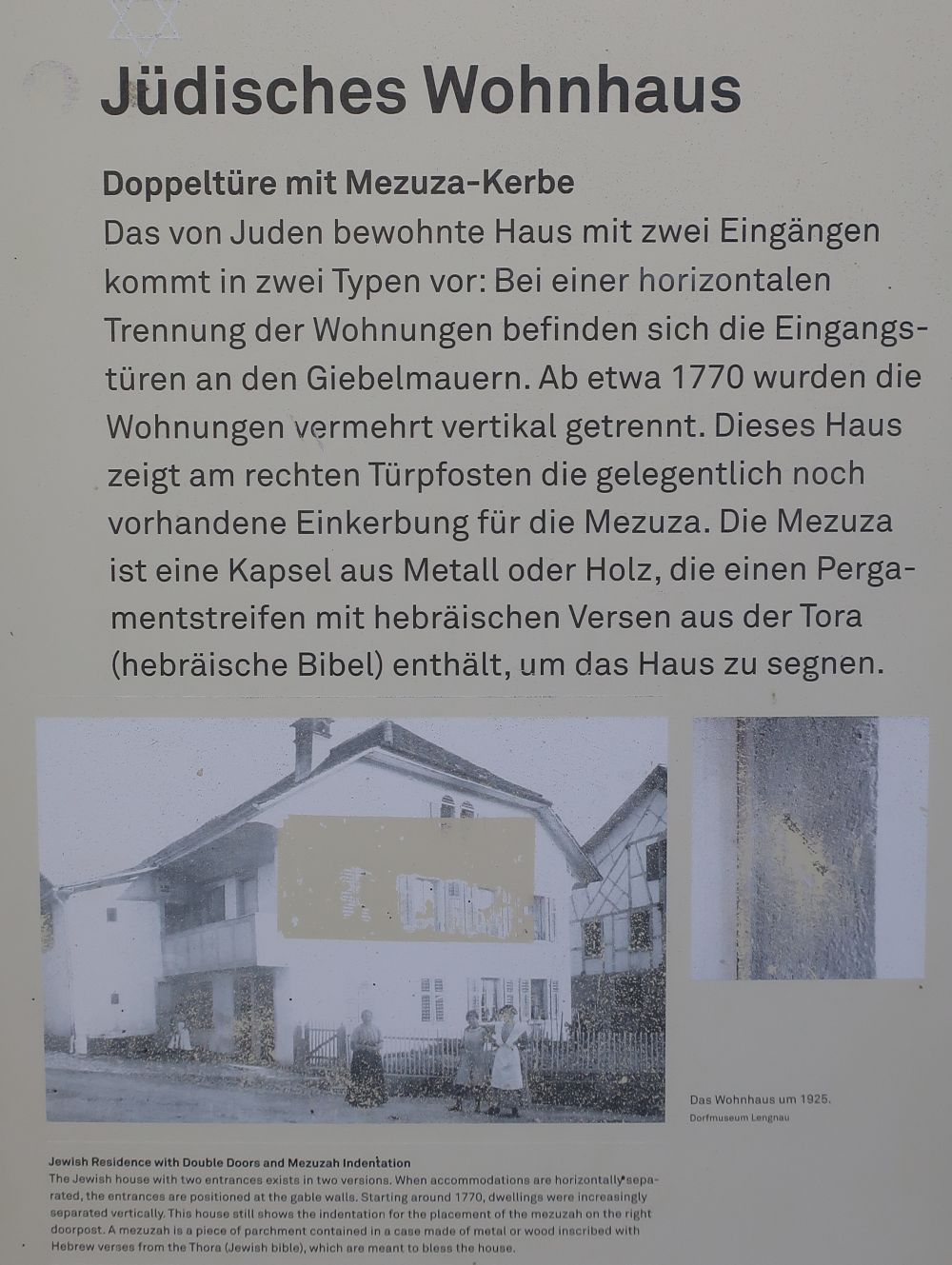
Continuing the series, here is a nice house in Lengnau that shows the double doorway that is characteristic of the Jewish/Christian houses built in the eighteenth century:
It was forbidden for Christians and Jews to co-habitate, so the problem was carefully avoided by splitting the house into two areas, each with its own door. The village of Lengnau in Aargau, in North Central Switzerland, has many fine examples of historical buildings with this characteristic.
The town of Lengnau is filled with historical plaques that discuss legacy of the historical Jewish community in this area, and in fact there is a self-guided walking tour that leads visitors to important historical locations within the town.
Ratchaburi, three views
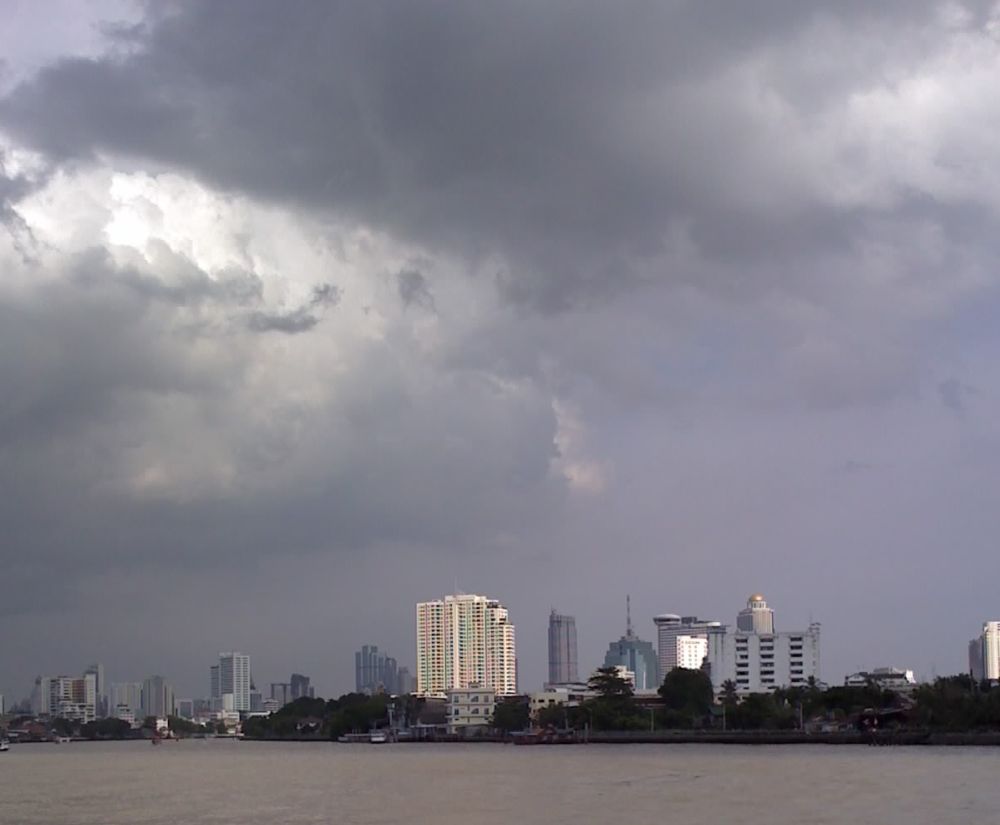
The village of Ratchaburi is located about 100 km or so east of Bangkok.
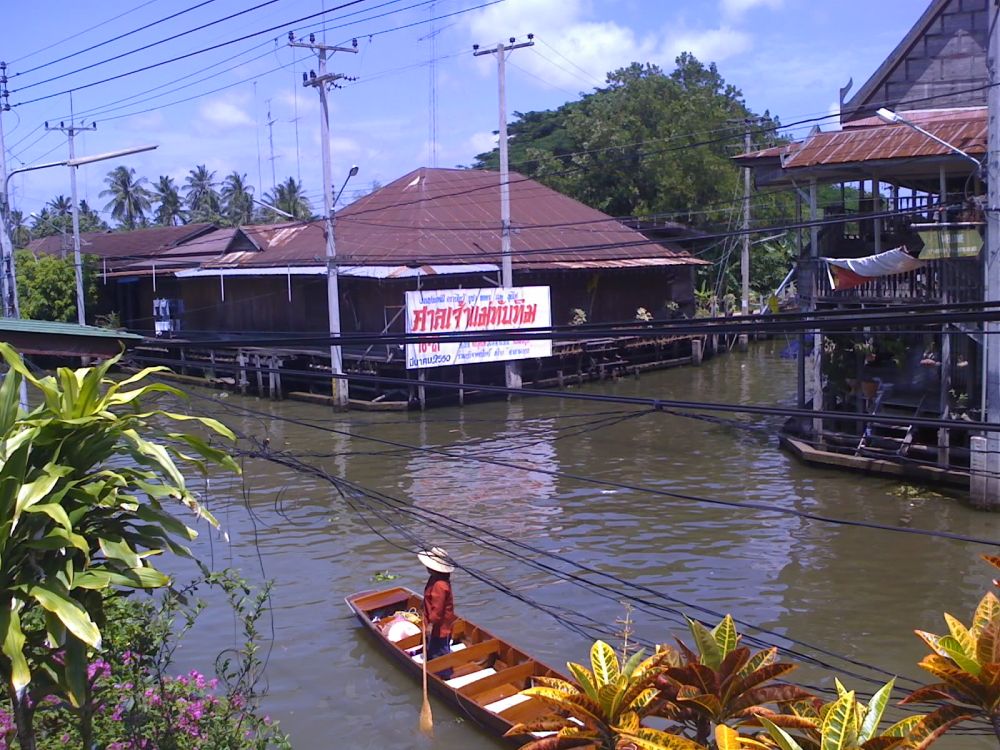
Here is what it starts to look like when you get close to the village:
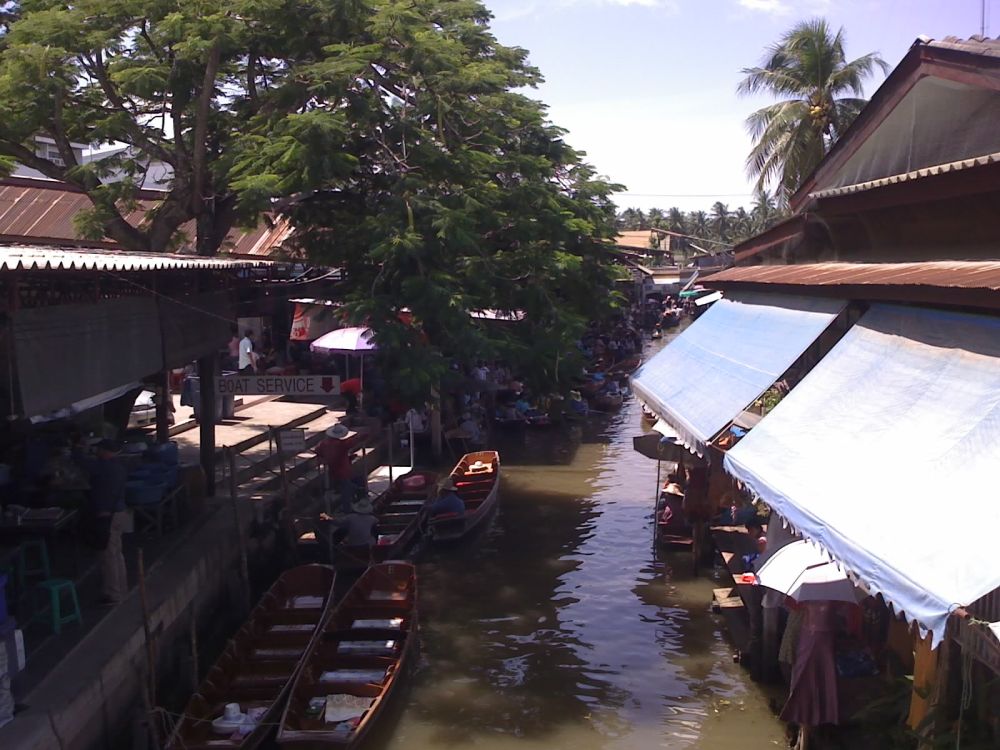
Here is a typical street in the village, and when I say street I mean canal, with the houses side-by-side along it:
And another view of a typical Ratchaburi street:
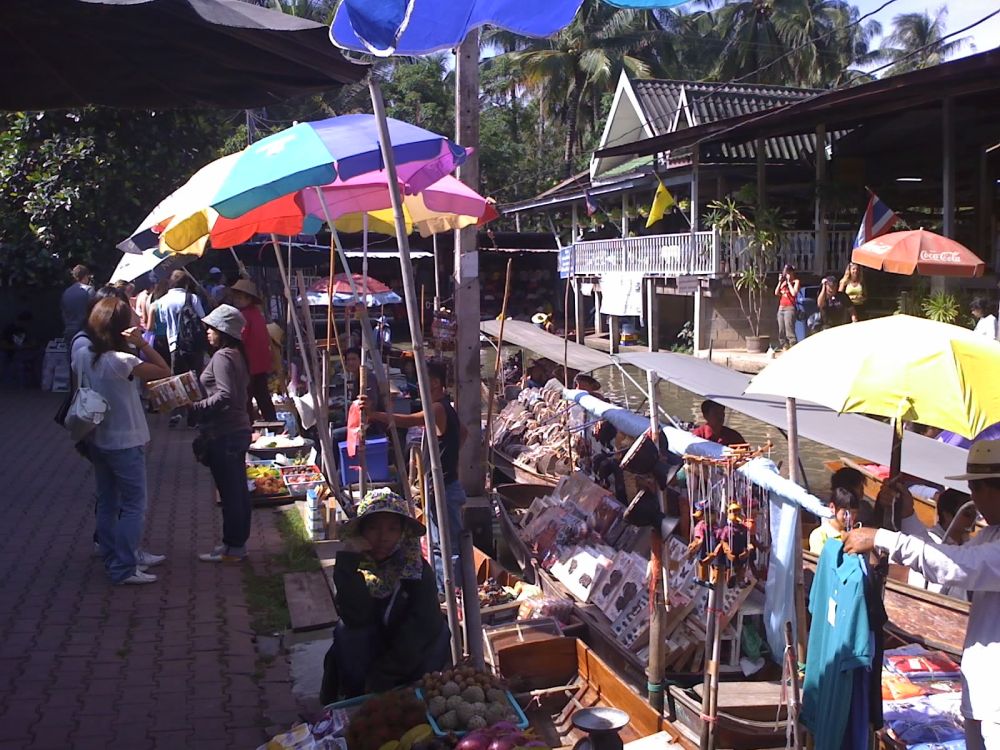
Damnoen Saduak floating market, two views
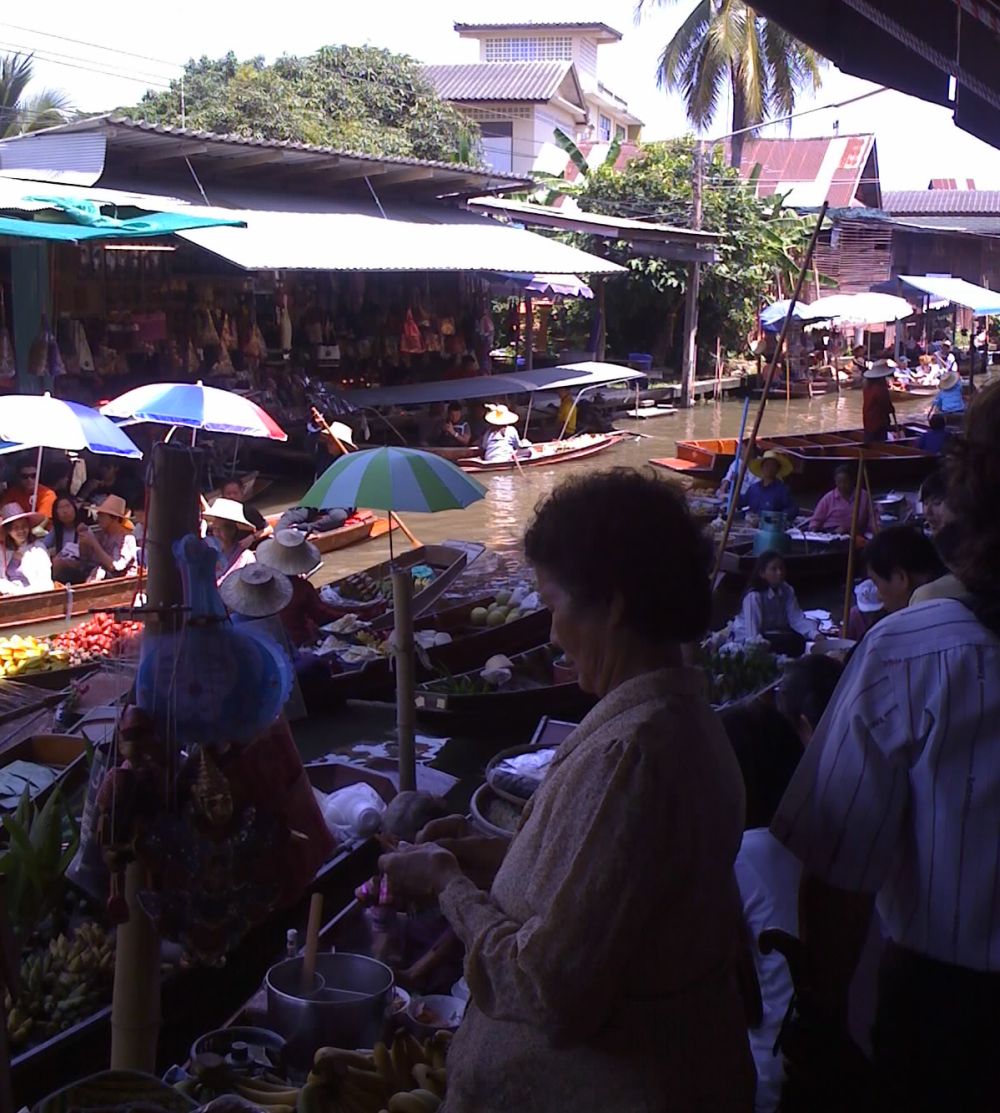
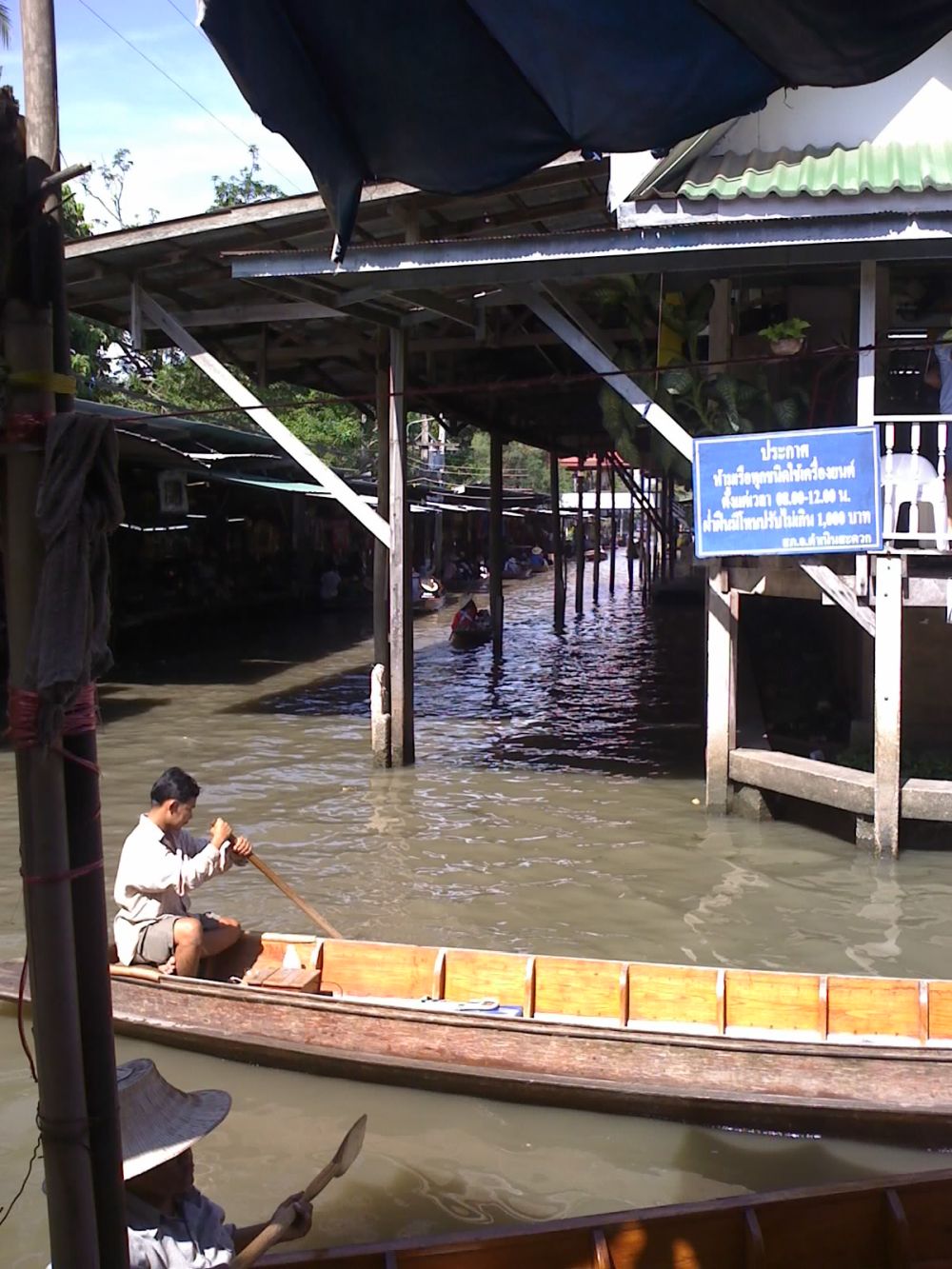
This is the tourist side of the Damnoen Saduak floating market in Thailand. The boats are filled with souvenirs:
And this is the non-tourist side of the Damnoen Saduak floating market in Thailand. The boats are filled with vegetables, groceries, and some of them have little kitchens for cooking fast food:
Steel acrobats, two views
The amazing self-service flower stands of Germany and Switzerland
I’ve seen these things for years – but like so many things, I only just realized that for Americans this concept might be kind of strange.
The countrysides of Germany and Switzerland are filled with little “self-service” stands owned by local farmers. You can stop anytime and get flowers, vegetables, and sometimes even eggs. There’s a little jar for you to put your money, and it run 100% according to the honor system.
I took this snap of a flower stand just outside of the Northern Swiss village of Embrach:
The amazing history of the Jews in Switzerland – 1
There have been large communities of Jewish people living in Switzerland since the Middle Ages. Sadly, there were also large pogroms, so their history was hardly a pleasant one. I’ve shared some information about the Jewish community in Zürich in a recent blog post.
During a brief period in the eighteeenth and nineteenth centuries, the Jews in Switzerland were required to reside in one of two villages in the North Switzerland canton of Aargau, just a few miles from where I live: Lengnau and Endingen.
This is the village of Lengnau, and in contrast to other German and Swiss villages, the city center is punctuated by a truly massive synagogue rather than a Christian church or Catholic cathedral:
There is a Jewish description in both German and Hebrew carved into the stone arch doorway:
And a plaque in front of the synagogue shares a few details:
The villages of Lengnau and Endingen are filled with interesting relics from this Jewish period, and I will share some additional photos and more information in future blogs.
Scenes from the Great American Desert – 2
Continuing the series, parthenium integrafolium. Also known as Wild Quinine:
WARNING! Do not under any circumstances reach for this plant if you have malaria: while it does have medicinal uses, despite its name it contains no quinine at all!
Cathedral Symmetry
In a few other blog posts I’ve complained that the great European cathedrals are simply the wrong size to photograph well. But more than this: they present a conflict situation between the needs of the human brain and the needs of the camera.
The cathedrals are too large: no problem for the human brain but the photos always look skewed; and at the same time the cathedrals are too small: the photos would look fine at a distance but the human brain would miss the needed details.
Perhaps I’ve come up with a solution?
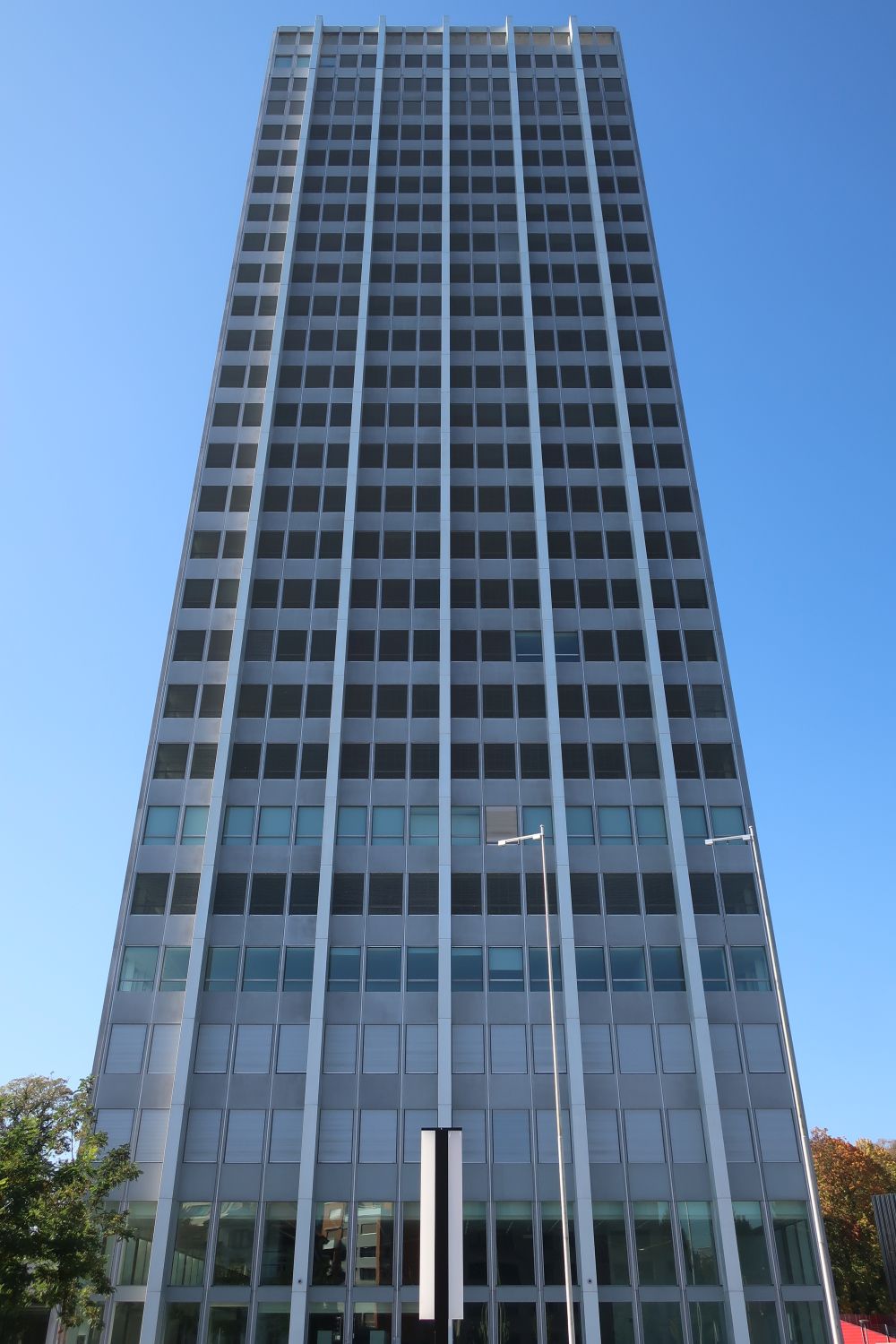
Here is the what was the tallest building in the world for a long, long time, and remains the centerpiece of Strasbourg:
But I’ve tried to capture it from a unique angle:
Bubble architecture – 4
Continuing the series, I’ve blogged about a trend that I’ve seen mostly in France, in which historical buildings are encased in glass bubbles. Sadly, almost every example I have seen to date has been atrocious.
But one example stands apart, and it may be the biggest bubble of them all: the giant glass bubble encasing the Gare Central in Strasbourg:
I don’t want to exaggerate and provide fuel more more atrocious bubbles in France, but this example show above is, in my opinion, truly magnificent.
The amazing garbage vacuums of Germany – IN ACTION!
I’ve recently blogged about the garbage vacuums in Germany. So you can imagine my thrill and pleasure when I got the privilege to photograph one in action!
As you can see, even the small children took a small break from their very busy day to watch the two men.
And you can be sure to expect no less than ultra-cleanliness from the South Germans, so after sucking out the garbage, the big orange van is equipped with a high temperature steam sprayer, and the whole area is steam cleaned.
My guess is that the entire process, from driving up to the garbage area, sucking out the garbage, and steam cleaning it – the entire process took no more than 7 or 8 minutes.
Unbelievable!
The Euro Cruiser
The latest addition to my personal fleet is a 150 PS, 2.0L 2017 Peugeot Business Traveller van that comfortably seats 9 people:
The main way to interact with this vehicle seems to be the voice system, so I am in the process of learning dozens of voice activated commands.
By the way, it all began with the Urbana Cruiser, 20-year-old 1978 Oldsmobile that I bought in 1998 for $200 from a good friend of mine, Andrei Botchkarev, one of the world’s most well-known semiconductor physicists. It was too cool to resist giving it a name.
The tradition continued with the Zürich Cruiser.
The amazing parking lot geese of Chicago Heights
Europeans often don’t believe me when I tell them about the American phenomena known as parking lot geese, so I was pleased and privileged to be able to make this snap on a recent visit to Chicago:
Although these are wild birds, they have absolutely no fear of humans. In fact, while visiting Champaign, Illinois on the same trip, I came across another parking lot gaggle, and I was surprised to see one of the geese wearing a tag:
In fact, here you can read about an interesting encounter I had with parking lot geese many years ago.
The amazing Italian beef sandwiches of Chicago Heights
This looks like my Italian Beef sandwich, but it was not my Italian Beef sandwich:
On a recent trip to Chicago, I was pleased and privileged to order an Italian Beef sandwich at my favorite restaurant for this specialty, the Perros Brothers in Chicago Heights. I haven’t been here in nearly 20 years, and I was pleased it was still standing:
I always thought this was a great place for Italian Beef sandwiches, but by surfing to their website I only just now learned they are a top rated diner in Chicago!
Sadly, not a lot of people know about Italian Beef sandwiches, even people who travel to Chicago. It’s a sandwich of extremely thin slices of beef that are cooked in a spicy broth. Generally, it helps to eat it with a fork: usually either the broth is poured over the sandwich, or else (and this seems to be the most common approach, to order “an Italian beef sandwich with a dip“) the entire sandwich is dipped into the broth, totally soaking the bread.
Scenes from the Great American Desert – 1
Silphium laciniatum. It sounds like a spell from Harry Potter, but in fact it is a native to the American midwestern prarie:
It took me a long time to spot why this snap was emotional and reminded me somehow of conflict, but you’ll note the blooms are straining to the right as the wind is blowing to the left.
St. Joseph
The amazing hot dogs of Chicago
This not only a Chicago style hot dog, it is my Chicago style hot dog:
For those who may be unaware of Chicago style hot dogs, they are truly unique things, served with hot peppers and (of all things) seasoned celery salt. Remember, due to Chicago’s unique location between the American west and the American east, Chicago was once known as hog butcher and meat packer to the world.
Perpetual pursuit of the perfect purse
A guest blog, by Arlene Ritley
Hello, my name is Arlene. And yes I am addicted to buying new purses and handbags.
I currently have, at last count, at least fifteen handbags. Some are very expensive and come with their own dust bag. Others are fine leather ones I purchased at discount, paying very little considering the quality of the leather and trim. Some are made of fabric not to be used when we have inclement weather.
Some people make fun of me – “What! Another purse?” I simply laugh it off and say I really needed a new one. I often give them as gifts for birthdays or Christmas. I fool myself into thinking all my women friends are just waiting for a new handbag.
I have given much thought as to when this obsession had started. I have come to the conclusion that it started when I was about seven or eight years old making my First Holy Communion. My mom and I went shopping to buy a communion dress and veil. But along with the ensemble there was a very small white purse with a gold religious emblem sewn on the front with a prayer book inside. How could you not feel special carrying this purse?
But like all items people obsess over, the euphoric feeling doesn’t last long. And before you know it you will find me in the handbag section of the department store.
BUT – this all changed. Finally, finally I found the one purse that fulfills my every requirement. It is large but not too large. It has an opening on the outside for a cell phone plus a charger. Once I open the zipper of the main compartment I find six compartments to hold everything I need. I’ll never have to buy another purse again!
(Who am I kidding? Just thinking about not purchasing another purse makes my hands shake; I feel dizzy, nauseated and agitated. Am I addicted – you bet your bottom dollar I am.)
This guest blog was submitted by Arlene Ritley, an editor with the Island Moon Newspaper – one of South Texas’s largest community newspapers.
The amazing crawling crawfish of Chicago Heights
On a recent trip to Chicago, while cruising down a side street parallel to the world-famous Cicero boulevard in Chicago Heights, I could hardly believe my eyes when I saw a giant crawfish walking down the street:
On both sides of the street there were nothing but cornfields, but the previous night there was a torrential thunderstorm. I can only assume that the rain washed this big fellow out of whatever pond he was living in.
Blodelsheim Sprinkler
Räterschen Cow
The great swallow plague of Rumersheim le Haut
Well, there was probably never a plague of swallows at the tiny hamlet in Alsace called Rumersheim le Haut. In fact, while there have been plagues of locusts and plagues of disease, there was probably never a plague of swallows, anywhere.
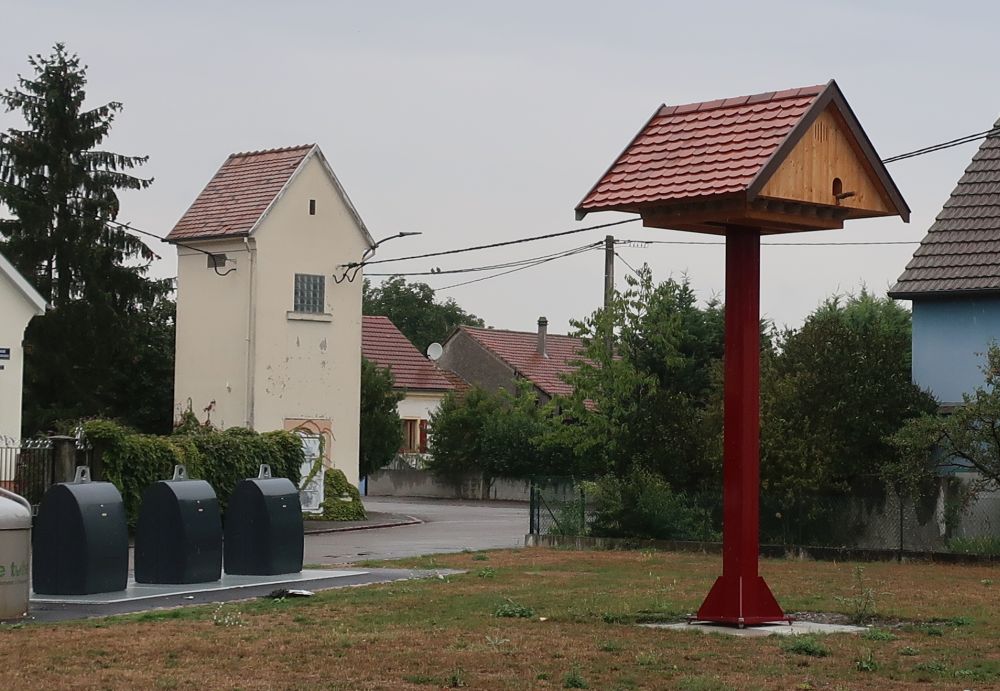
But nevertheless I could not believe my eyes when I came across this bird house, right smack dab in the middle of the village:
If you look closely, you’ll see not only that it was designed to withstand a F5 tornado (which has never happened in Alsace, either) and that it sports tiny gray swallow enclosures on the underside of the platform.
There must have been swallow babies in there, because I could hear them squeaking.
Source of mighty warmth
This is the big sign on the Winterthur Stadtwerk Kehrichtverwertungsanlage:
The place burns almost 200,000 tons of garbage each year, turning it into both electricity as well as heat that is transported to the local area. As a result of living so close to this place, my heating costs in the winter are astonishingly low.
The amazing outdoor public washing machines at Chalampé
Räterschen Rätsel
Or in English, the Riddle of Räterschen.
First things first, this is NOT the Räterschen Rätsel. This is just a nice little spider snacking on a bug she caught:
But I took the snap in the tiny village of Räterschen, just outside of Elsau in North Central Switzerland – and that is the mystery!
For you see, in the North of Germany, the diminutive form of nouns in German is “-chen” appended to the end of the noun. (Example: Mädchen = little Hamburg girl.) As you head south, the “-chen” is replaced with “-le.” (Example: Mädle = little Schwabian girl.) As you head even more south, the “-le” is replaced with “-li.” (Example: Mädli = little Swiss girl.) If you keep heading south, nobody really knows what happens, because you run into the area called Wallis – and there they speak a form of German that is so hugely different than anything else, even to this date linguists have never really figured it out; some linguists even believe that due to the majestic, magnificent Swiss Alps in this area, the locals have no words for the concept of “small.”
And so the mystery is: why does a tiny village nestled deep within North Switzerland have a North Germanic name?