Ask Mr. Tradecraft – 3

Dear Mr. Tradecraft,

I landed an upcoming assignment beginning 6 weeks from today, but for reasons I can‘t mention, I‘ll need to disguise myself. Any advice? – Disguised Operator Needs Good Lessons from Experts.

MrTradecraft

Dear DONGLE, Cancel the contract. I won‘t operate with a different persona without a minimum 4 months solid prep time, 24×7.  The hair, the clothes, the look, the speech – that‘s the easy bit. But the walk is the key. We all have our own natural walk, and learning to walk differently – to carry yourself differently – that‘s the hard bit. You’ll need a minimum of 4 months living the persona full time to develop the muscle memory, and to keep it throughout any stress situation.

Dear Mr. Tradecraft,

Ken has mentioned in his blog all the different areas you’ve worked in. What is the hardest and most challenging?– Secret Person Yearning

Dear SPY, The clandestine world has many specialties and sub-disciplines, but one stands far, far apart from the others: Cut-Out: getting a physical “thing” from Place A to Place B with absolutely, positively no trace-ability. Oh, I’ve dabbled in this from time to time, and I rarely turn down a straightforward contract. But for the big stuff – the political dossiers, the nuclear plans, the CD of videos showing CIA torture scenes – nothing less than a purebred, died-in-the-wool CU master will do. A top earner in this discipline easily earns fifty times what I bring down. But it takes decades of hard work and experience to get to this level. Today, there are only three well-known international, freelancing CU masters at this level. Four, if you count one in the Mossad.


Note from Ken: I’ve known him for years, but I never know when I’ll hear from him. Gladly, he’s back, not sure for how long, and I hope he has time to start emptying his mailbox.

After many decades, Mr. Tradecraft remains a much-sought-after operator for the most demanding contracts with governments, corporations, and private parties alike. He has over 30 years of international field experience that span the whole spectrum of clandestine services, from cut-outs, snatch-and-grabs, bag jobs, surveillance, to wet work — much of it spent in red zones. His retirement increasingly near, Ask Mr. Tradecraft is the pro bono way he gives back to the community. If you’d like to ask him a question, please submit it to Ken – but due to obvious reasons there may be a wait of many months before he can respond to your question.


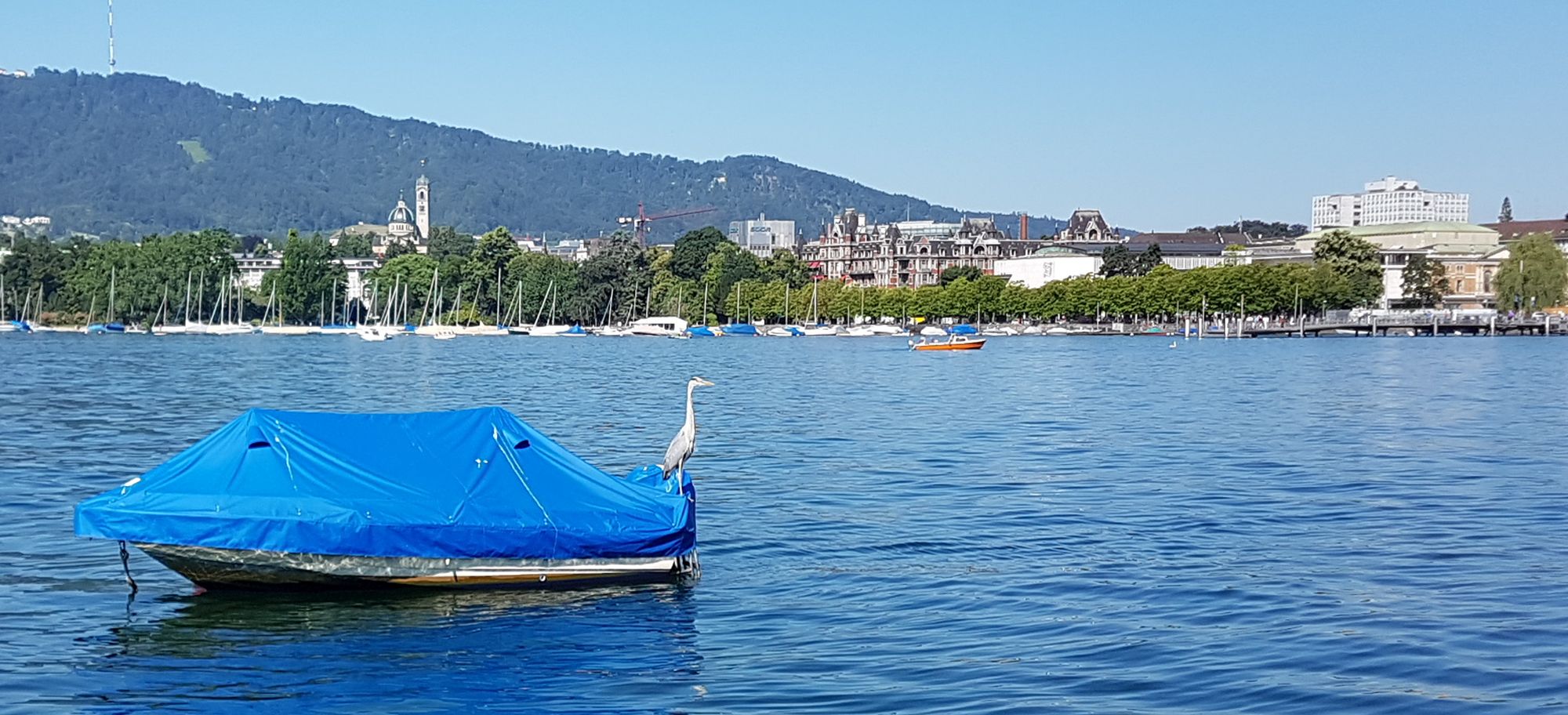
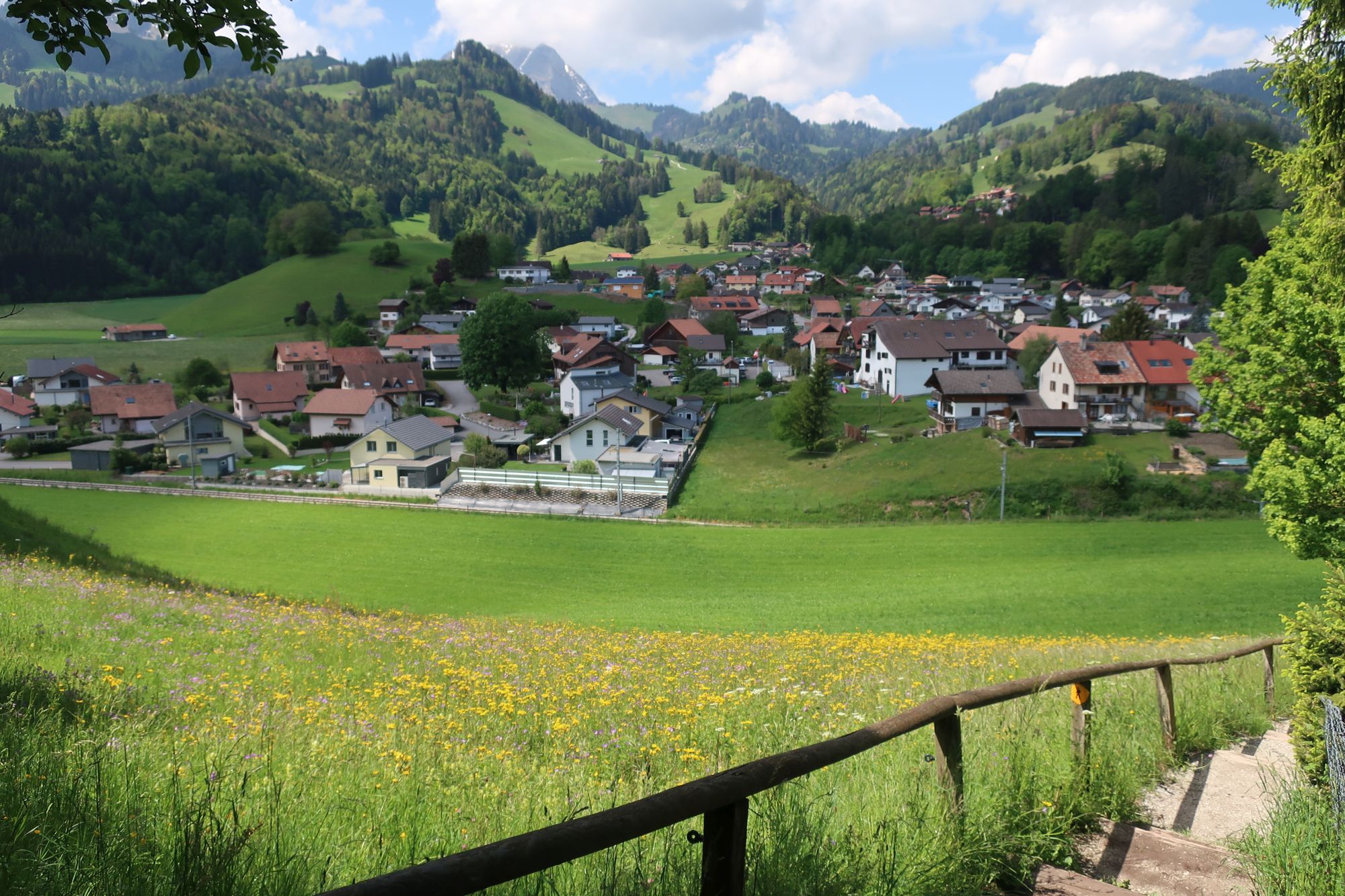
Lake Geneva

To me, Lake Geneva is the most spectacular and breathtaking of all the Swiss lakes. It’s truly massive in size, and at least looking south into France from Switzerland it’s backstopped by some of the most awe inspiring Alps you can imagine.

Here is a panoramic shot of Lake Geneva, just north of Montreux and looking south:

The amazing Arondissments of Paris and Quận of Saigon

Saigon and Paris are very similar in one regard: the cities themselves are organized into numbered districts.

In Paris a district is called an Arondissment, there are a total of 20 of them, and the districts appear clockwise starting at the center:

In Saigon a district is called a Quận, there are a total of 19 of them, and although the districts start at the center, they are not as neatly clockwise as in Paris:

Why is Saigon similar to Paris? Does this have to do with the history of the French in Saigon? I suppose it does, but I don’t know the details.

Super Moon Trifecta! Wolf, snow, and worm

Many people don’t know this, but each full moon in a year has a unique name.  The full moons in January, February, and March are known as the Wolf Full Moon, Snow Full Moon, and Worm Full Moon, respectively.

Well, for the last time in zillions of years the first three full moon’s of 2019 are also so-called super full moons, when the moon approaches so close to the earth that even the International Space Station is in danger of a collision!

I was privileged to have the accident of catching all three Super Full Moons on film for 2019. This is the January Super Wolf Full Moon,

This is the February Super Snow Full Moon, snapped from my apartment:

And this is the March Super Worm Full Moon, snapped from downtown Winterthur:

Fall of Saigon – Then and Now

On April 29, 1975 Hugh Van Es of United Press International at Gia Long Street took what became the iconic photograph of the U.S. evacuation of the Vietnamese city of Saigon,

Being in Saigon, and 44 years and one day later, I decided to hunt for this place. It’s not easy to find! First, the street has been re-named. Second, it’s not on any tour maps. Third, it’s almost entirely surrounded by modern shopping centers and high rise skyscrapers.  But after about two hours of exploring in the hot, humid, healthy Saigon sun I found it!

Here is the top of the building, right across the street from a modern indoor shopping mall:

And here is a blow-up so you can see the detail on the top.

Interestingly, I spotted a large number of American tourists walking in and out of the shopping mall, all of them unaware that they were standing underneath a true historical landmark. It’s a shame that the city of Saigon does not do more to recognize this location.

Is the slashed zero now dead?

Things change, and in the field of Information Science they change faster than most.  A delightful story of change is provided on the homepage of perhaps the world’s most famous computer scientist, Donald Knuth:

A note on email versus e-mail

Newly coined nonce words of English are often spelled with a hyphen, but the hyphen disappears when the words become widely used. For example, people used to write “non-zero” and “soft-ware” instead of “nonzero” and “software”; the same trend has occurred for hundreds of other words. Thus it’s high time for everybody to stop using the archaic spelling “e-mail”. Think of how many keystrokes you will save in your lifetime if you stop now! The form “email” has been well established in England for several years, so I am amazed to see Americans being overly conservative in this regard. (Of course, “email” has been a familiar word in France, Germany, and the Netherlands much longer than in England — but for an entirely different reason.)

I’d like to single out something similar, probably only known to those of us (like me!) whose history of Information Technology and computers pre-dated with the development of computer monitors: the first application I used was on a teletype machine at a laboratory at U.C. Berkeley.

Slashed O

When programmers started programming in the days even before punched cards, zero’s and one’s were so important  – and in those days, numbers were far more important and frequently used than letters. Therefore, programmers and also typesetters most frequently wrote “slashed o” instead of the letter O, in order to distinguish the uncommonly used letter from the very commonly used number.

If you look on Google you can find many examples of this, usually images of very old computer manuals, like this:


Slashed Zero

At some point after the introduction of high level computer languages, the letter O became more important than the number zero, so programmers use “slashed 0” instead of the number zero, in order to distinguish the uncommonly used number from the very commonly used letter.

Here is a good example of what that looks like:


0 = O: Leave it to the fonts, high resolution displays, and good eyes

Today, it seems rare to see the slashed zero anymore. The computer fonts used in many editors make it very difficult to distinguish between “oh” and “zero” – usually relying on highlighting the entire word or variable when the programmers application developers get it wrong.

I don’t know when the slashed zero fell out of use, but it would be nice if some language scholars have studied and document this before it disappears from human memory.

FYI, most programmers application developers I know not only do not use this convention, but also have never heard of it – so it goes to show you how quickly things change and the past is forgotten!


A very impressive view of the unimpressive

In case you wondered, a panoramic shot of the Duomo central square in Milan.

What’s so impressive about it is that this snap is taken from the center of the direction outward. So the truly impressive, spectacular view is behind the camera and not visible.

OLYMPUS DIGITAL CAMERA

On the left is a piece of the famous Galeria shopping mall – the first Galeria after which all the others were designed.

Great tip for tourists in Saigon!

In my last post I showed the Ben Thanh tourist market, which by the way has a floor layout that looks like this and raises all kinds of interesting questions in my mind about how you rent space here, how the rental agreements look, how much the vendors pay per square foot, and the like:

But be that as it may, a business partner of mine who lives here gave me a great tip: if you are looking for souvenirs, then the best place is the Post Office. In addition to it being an historical landmark itself, it has government operated shops where you can find all the souvenirs offered in Saigon, but at a tremendous cost savings.

I could be wrong, but as far as I know this Post Office was designed by the same architect that created the Eiffel Tower.


More mountain marvels

Continuing the series, this snap of the Austrian Alps shows something that people unfamiliar with high mountains are unaware of.  Certain plants can only grow at specific altitudes. So for example, you’ll see the termination of a green strip – at altitudes higher than this, that particular species of plant just can’t grow:

The mysterious street transformers of Saigon

If you’ve been to Saigon, then you know how it is. The city is filled with hundreds and hundreds – if not thousands – of above-the-ground transformers that look like this:

Now, I am not an electrician, so I could be wrong, but it looks as though these units are converting three phase electricity to two phase electricity, as this close up shows:

What are these transformers here for?  What do they do?  Are there indeed underground three-phase electrical cables – which in and of itself would be an amazing thing?

For me this is still just a mystery to be cleared up one day!

Just what were those Buddhists thinking?

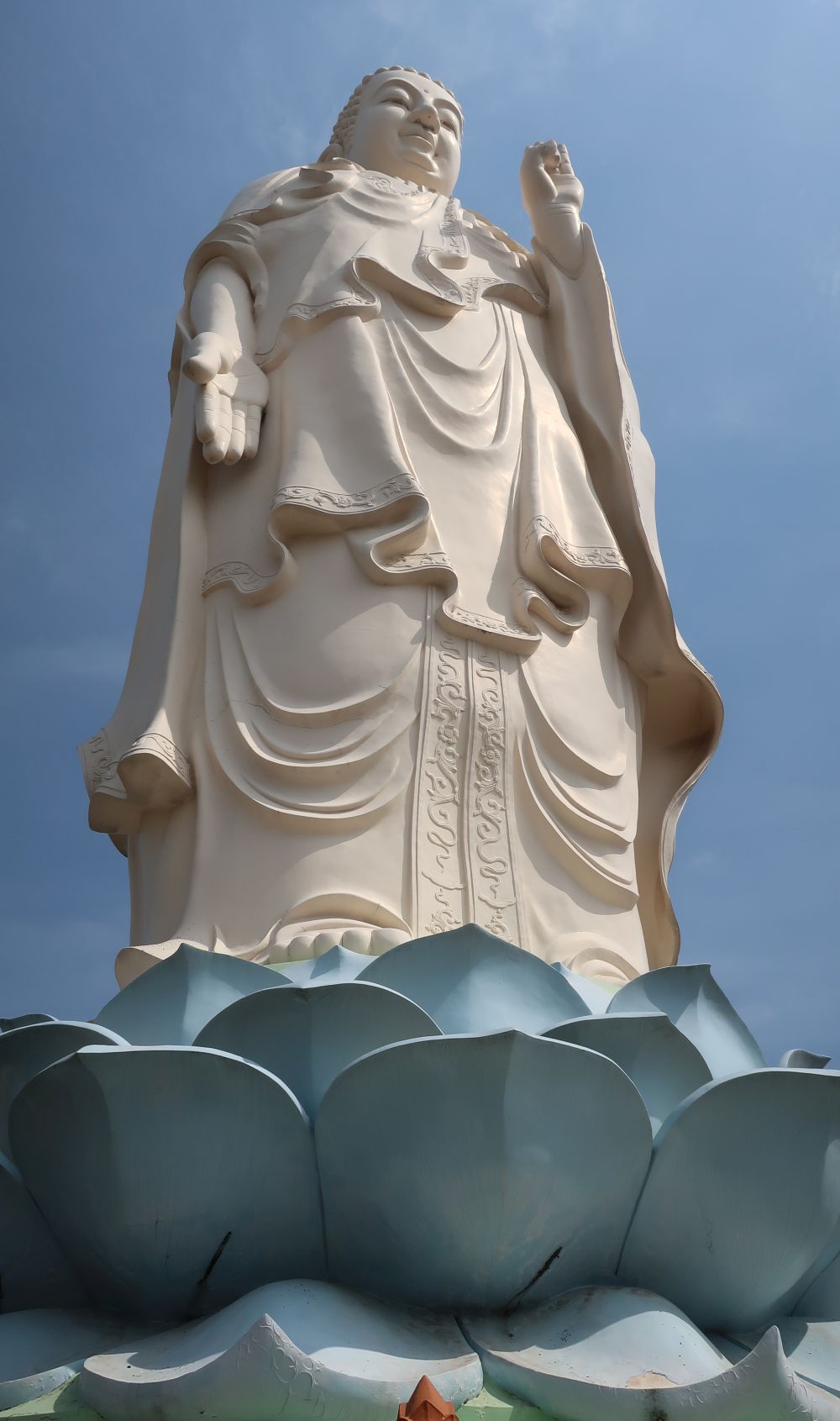
There is a wonderful Buddhist template in Vietnam, in the city of My Tho just next to the Mekong Delta, and in the next few blog entries I’ll share some snaps.

But this one caught my attention, just as you walk into the temple you are greeted with this wonderful sign:

Now, not being a Buddhist myself I’m afraid I don’t understand the significance of this. I always thought Buddhists aspired to something more transcendental, rather than just birth-to-grave.

Old Timer Tram – is that really what it’s called?

The big cities in Switzerland like Zürich and Bern keep a small number of their old, antiquated street cars in good functioning order, then from time to time put them into limited use.

This is a snap of the “Old Timer” tram in Basel – and it raises a very good question:

Is there no phrase in German – or in the more advanced, evolved language of Basel (know as Alemannic) – besides “Old Timer?”