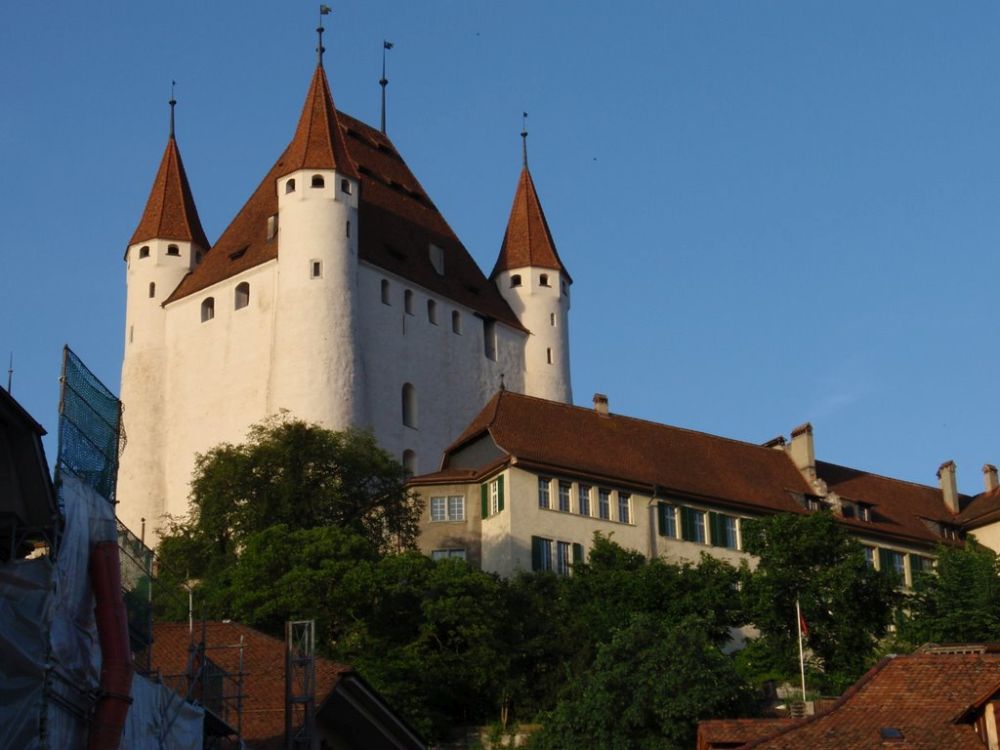
Also known as Thun Castle, it was built in the twelfth century
A renaissance man for the twenty-first century!
Also known as Thun Castle, it was built in the twelfth century
What is very surprising about the Basel Herbstmesse, or Basel Autumn Fair, is not that it is Switzerland’s oldest street market – over 600 years old! And it is not that it is Switzerland’s largest street market, drawing hundreds of thousands of visitors each year.
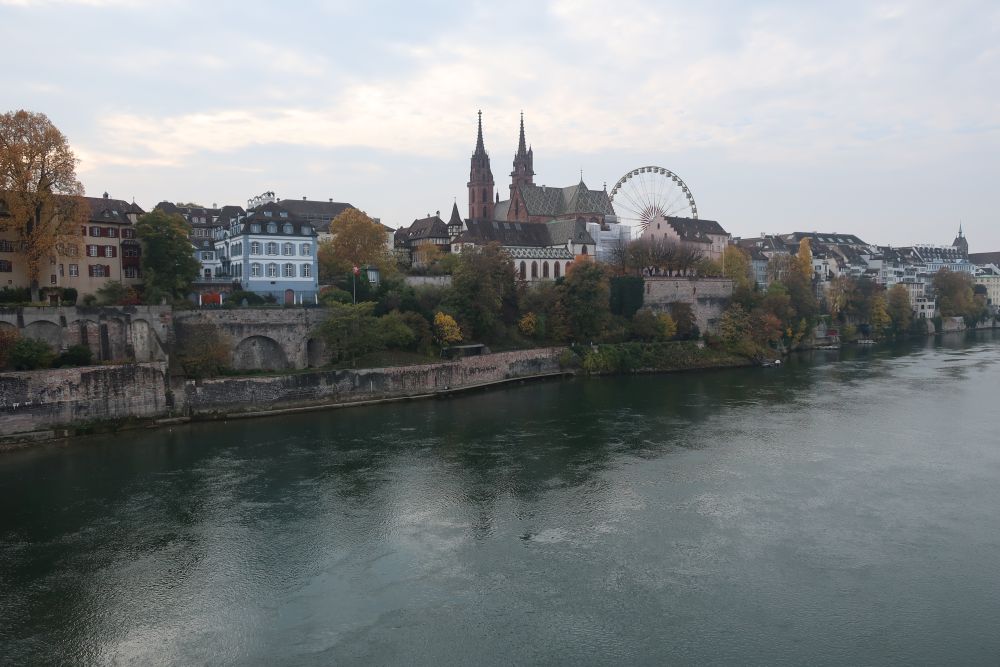
What is amazing is that so few Swiss people seem to know that this market exists or have even heard of it.
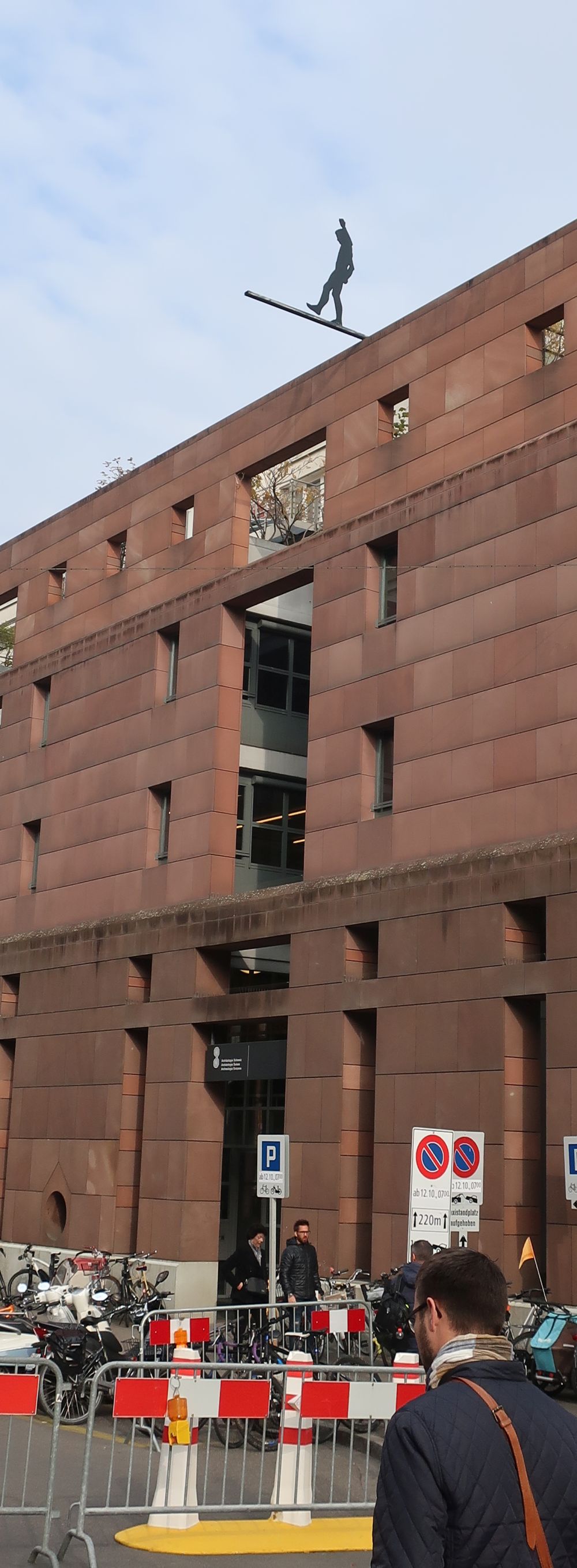
I’ve talked about walking the plank – in Stuttgart. And I’ve talked about walking the plank – in Esslingen am Neckar.
Continuing the series, here is an art exhibit in Basel at the top of the Basel Rosshof, at one time a historically significant place for horses, and today a rather ugly building:
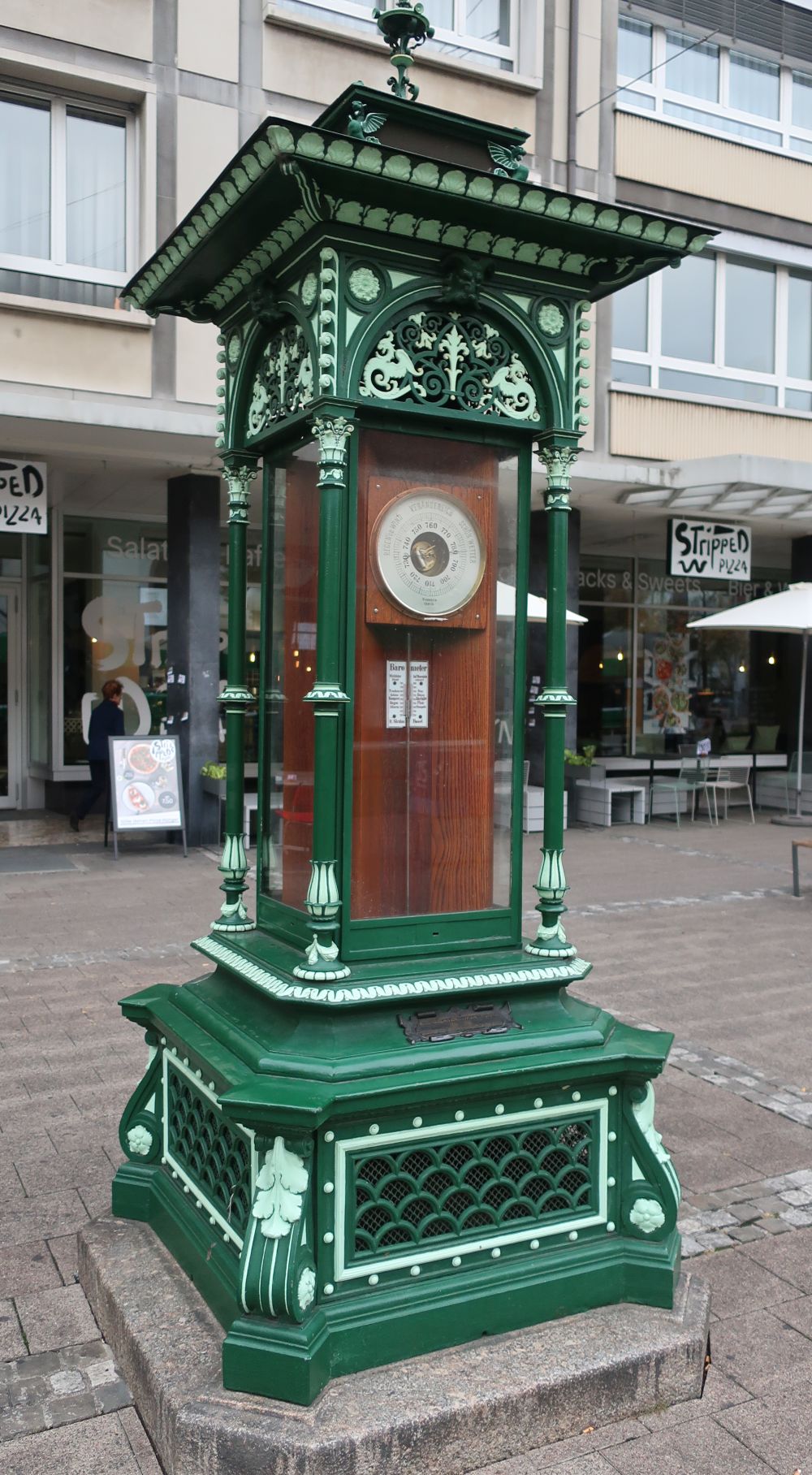
It is amazing that it still runs today, and of course it raises of host of other questions, such as who takes care of it, is there a financial budget for it, and the like.
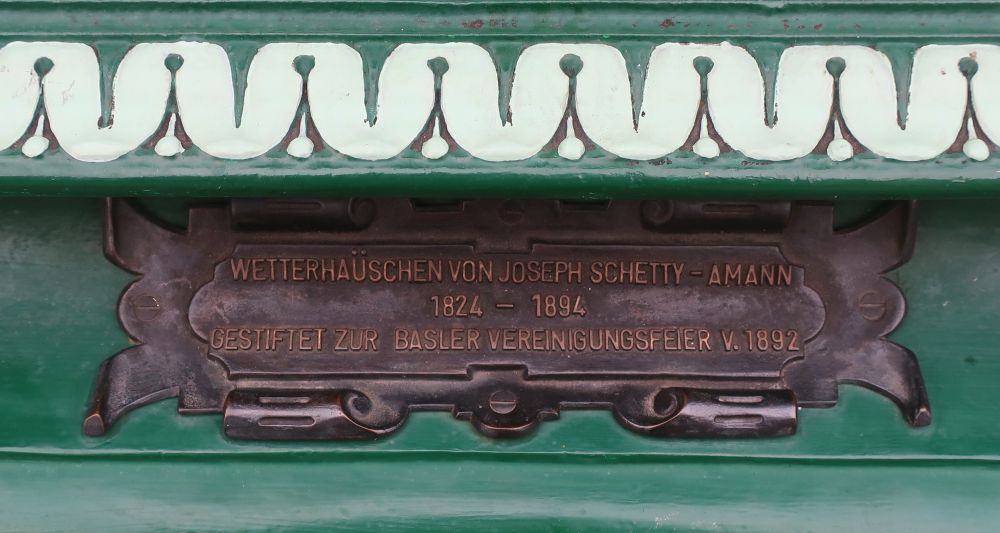
Here is a plaque where you can see more details:
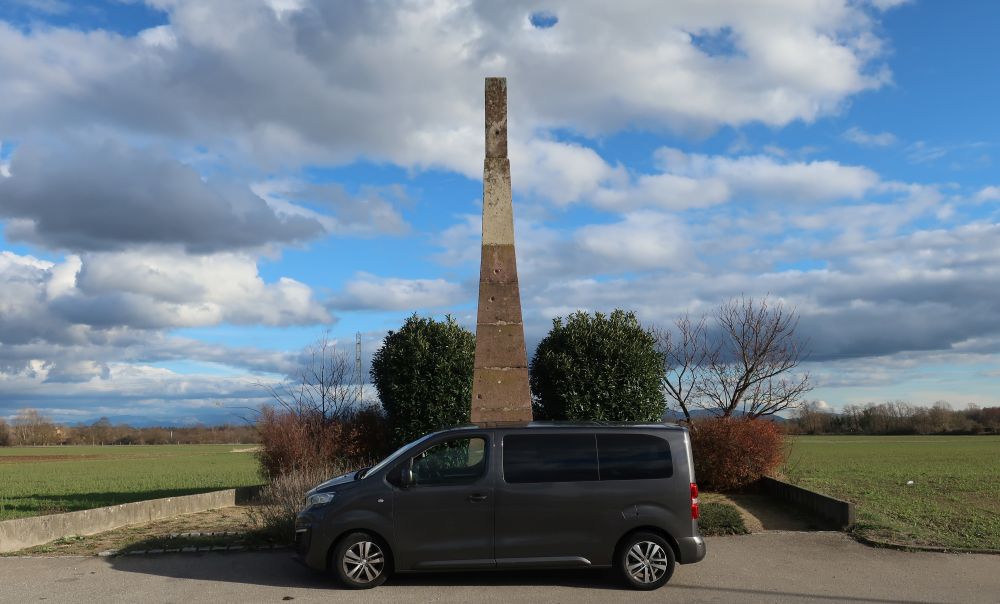
I’ve talked about the Euro Cruiser. And I’ve talked about an historical marker in Alsace that was used in a survey of Switzerland commissioned by Napoleon.
Now, here they both are, together!
If you have ever been to the train station in Basel, and if you have a sharp and discerning set of peepers, then this view might drive you crazy:
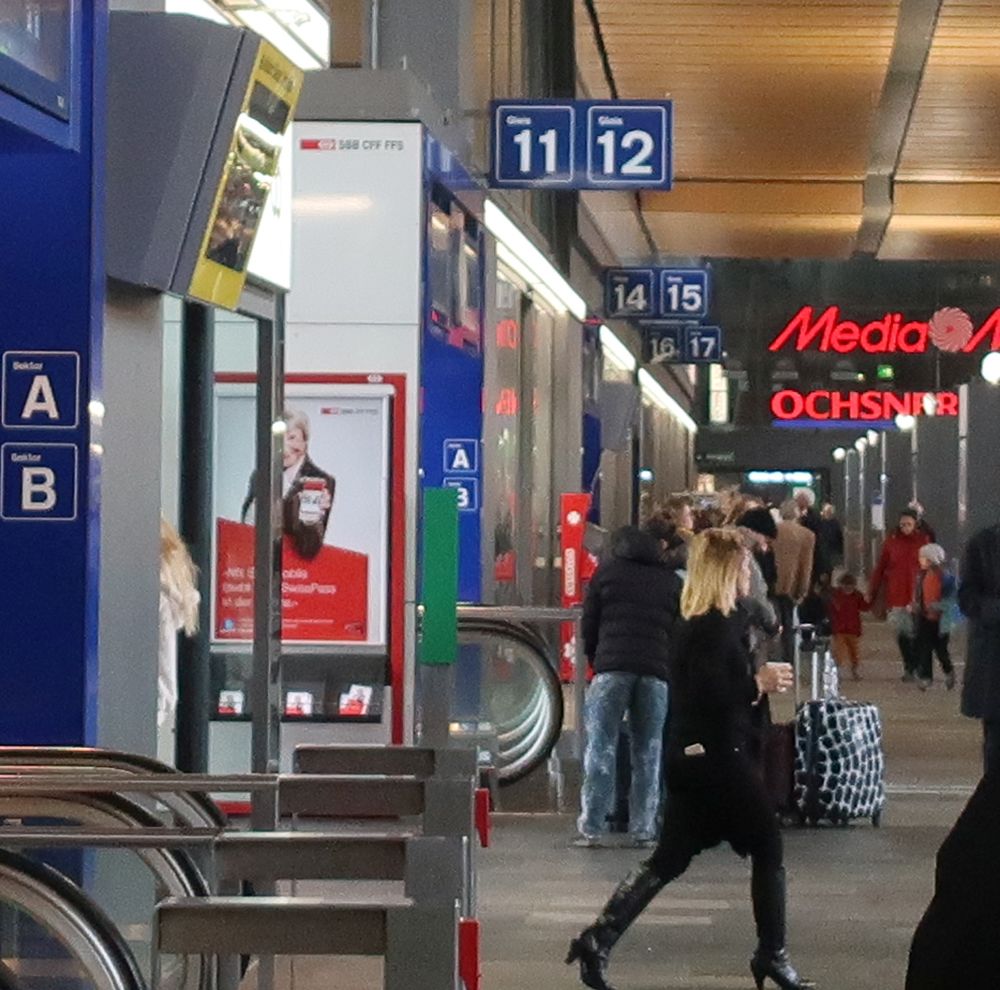
Why? As you can see, there are train tracks 11, 12 . . . and 14 and 15 – but there is no track 13!
For a long time, I pondered this mystery. Was track 13 removed to avoid bad luck? Other train stations have track 13, so I don’t think so. Was track 13 removed for satanic pagan reasons? Basel has one of the largest pagan celebrations in the free world – so this could be likely – but I never was able to connect this pagan ritual to the number 13. Was track 13 removed because the Swiss are sloppy guys that made a mistake and never bothered to correct it? Hardly!
So then I got busy: I hit the rails and asked train conductors – lots and lots of them. Sadly, none of them knew the answer. I hit the Basel train station office and asked the counter staff – lots and lots of them. Sadly, none of them knew the answer.
Fast forward about THREE YEARS! Recently, I finally got lucky – while talking to a train conductor a train driver happened to overhear my question, and he jumped in and told me there was in fact a track 13. Turns out, he knew the track very well and drives on it regularly!
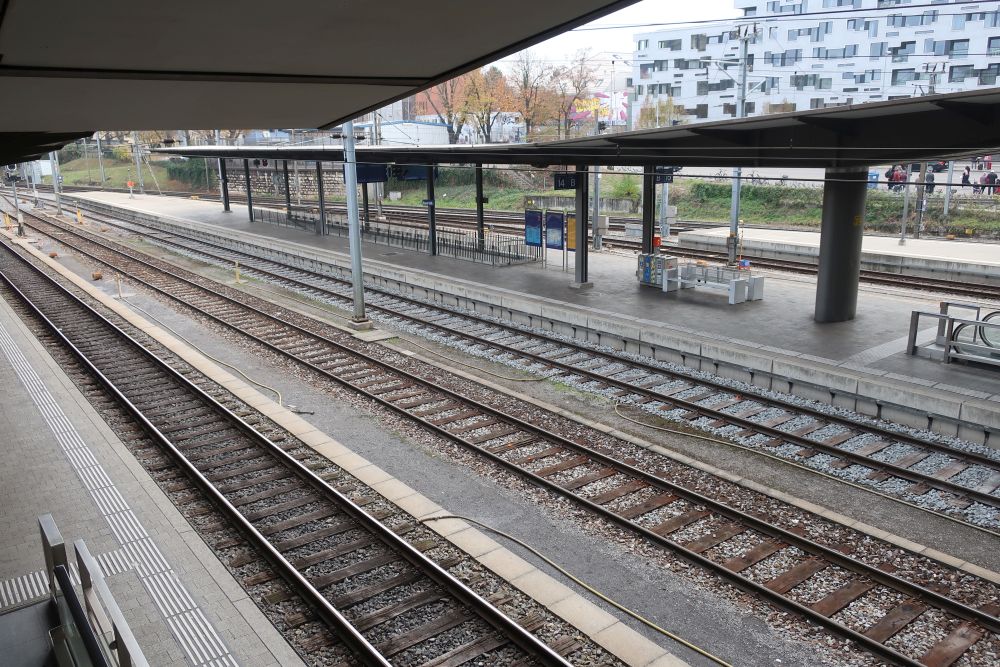
You see, the key to the mystery was, there is a track 13, but no platform 13.
And to their great credit, the Swiss Federal Railways did not lie or mislead about this. In German, the term used is “Gleis 13” which – translated – means “Track 13” and not “Platform 13.”
After three years of hard work – the great mystery of the Basel Bahnhof has been solved!
Storks. I’ve written about transformer storks, house storks, monument storks, and Bodensee storks. And now to add to my collection of storks, train storks!

This fellow set up shop at the Basel Bahnhof, and as you can see from this snap he looks rather proud of himself:

Technically, he is geolocated in Switzerland – but legally, he is residing in the French area of the Bahnhof.
Continuing the series,
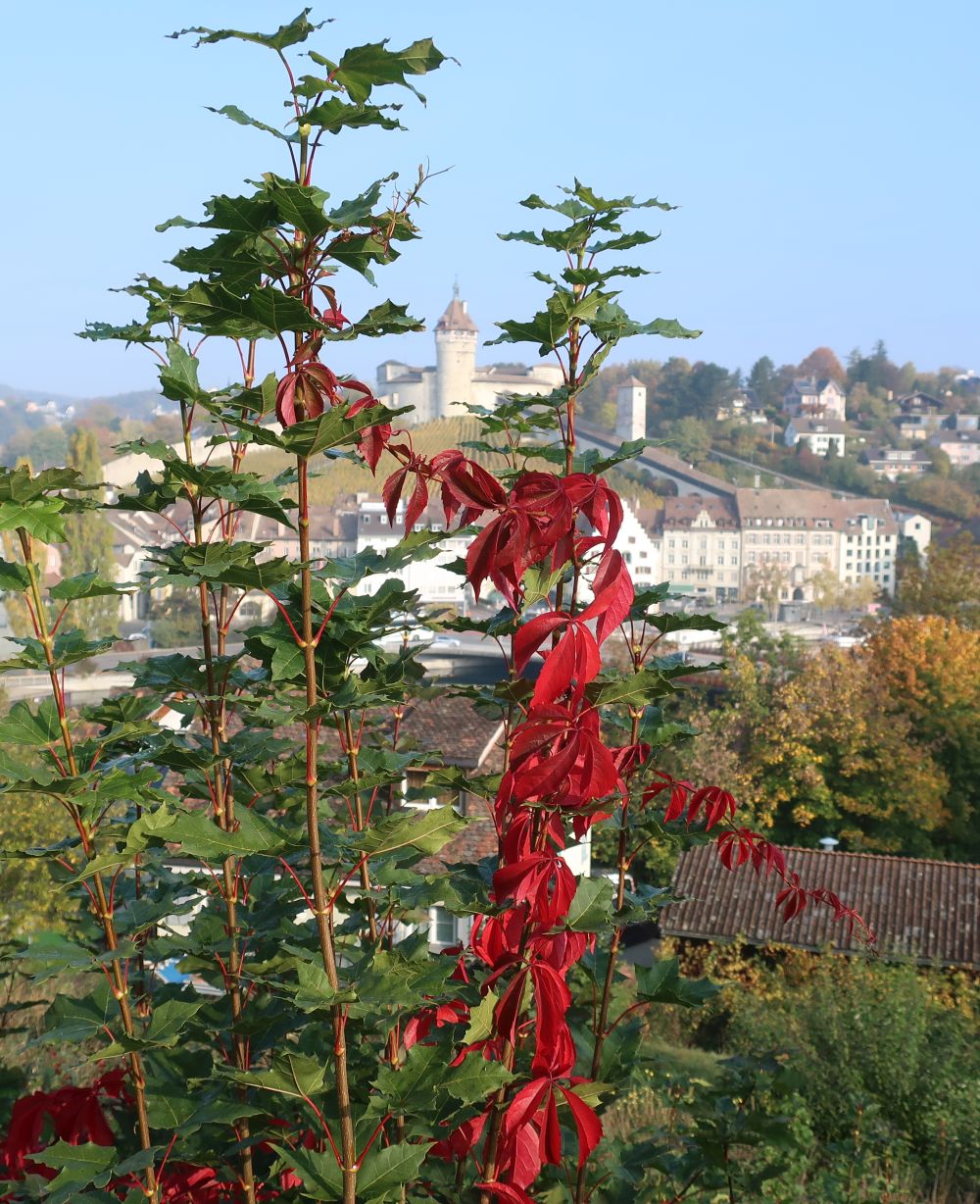
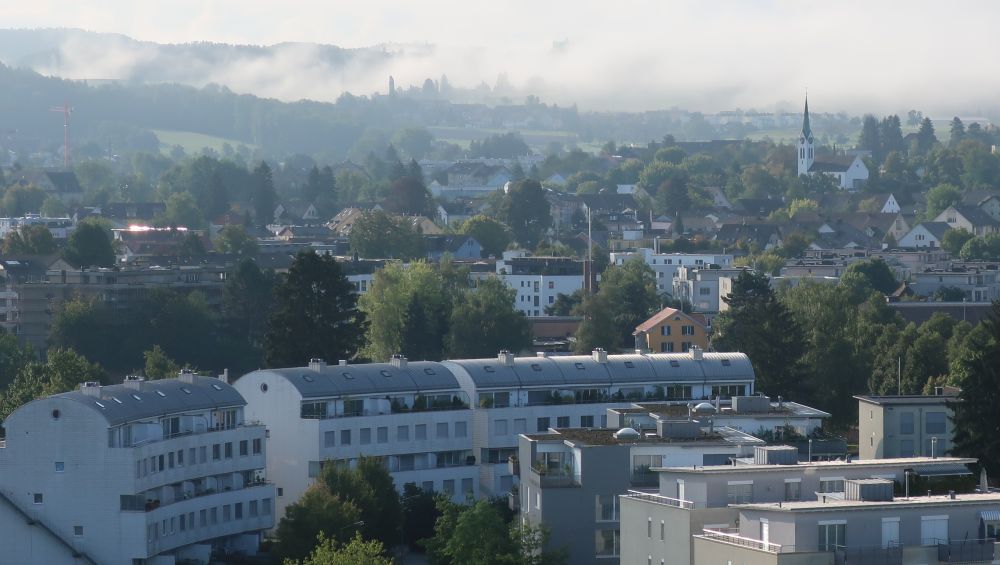
Continuing the series, this snap somehow reminds me of a dystopian, futuristic landscape:

It’s the year 2042. The outside temperature during the summer in Switzerland can be in excess of 60 C, so it‘s not possible to spend time outdoors unless in a chill-suit. Winterthur is a small industrial outpost with a population of less than 100. Here you can see the sun rising above the nuclear powered carbon extraction plant. In a network of nearly 1000 stations like this circling the globe at strategic points, carbon is extracted directly from the atmosphere, converted to a solid, and transported by computer controlled railways to Spain – a long dead country in the uninhabitable zone of Europe, where the average yearly temperature is above 60 C, and the peak summer temperatures approach the boiling point of water.
Climate scientists are in unanimous agreement that these decarbonification activities must continue unabated for another forty years before the year-over-year rise of the Earth‘s temperature will be stopped, and another century before the pre-2000 temperatures will be restored. With Earth‘s population currently hovering at a little over 250 Million, it will be a tough challenge to keep this system in operation that long.
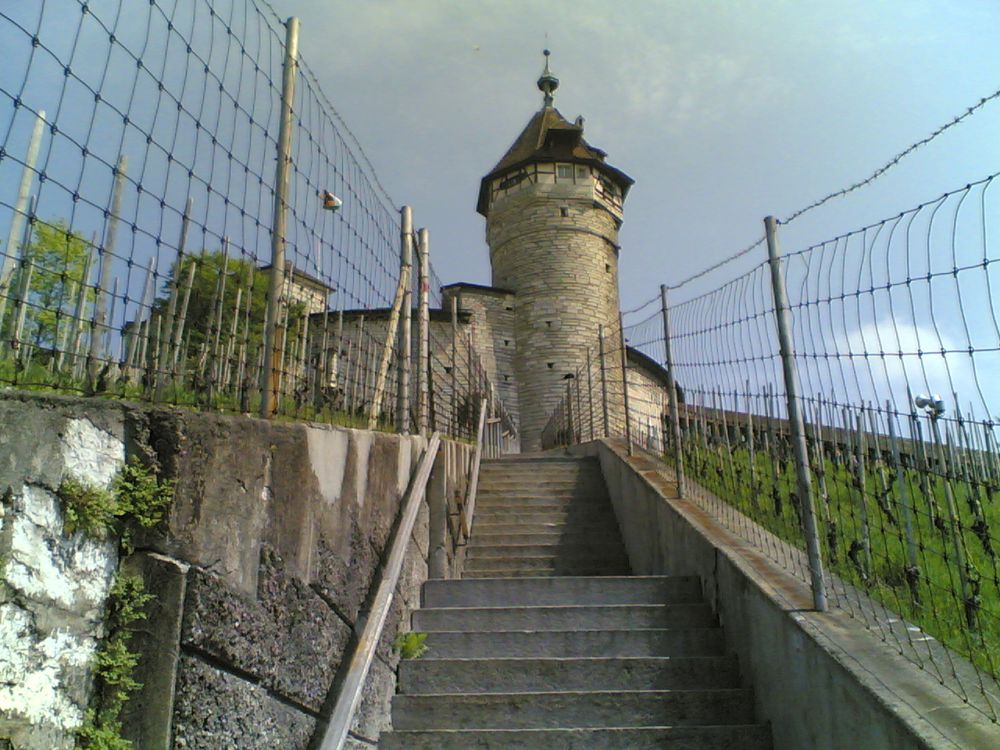
Continuing the series, this is a magnificent view of the Munot Fortress overlooking the Rhein River in north central Switzerland:
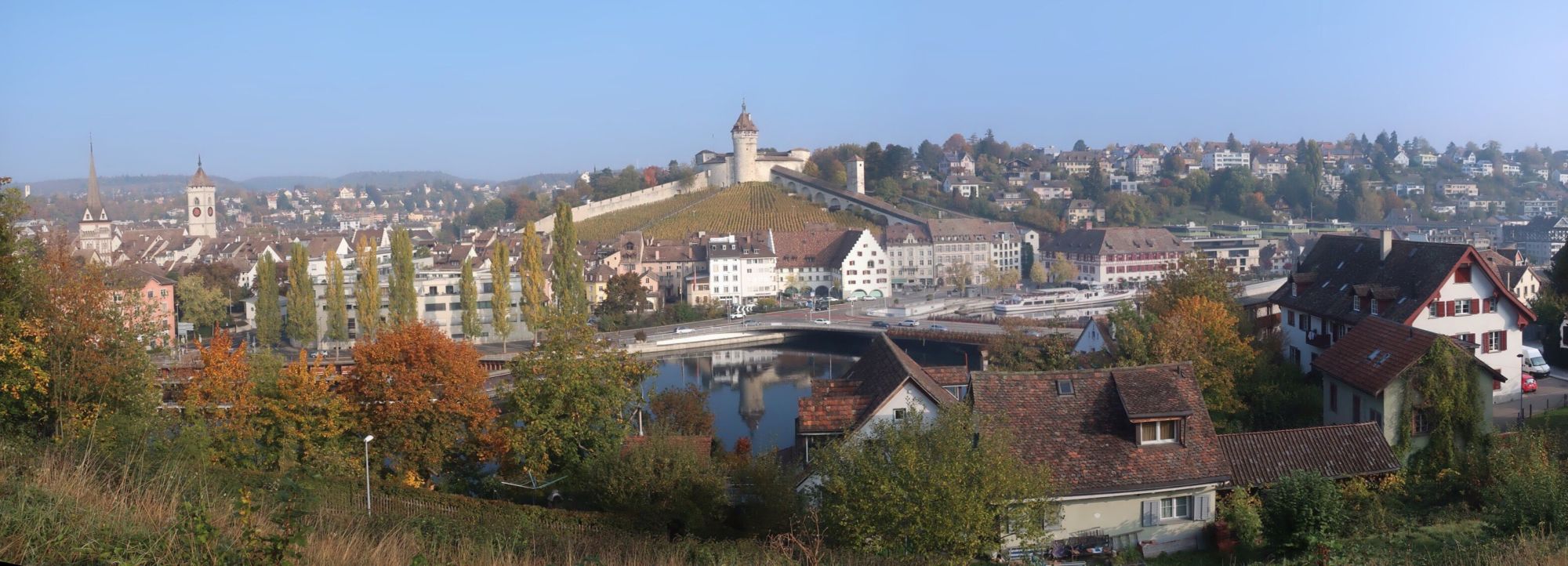
This is looking up at the Munot, from the old city of Schaffhausen:
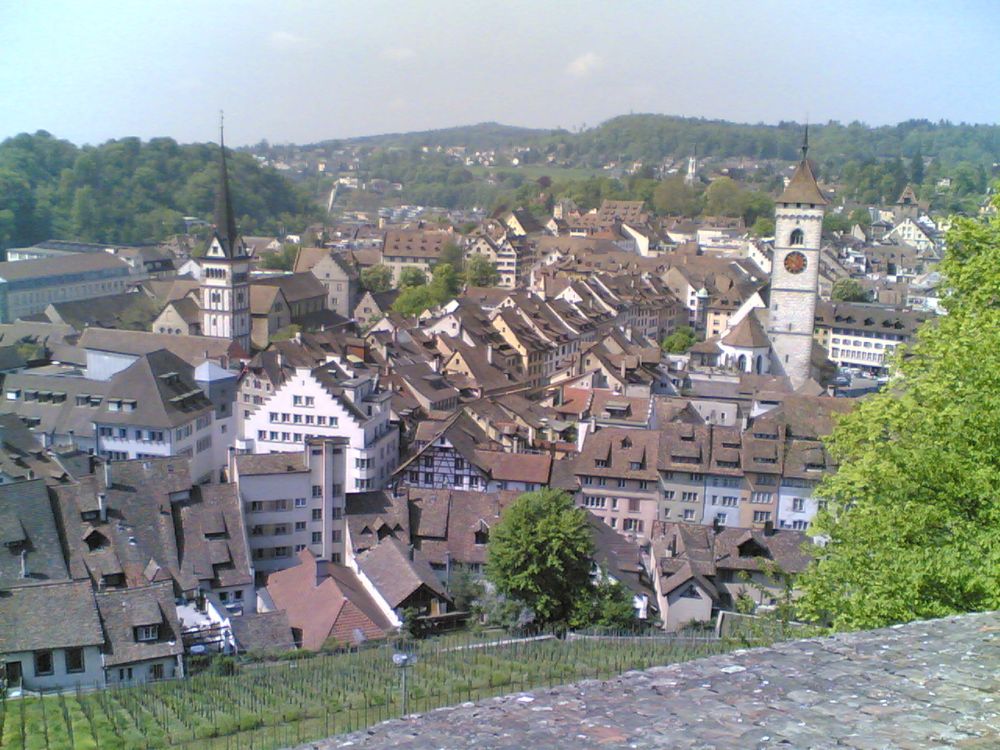
And this is looking down from the Munot, towards the old city of Schaffhausen:
Yesterday I spotted a muster of storks (sometimes, at least according to Wikipedia, called a phalanx of storks) overflying the Zurich airport in Switzerland, at an altitude that made them nearly impossible to see:
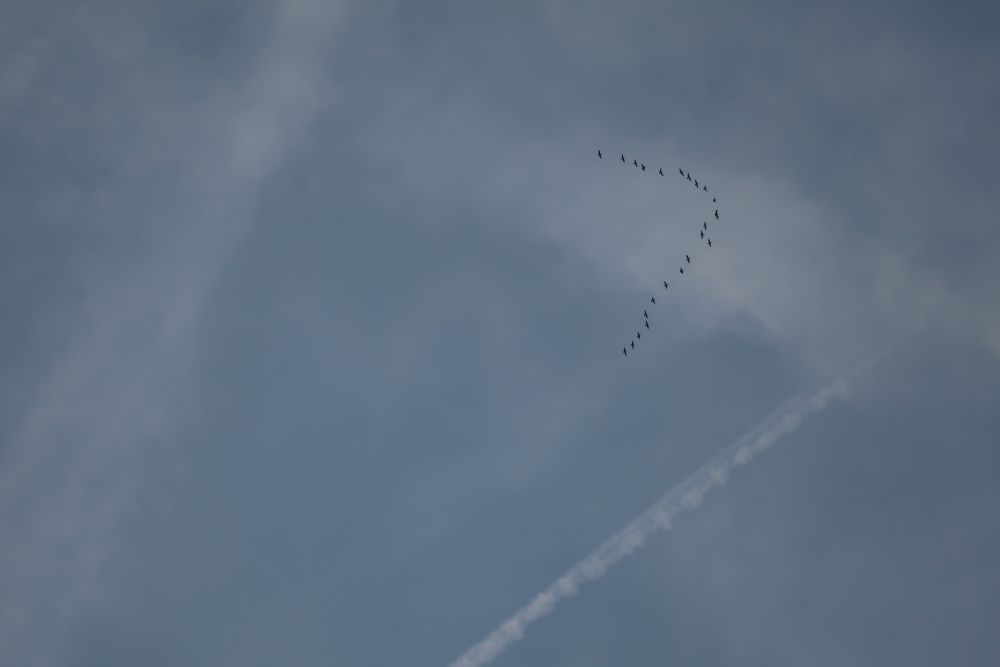
In fact, I could not see whether they were in fact storks. Fortunately, I had my camera with me, and it has a terrific photographic lens:
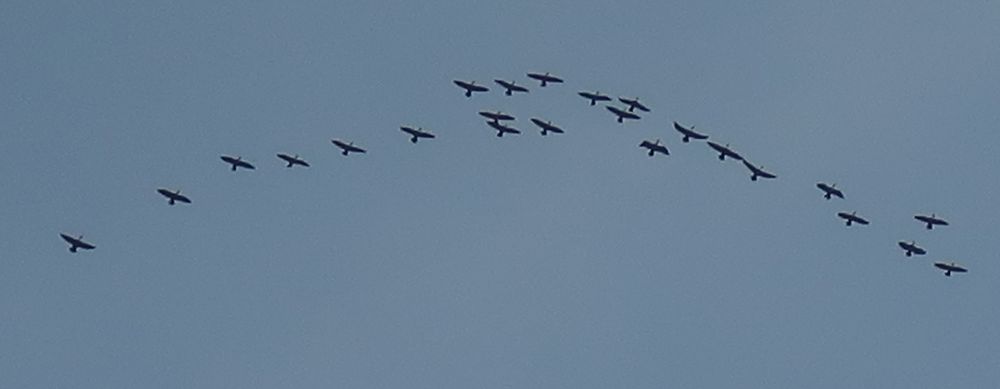
I mentioned in an earlier blog that when storks are juveniles in Europe they are taught flying skills by their immediate peers, and there are in fact two groups of storks: those with lessor flying skills that overwinter in Spain, and those with better flying skills that overwinter in Africa. Interestingly, scientists have attached accelerometers to storks, and they can determine within seconds to which group of flyers the storks belong.
They don’t have hurricanes or tornadoes in Alsace- never have, likely never will. So in a recent blog I observed was quite odd for the French to take time from their favorite hobby (namely, wrapping historical buildings in atrocious glass bubbles) to build a nuclear-war-proof bird house, complete with high strength structural steel and (I assume) titanium bolts attached to a deep rebar-reinforced concrete piling:
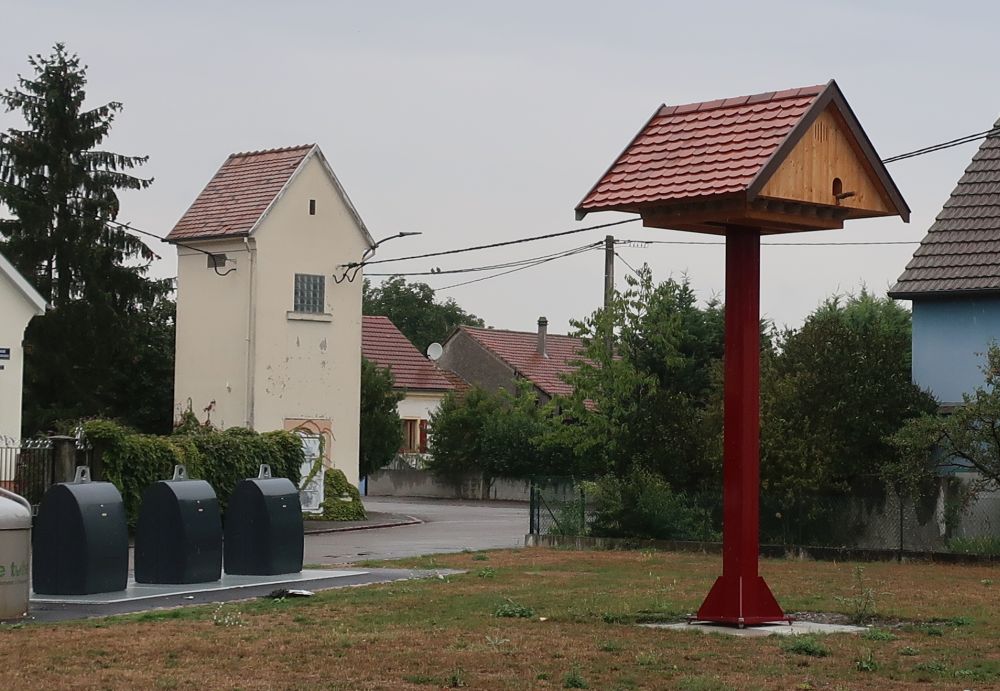
To me, this was an oddity but no more than that.
But . . . something amazing happened this week. The situation has now suddenly turned from French oddity to international mystery!
For this week I spotted exactly the same type of bird bunker, in a completely different country!

This high strength bird bunker is located near the Zurich airport in Switzerland – and unlike France, outside of the European Union!
So it is now truly an international mystery: who designed this bunker? Who decided where and when it would be used? Who paid for it? Who maintains it? And especially, when someone decided this was needed, how did they go about sourcing it? I haven’t checked, but I am pretty sure the local do-it-yourself stores don’t stock massive bird bunkers!
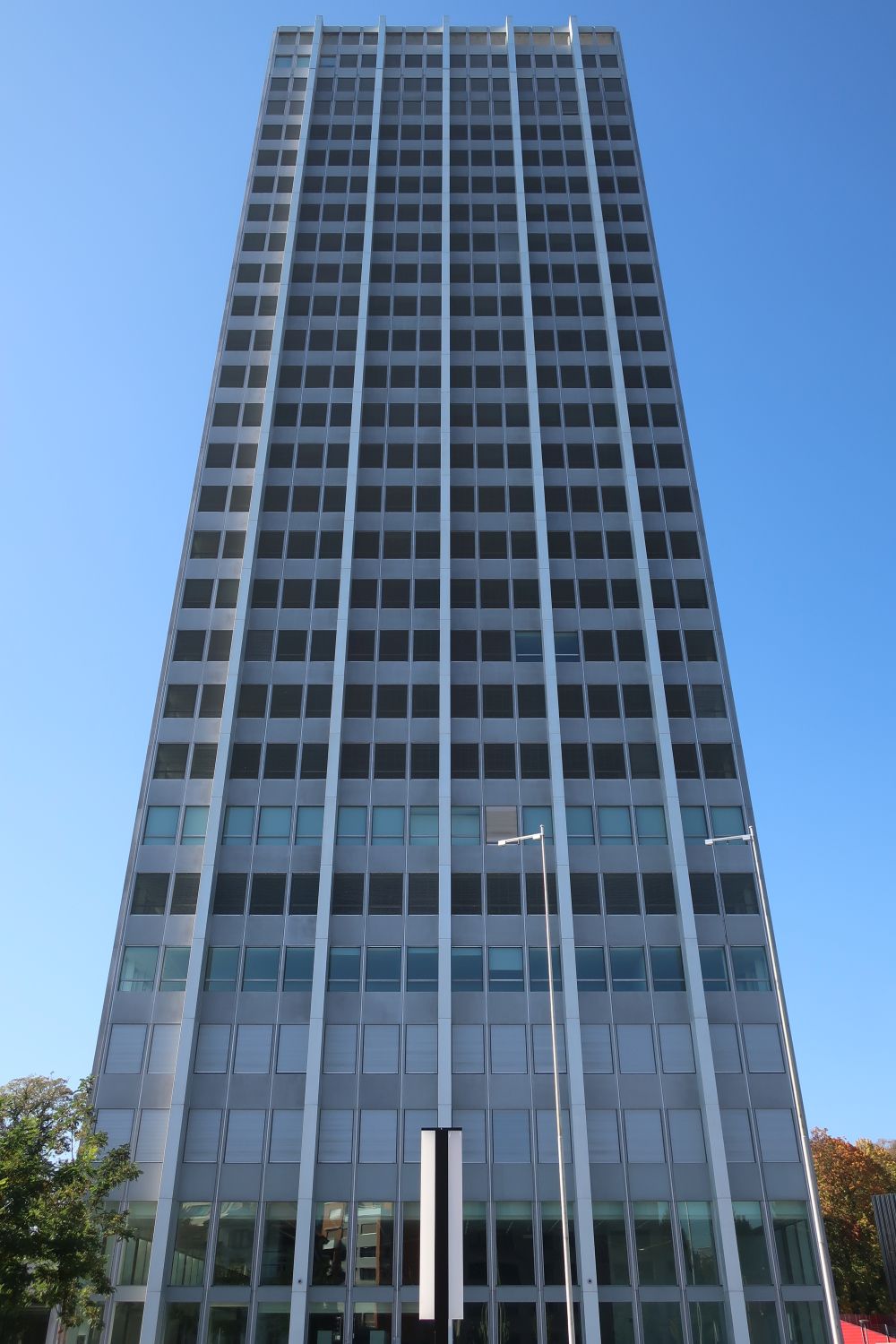
Sulzer is an amazing high-tech manufacturing company. It has long roots in Switzerland that date back to the 1700’s. It’s headquarters is in the sixth largest city in Switzerland, Winterthur, in this building:
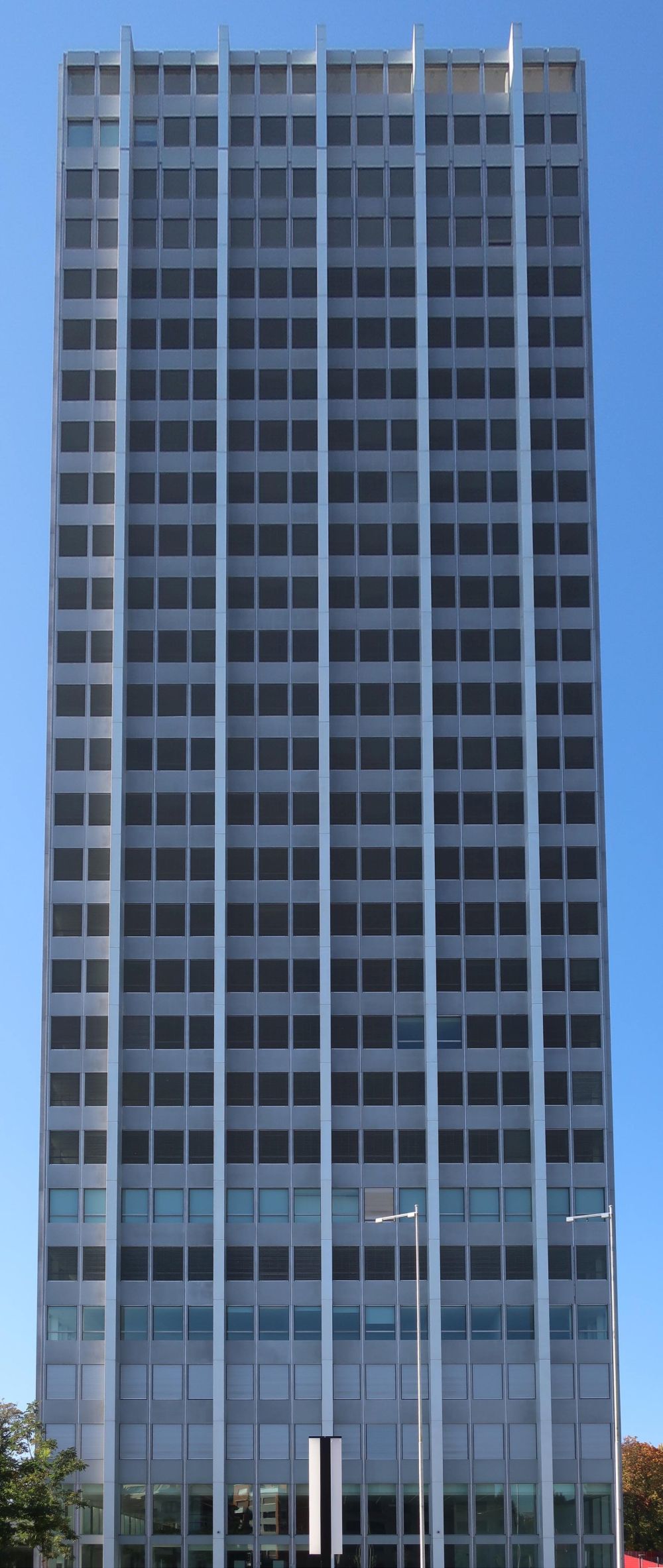
Using Microsoft Lens, this is that same building, but unstretched:
Continuing the series, here is a nice house in Lengnau that shows the double doorway that is characteristic of the Jewish/Christian houses built in the eighteenth century:
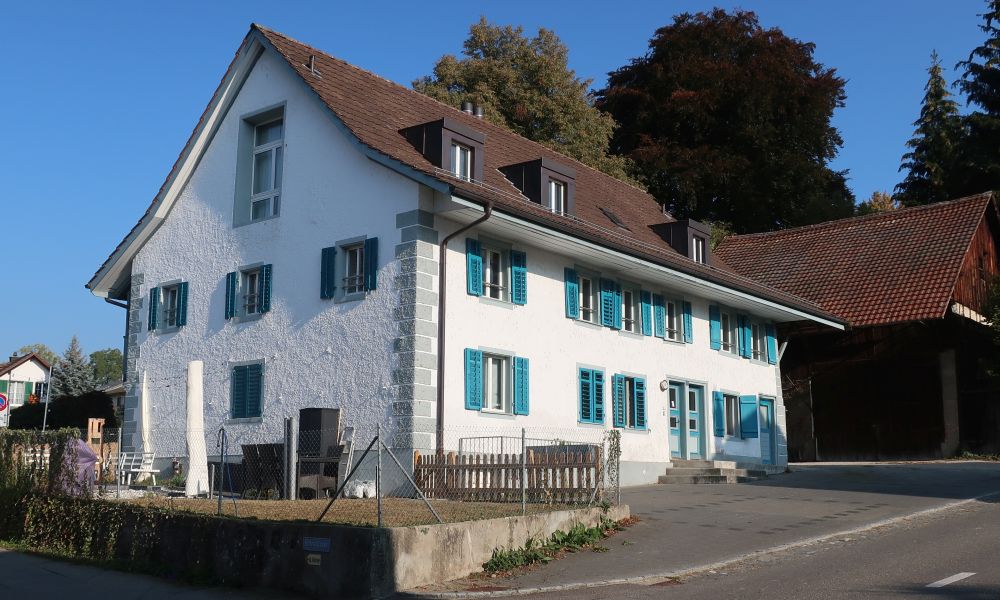
It was forbidden for Christians and Jews to co-habitate, so the problem was carefully avoided by splitting the house into two areas, each with its own door. The village of Lengnau in Aargau, in North Central Switzerland, has many fine examples of historical buildings with this characteristic.
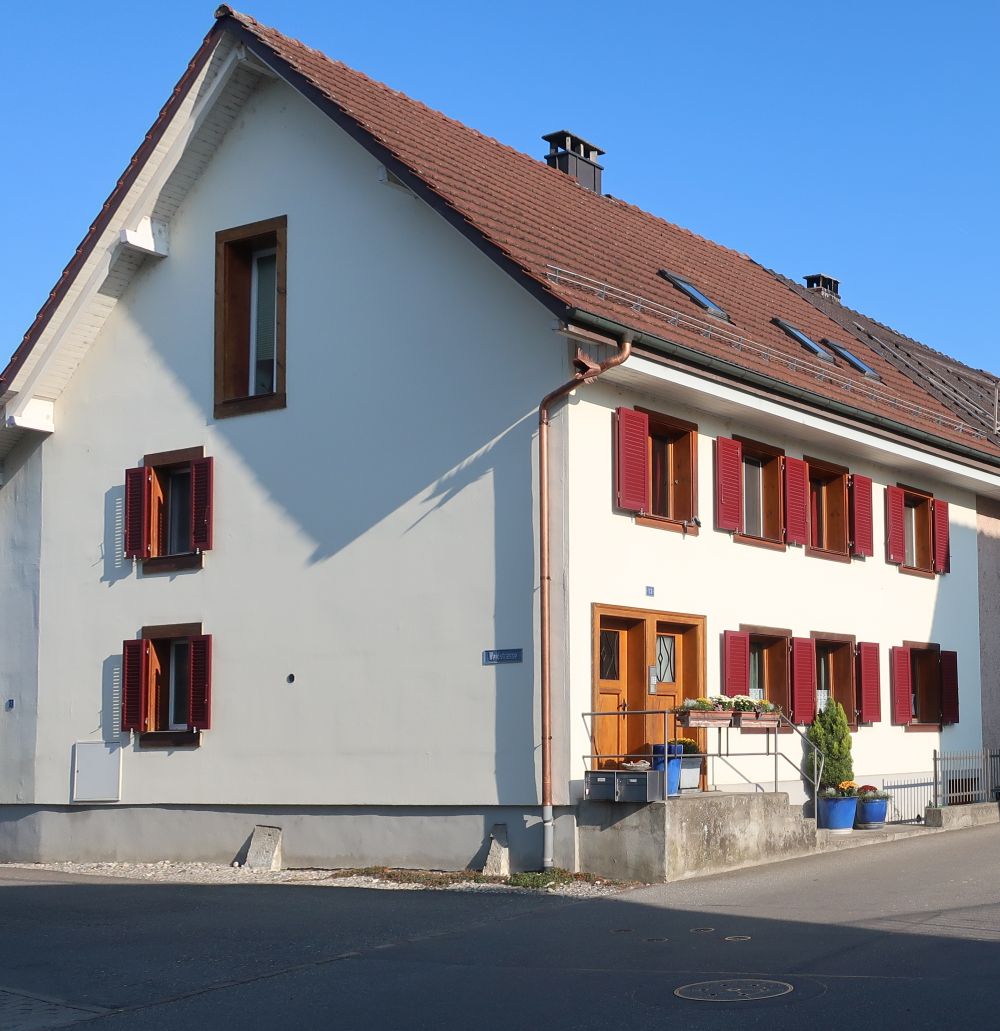
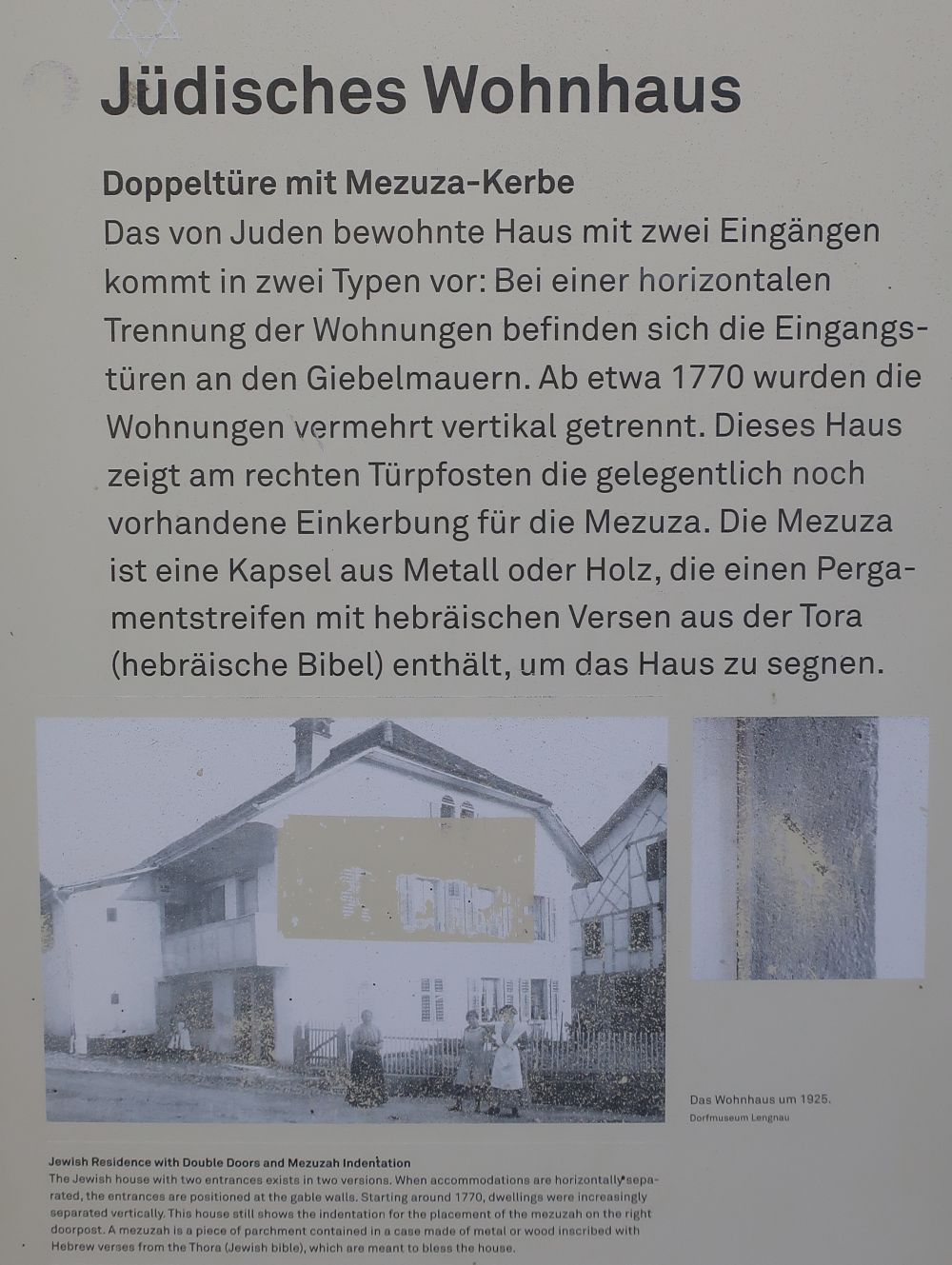
The town of Lengnau is filled with historical plaques that discuss legacy of the historical Jewish community in this area, and in fact there is a self-guided walking tour that leads visitors to important historical locations within the town.
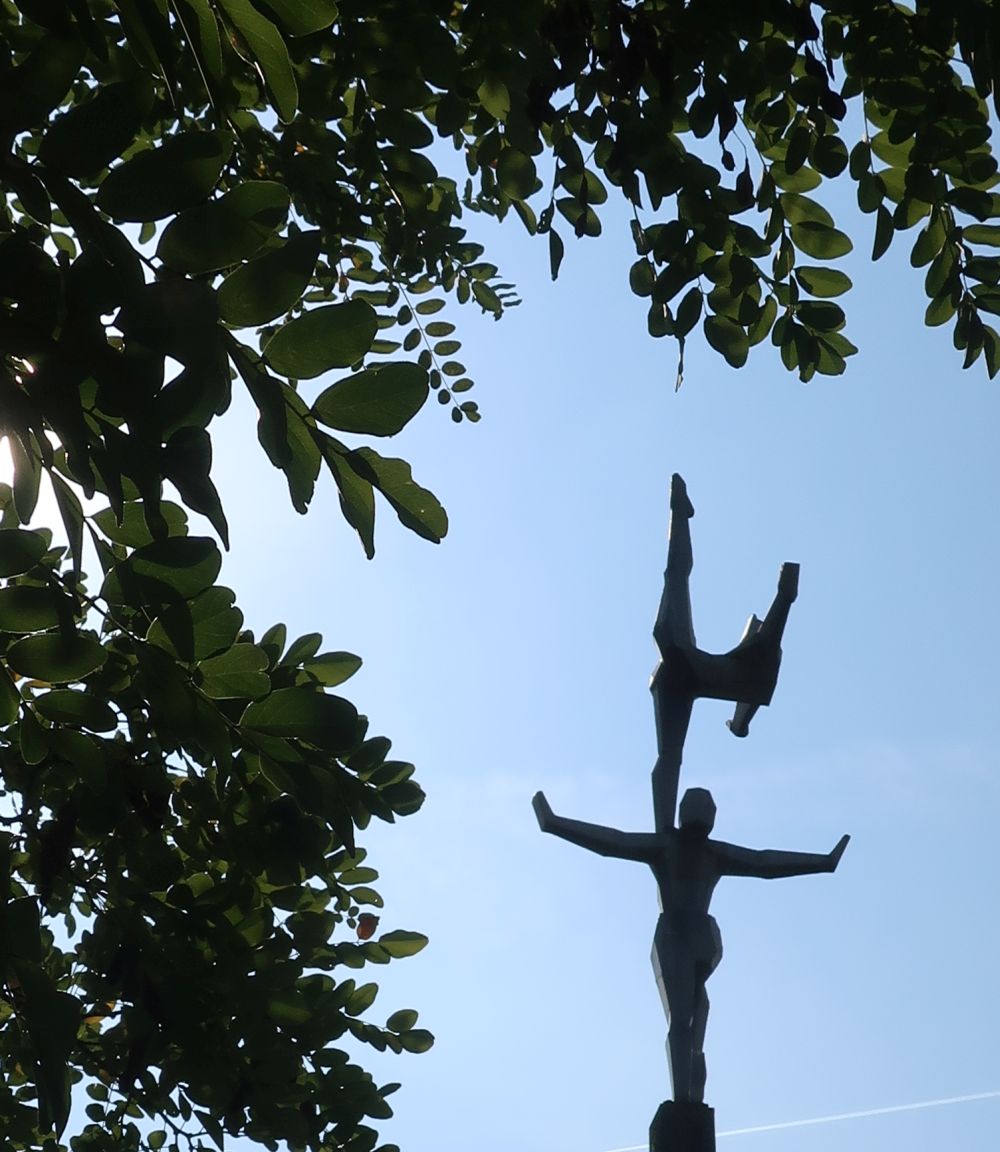
The water fountain outside of my apartment building has a tall spire topped with steel acrobats.
Here is one view:
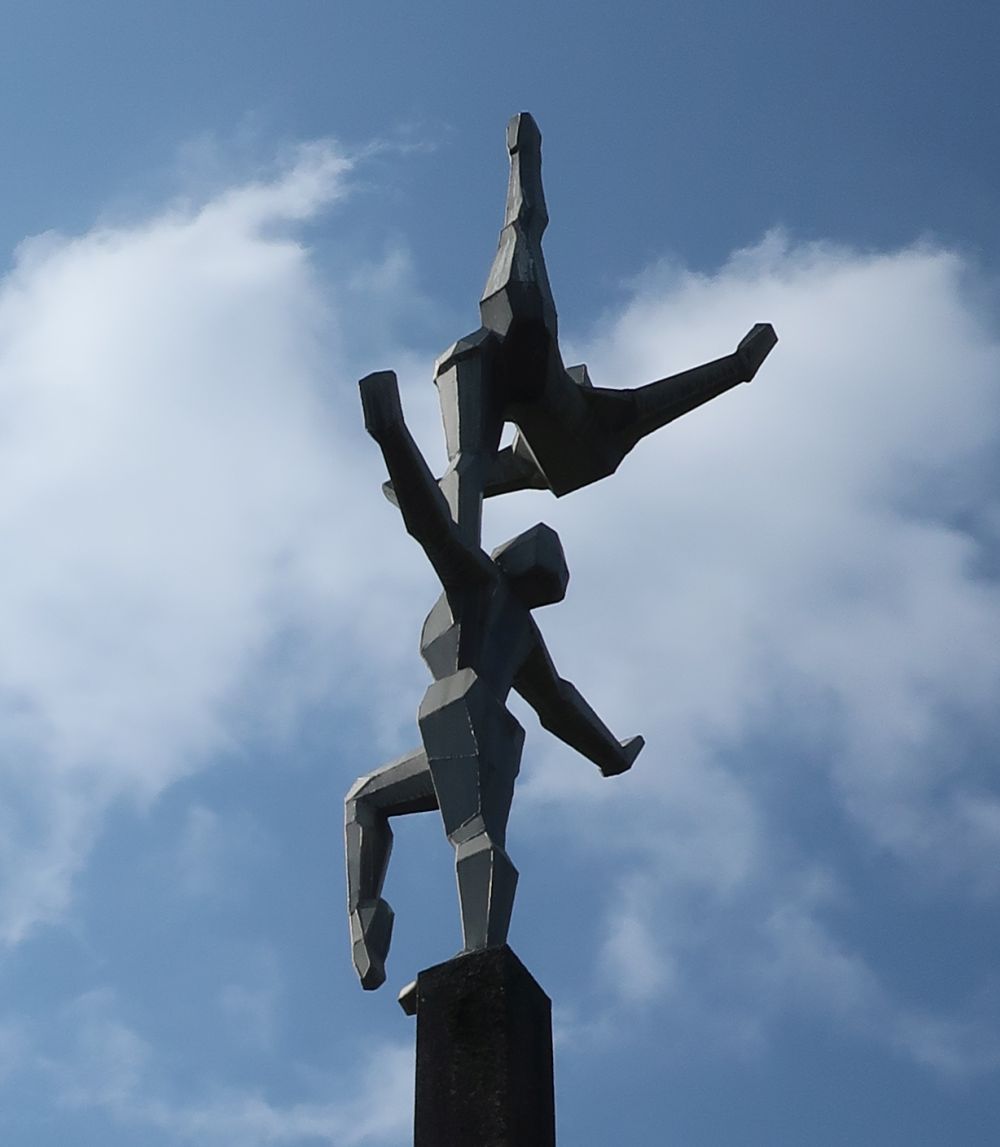
And here is a different view:
I’ve seen these things for years – but like so many things, I only just realized that for Americans this concept might be kind of strange.
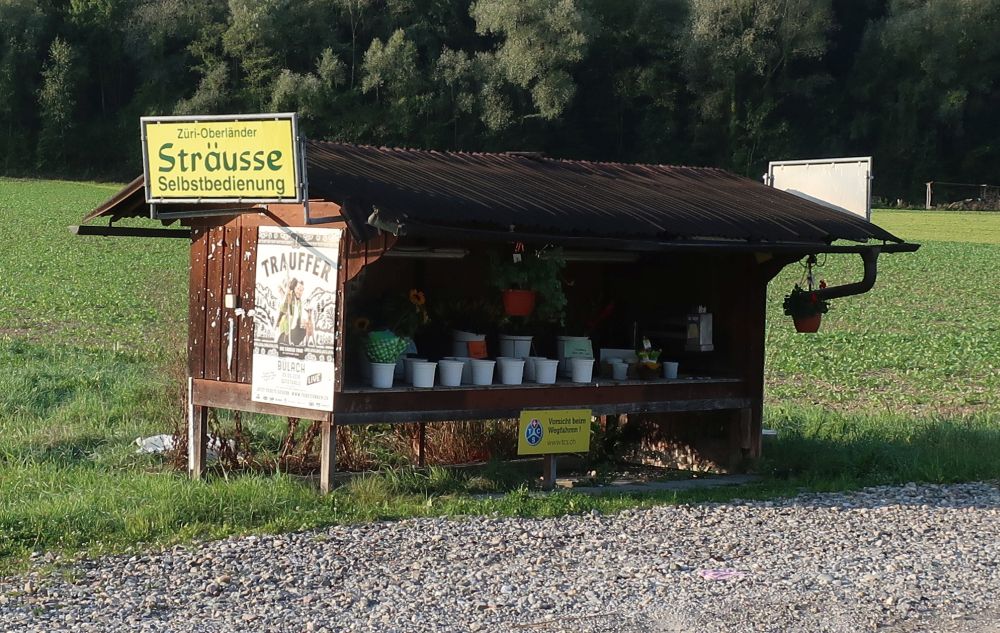
The countrysides of Germany and Switzerland are filled with little “self-service” stands owned by local farmers. You can stop anytime and get flowers, vegetables, and sometimes even eggs. There’s a little jar for you to put your money, and it run 100% according to the honor system.
I took this snap of a flower stand just outside of the Northern Swiss village of Embrach:
There have been large communities of Jewish people living in Switzerland since the Middle Ages. Sadly, there were also large pogroms, so their history was hardly a pleasant one. I’ve shared some information about the Jewish community in Zürich in a recent blog post.
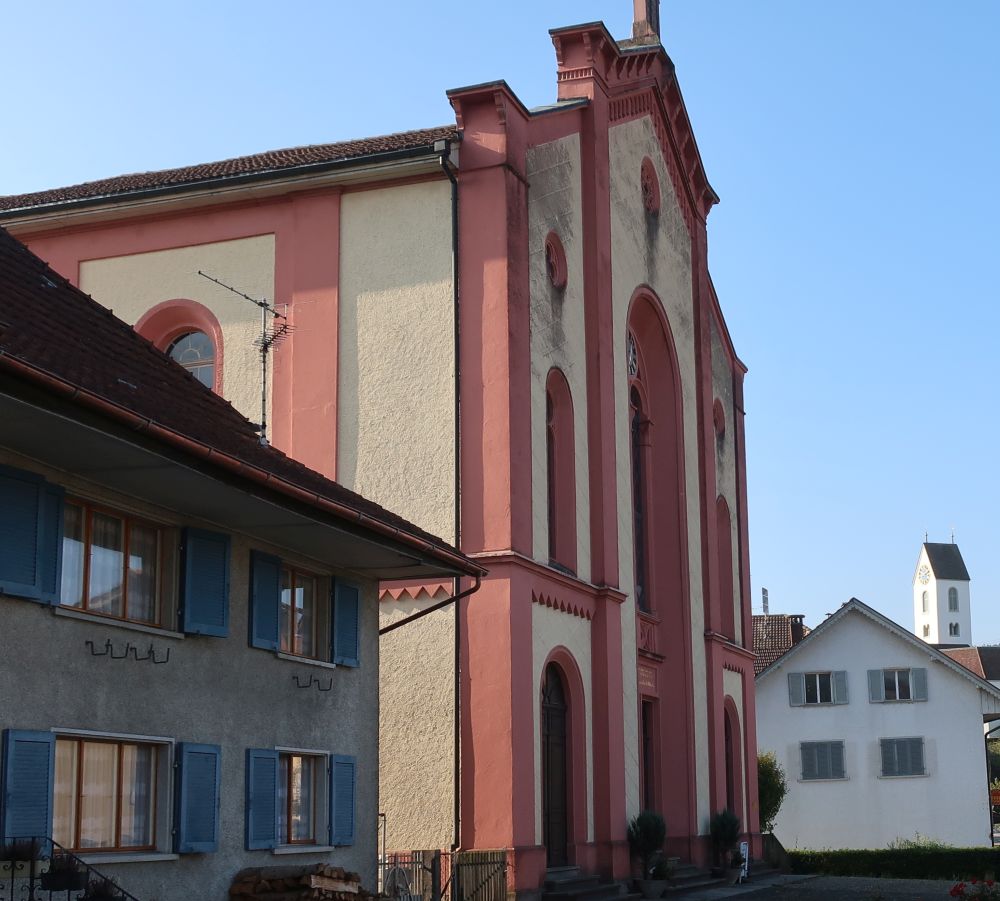
During a brief period in the eighteeenth and nineteenth centuries, the Jews in Switzerland were required to reside in one of two villages in the North Switzerland canton of Aargau, just a few miles from where I live: Lengnau and Endingen.
This is the village of Lengnau, and in contrast to other German and Swiss villages, the city center is punctuated by a truly massive synagogue rather than a Christian church or Catholic cathedral:
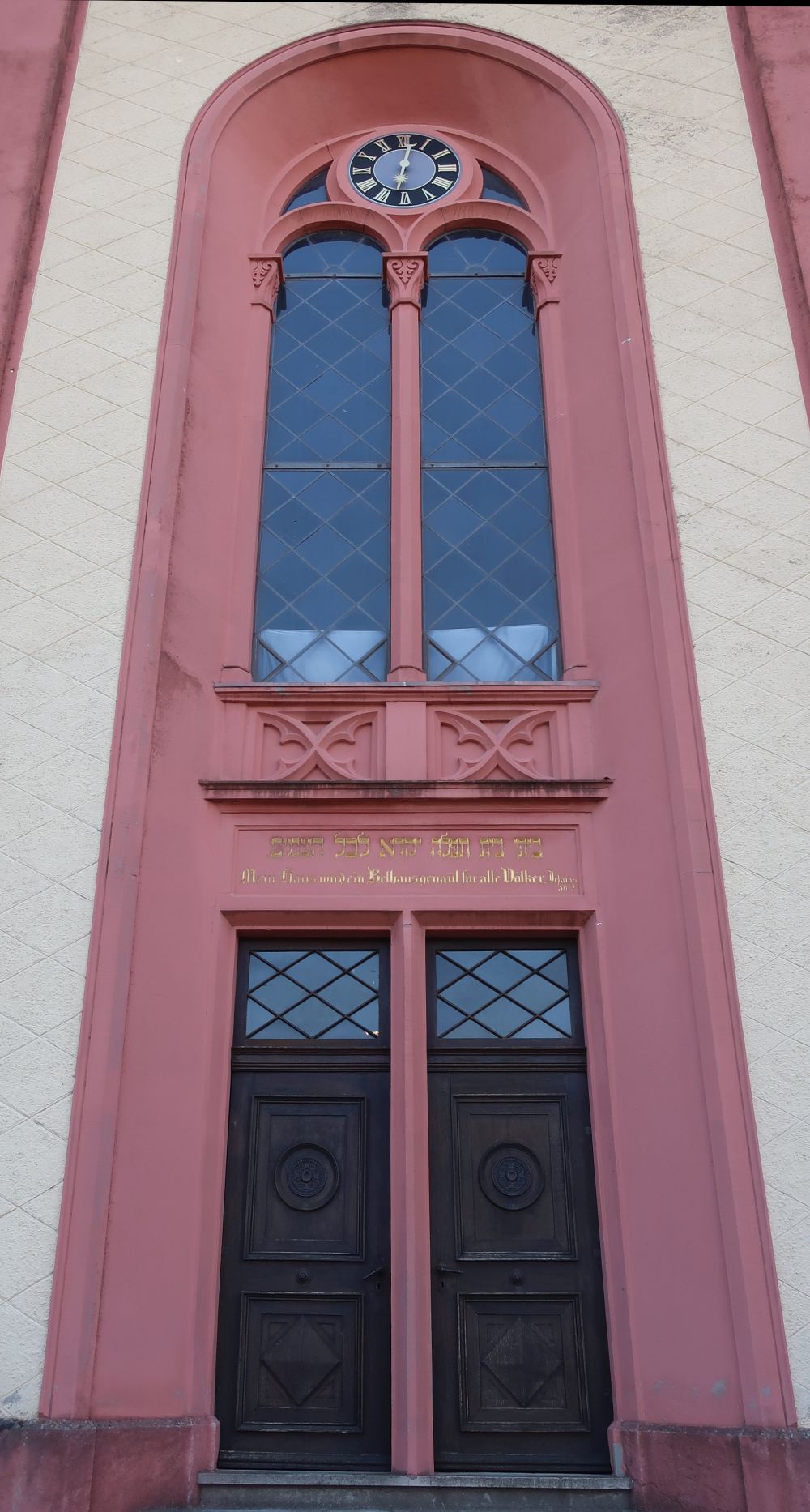
There is a Jewish description in both German and Hebrew carved into the stone arch doorway:
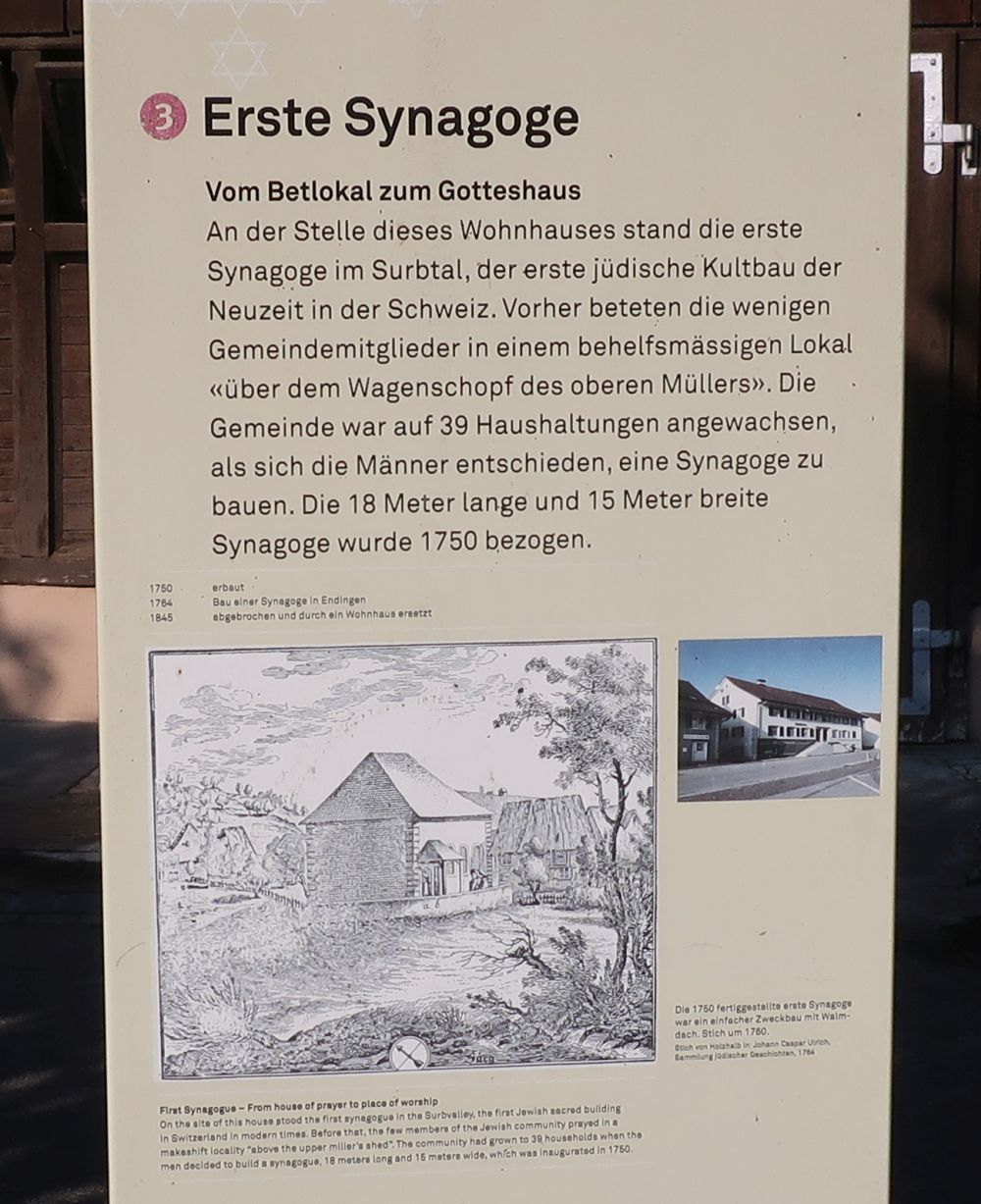
And a plaque in front of the synagogue shares a few details:
The villages of Lengnau and Endingen are filled with interesting relics from this Jewish period, and I will share some additional photos and more information in future blogs.
The latest addition to my personal fleet is a 150 PS, 2.0L 2017 Peugeot Business Traveller van that comfortably seats 9 people:

The main way to interact with this vehicle seems to be the voice system, so I am in the process of learning dozens of voice activated commands.
By the way, it all began with the Urbana Cruiser, 20-year-old 1978 Oldsmobile that I bought in 1998 for $200 from a good friend of mine, Andrei Botchkarev, one of the world’s most well-known semiconductor physicists. It was too cool to resist giving it a name.
The tradition continued with the Zürich Cruiser.
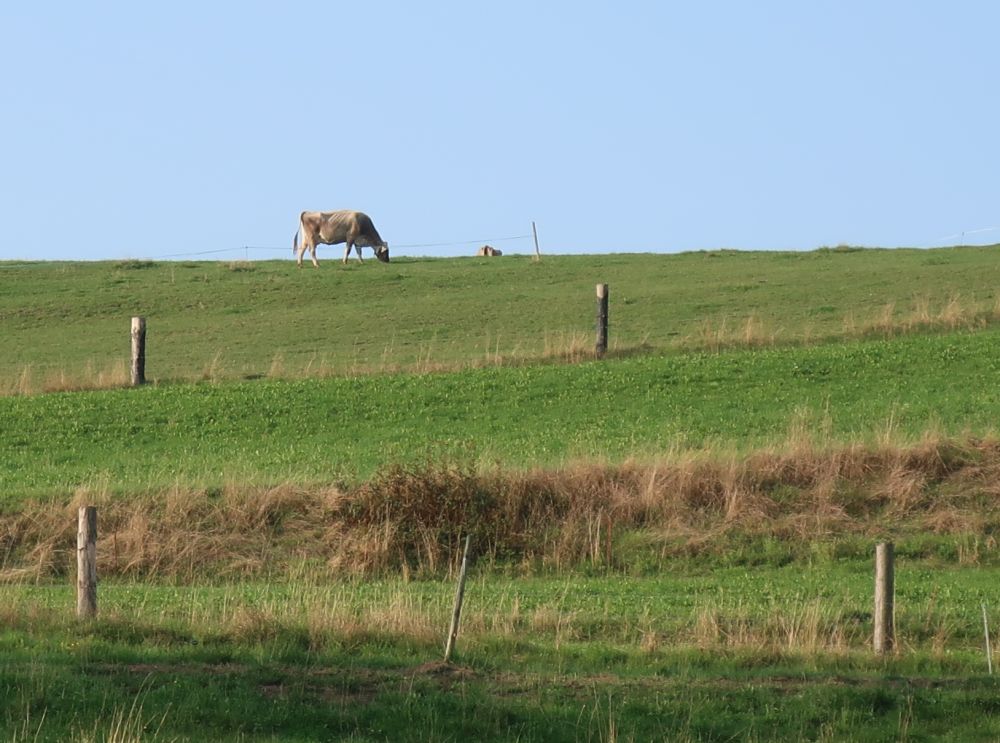
No mystery here. It’s difficult to take a bad photograph of a good cow.
This is the big sign on the Winterthur Stadtwerk Kehrichtverwertungsanlage:
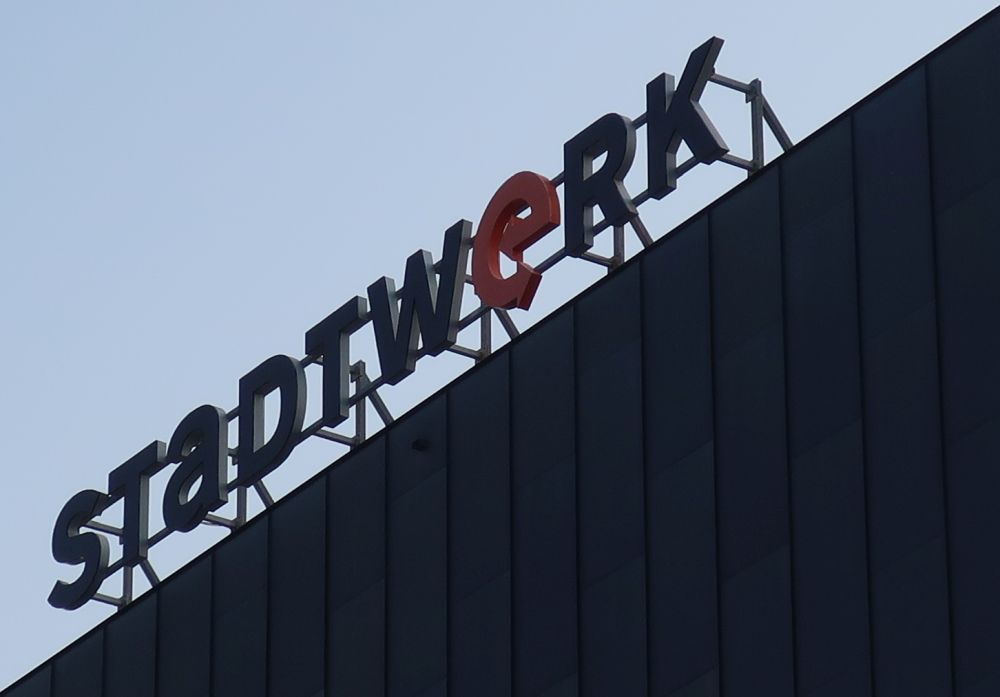
The place burns almost 200,000 tons of garbage each year, turning it into both electricity as well as heat that is transported to the local area. As a result of living so close to this place, my heating costs in the winter are astonishingly low.
Or in English, the Riddle of Räterschen.
First things first, this is NOT the Räterschen Rätsel. This is just a nice little spider snacking on a bug she caught:
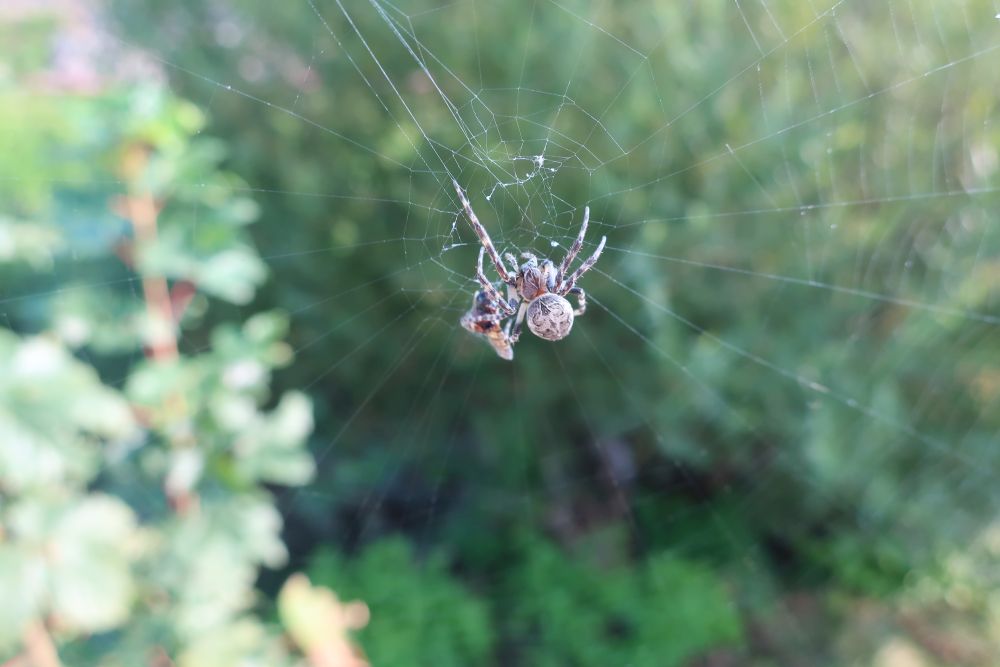
But I took the snap in the tiny village of Räterschen, just outside of Elsau in North Central Switzerland – and that is the mystery!
For you see, in the North of Germany, the diminutive form of nouns in German is “-chen” appended to the end of the noun. (Example: Mädchen = little Hamburg girl.) As you head south, the “-chen” is replaced with “-le.” (Example: Mädle = little Schwabian girl.) As you head even more south, the “-le” is replaced with “-li.” (Example: Mädli = little Swiss girl.) If you keep heading south, nobody really knows what happens, because you run into the area called Wallis – and there they speak a form of German that is so hugely different than anything else, even to this date linguists have never really figured it out; some linguists even believe that due to the majestic, magnificent Swiss Alps in this area, the locals have no words for the concept of “small.”
And so the mystery is: why does a tiny village nestled deep within North Switzerland have a North Germanic name?
There is a small river called the Sihl, and it runs parallel to a shopping center in Zürich known as Sihlcity. And on a concrete pillar is a rather nice depiction of Dirty Harry.
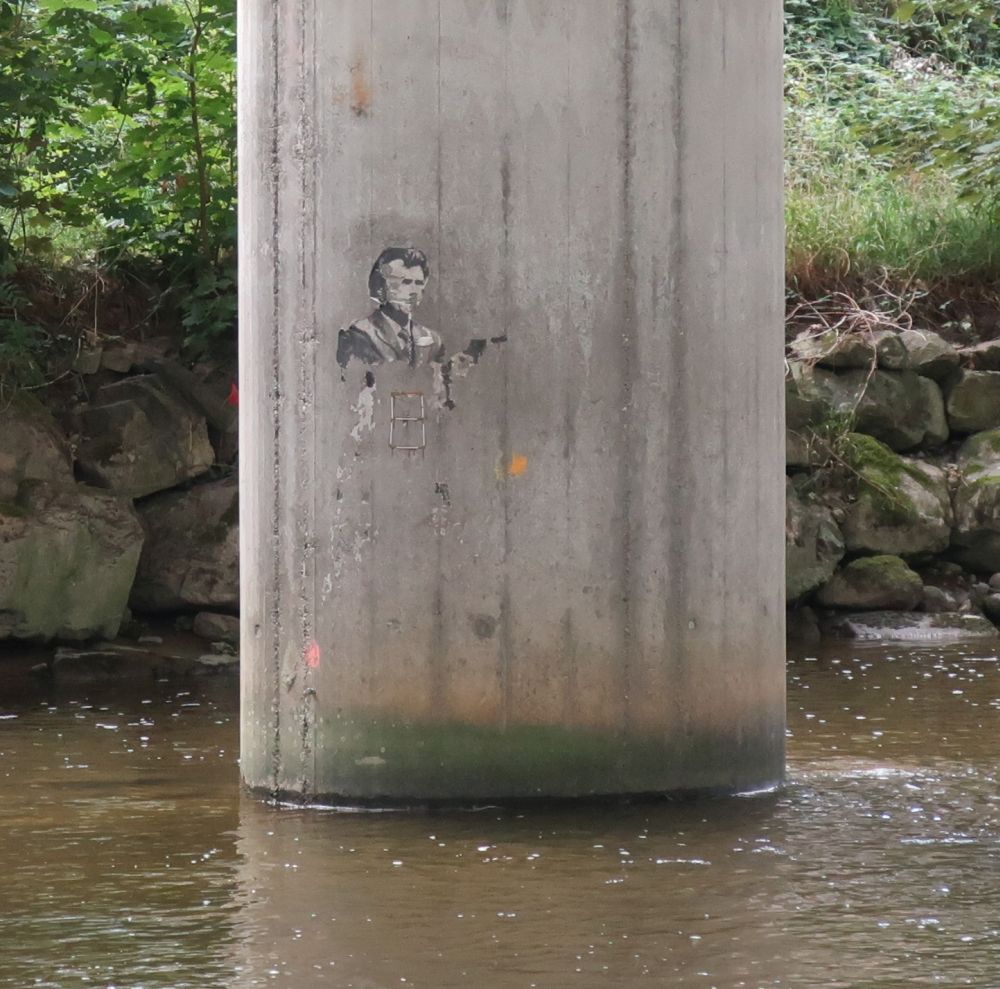
I’m not sure why it’s there, but it is located only about 200 m from one of the largest movie theaters in Zürich – so maybe that is somehow related?
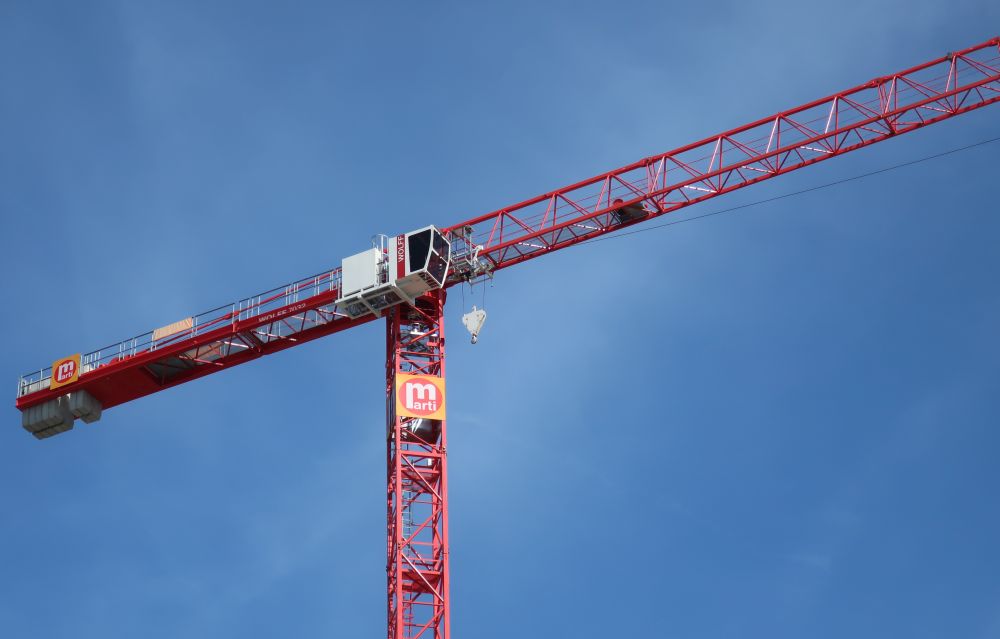
Continuing the series, I thought this one was particularly striking, because it was missing the top tension cables you normally see on a construction crane.