The dark and secret world of Facilities Management – 5

Continuing the series, as part of a large IT transformation that I helped drive, it was necessary for us to hire 20+ talented IT professionals. And add to that around 30 mostly Indian colleagues that were to join us to run the Transition and Transformation (T&T) program. And add to that at least two other large IT teams we wanted to consolidate. And because we had so many people, it was necessary for us to locate and rent a building dedicated to IT. So I had a once-in-a-lifetime opportunity to take off my IT transformation hat and put on my facilities management hat.

This blog series recollects a bit of the journey before too much time passes and I forget some of the more interesting details.

The dark and secret underworld of Facilities Management

I’ve worn a few different hats in my life: cook in a restaurant, forklift truck driver, landscape gardener, and professional house painter to name just a few of the most important ones. So it is not only fun but a privilege when life gives me the chance to establish working relationships with people in varied trades.

And it is even more fun and rewarding when I got to learn a new trade myself, in this case the honorable trade of Building Facilities Management.

And as you will read below, the world of Building Facilities Management has a very pleasant public face, but deep down inside it is really a dark, secret underworld, inhabited by god-like people that can accomplish anything – if you treat us with dignity and respect.

The outside view: the helpfulness gene

Paul Cottingham, one of the finest IT leaders I’ve ever known says time and again that IT hardware people (not the software guys) are all endowed with the helpfulness gene: they’ll go to any lengths to help other people, even at the cost of great self-sacrifice. And if you see the tremendous number of over-time hours they work – and how egregiously they underestimate IT project efforts (sadly incorrect, “it never helps to bring in external help” is their mantra).

And when I put on the Facilities Manager hat and joined this mysterious underworld, I learned quickly that Facilities Managers are endowed with this gene as well.

Because at the end of the day what gives us pride is to see the people working in and visiting our building. Are the desks comfortable? Are the meetings super-productive because the rooms are equipped with exactly the right flipcharts and whiteboards and speakerphones and wide screen televisions and coat racks and wastebaskets? Is the building filled with pleasant look plants that are also easy-to-care for, and are they watered and healthy? Walls clean? Carpets smelling fresh? Nice little mats to wipe your wet shoes on?

And think about what that requires, all those things and much more: flip chart pens and white board pens and someone having made sure there are the right telephone and LAN and power cables right where they need to be. Containers to water the plants.

So – how do we facilities managers make this look so simple?

Facilities Managers are like gods

It’s not wrong to think of us Facilities Managers as gods – hopefully benevolent gods, but gods nevertheless. Because your comfort, your tools, and your very productivity at work is in our hands.

The pride of our trade means we strive to do our best to provide all employees a good level of comfort, no matter how they treat us in return. But for those employees who treat us with dignity and respect, (which sadly is all too few people who do that) we aim to exceed your needs.

The question is, how exactly are we able to do this?

And the answer is, we don’t work alone.

A dark and secret underworld

At the risk of great personal harm, I will now officially spill the secret: Facilities Management is a dark underworld comprised of Facilities Managers – but not just those in your company, but those in all companies!  Our work knows no barriers. If I work for Company X and I have an old desk, and you work for Company Y and need a desk, you just give me a call and it’s done. Because in a few months time I may need a flipchart stand that you have but don’t need. Inter-company exchanges go on like this all the time.

Think about it: the Facilities Manager is likely to inherit many basements if not whole warehouses of old things: desks and shelves and coat racks and lockers. Sure, the new stuff probably has inventory labels, and those labels have numbers, and those numbers are in some spreadsheet in the finance department. But more than likely all that old stuff has been depreciated and written off and forgotten long ago.

I can’t mention any names – although there are many.

I can’t mention any examples – although there are many more.

I can only say that, during my brief time as Facilities Manager I got to meet some really terrific, passionate people who make up this dark and secret underworld. And with their help – and they with mine – we were able to make the people in our buildings content. And for those who treated us kindly, and with honor and respect, we were always able to exceed their expectations.


Rocket

I fired up my iPAD this morning and Google Photos showed me this snap, that I took at Cape Caniveral exactly 15 years ago to the day.

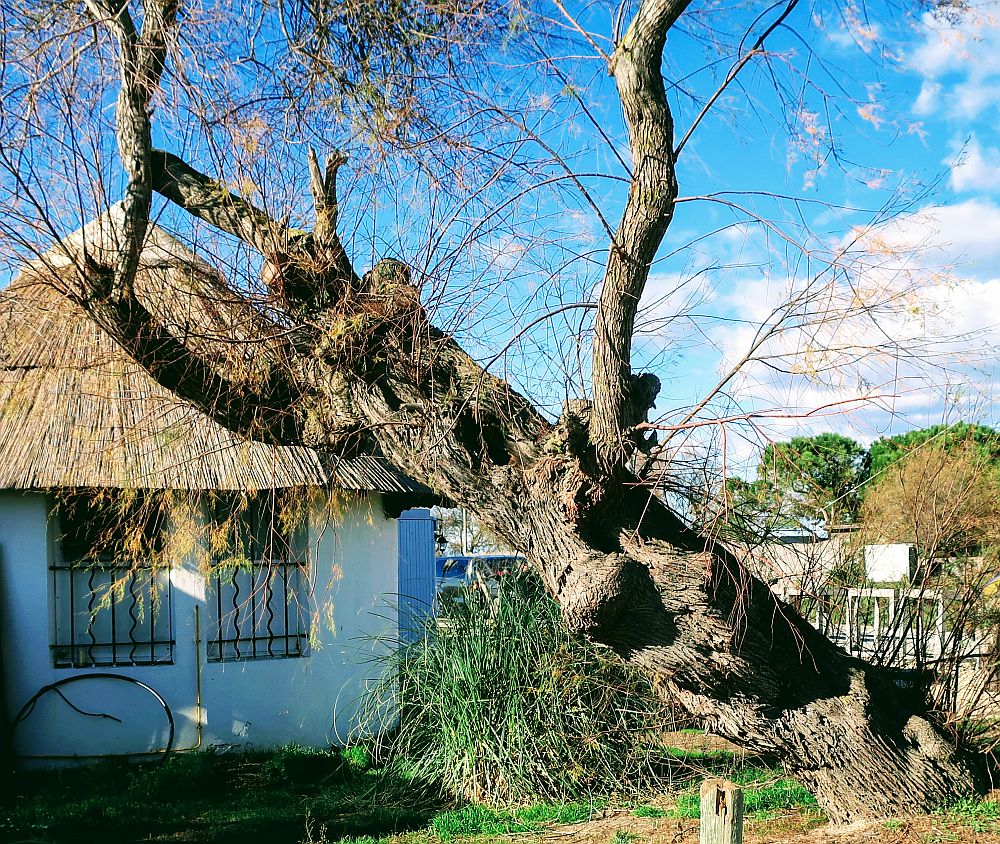
It makes me stop and think a bit: what happens when a hurricane hits?  Are these pieces all brought indoors?  Or, are that very securely fastened so there is little danger of them blowing away? Here’s an example of some hurricane damage I spotted during this trip, just a few miles away from Cape Canaveral,

It’s amazing that my brain is sometimes so slow as to think about important questions like this – in this case – 15 years too late!

The amazing, mind-blowing Étang de Montady

While scoping out the area near Béziers in the south of France on Google Maps, my eyes spotted this interesting thing:

Was this a special French signal to extraterrestrials? Was this perhaps a secret French nuclear installation?  I had to check it out!

Well, as you can see from the snippet in Google Maps, not only can you check it out but in fact there is a small, one-lane farm road that lets you drive right through it!  Here’s what I saw, rows and rows of drainage ditches:

Indeed, there were a series of drainage ditches – all filled with water – that were feeding radially into a center point. I spotted a nearby hill – at the top of which, coincidentally, is a Roman archeological site called L’Oppidum d’Énsérune, and from that place you can really see how huge this place is:

I discovered a bit more on Wikipedia. Turns out that this site dates back to the thirteenth century! Originally this land was a swamp, and they created this pattern in order to drain the swamp.  I would have loved to walk into the center of the installation, but there were a number of “private property” signs – and, to be honest, I was a bit worried I might accidentally fall into some type of a sink hole, or perhaps into one of the “sixteen vertical shafts” that Wikipedia talks about – so I’ll leave that on my bucket list for a later date.

Forlorn tank in Kaysersberg

This snap is sad for a number of reasons. When I saw this tank, at this angle, in this light, looking longingly out into the fields where, in its youth, it was running about and shooting and deflecting bullets and driving over people, it somehow made me very sad. Not that these activities were good things; quite the opposite. But that this tank still had a wonderful condition but could not do what it was designed to do.

But now I am even more sad, because this is the Alsacian village of Kaysersberg where, just a few months later, the noted celebrity chef Anthony Bourdain took his own life.

Swiss crows prefer Swiss cheese

Since I’ve been spending more time at home due to the Covid pandemic, I’ve been experimenting with feeding my neighborhood crows.

I’ve tried everything.

They have almost no interest in foods that are pure carbohydrates, such as unsalted peanuts.  But they like salted peanuts and scarf them up. It amazes me how they can somehow sense or smell the salt.

They will eat meat, cooked or raw, as well as chicken and fish, cooked or raw.

But there is nothing – NOTHING – that they prefer than their favorite snack: CHEESE.


I’m not quite sure why they like cheese so much, since milk products are not typical bird fare (birds have very small breasts so I assume their own milk is negligible).

I assume it is probably the combination of protein and fat, particular in the colder weather as it is now.

Long story short, I put out a bit of cheese, and crows come for miles to fight over it.

Train text

Here’s a snap of a tanker wagon that I took at a railroad siding in Interlaken.  I was amazed at how much writing was on the wagon – old symbols like stars that were probably innovations in their day, and modern messages like an email address.  I am quite sure all this information is documented, but I am guessing it would be a Herculean effort in Google to find it all out.

Stuttgart Fountain: Then and Now

I took this snap of a very unusual fountain in Stuttgart:

And recently I came across a wonder iPhone app called “Then and Now” that shows historical photographs:

Now that I have the app, next time I’m in Stuttgart I’ll try to do a better job of capturing exactly this frame. Here’s another view:

The careful observer will definitely notice some changes. These are most likely explained due to bombing damage from WWII. In the top snap you’ll see the upper part of the building in the foreground is new.

The historical name placques of Konstanz

I’ve written about a number items of Jewish historical interest in Switzerland, now here’s one from Germany. During WWII the Jewish population of the southern German city of Konstanz was mostly swept up in the holocaust.  Today, as you walk around the residential area, you can spot things on the ground just outside of the doorfronts that look like this:

If you look closely, these are placques that bear the names of the Jewish residents that met their fate in WWII:

Lest you think these are all memorials to victim of the holocaust, some of these markers show that while, yes, they were victims, they did not all perish in the pogroms.  Clockwise from top left, the translations read: fled to Yugoslavia 1935, survived; slandered and disenfranchised, died in 1934; fled to England 1939, survived; fled to England 1939, survived; deported to Auswitz, killed 1942. Since they all have the family name Haymann it is a further tragedy to see how this family unit was broken up in this way.

The Rhine Rider at Lake Zürich

Since 1997 I’ve followed the tradition of naming my vehicles.

In 1997 while studying physics and living in Urbana, Illinois, I bought a 1983 Oldsmobile for USD $200 from a good friend of mine, Andrei Botschkarov, at the time one of the top semi-conductor physicists in the world. (He was not personally a semi-conductor, but rather he did research on them). Anyway, it had a maximum speed of 40 mph, it turned itself off after 20 minutes, and the tires were so flat that the steel was mostly worn away. That car was classy – and there was no other approach than to give it a classy name: Urbana Cruiser. Sadly, I don’t have any photos.

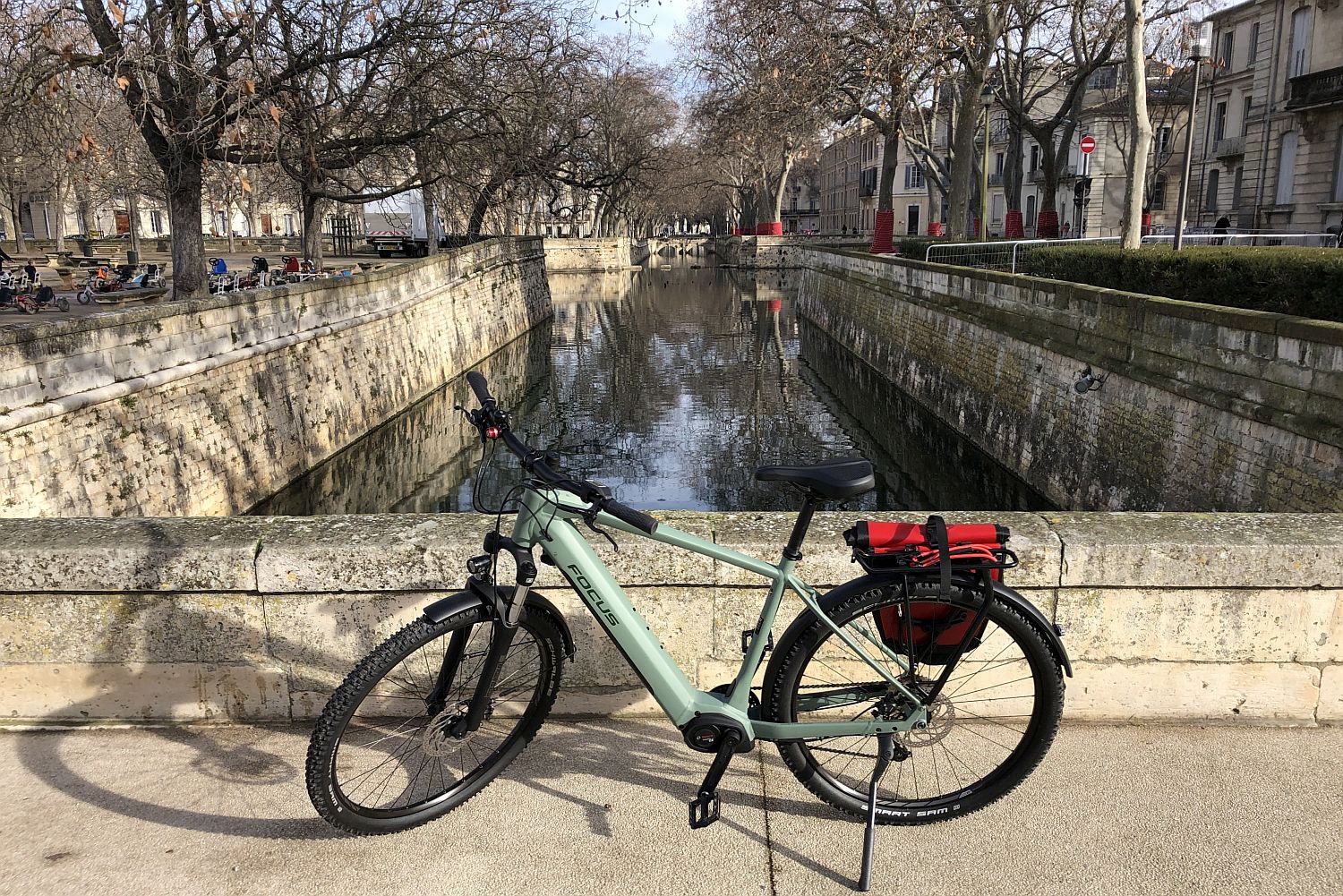
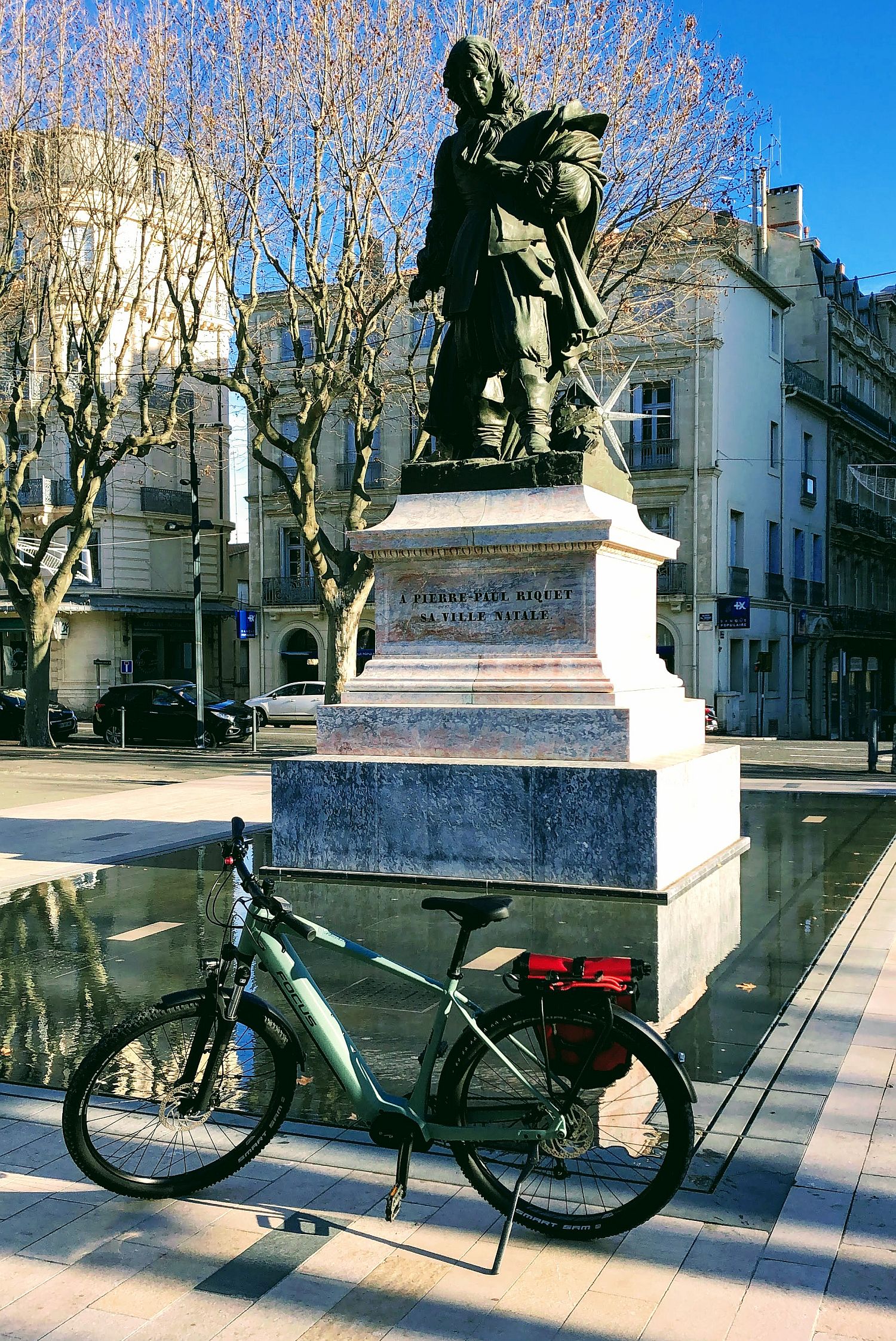
There followed the Eiger Chopper, the Zurich Cruiser, the Euro Cruiser, and now the latest addition to my personal fleet: the Rhine Rider:

No, that’s not the Rhine. That’s Lake Zürich, also known as Zürisee.