Clever idea I spotted just outside about every shop in the Finnish town of Kotka, just miles from the Russian border:

A renaissance man for the twenty-first century!
Clever idea I spotted just outside about every shop in the Finnish town of Kotka, just miles from the Russian border:
Continuing the series, here’s another view of the mosque standing in the Abu Dhabi desert:
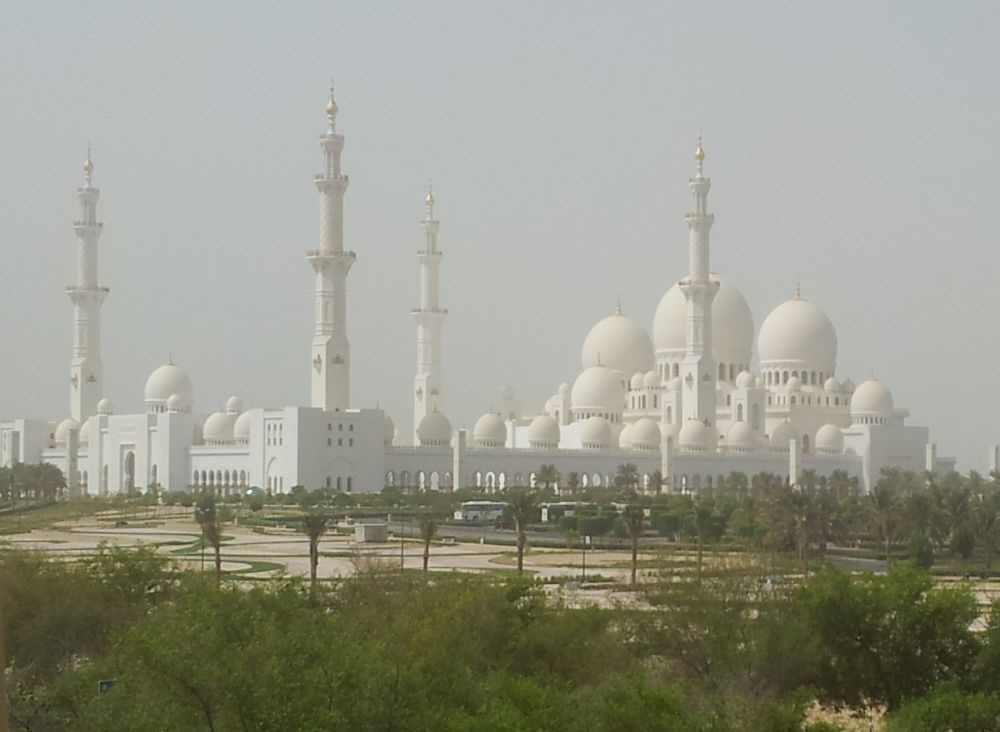
The temperature during my visit in August was over 40 C.
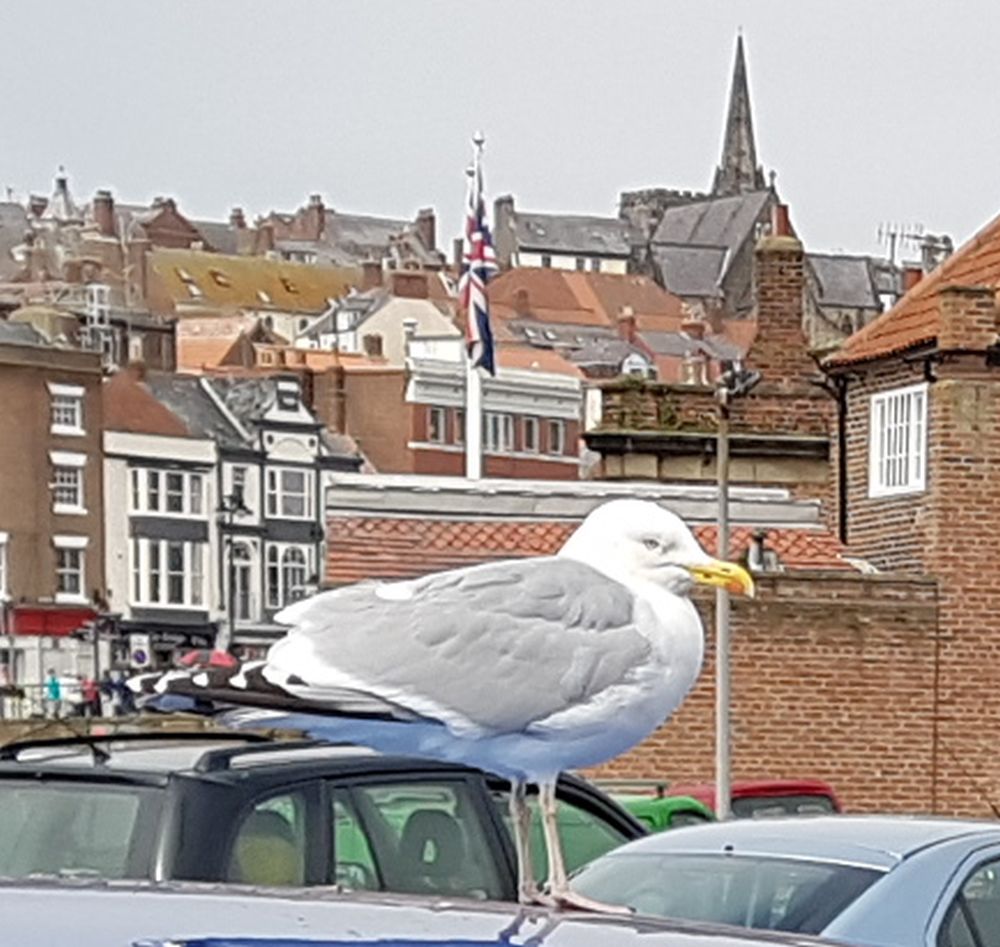
Continuing the series, the English seaside town of Whitby is a real fishing and crabbing village, so it’s not surprising the seagulls have grown to huge proportions:
Continuing the series, still not what you probably think when you hear the term black church:
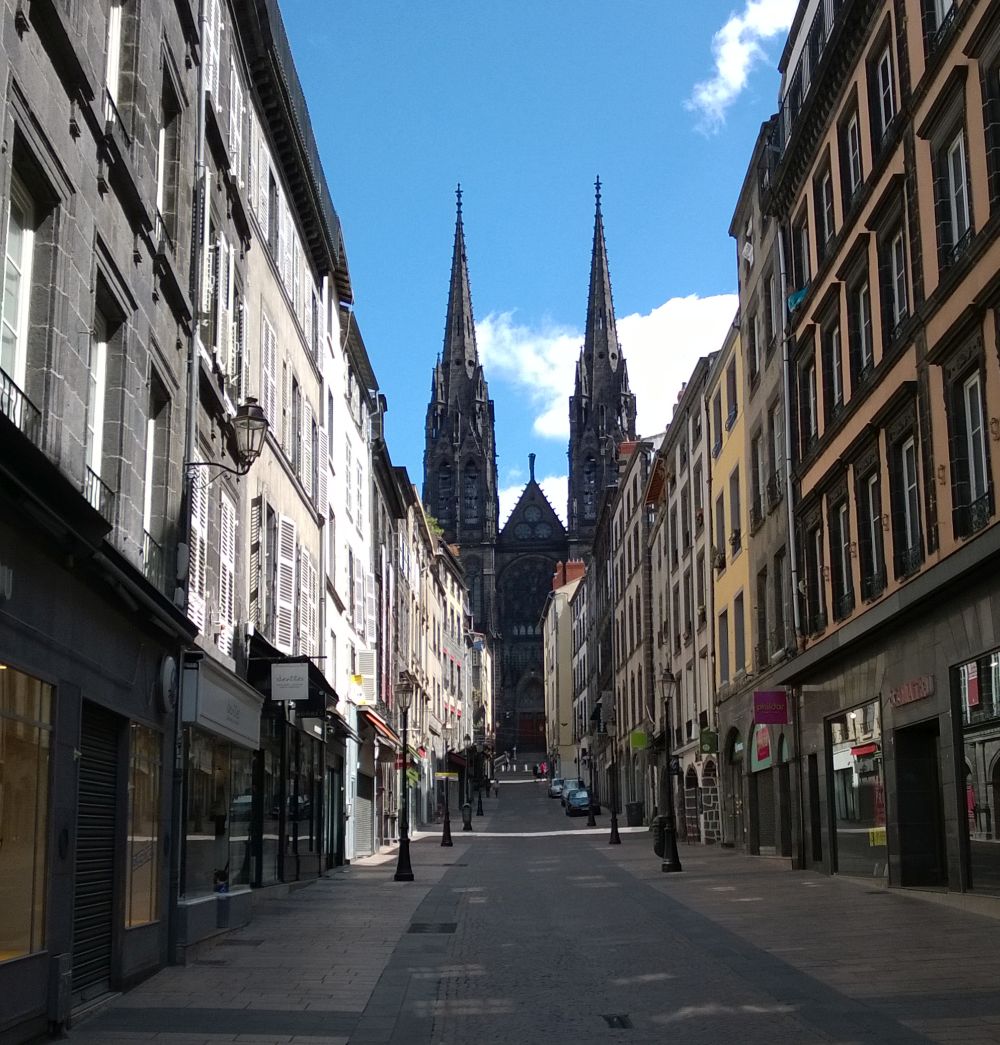
My passion is blind exploration – not guided tourism. So for me, the French city of Claremont-Ferrand is one of those truly magnificent, unplanned, unexpected discoveries that keeps me going back to France, time and again, even though there are other countries close by with impressive things to see: it’s an amazing, mind-blowing city that almost no one outside of France has ever heard of, or likely ever will.
Robin Hood’s Bay is a fairly small bay containing a fairly small village of the same name, located a fairly small drive south of Whitby, frequented by a fairly small number of tourists but offering a magnificent view of the coast alongside the Yorkshire Moors,
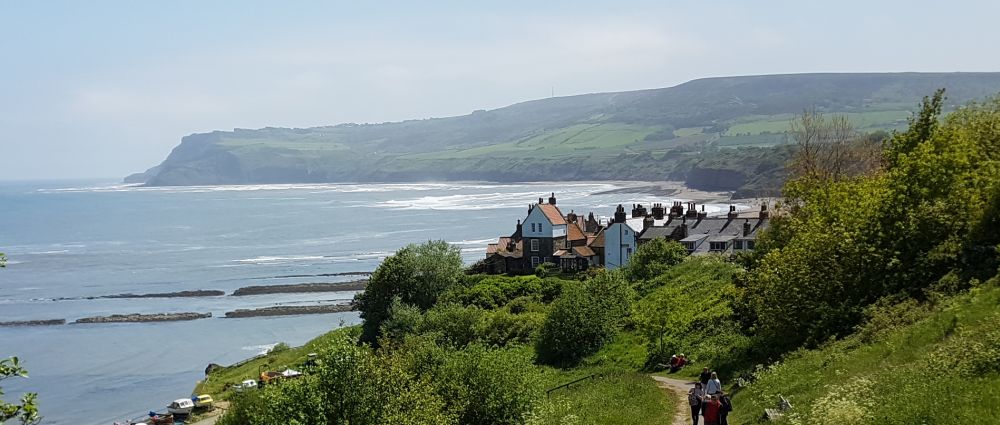
The village itself is remarkable, having been built by smugglers over the centuries. The streets are lined with shops selling fossils (you can find them on the beach!) and a pitch black gemstone called jet, formed from compressed fossilized wood, that you could find on the beach but presumably all the good stuff has long since been scooped up.
Here’s another view:
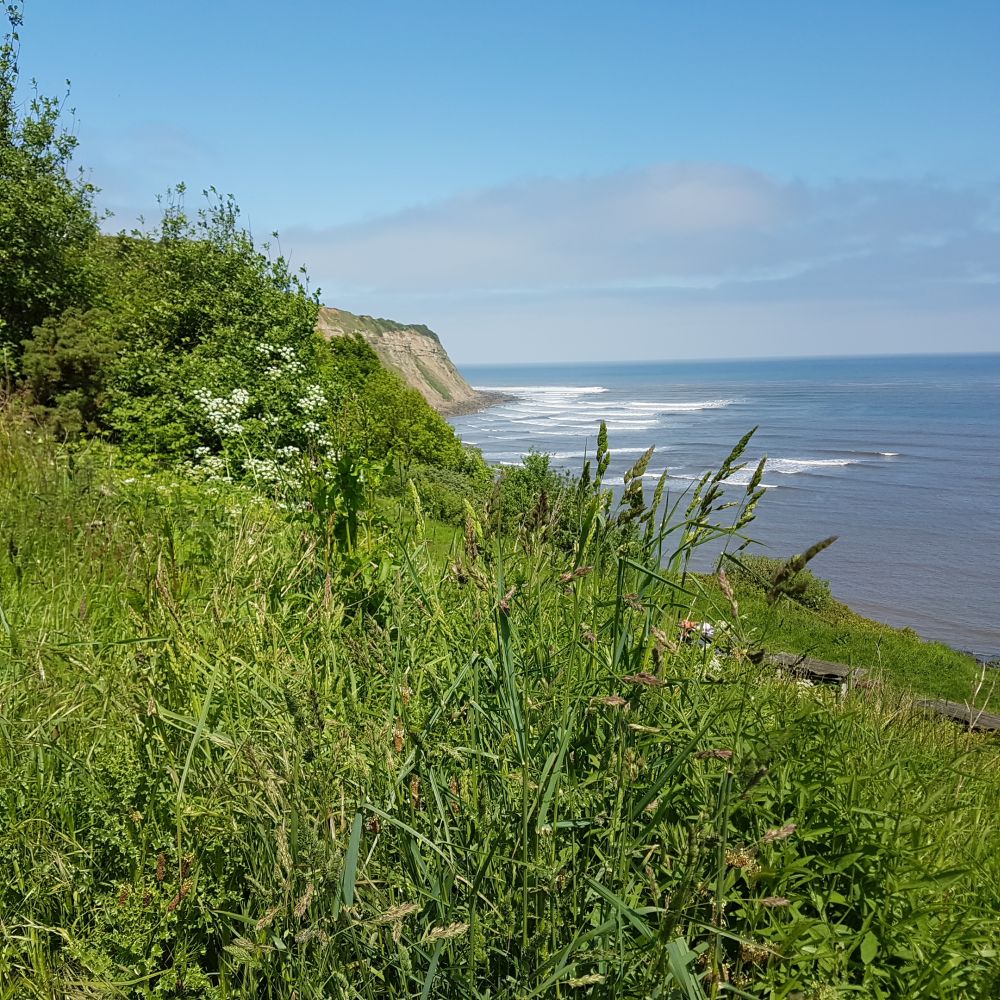
Continuing the series,
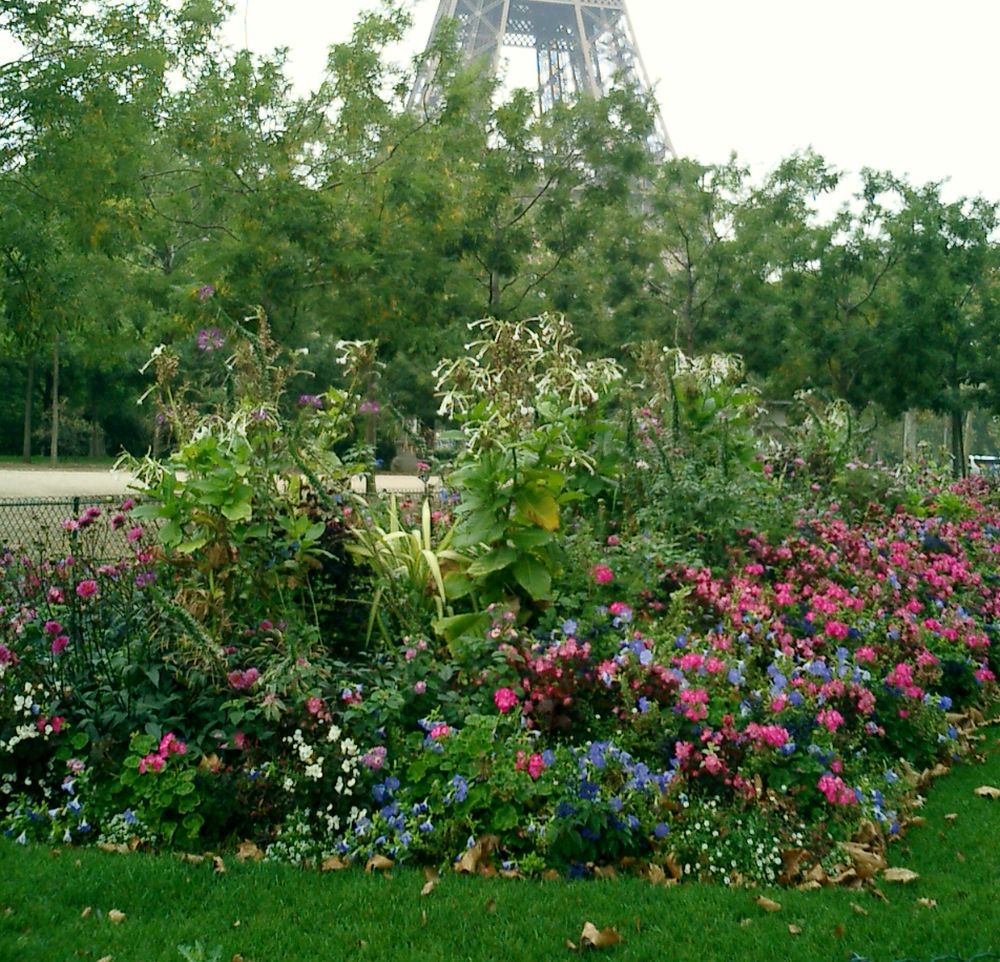
Continuing the series,
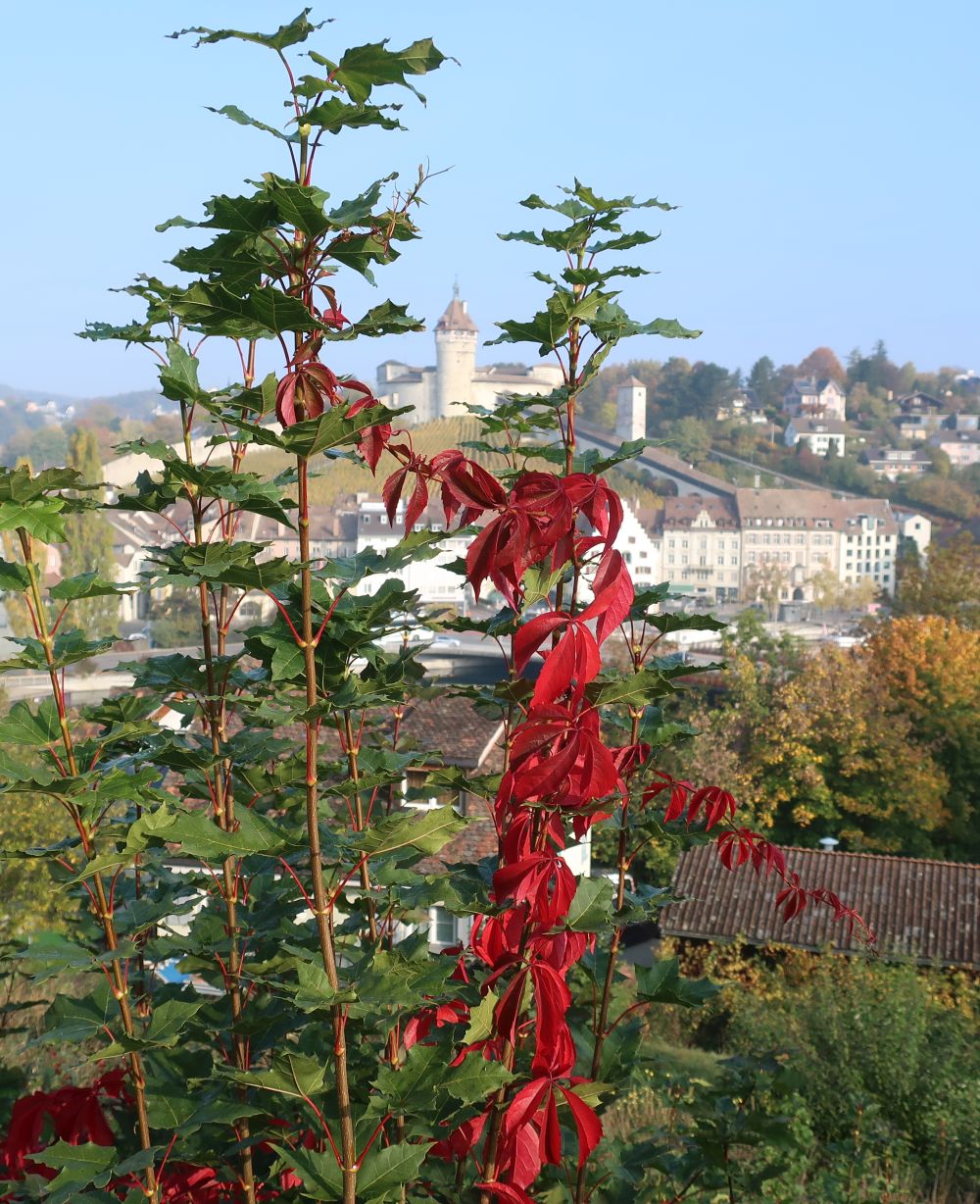
This is the Münster, a Catholic cathedral in the Middle Age village of Villingen in Southern Germany:

It dates back to the year 1130. It is very, very old.
And this is one of the doors of the cathedral:
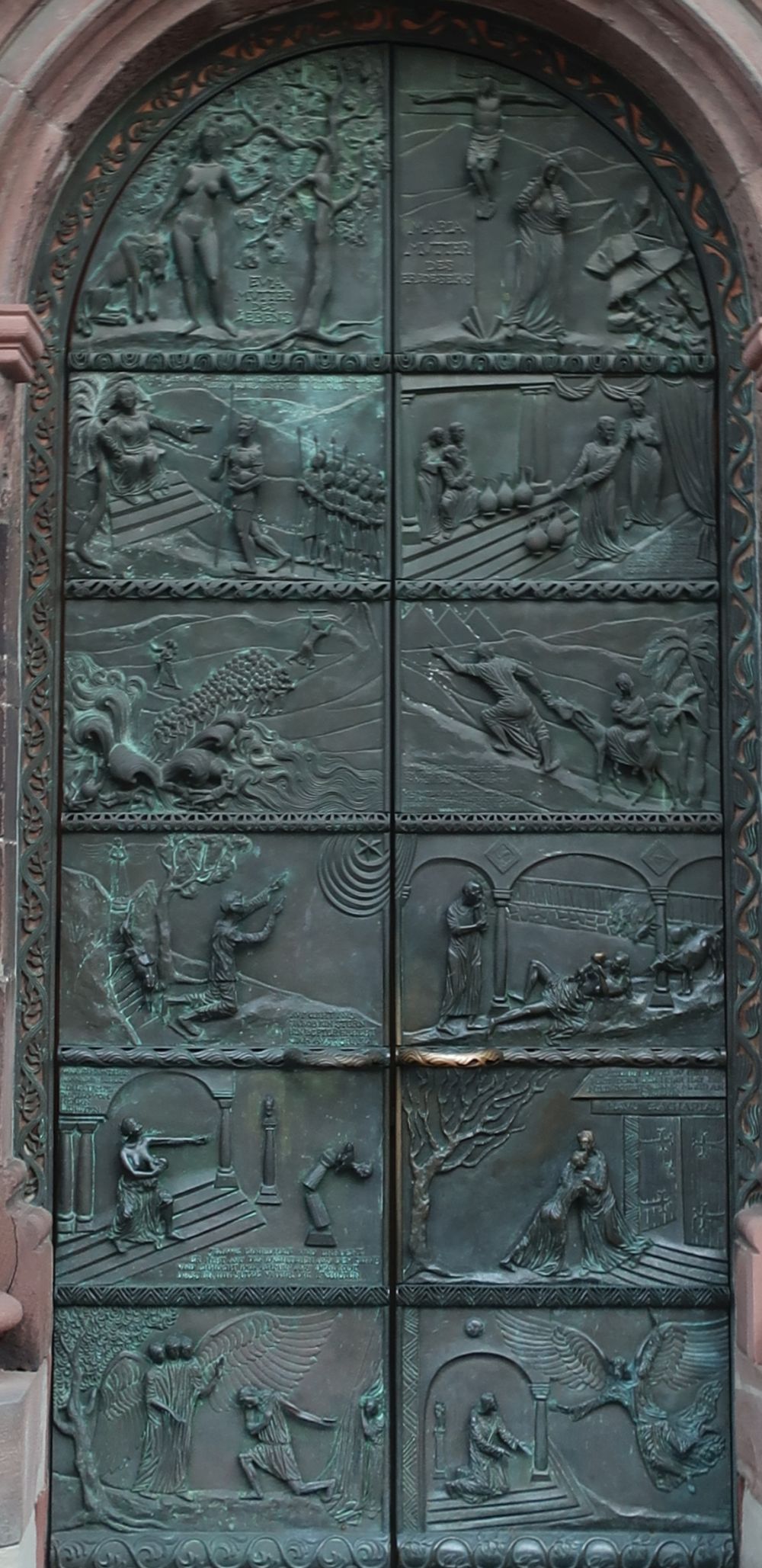
Created in the late twentieth century out of bronze by the artist Klaus Ringwald, it is very very new.
So you might think: old meets new. And you’d be right.
But . . . you’d only be half right!
Because the scenes on the massive bronze door (twelve of them, no less) depict historic scenes from the Old Testament (left) and the New Testament (right).
So . . . this is two amazing ways that old meets new!
Continuing the series, this snap somehow reminds me of a dystopian, futuristic landscape:

It’s the year 2042. The outside temperature during the summer in Switzerland can be in excess of 60 C, so it‘s not possible to spend time outdoors unless in a chill-suit. Winterthur is a small industrial outpost with a population of less than 100. Here you can see the sun rising above the nuclear powered carbon extraction plant. In a network of nearly 1000 stations like this circling the globe at strategic points, carbon is extracted directly from the atmosphere, converted to a solid, and transported by computer controlled railways to Spain – a long dead country in the uninhabitable zone of Europe, where the average yearly temperature is above 60 C, and the peak summer temperatures approach the boiling point of water.
Climate scientists are in unanimous agreement that these decarbonification activities must continue unabated for another forty years before the year-over-year rise of the Earth‘s temperature will be stopped, and another century before the pre-2000 temperatures will be restored. With Earth‘s population currently hovering at a little over 250 Million, it will be a tough challenge to keep this system in operation that long.
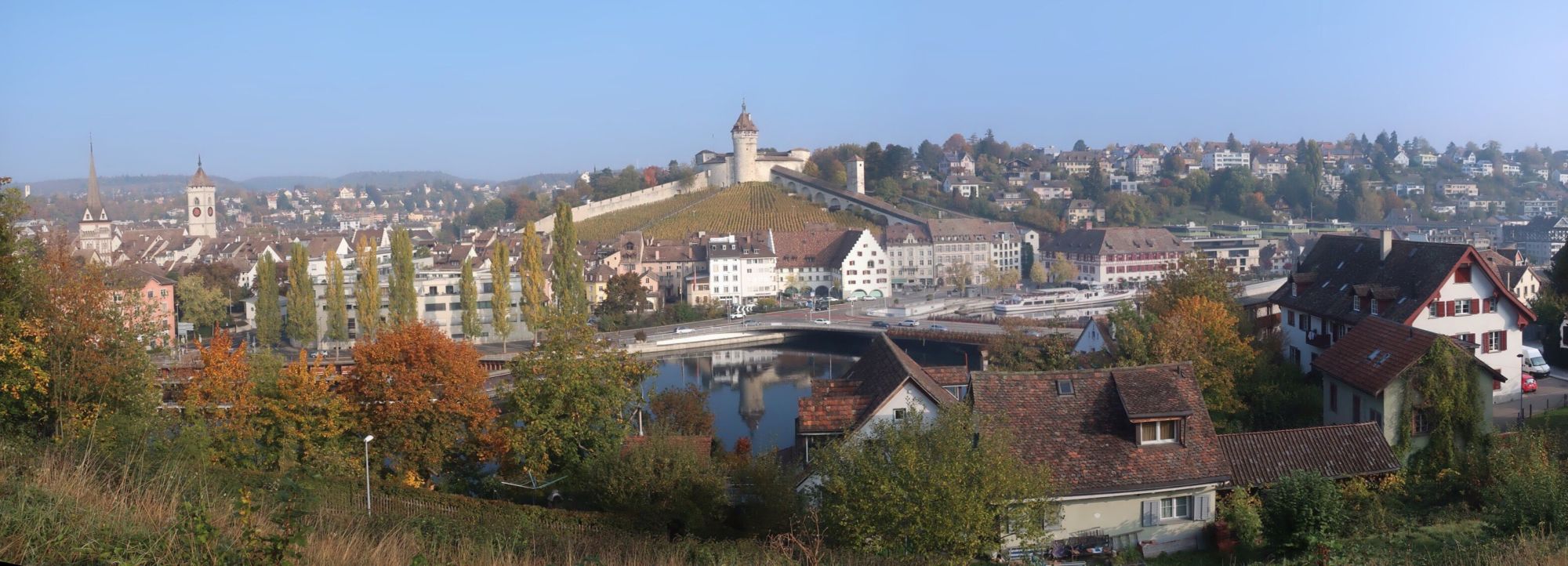
Continuing the series, this is a magnificent view of the Munot Fortress overlooking the Rhein River in north central Switzerland:
A snap of the Neckar River as it flows through the Southern German town of Tübingen,
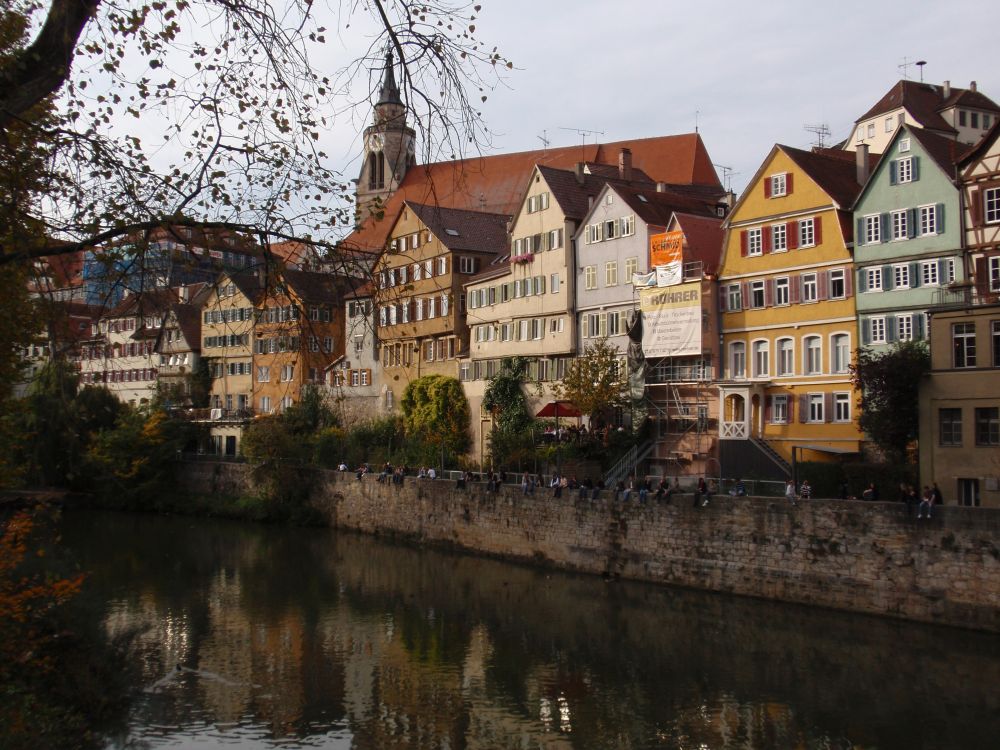
It‘s a very pretty sight – but of course during the Middle Ages it would have been a smelly cesspool as the filth and raw sewage spilled out into the river.
These are some trees in the Schwarzwald of Southern Germany, just outside of Freundenstadt:

I read two interesting things, but I don’t know if they are true.
First, there are no original trees in the Black Forest. All of the original trees have long, long been harvested and re-planted.
Second, the current trees of the Black Forest are no longer optimal for the current climate conditions, so land management experts in Germany are considering replacing the trees with different species that are better suited to warm temperatures.
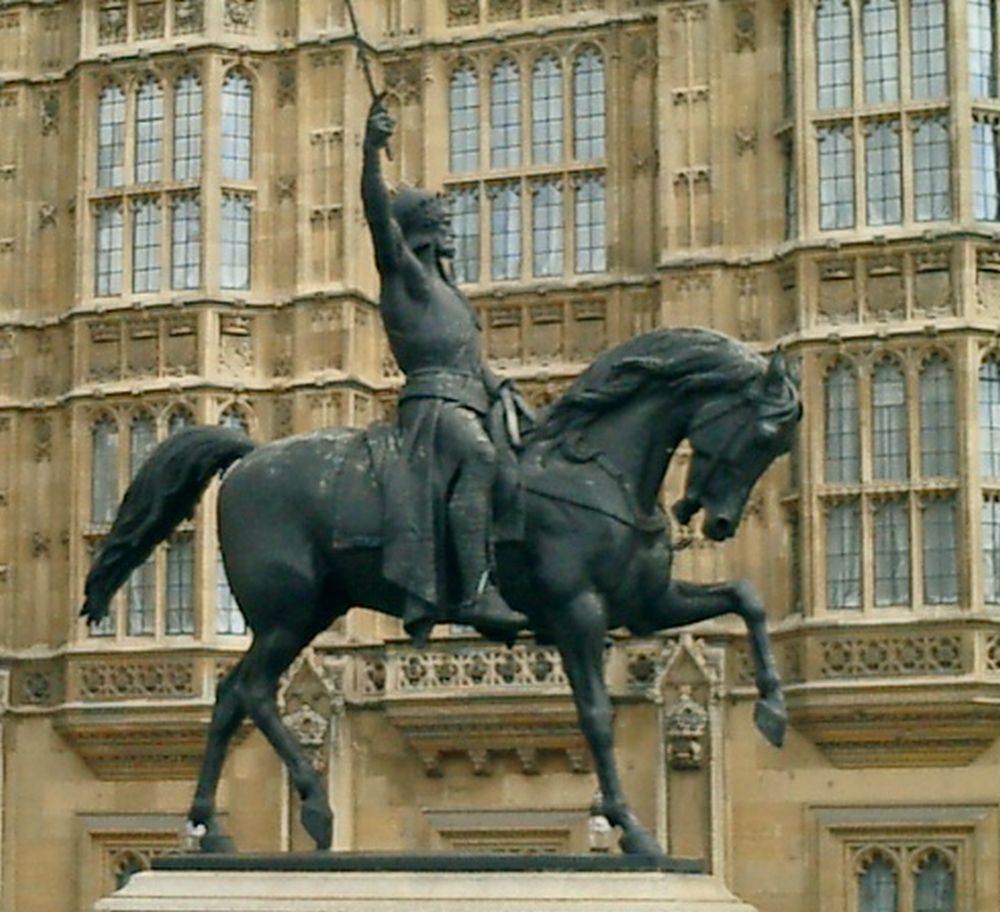
Just outside the Palace of Westminster in London stands a statue of Richard the Lionheart. He lived in the 12th century, but the statue was created in the 1850’s:
I lived for years in India and I usually ate with my fingers, rather than with a fork and knife. And the Indians were quick to me that scientists have proven (somehow?) that by eating with your fingers you increase your food happiness, because the tactile sensations start before the food reaches your mouth.
Well, I never really believed that . . . until I tried a Punjabi dish, a huge empty doughball much bigger than a bowling ball or your head, channa bhatura:
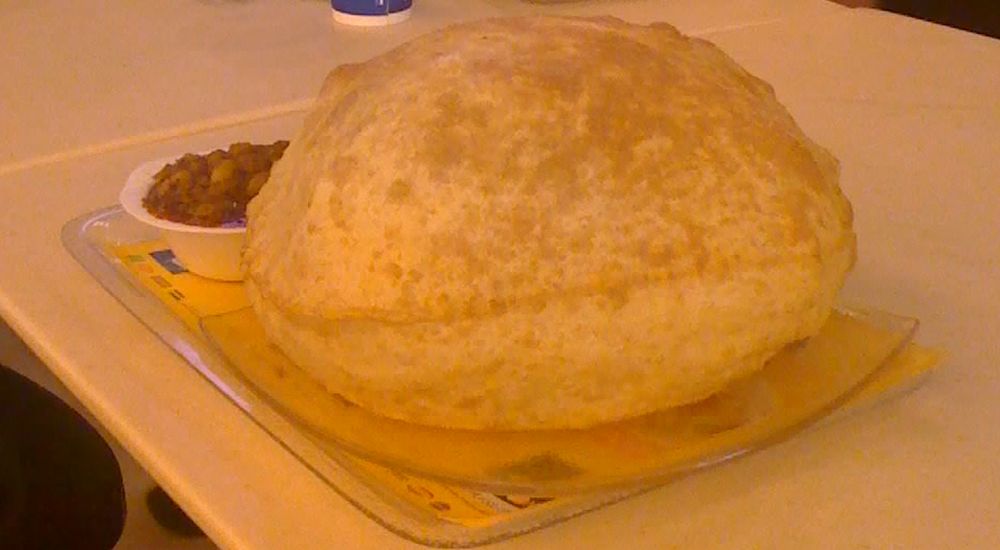
And it is true! There is something about tearing into the big, fluffy, glutinous ballon to tear off a piece to dip into the chickpeas that is really amazing!
Nothing special, just what I thought was a nice snap:
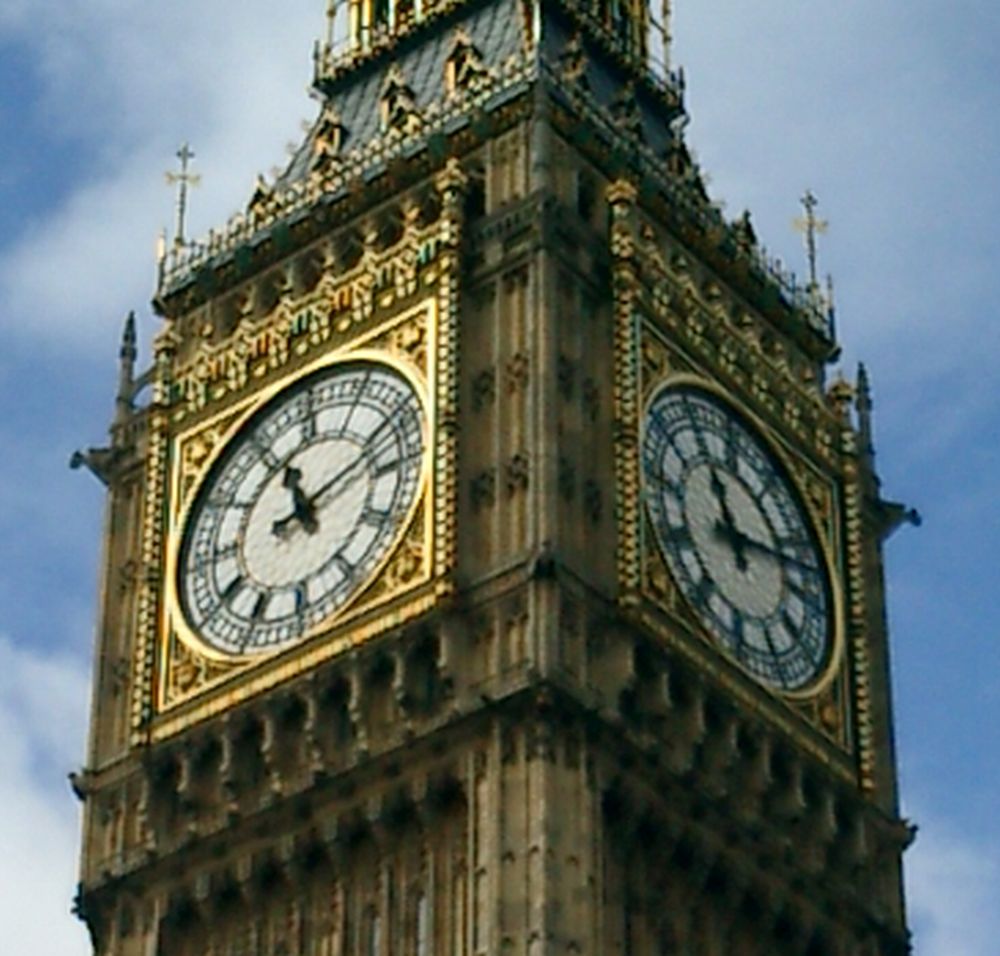
But if you are technically oriented, it does raise a good question: are the hands on the different faces mechanically or otherwise synchronized to each other? In a normal mechanical clock, normally the mechanism keeps the hands turning – but the hands themselves can be slipped freely, for manual adjustment. But how is this handled on the London Clock Tower?
And that raises a very interesting point that a lot of people don’t know about: the topic of slips and fits. Have you ever noticed how some parts turn very freely, such as a bicycle wheel – whereas other parts turn with stiffer resistance, such as the hands of a clock.
Probably everyone knows that machinists work in machine shops, and they use blueprints and precision machines like lathes and CNC machines to fabricate highly precise metal parts. But very few people know there is a sub-branch of precision machining known as slips and fits – it is all about how to specify (with an international specification, no less!) and with extreme, mega-tolerance how two parts should behave when they are in mechanical contact with each other.
An afternoon thunderstorm is brewing over Bangkok,
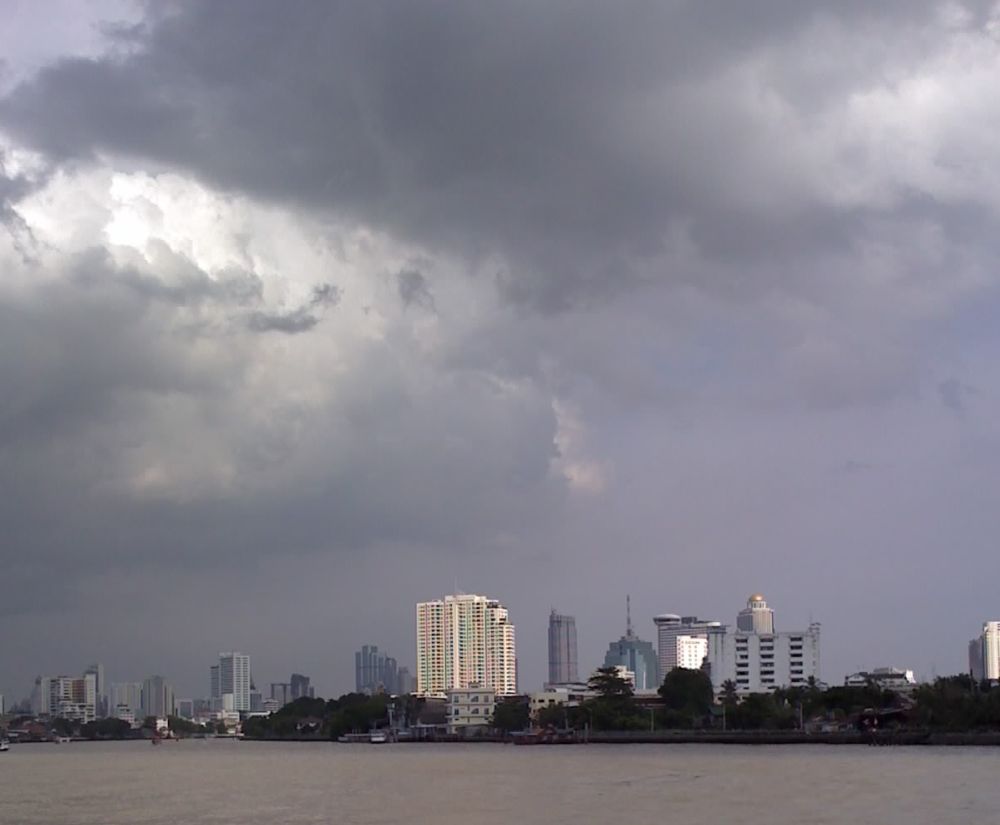
Interestingly, I flew here from Bangalore on an airline that does not exist anymore. To encourage the wealthy Bangaloreans to spend their money in Bangkok, the Chamber of Commerce in Bangkok sponsored a low-cost airline to shuttle passengers between Bangalore and Bangkok. For around USD 100 you’d take a 5 hour red-eye flight, arrive early in the morning rested and relaxed, and they give you a free shopping bag filled with coupons, maps, and sightseeing guides. I’m glad I took advantage of this while I could!
I don’t know if they are or if they aren’t, but I took this snap in Paris at the famous Cathedral of Notre-Dame, and they have circles around their heads, so it is not unreasonable to think this:
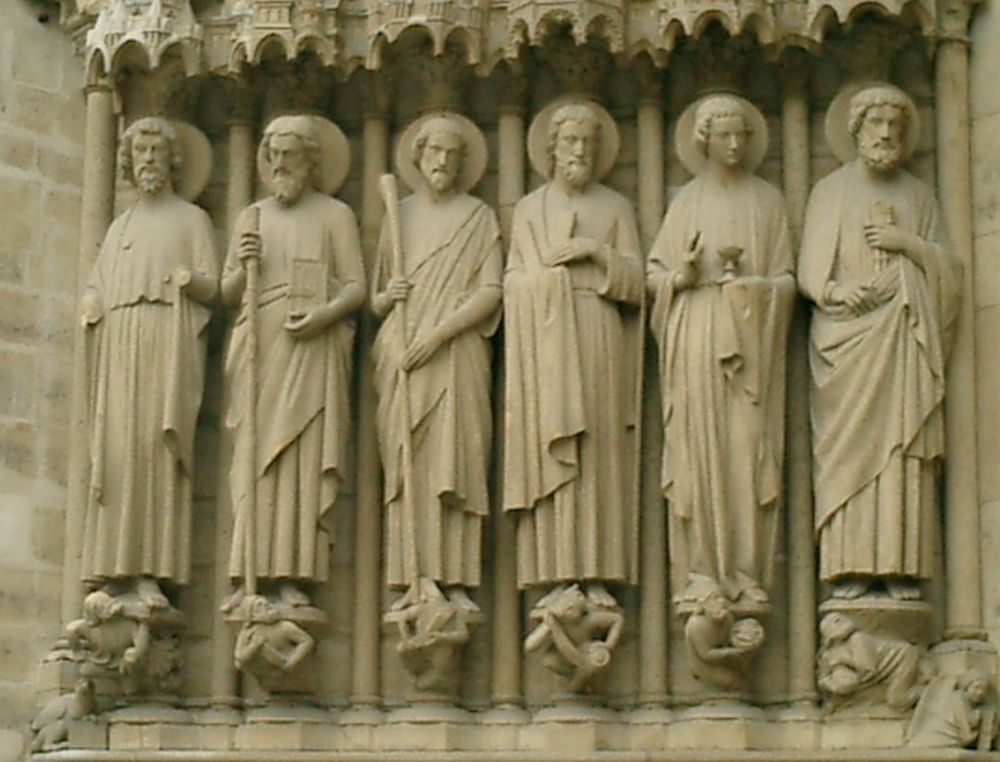
As you can see, the second one from the right (oddly) sports no beard. Could this perhaps really be Mary Magdelena? After all, this figure is carrying a chalice . . .
Another mystery for me to clear up one day!
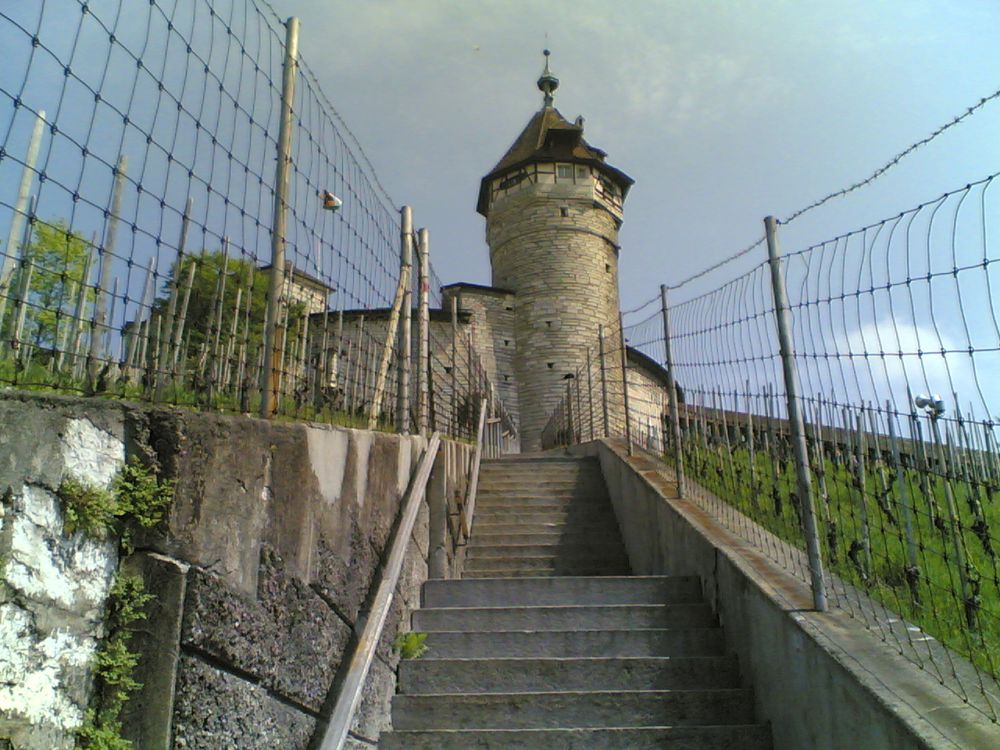
This is looking up at the Munot, from the old city of Schaffhausen:
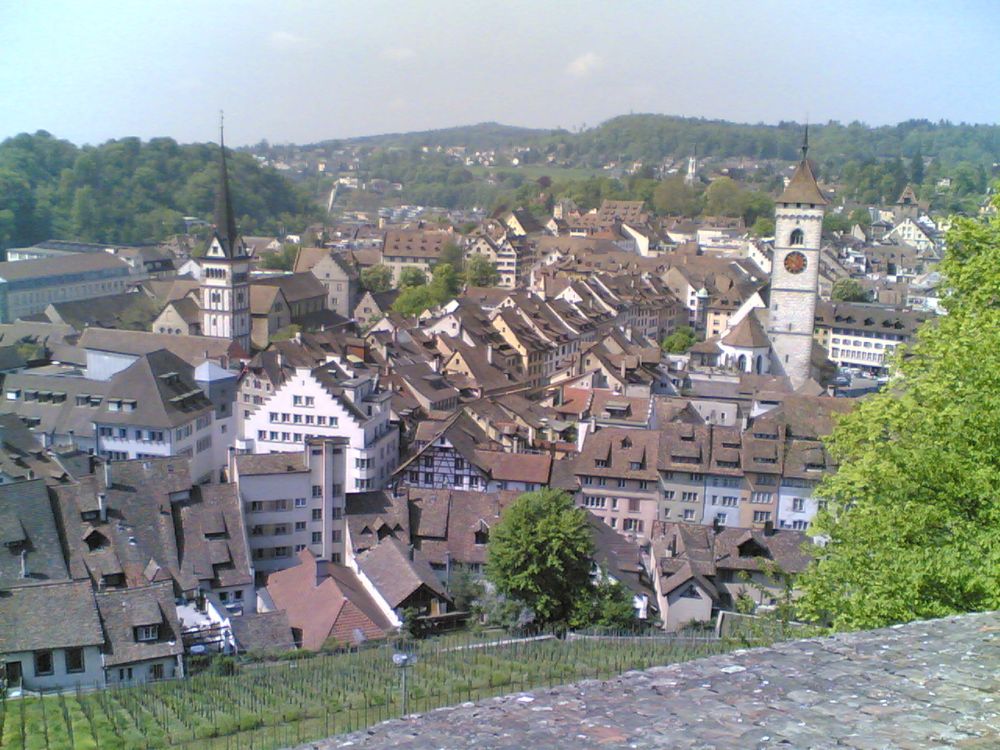
And this is looking down from the Munot, towards the old city of Schaffhausen:
No trivia, no fancy story, just what I thought was a very nice shot:

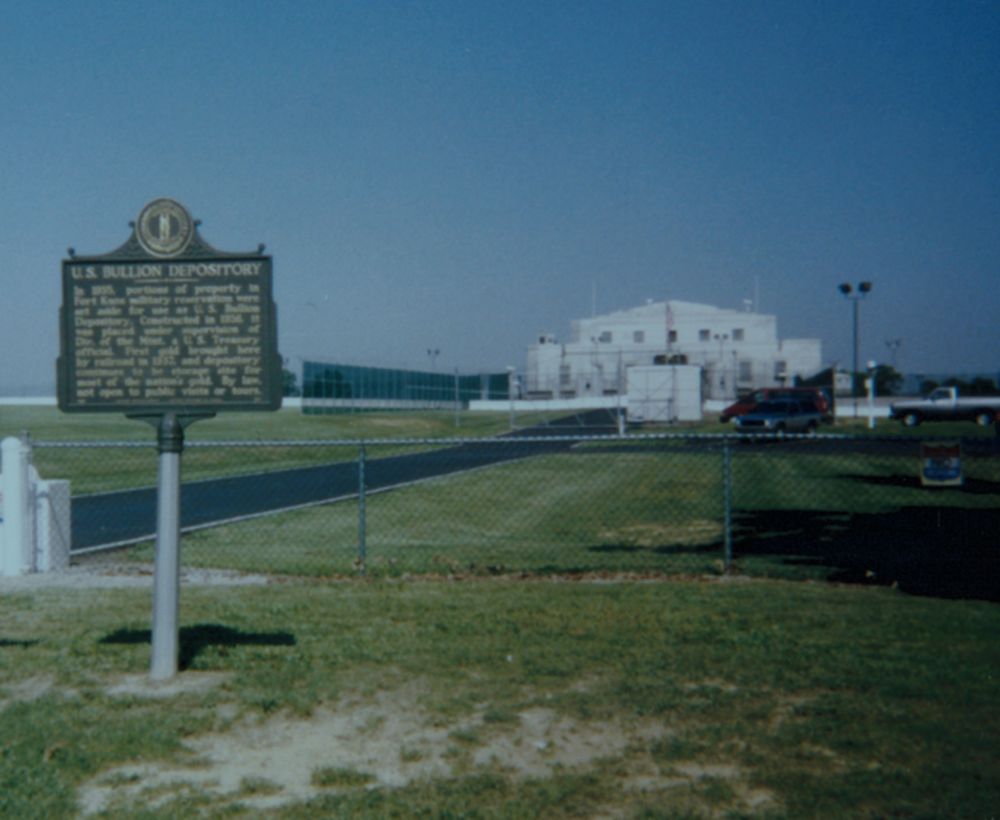
Fort Knox is a real Army base in the city of the same name, in the state of Kentucky. I am not sure what it’s like today, but “back in the day” – as this snap shows – you weren’t allowed into the main building that stores the gold, but at least you could get pretty close and take some pictures.
Yesterday I spotted a muster of storks (sometimes, at least according to Wikipedia, called a phalanx of storks) overflying the Zurich airport in Switzerland, at an altitude that made them nearly impossible to see:
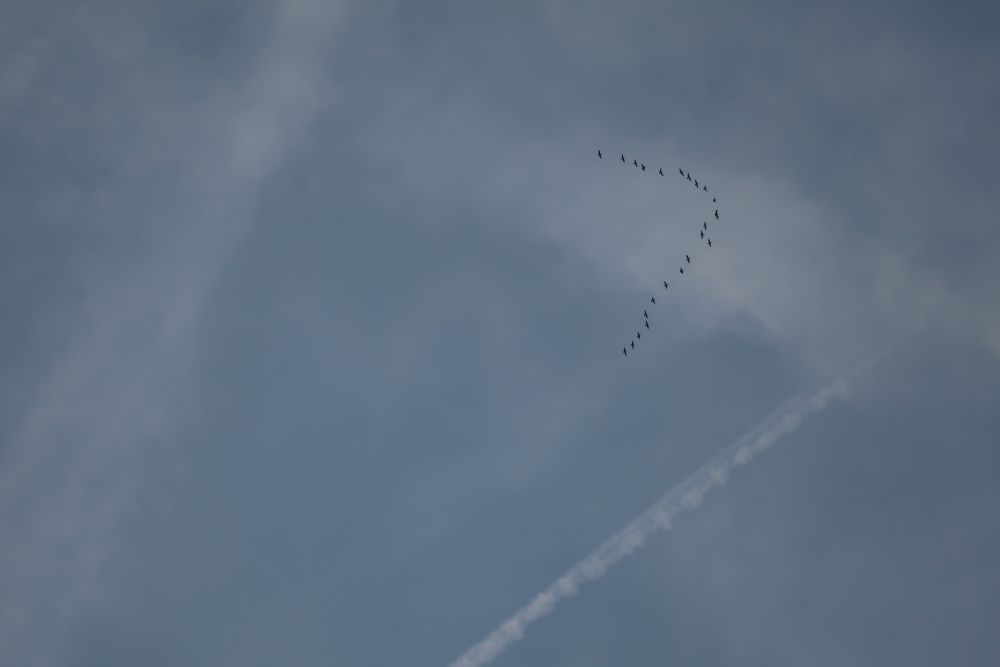
In fact, I could not see whether they were in fact storks. Fortunately, I had my camera with me, and it has a terrific photographic lens:

I mentioned in an earlier blog that when storks are juveniles in Europe they are taught flying skills by their immediate peers, and there are in fact two groups of storks: those with lessor flying skills that overwinter in Spain, and those with better flying skills that overwinter in Africa. Interestingly, scientists have attached accelerometers to storks, and they can determine within seconds to which group of flyers the storks belong.
They don’t have hurricanes or tornadoes in Alsace- never have, likely never will. So in a recent blog I observed was quite odd for the French to take time from their favorite hobby (namely, wrapping historical buildings in atrocious glass bubbles) to build a nuclear-war-proof bird house, complete with high strength structural steel and (I assume) titanium bolts attached to a deep rebar-reinforced concrete piling:
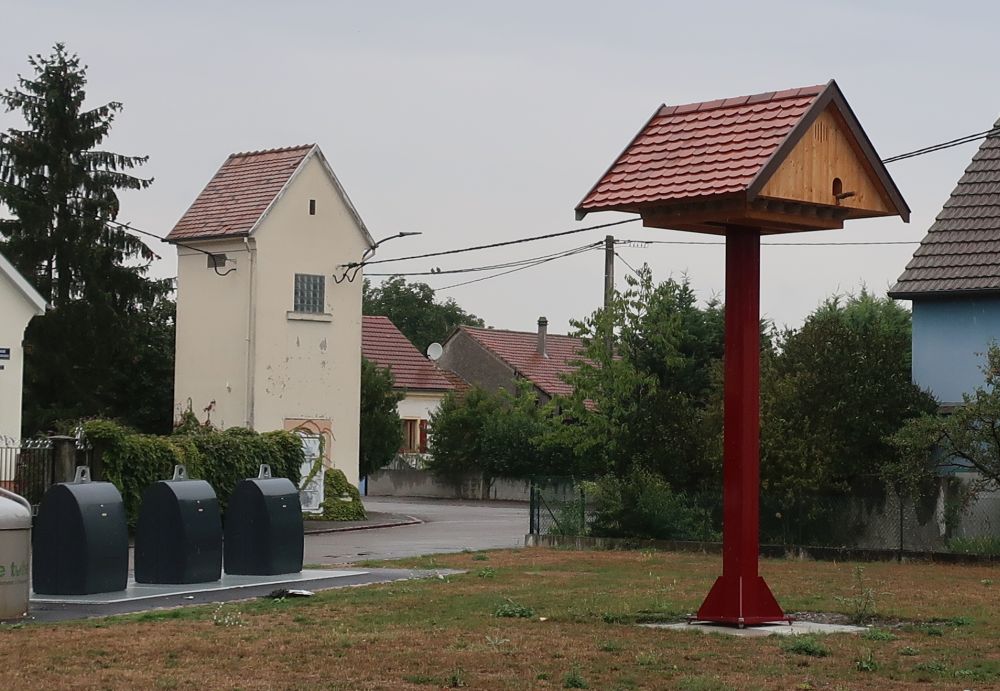
To me, this was an oddity but no more than that.
But . . . something amazing happened this week. The situation has now suddenly turned from French oddity to international mystery!
For this week I spotted exactly the same type of bird bunker, in a completely different country!

This high strength bird bunker is located near the Zurich airport in Switzerland – and unlike France, outside of the European Union!
So it is now truly an international mystery: who designed this bunker? Who decided where and when it would be used? Who paid for it? Who maintains it? And especially, when someone decided this was needed, how did they go about sourcing it? I haven’t checked, but I am pretty sure the local do-it-yourself stores don’t stock massive bird bunkers!
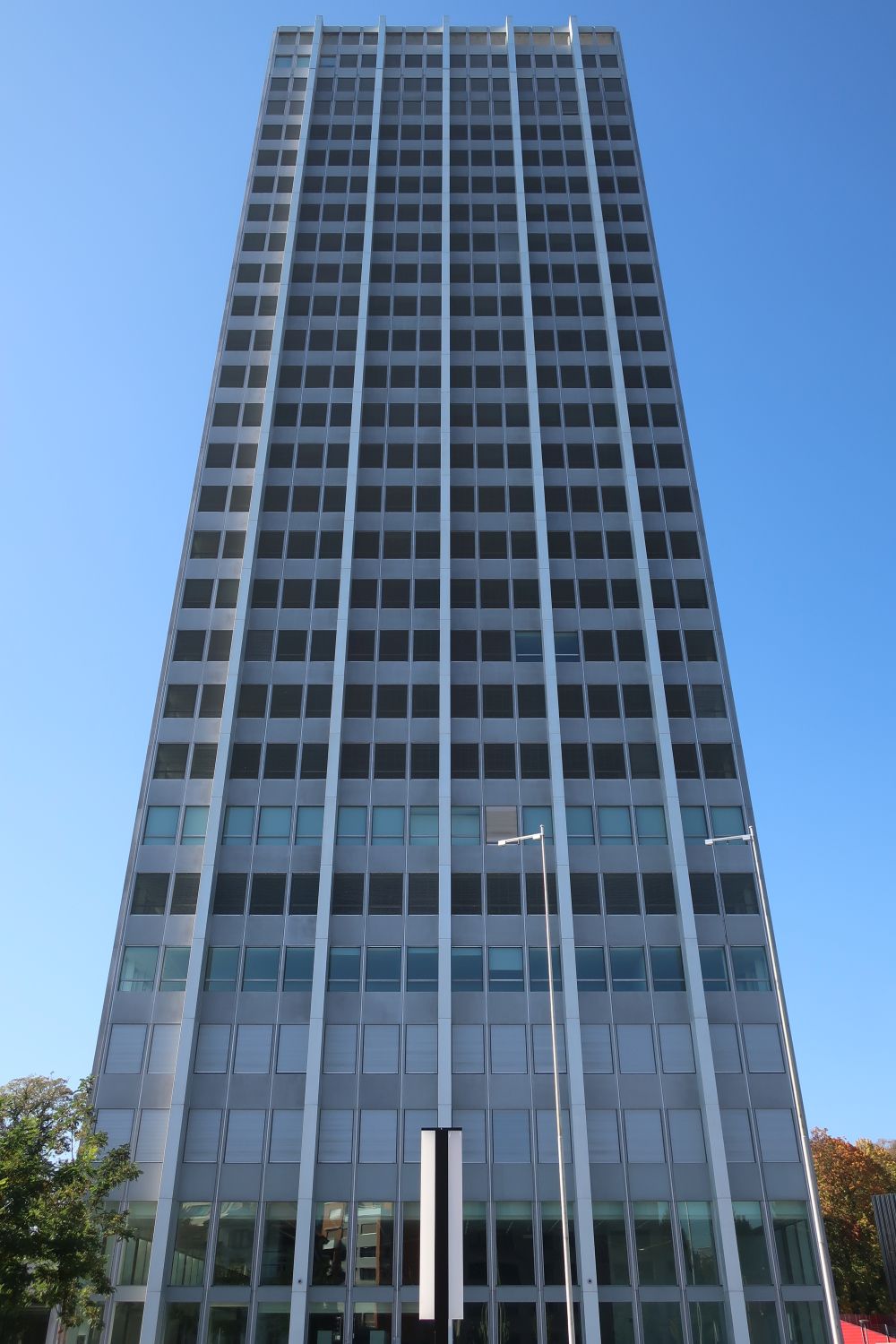
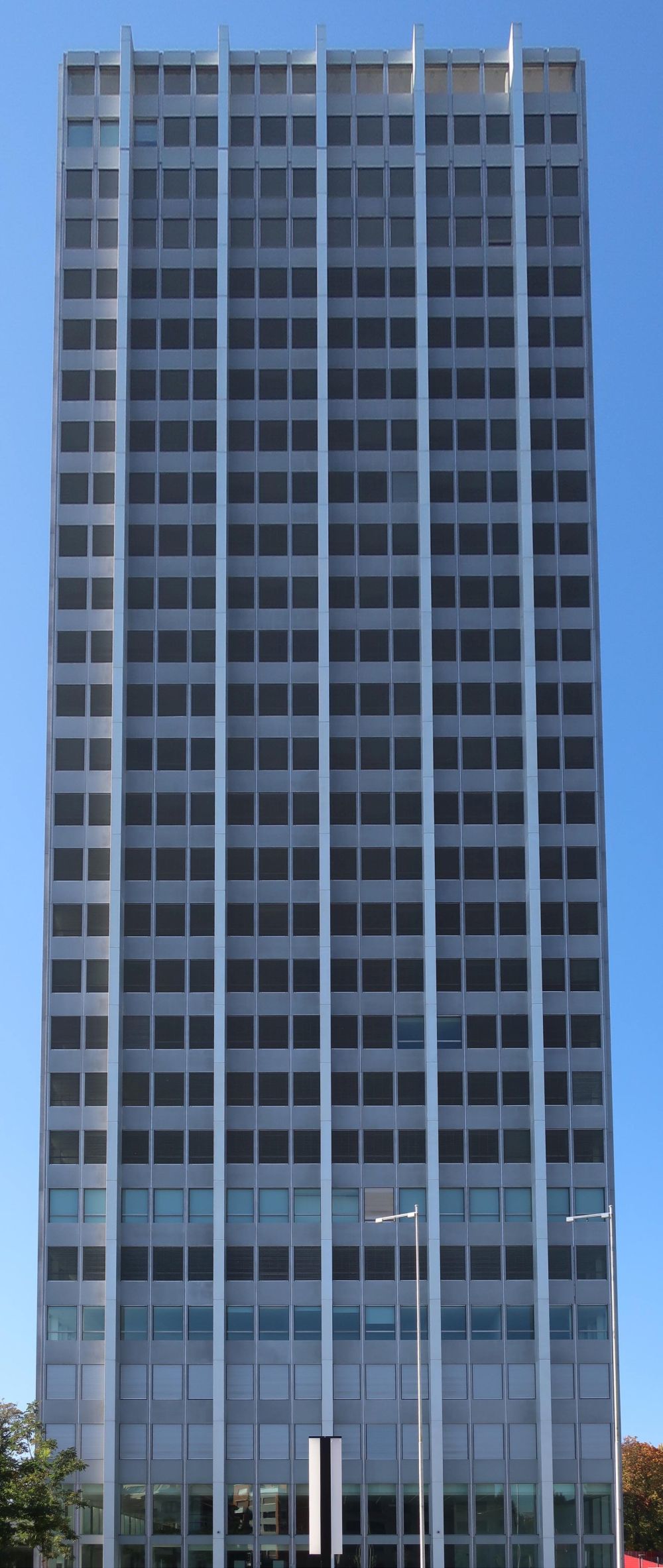
Sulzer is an amazing high-tech manufacturing company. It has long roots in Switzerland that date back to the 1700’s. It’s headquarters is in the sixth largest city in Switzerland, Winterthur, in this building:
Using Microsoft Lens, this is that same building, but unstretched:
I spotted this gargoyle in the historic Middle Ages Southern Germany village of Villingen-Schwenningen:
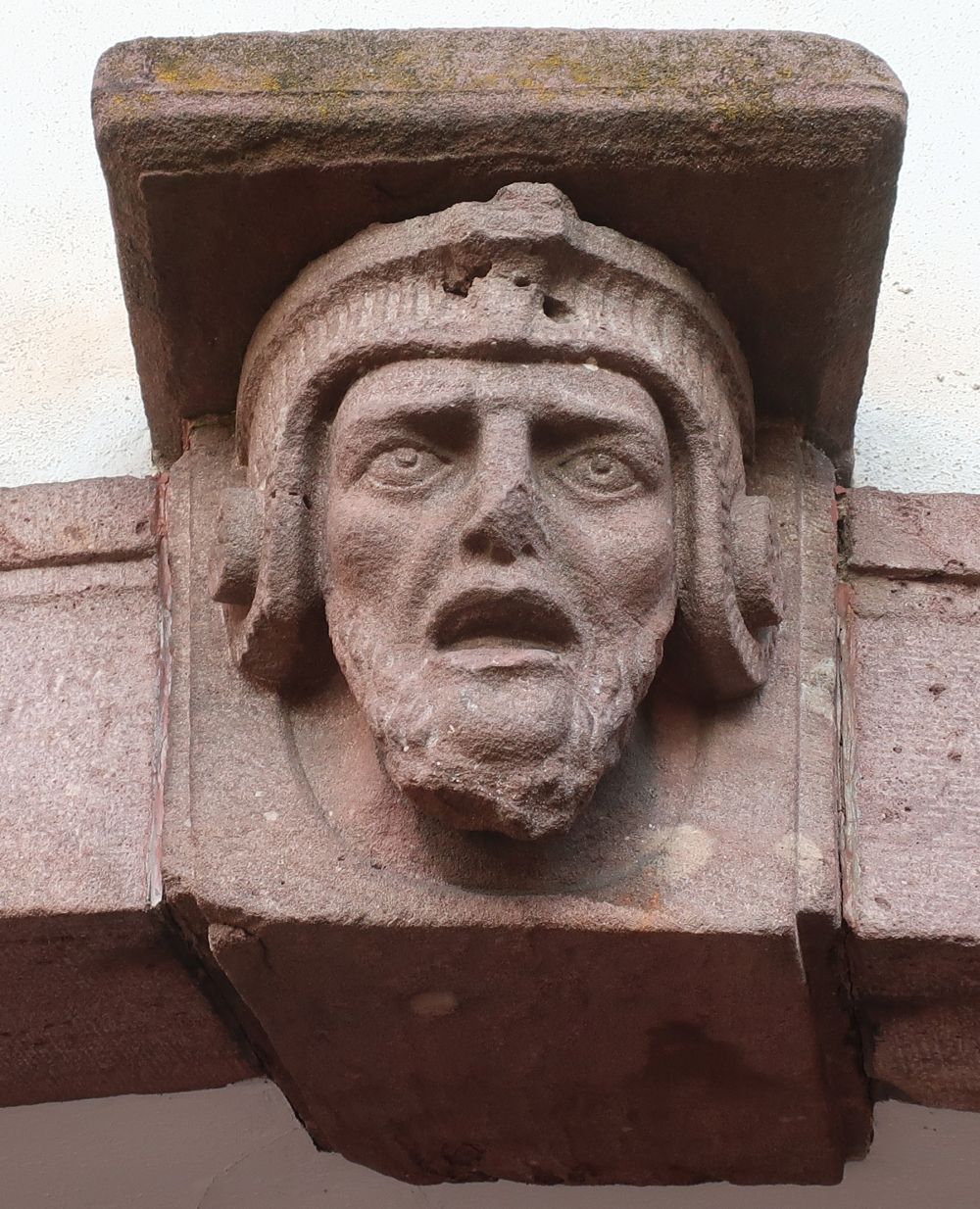
But then something amazing happened! I realized I did not know the German version of this word, so I looked it up: der Wasserspeier.
OK, fair enough. Gargoyles were primarily designed to direct the flow of rainwater off of a building.
But here’s the amazing part: in English, the word gargoyle immediately invokes terrible emotions involving monsters and demons and people with ugly faces – whereas (I’m pretty sure) the word Wasserspeier does not. In fact, just about any native speaker would define gargoyle as monster – not as e.g. water spout.
I’ve often thought that the German word for battle, die Schlacht, is a good example of this in the opposite direction: battle connotes fight in English, but in German it connotes slaughter.