Medieval village of knives

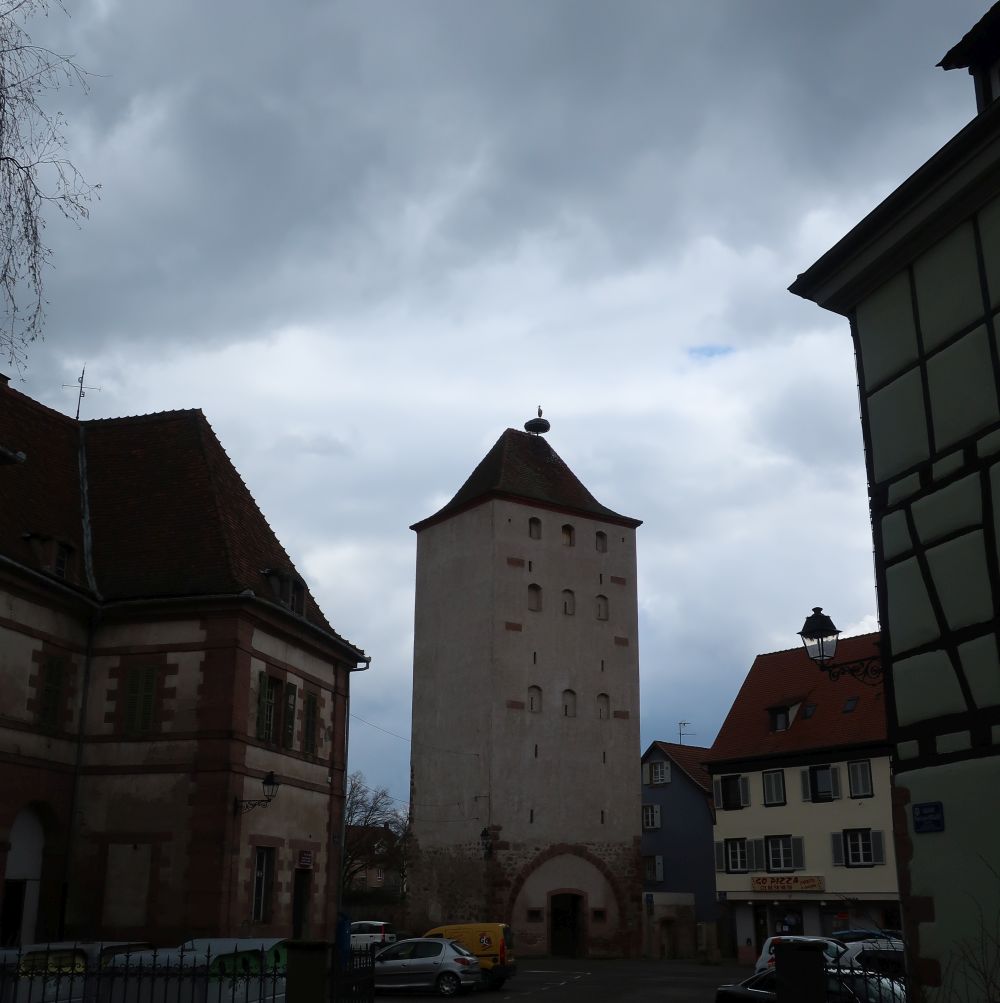
Deep within France, just inside a French national volcanic park, is the medieval village of Thiers:

Manufaccturing more than 90% of all cutlery sold in France, the artisans have made this village not just the knife capital of France, but truly the knife capital of the world:

The village is home to literally dozens upon dozens upon dozens of shops run by knifemakers.  The shop shown above sells custom handmade knives made by a family whose been living here and doing this for six generations!

So it was really exciting and unique for me to practice my French and purchase a pocketknife here, with handles made of Brazilian rosewood:

Interestingly, the inhabitants of this village are something of a language enclave, speaking a language (Auvergnat) derived from Langue d’Oc, one time quite important but now mostly extinct in France.

Jaw dropping experience

Humans aren’t really so diverse as we might think.

Myers and Briggs created a test to classify people based on their personality. The idea being, that there are just a few types of different personalities. There are plenty of free online versions of the test: you spend a few minutes, answer a few questions, and your personality can be classified into one of several types:

Usually when I manage a team, I ask some of my key team members and high achievers to take this test – and, as happened with me, usually people fall off their chair when they read the detailed description of their personality type and see just how accurate it is, as this example shows.

Why do I find this so useful as a management tool?  I really don’t want or need to know about what Myers-Briggs category people fit into – for me, there are just too many categories to make this a useful management tool. But I find when people read their own self-assessment, it provides them a lot of insight into their own personality, which in turn can help them develop in the team.  In German we call this the difference between Selbstbild und Fremdbild.
Black Church

Probably not what you are thinking when you read the title.

Here is a snap of the famous Cathedral of Our Lady of the Assumption of Clarement-Ferrand, in the city of the same name, in France:

What’s absolutely amazing about this cathedral is its color.  Claremont-Ferrand sits in an area of France filled with volcanoes, and the cathedral is build with black lava stone.

It’s a pretty impressive sight!

Even more interesting than the church are the people, many of whom do not speak French, but rather a descendant of the old and nearly extinct Lang d’Oc language.

Cité de Carcasonne

Anyway touring around Southern France or travelling by car to Barcelona usually finds time to stop here, the ancient medieval UNESCO site known as the Cité de Carcasonne:

It’s a truly massive fortified city high on a hill, complete with moats

As well as impressive Gothic cathedrals

If you are here and have the time, to me a more interesting and more wonderful place is this site at which it’s been speculated that hidden proof was discovered about Jesus not being crucified, but rather moving to France with his wife, Mary Magdelene:

Taunus

The Taunus is a hilly area just outside of Frankfurt in Germany. According to Wikipedia, this area is the namesake of the Ford Taunus automobile – that makes a certain sense.

But also according to Wikipedia, it’s also home to the Main-Taunus-Kreis, which is the second most densely populated rural area in Germany.  Think about it that phrase for a minute – it makes almost no sense at all!

Anyway, sense or nonsense, here is a scene from a village in the Taunus were a good friend of mine was recently married:

Srirangapatna – The Logan’s Run of South India

As a small child I was impressed by the scene in the 1976 movie Logan’s Run, when Logan and Jenny escape the hermetically sealed dome only to find that Washington DC – originally the bustling capital of America – has reverted to a quiet, peaceful, animal-filled natural area.

So you can imagine how I felt when I first encountered Srirangapatna in Southern India.

It was once home to the Kingdom of Tipu Sultan, center of a vast dynasty across Southern India.  To be here then was to be at the seat of power, side to side with the movers and shakers of society, truly to be in the company of giants. Today it is little more than sleepy villages filled with farmers and shephards:

Alemanic rituals of Switzerland, Southern Germany and France

Switzerland, Southern Germany as well as the eastern Alsacian region of France are home to a more evolved form of the German language, called Alemanic. And this region is also filled with tiny medieval villages, some of them still having impressive city walls like Riquewihr in France:

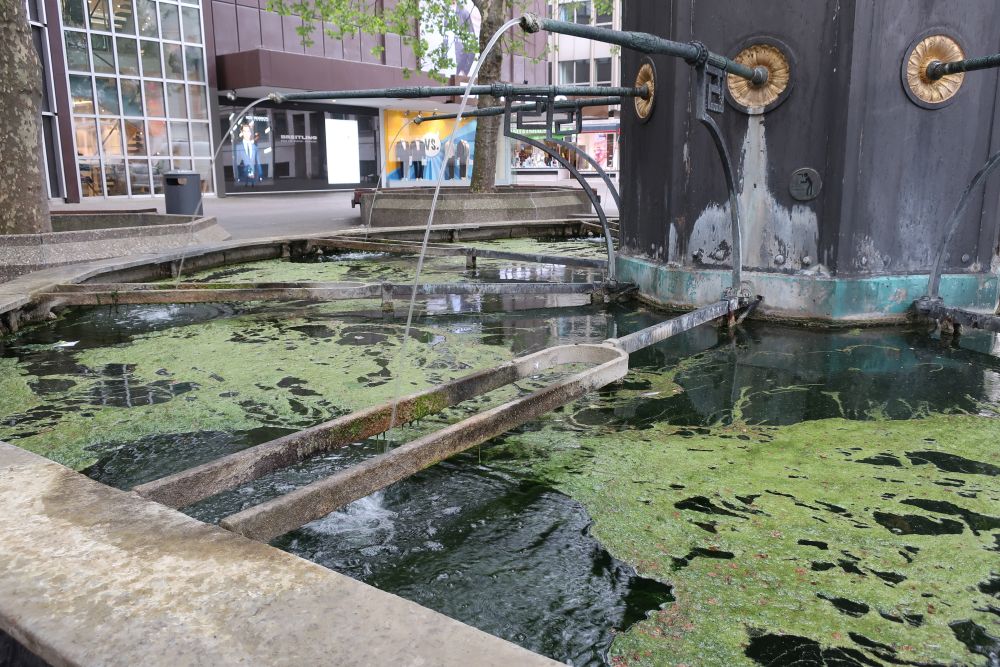
Inside of the village you’ll often find public fountains, which until quite recently supplied the residents with drinking water:

But the most interesting bit are the yearly celebrations such as Faschtnacht, planned for months in advance by the locals and usually involving street festivals and parades:

Unbelievably, in many of these towns the specific characters in the parade and even the costumes themselves are hundreds of years old, each accompanied by elaborate stories and detailed historical myths.

Bodensee: the lake with two faces

The Bodensee, also known as Lake Constance in English, straddles the border between Germany, Austria, and Switzerland – and it’s also Europe’s largest lake.

But what many people don’t see are its two distinct faces. In fact, I never recognized this either, until someone point it out to me.

By and large, Germany doesn’t have great lakes, so the Bodensee has developed into the place for many Germans to vacation and own second homes: ritzy and glamorous. Filled with fancy restaurants and hotels.

But for the Swiss, on the other side of the lake, the Bodensee is one of the more boring lakes, as far as Swiss lakes go: not surrounded by breathtaking Alps, no sculptured coastline to compare with Norway, relatively flat and boring.  So the Swiss side of the lake never developed in that same way.

Here are some scenes of the Bodensee, taken from the ferry landing at Meersburg:

Wine is produced along the German side of the lake:

And in the summer, you can usually find a huge Zeppelin flying around, since Friedrichshafen is the home to the company that invented the Zeppelin.

William Tell was here

Well, I don’t know if he was or he wasn’t.

But according to the legend, he was captured by a tyrant, lept off a boat to freedom, climbed up to exactly where I am now, and founded the Swiss Confederacy. And unbelievably, all this happened more than 600 years ago.

Today it is a little park called the Tellsplatte, and you can get a spectacular view of the snow-covered Swiss mountains in the late summer, as well as the lake, Vierwaldstättersee.

Here’s a slightly different view:

Indian apartment essentials

During the time I lived in India, my apartment was one of the best ones I ever had. Not because it was huge, had three balconies, and was regularly kept clean by a maid and a gentleman who ironed my shirts.  Also not because it overlooked a small park, during the day filled with brightly colored birds and in the evening with huge “flying foxes.” But because of the infrastructure.

Here in my bathroom you can see my “Geezer” – a tank on the wall that heats the water only just before you use it:


(I’m not sure if this is where the expression “You old geezer” comes from or not, but it still confuses me why this highly efficient system is not in more widespread use, particularly in the U.S. where the homes are very big.)

Here you can see my water filter, attached to the sink.  It had a canister containing carbon, and a second canister containing an UV light. Thanks to this set up, I think the water I drank in India was probably the best, cleanest water I’ve had in a long time. Because of the low flow rate, however, it meant that I would practice my own “water management” – and I kept my refrigerator stocked with water that I would bottle myself from this system, ready to be used in volume if I needed to:

Here you see my washing machine. There was no real need for an intense spin cycle, because the air was so dry, no matter how wet they were, my clothes would usually air dry within just a few hours:

And finally the best part, my stove, fed by a tank of gas underneath the counter:

Once you get used to cooking with a real flame, it is hard to go back to induction, infrared, or electric.

When the wind blows

I didn’t see any rocking cradles, but anyway I took this snap just a few meters from a spot called Bodega Head, on a cliff high above the Pacific Ocean, near Bodega Bay, California:

What you can’t see here, but what I find amazing, is that this tree is leaning almost 90 degrees to shoreline.  If I simply turn around, this is what it looks like behind my back:

So even though you’d expect the wind would travel perpendicularly to the shoreline, in fact the local geography and hills somehow influence the wind to run south, parallel to the coast.

(By the way, I am no expert on trees, but I suspect this is a Cypress tree.  Cypress trees are amazing – and I hope to write a number of photo blogs (PHOGS) about them soon!)

Because it is so amazing, here is a close-up of the tree:

Unbelievable hole in the ground – what were they thinking?!

A lone black crow sits on a sign and contemplates an interesting landmark at Bodega Bay, California, which is nothing more than a hole in the ground:

But unbelievably, this water filled hole – or more precisely formulated, this water filled hole sitting directly on the San Andreas Fault – was originally planned to be the location of the largest nuclear power plant in the United States.  Until, of course, sanity triumphed over business interests in the end.

You can read more about this hole on the sign:

Where the “exotic niche” is mainstream

On a recent trip to the San Francisco Bay Area, I was shocked / surprised / stunned to see this advertisement on a public transportation bus:

Here’s a close-up of the advertisement:

Even within the IT community, there is probably only a small fraction of people who will understand this advertisement. And a tinier fraction than that who would be motivated to go find out more about this company.

So it is SHOCKING to see that a company expects enough value in paying for an advertisement like this. I don’t know the demographics of San Francisco, but it now must be one high tech city!

Ansel Adams was here – 1

This is the world famous photographer, Ansel Adams:

And this is the photograph he took in 1953 of a church in Bodega Bay, California:

And this is the same church, photographed by me in 2018:

One of these days I will play around with the color effects, and see what happens when I convert my photograph to black and white.  But . . . I still think Ansel did a better job than me!

Across the Krishnarajasagara

What a mouthful!  But South Indian names are actually quite easy to remember, because they are like German: long agglomerations of short words.

I have no idea what it looks like today.

But back in the day (the “day” being around 2005) the Brindavan Gardens were a world-class sight to behold: a massive city garden with dozens and dozens of powerful water fountains, and in the evening, everything lit with intense colored lights.

Anyway, built along the Krishnarajasagara Dam in South India:

The gardens had so many fountains, there are not enough pixels in most cameras to capture them all:

And where there were no fountains, there were man-made rivers decorated with intense flowers and exotic trees:

And even some spectacular buildings:

I visited the park a few years later, and sadly, it had fallen into a terrible state of disrepair – not worth visiting at all.  But a trip out there is still exciting, because there is a nearby village Bylakuppe with relocated refugees from Tibet – and in fact, it is the largest settlement of Tibet people outside of Tibet!

Bangalore Gothic

Back when I lived in Bangalore, what I think was an IT guy turned his passion into this livelihood and created Bangalore Walks, a program of guided historical walking tours of Bangalore.  I was one of his first customers.

On one of his walks, after showing us where Winston Churchill likely lived during his time in Bangalore, we stopped to look at this house:

It’s nothing fancy – there are hundreds of examples in Bangalore – but he brought our attention to the scalloped rooftoop.  According to him, this style of roof is only found in Bangalore – and it is an architectural style he’s dubbed Bangalore Gothic.

I haven’t taken any Bangalore Walks recently – and I hope they are still as good as back in the day – and you’ll actually find my name on the official website!