Continuing the series, I took this snap just outside of L’isle-sur-la-Sorgue, heading in the direction of Apt,

A renaissance man for the twenty-first century!
Continuing the series, I took this snap just outside of L’isle-sur-la-Sorgue, heading in the direction of Apt,
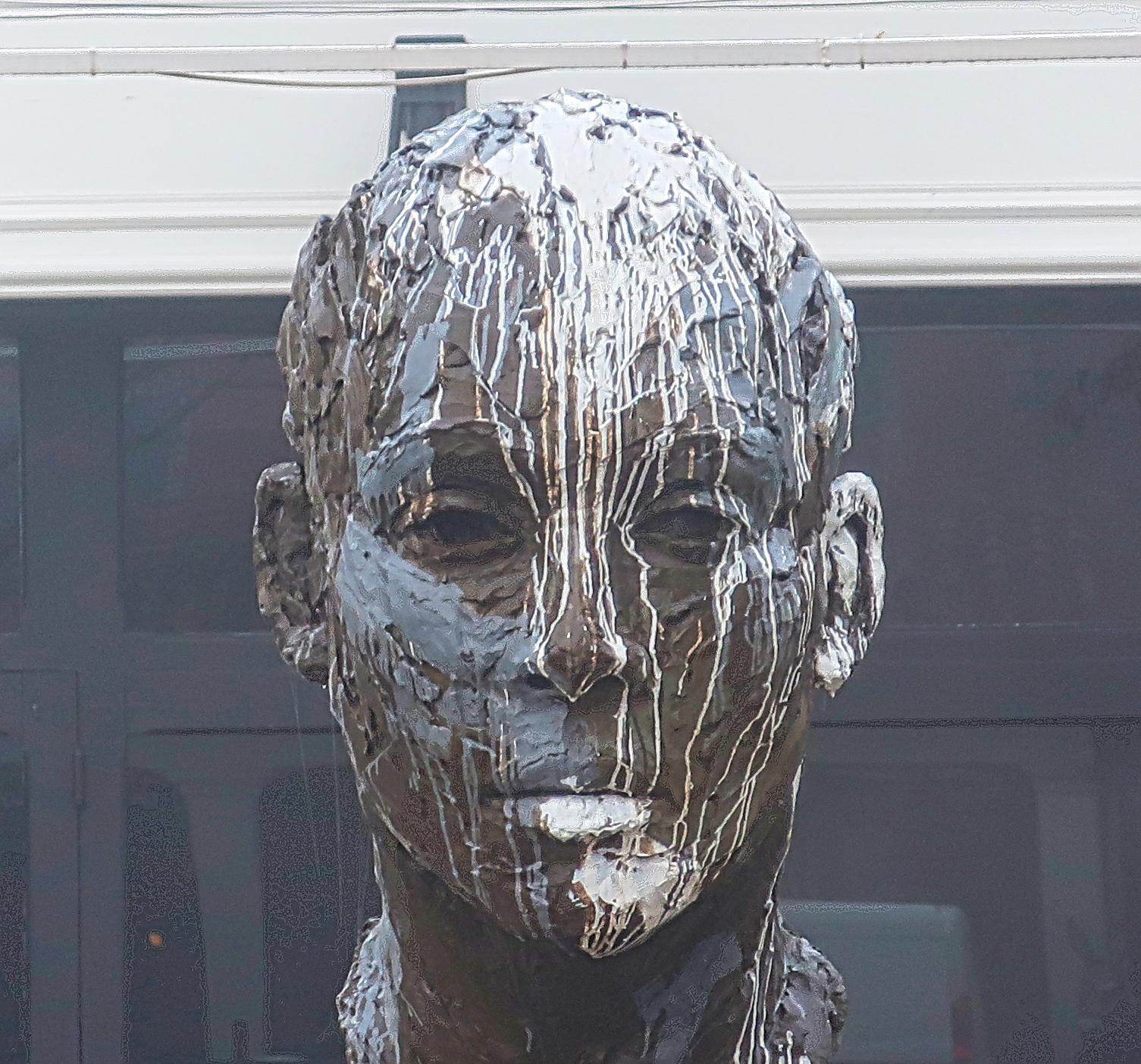
I captured this head just along one of the banks of mighty Sorgue river and it passed through the L’isle-sur-la-Sorgue,
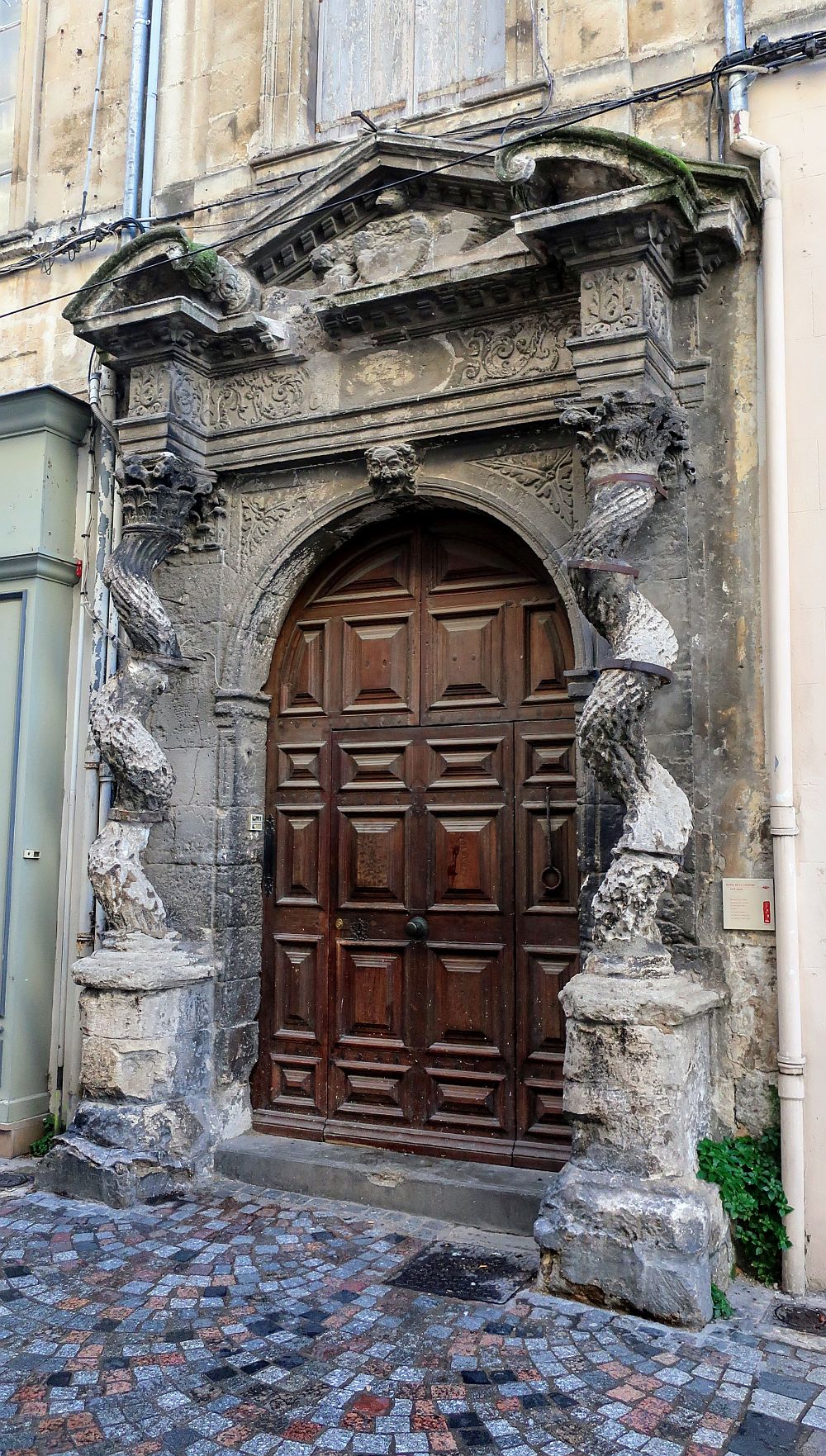
This is something you don’t see everyday – in fact, I don’t think I’ve ever seen anything like this at all. It’s a medieval doorway in the southern French city of Arles, but one that is framed with helical columns on both sides:
Barbershop poles are interesting things. They have them in the US, of course. Germany doesn’t seem to have them – at least, I’ve never seen one in Germany. They are quite common in Switzerland.
And you can find them in France, but not everywhere.
I took this snap in Arles:
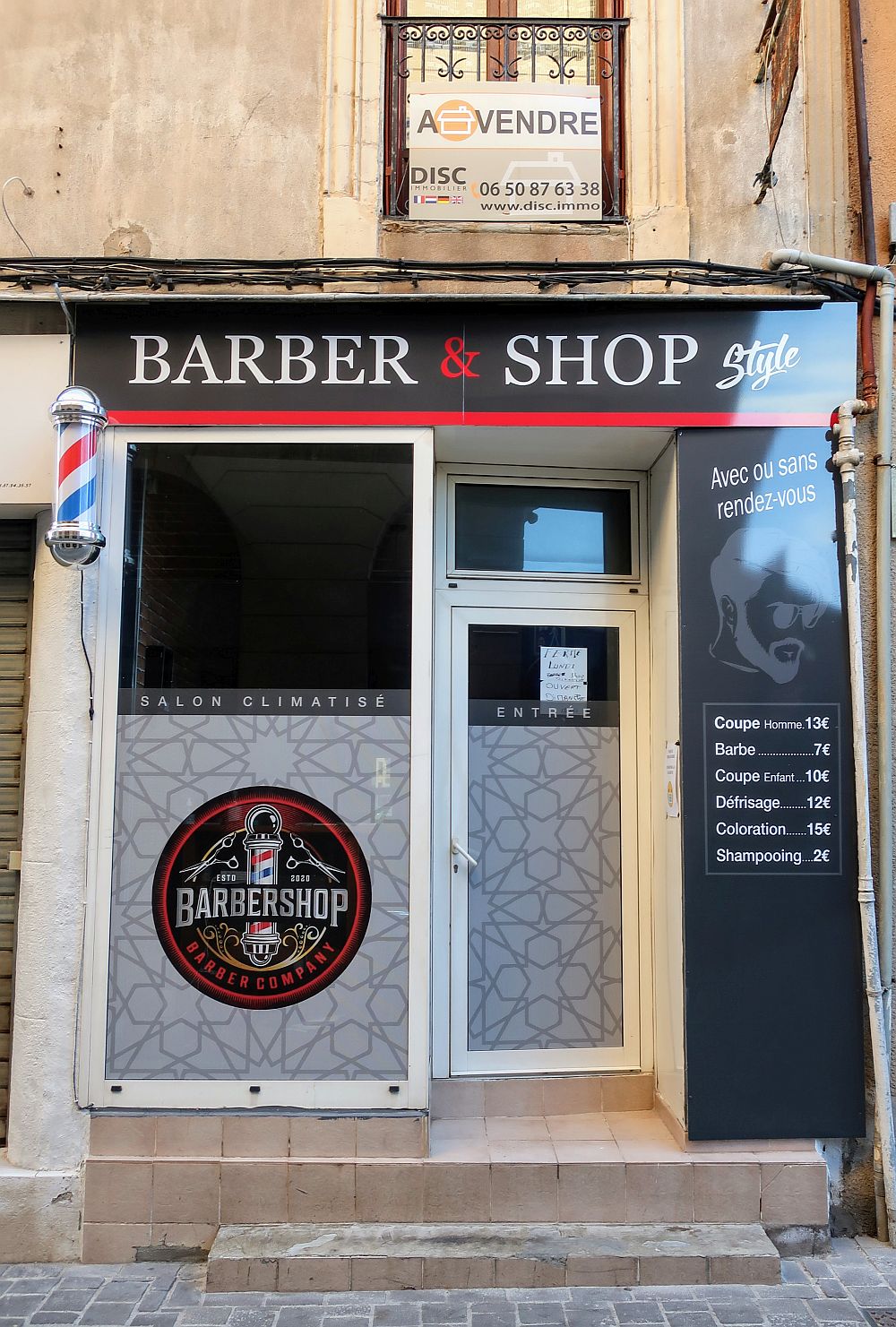
Of course it is probably more at home here in Europe, originally deriving from a sign used for shops that had doctors and leaches and were willing to bleed you with them.
But that begs the question: what else do we see in our daily lives and take for granted, but that we would have also seen hundreds of years ago? Probably if we could travel back in time there are more than a few things that we would instantly recognize.
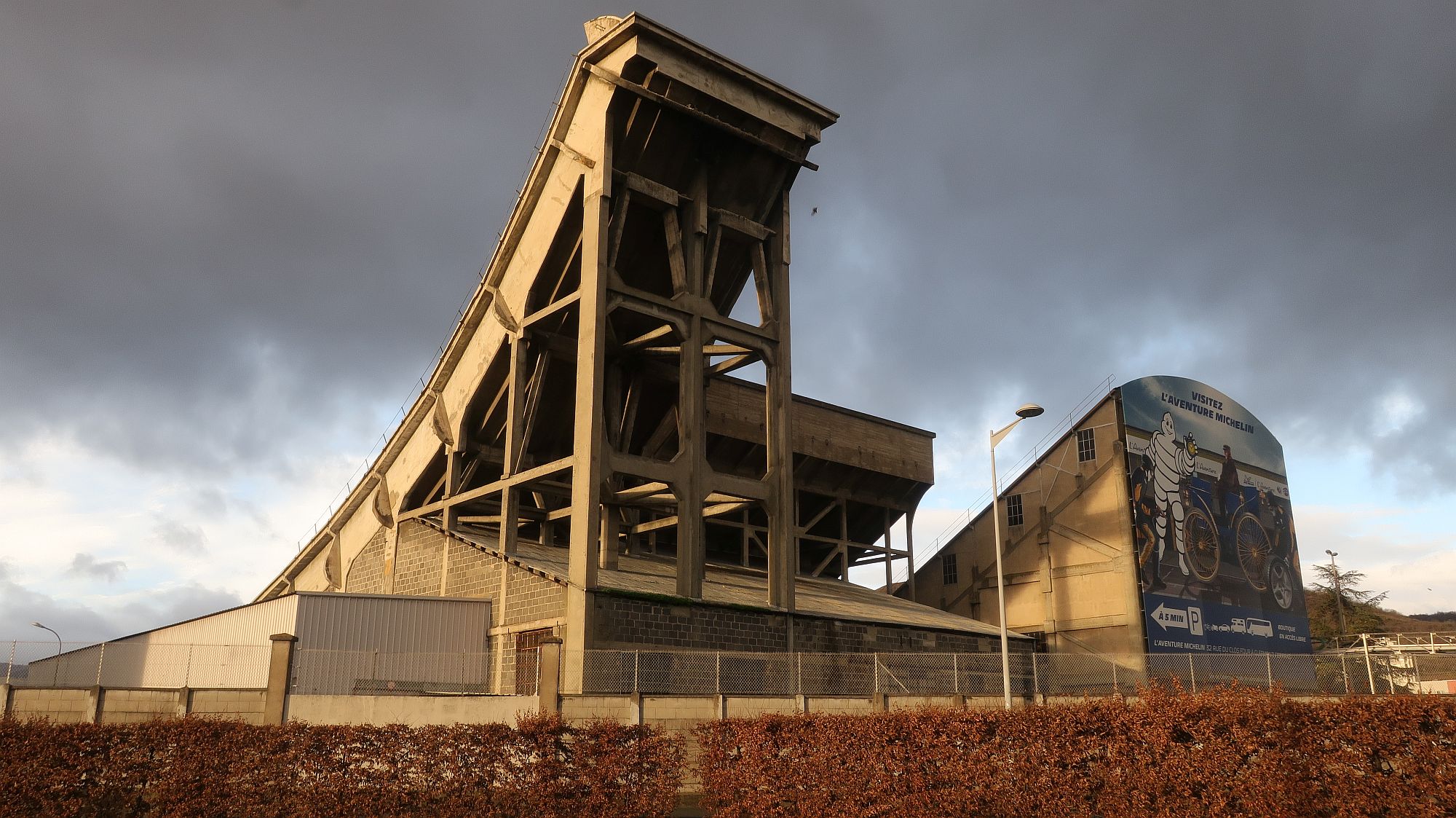
Continuing the series, here is another snap of what I thought looked magnificent in the winter sunlight:
I’ve written about cable ferries before, such as the cable ferry on the Rhine.
My hobby is very dangerous in and of itself, visiting to the most secluded regions of France – regions so remote and backwards that it is rumored, the local inhabitants themselves (after centuries of in-breeding) often have no names.
The Gendarmarie cannot stop you – but if you ask their advice they caution strongly against it, pointing you back to the nearest McDonald’s restaurant.
But I like to throw caution to the wind, and despite the obvious dangers I set out to explore the delta where the Rhone River meets the Mediterranean Sea. Even today I’m one of the few Americans to have ever seen where the Mississippi River meets the Gulf of Mexico – that place, too, is better avoided by most tourists.
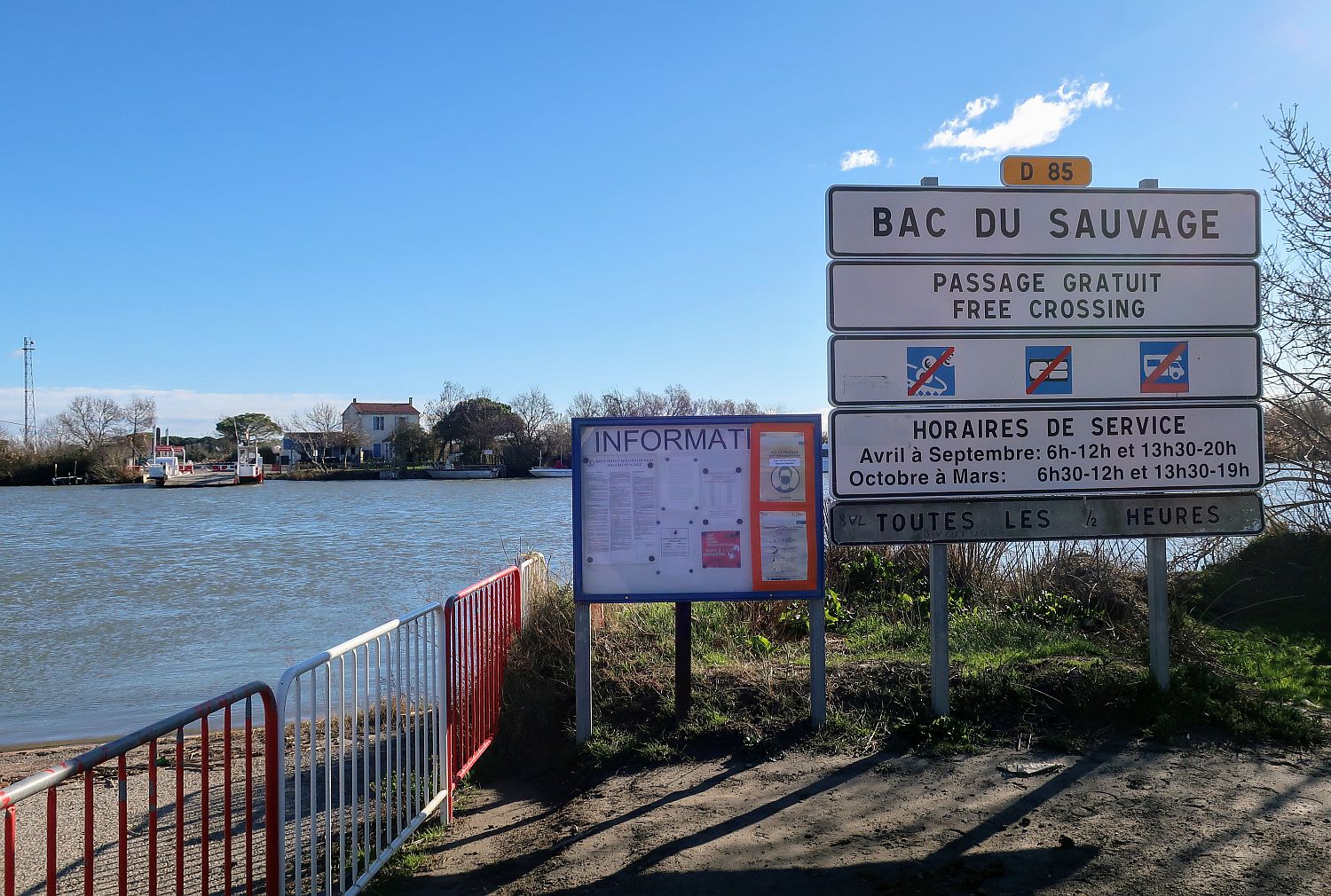
When driving to reach the secluded southern French village of Sainte-Marie-sur-la-Mer, the first thing you run across is a river and this sign:
Then next thing that happens: you step out of your vehicle and – suddenly! frightfully! just as you open your car door! – you are viciously attacked by two immense and deadly guard dogs:
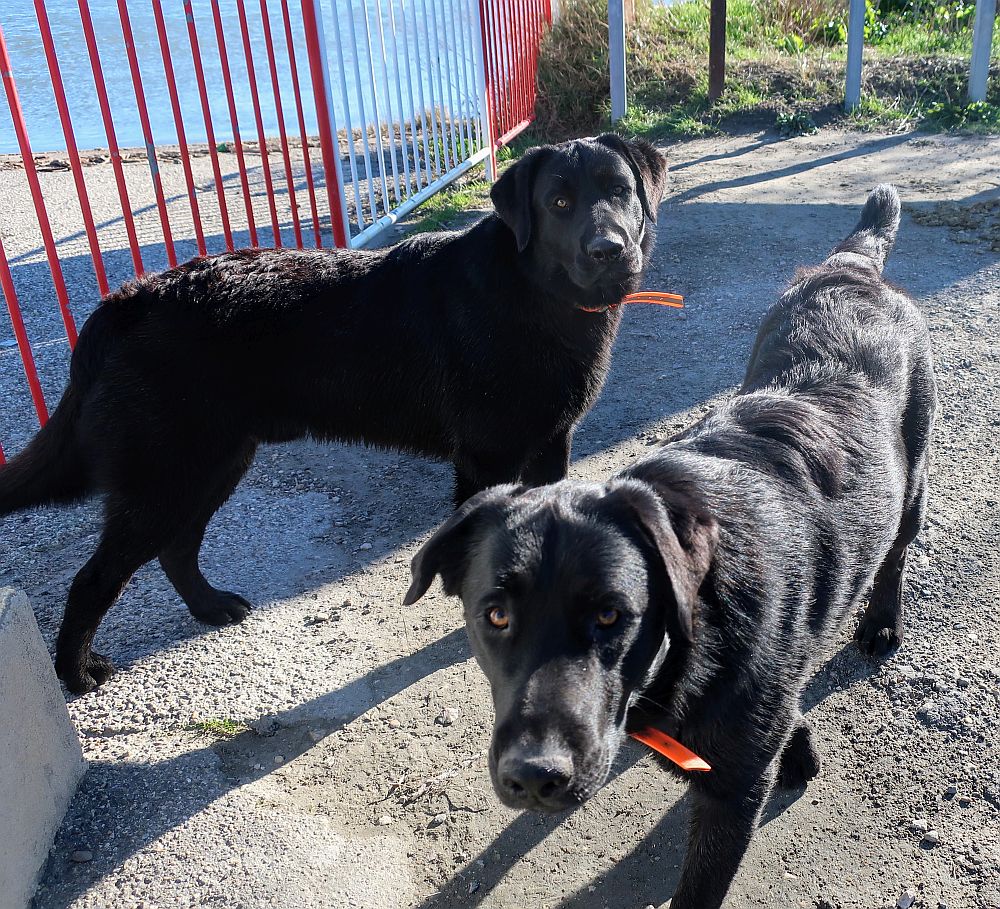
Sharp fangs. Massive jaws to crush their prey. A growl that could scare Satan himself. It’s doubtful that these hounds of hell would allow many tourists to live.
If these vicious attack dogs do in fact let you live – and in my case thankfully they did – then you’ll come to realize that the road has ended, and there is no bridge to the other side. The river you see here is the Le Petit Rhone, an offshoot of a huge French river that transports the glacial water from Switzerland down through France and into the Mediterranean Sea.
Hmmmmm, you think to yourself. I am way over here. I want to be way over there.
That’s not just one but two “way overs.”
Hmmmmm, you think some more. Does my car float? No.
So you think some more. Hmmmmm. (That’s the sound of you thinking.)
But there is in fact a ferry, as you can see on the left side of the above snap. And slowly . . . in a matter of minutes . . . it dawns on you: Hey, I bet that ferry is no coincidence! Someone must have put that way over here so that I could travel way over there. My problem of two “way overs” is solved!
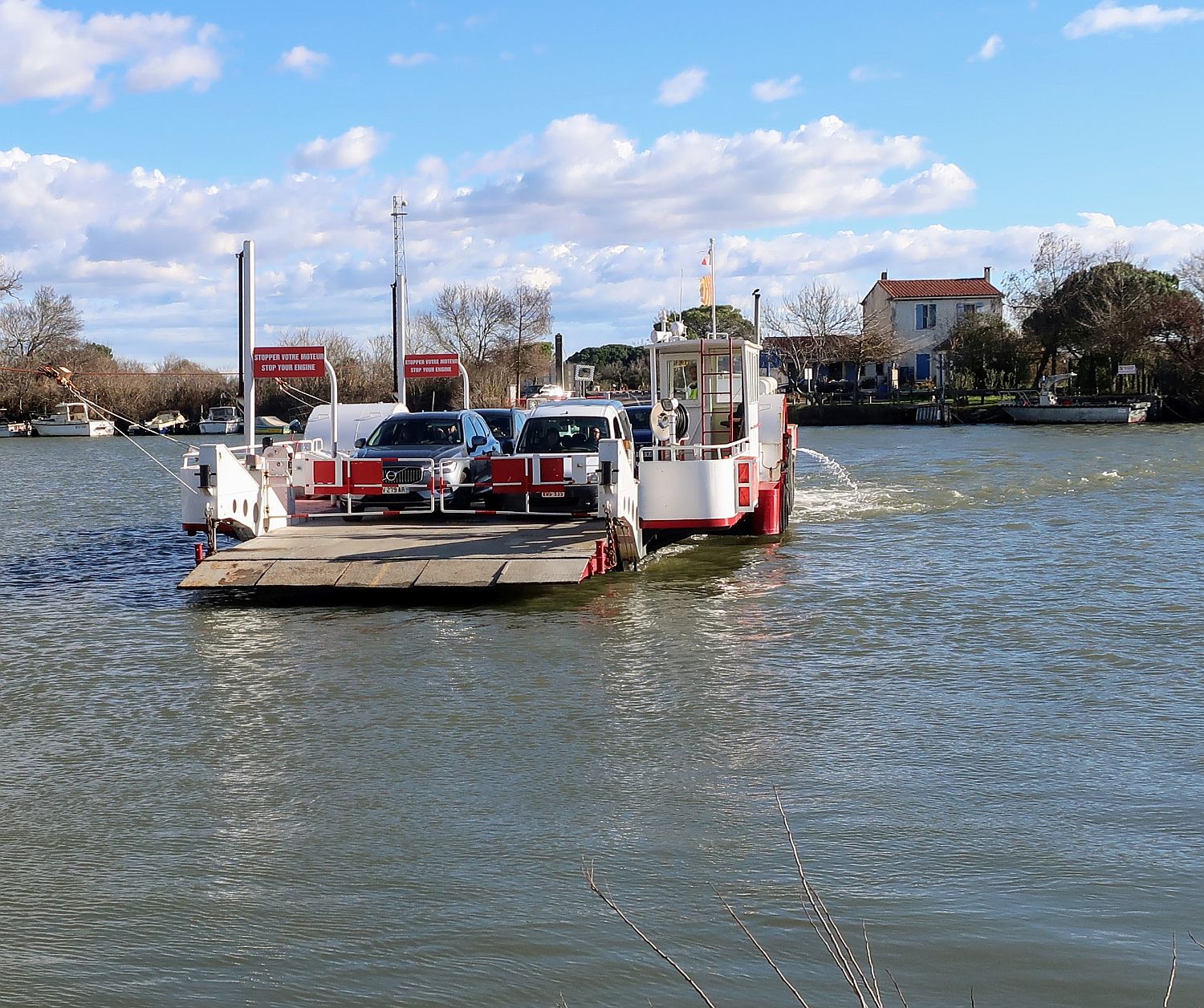
I had to wait for over an hour (it was lunch time, and the French are very serious about their lunches, very carefully timing them to include finishing the glass of wine and smoking a cigarette), but eventually the ferry was loaded up and started on its way over:
And here’s a snap just as it reached the shore:
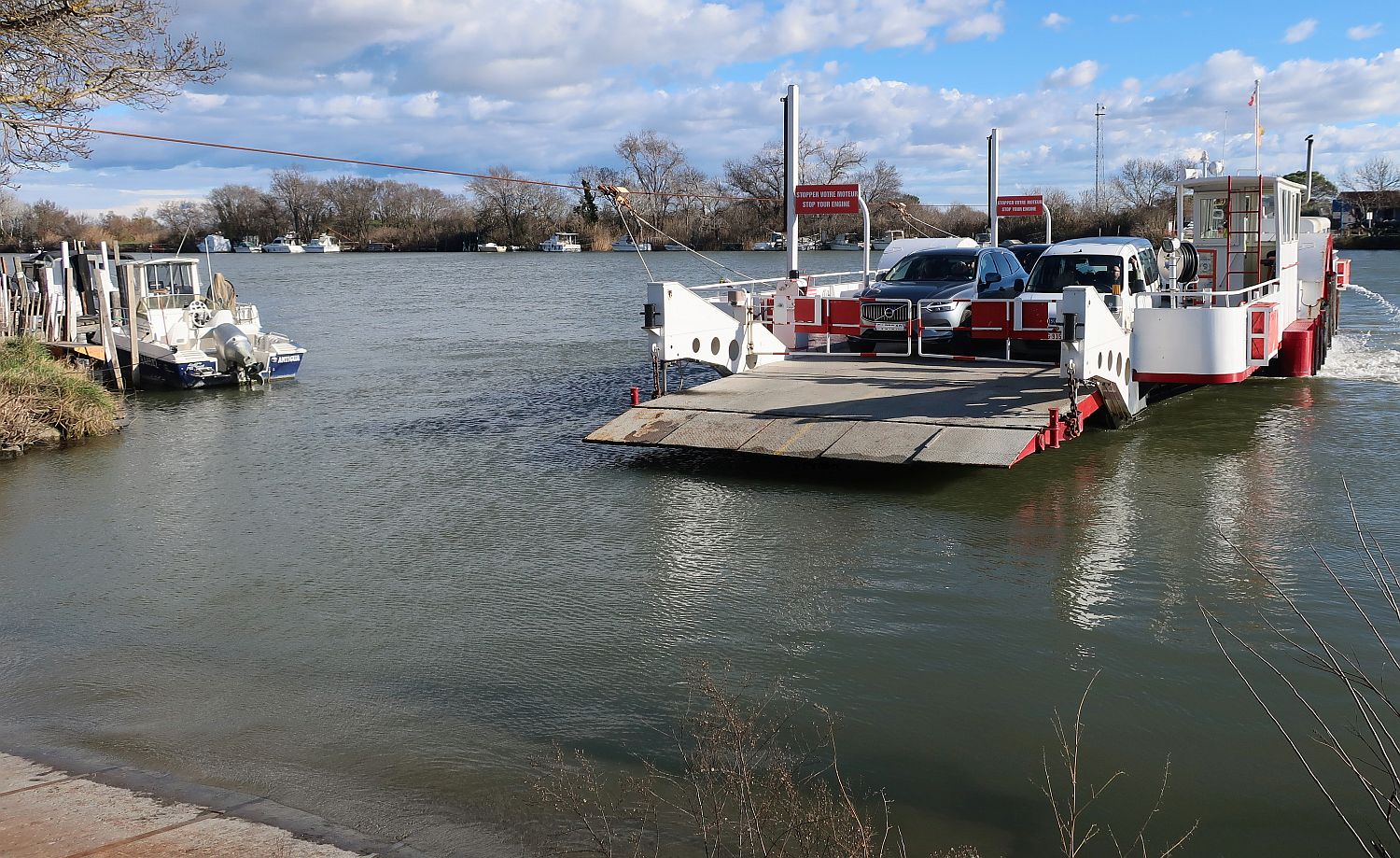
The difference between this ferry and the one in the link I posted: that ferry is attached to a steel cable, and the steel cable provides the locomotive force that pulls the ferry across the Rhine. In this case there is also a steel cable as you can see in the snap above, but the ferry has a motor and the cable is used to guide the ferry.
How did the story end?
I left the vicious hounds of hell (that interestingly liked having their ears scratched), got into my car, drove onto the ferry, crossed the river, and headed towards my fate in Sainte-Marie-de-la-Mer, a place so remote that the locals (after centuries of in-breeding) have no names and do not tolerate tourists lightly.
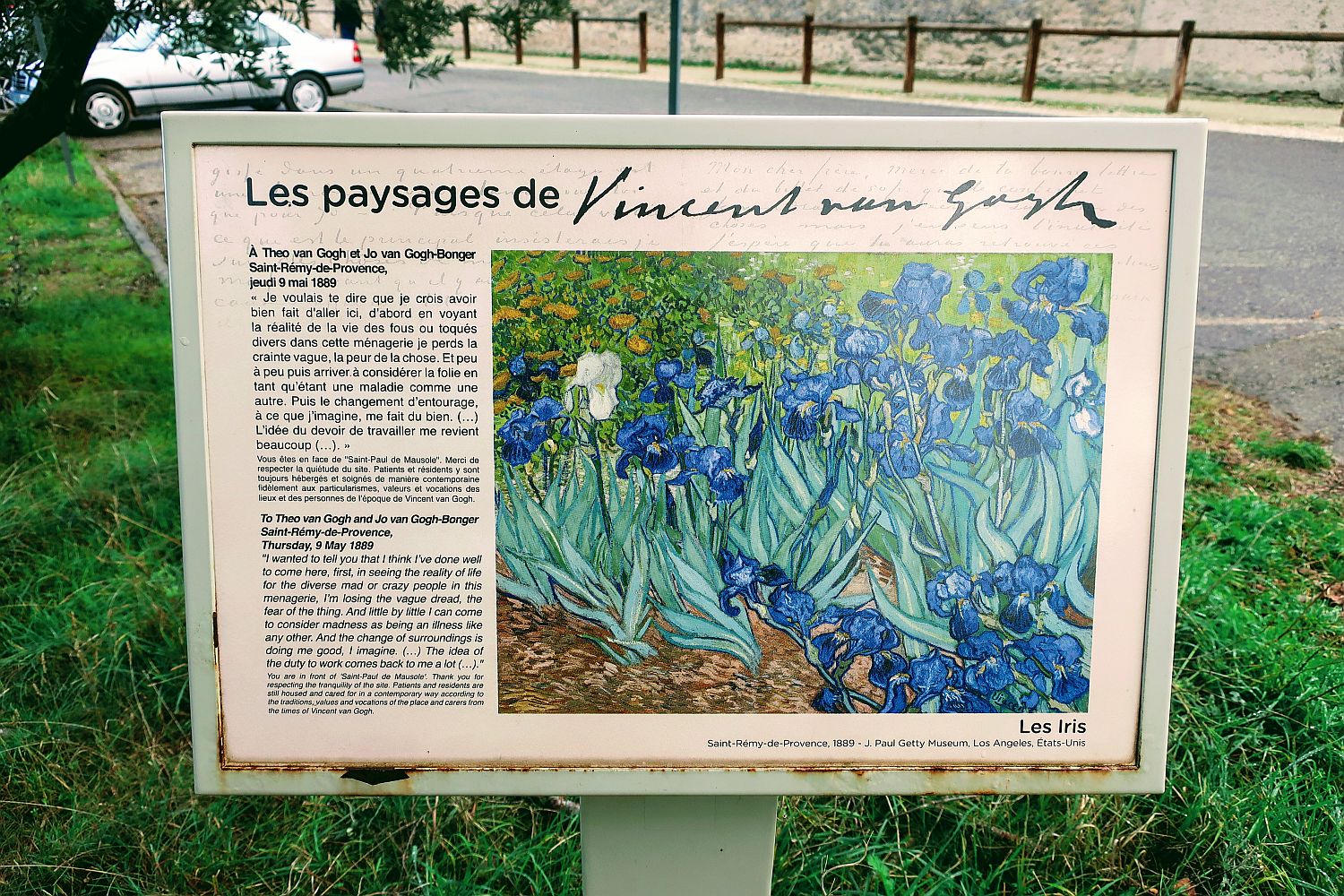
Vincent van Gough, that is, because this is the site, Monastery Saint-Paul de Mausole, in the tiny southern French commune of St. Remy de Provence where Vincent stayed in a hospital and painted:
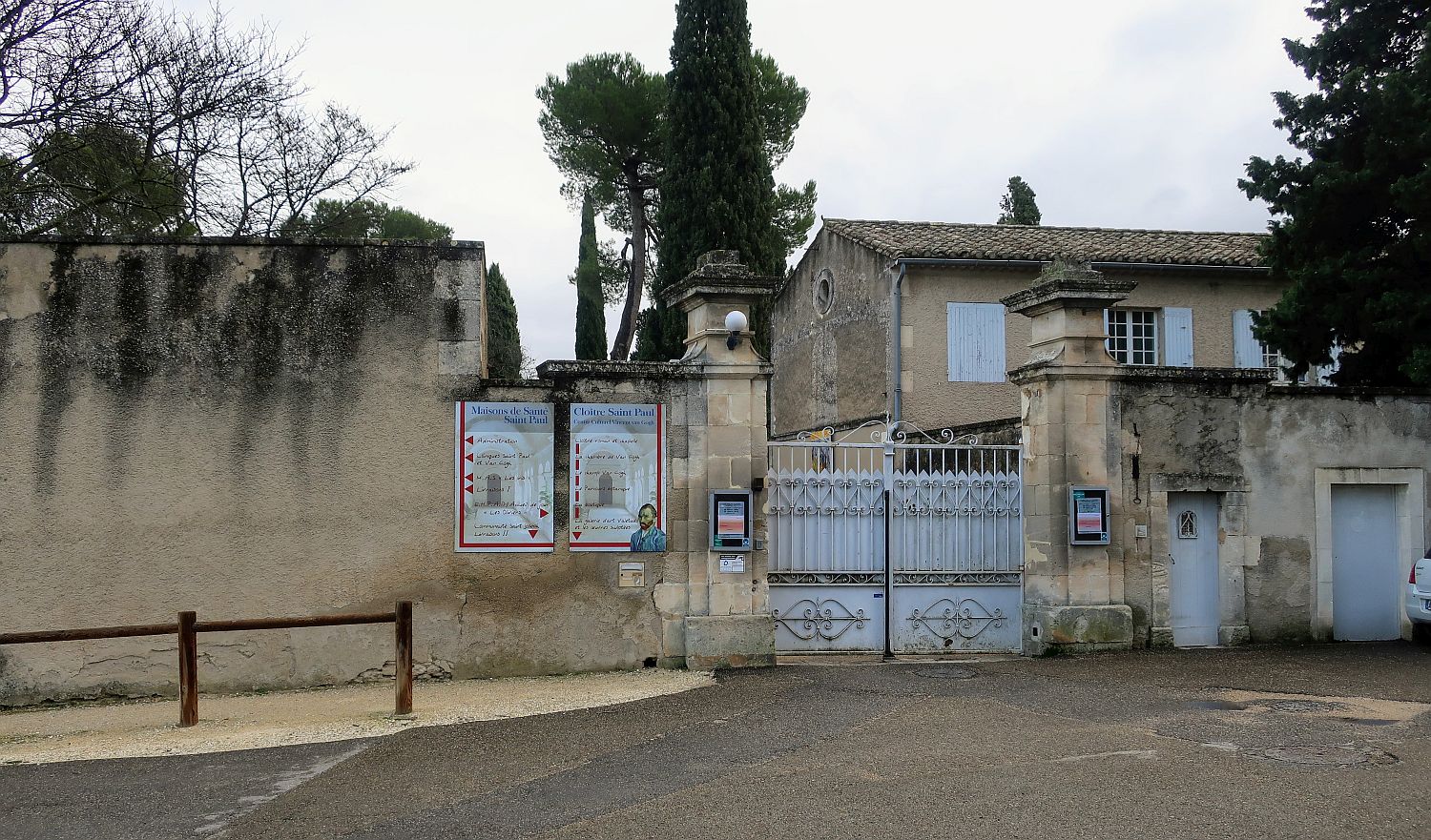
Here is a nice sign:
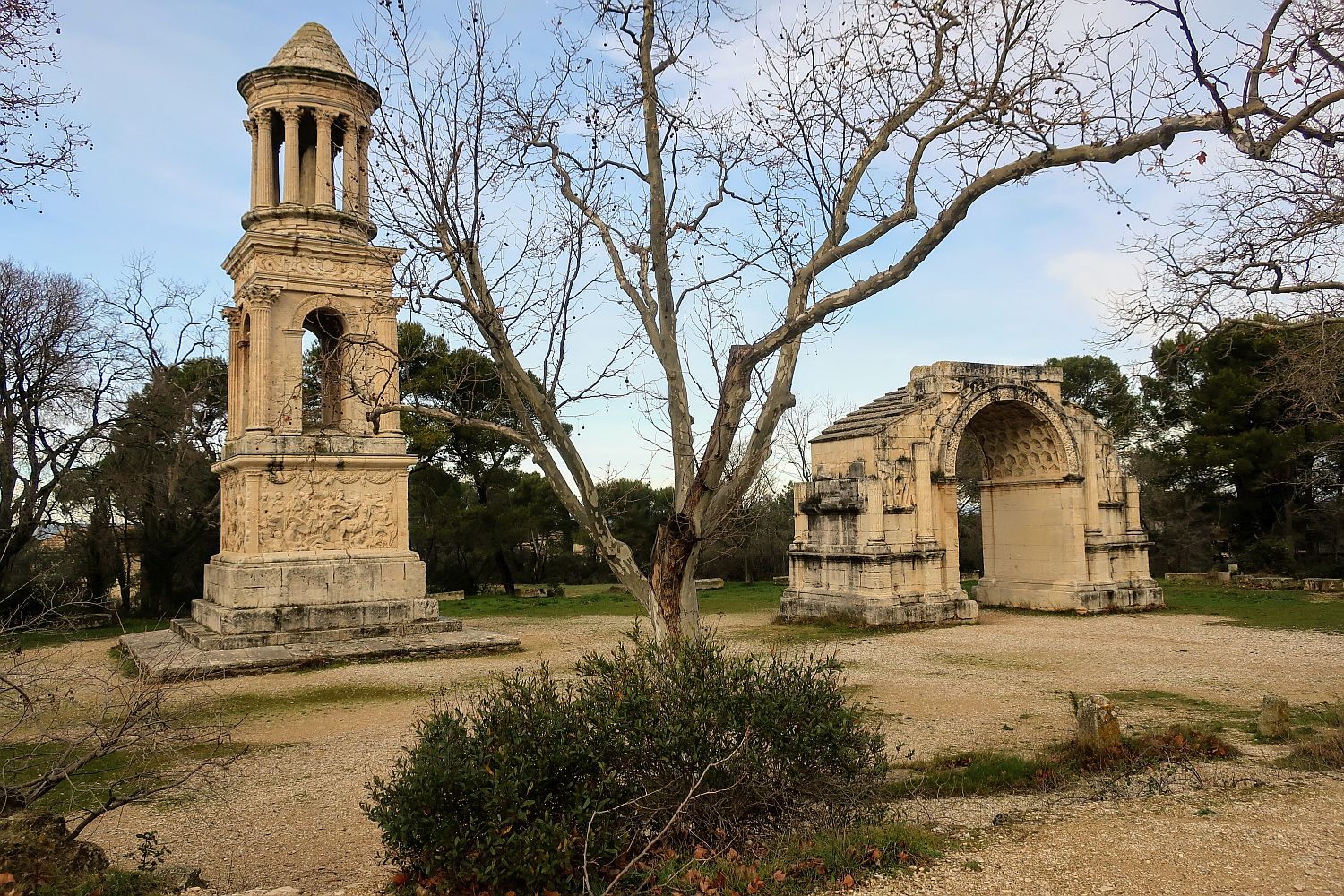
Vincent van Gough put the tiny French commune of St. Remy de Provence on the map, since this is where he stayed in a hospital. Just a stone’s throw from that hospital (literally, across the street!) is a pretty impressive site of ancient ruins, called Site Archéologique de Glanum. There are many more ruins than shown here – these are just the most impressive ones next to the parking lot:
It’s a good life in the south of France.
Whereas Swiss pidgeons in the middle of winter are worrying about food and avoiding freezing to death, these Provential pidgeons are using the medieval water fountain in Arles to take a bath and keep their feathers clean:
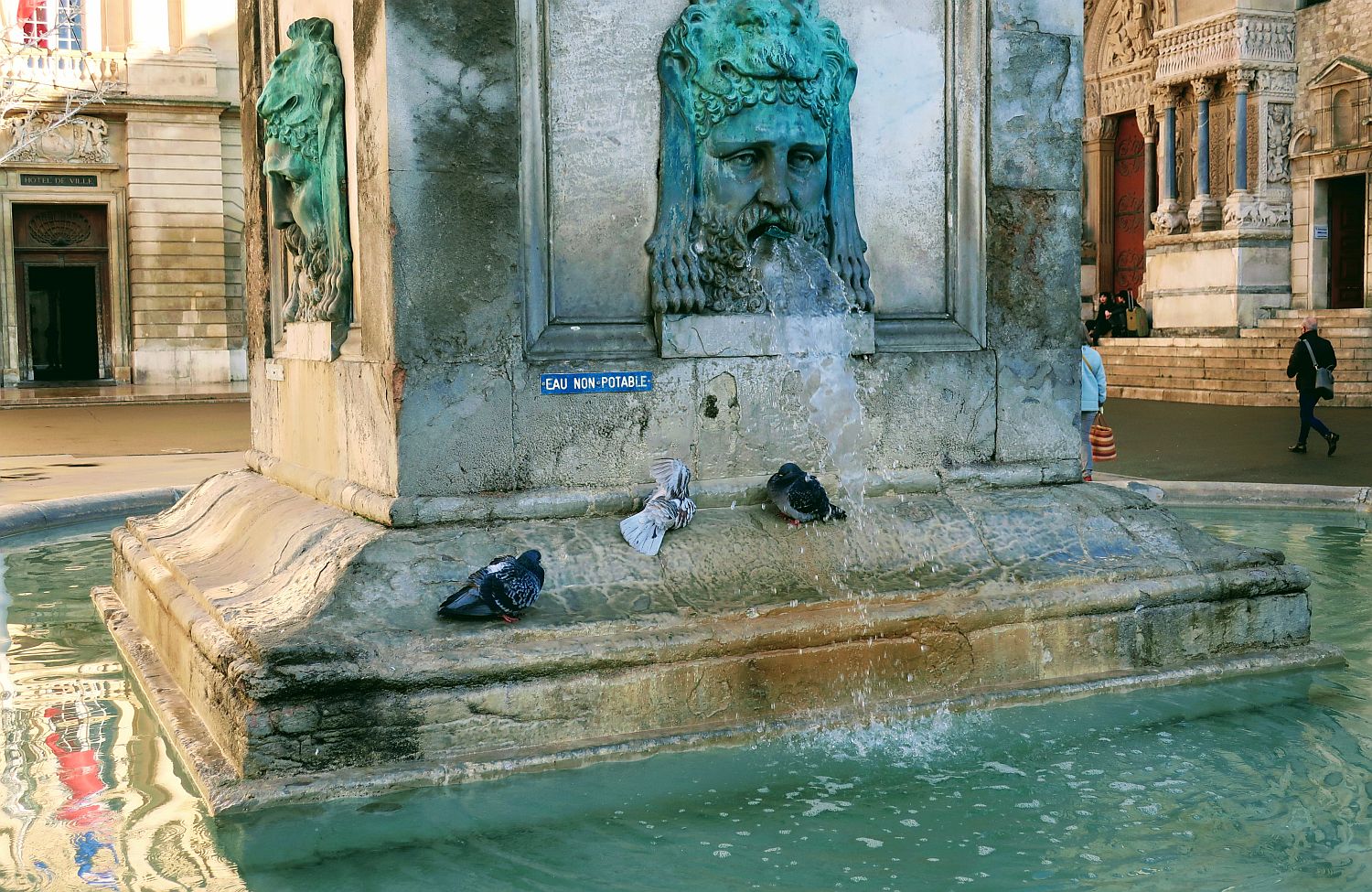
This snap really appeals to me.
It’s a juxtaposition of protection in the southern French village of Arles. In the foreground, modern protection against Covid; in the background, medieval protection against lawless threats. And on the side, that column you see is the sensor for a bollard, a modern traffic barricade that helps keep the inner city streets free from the threat of terrorists using their vehicles as weapons.
All three things serving a very similar purpose, keeping out something that is unwanted.

The Camargue region in southern France (essentially the swampy delta where the Rhone River empties into the Mediterranean Sea) is famous for its white horses, which many scientists actually think are one of the oldest breeds of horses in the world.
I took this snap down a deserted road in the Camargue, just outside of Sainte-Marie-de-Mer in the south of France

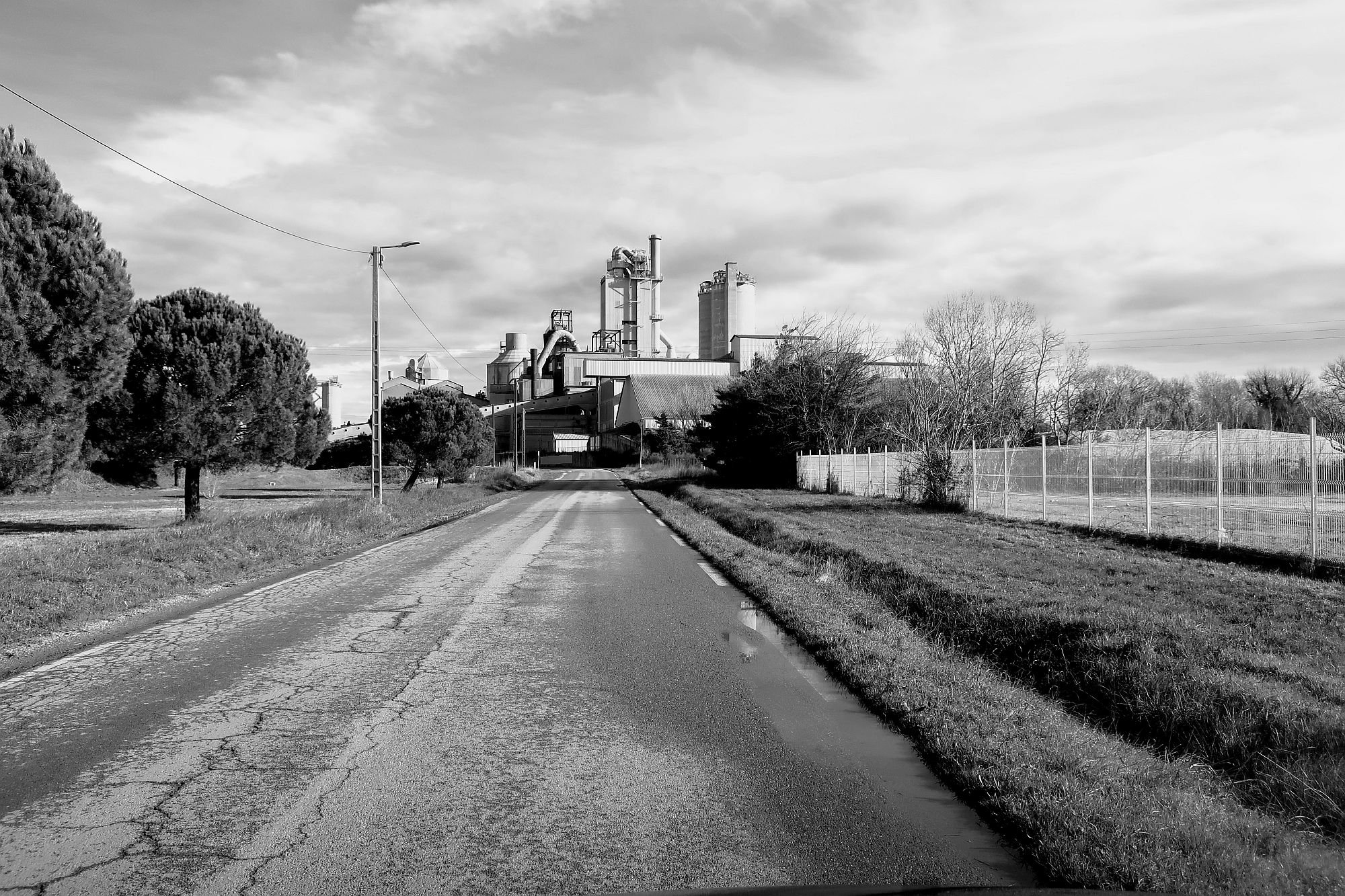
As artistic a snap as I thought I could take of what I think (but am not entirely sure) is a cement factory just outside of the southern French village of Beaucaire,
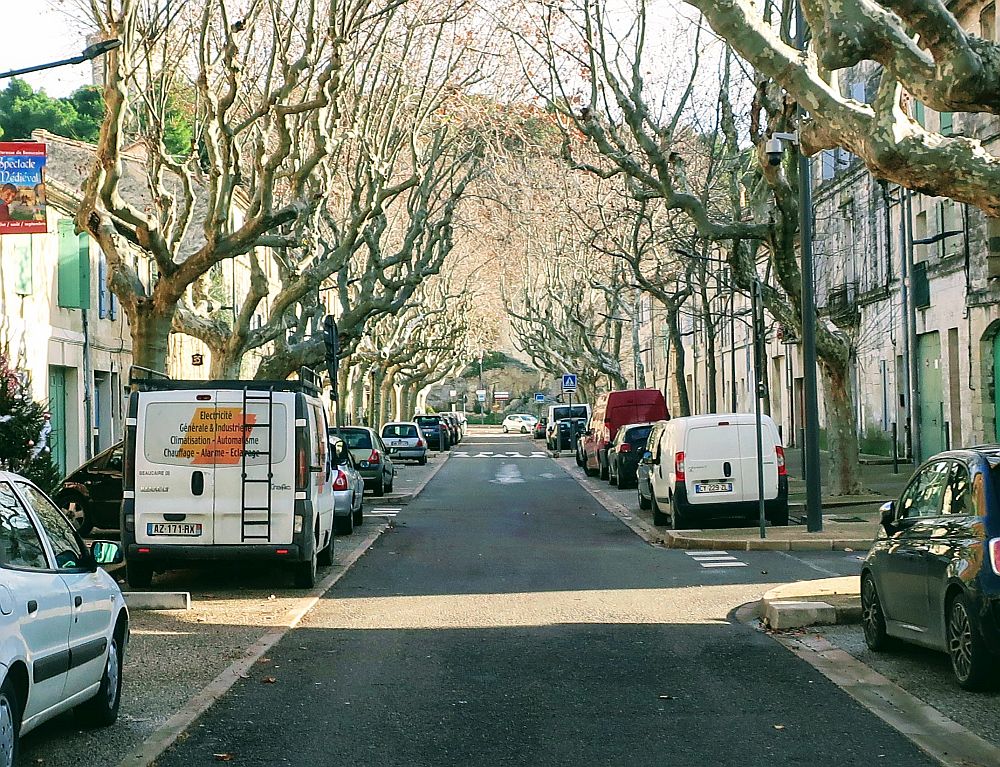
There are many good things about France that trace their origin back to Napolean – and the zillions of kilometers of streets in the south of France, lined by plane trees carefully planted to give shade to army troops, is one of them.
Here is as artistic a snap as I thought I could take of a street in the southern French village of Beaucaire, lined with plane trees:
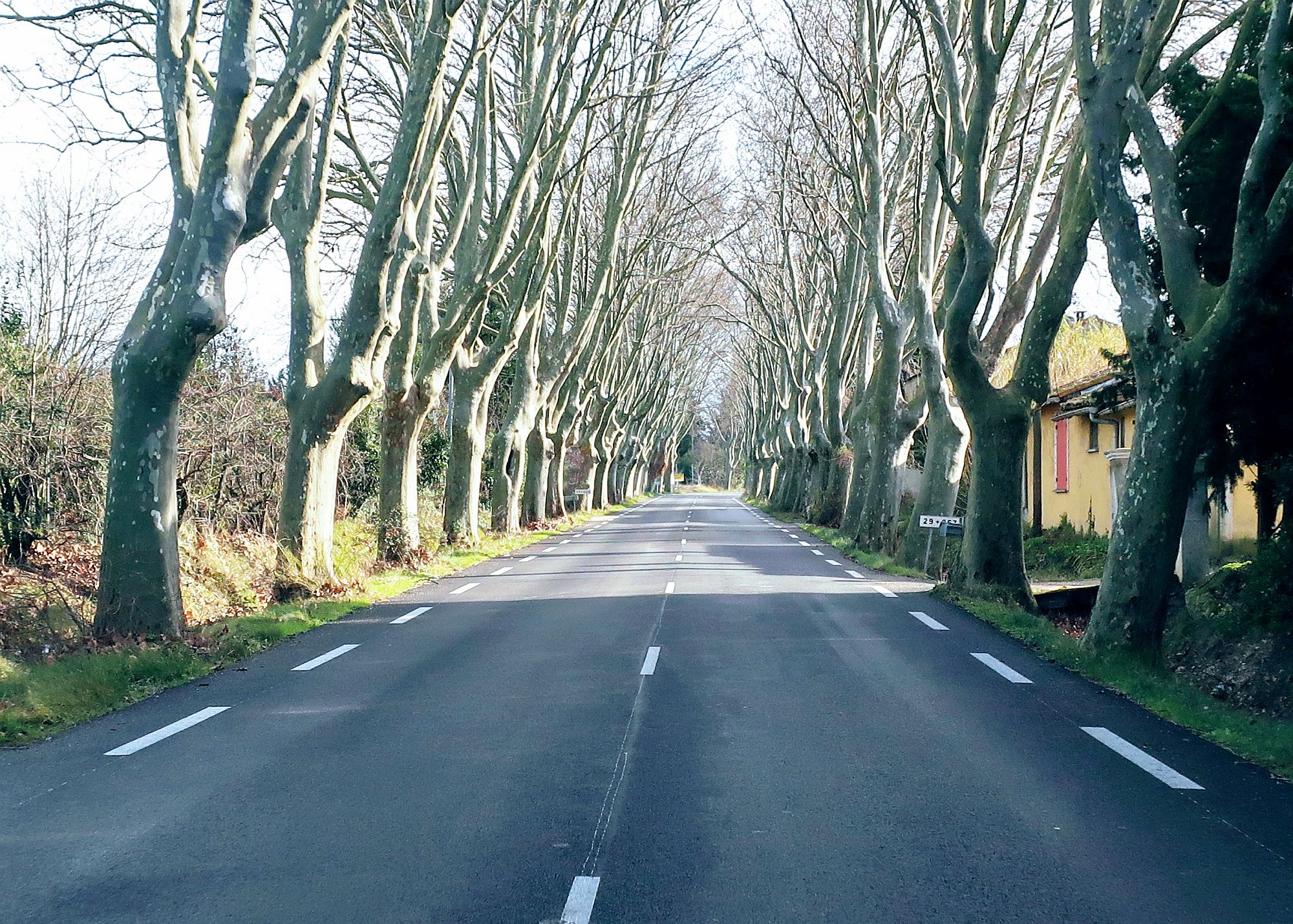
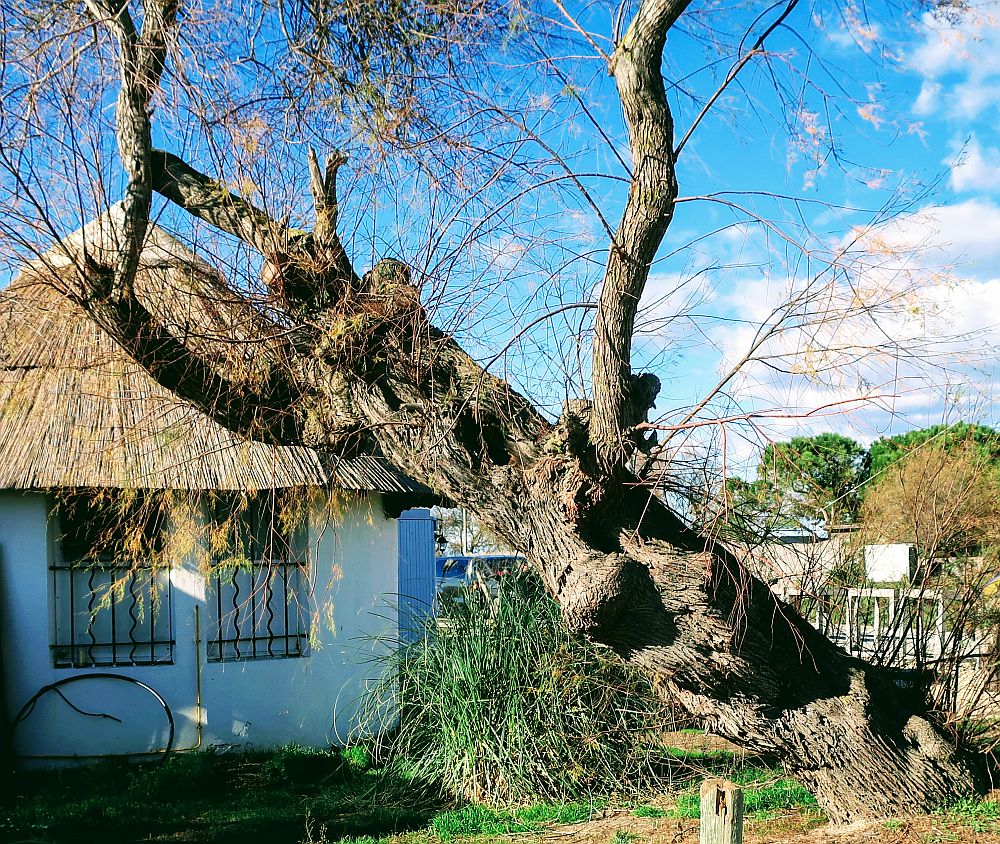
If you think they are all leaning to the right, you’d be right. This part of France lives under the so-called Mistral wind, a wind of up to nearly 75 km/hr that forces trees to grow tilted. I visited in the winter, and there were numerous times I had to stop the Euro Cruiser, my minivan, because the wind gusts were too strong to safely drive.
Continuing the series, here is a snap from the Southern French village of Agde,
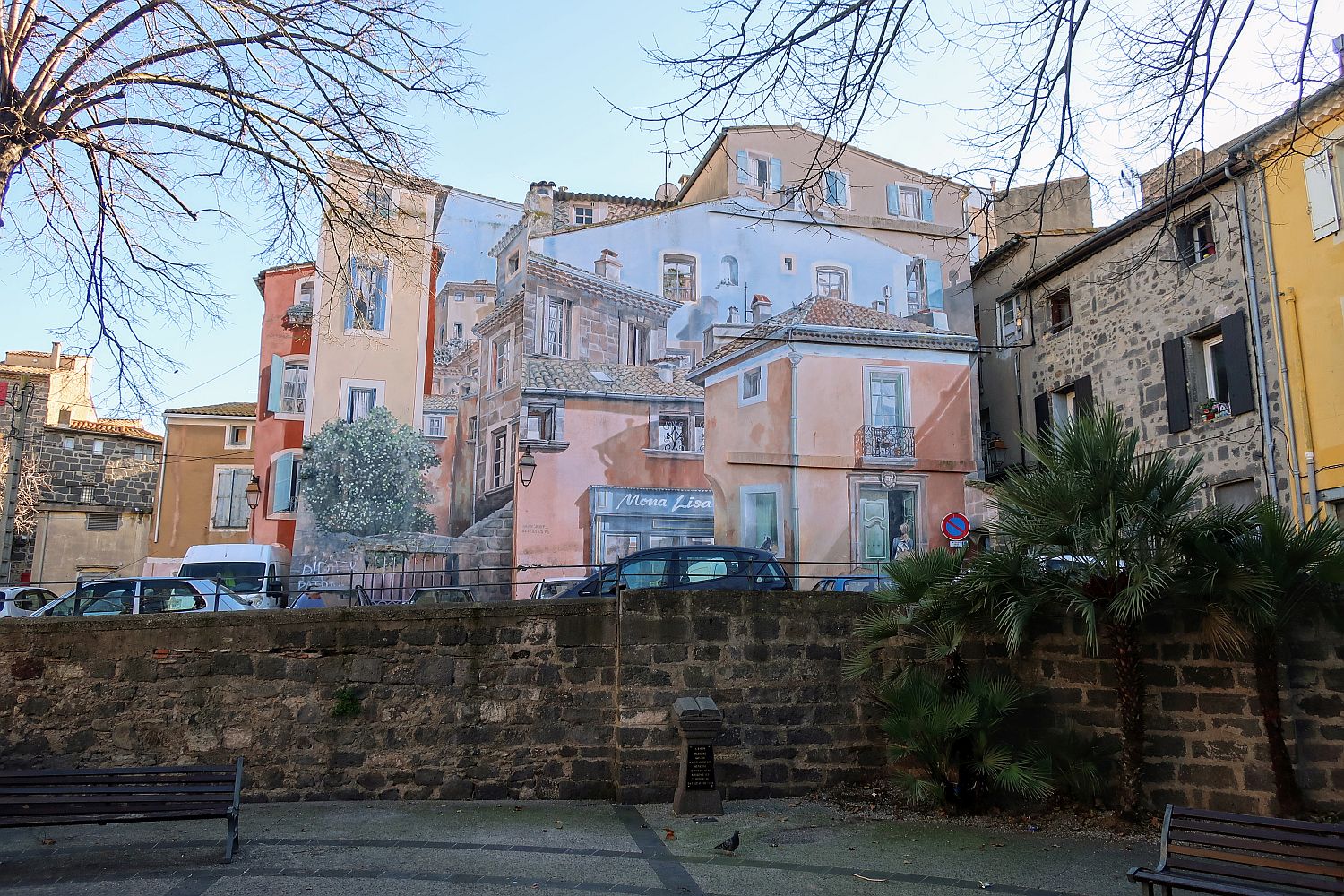
Continuing the series, what makes Agde so interesting for me is that many buildings have been built with a dark stone – and you just don’t see that in other French villages.

If you think there is something a bit amiss with this facade, you’d be right:
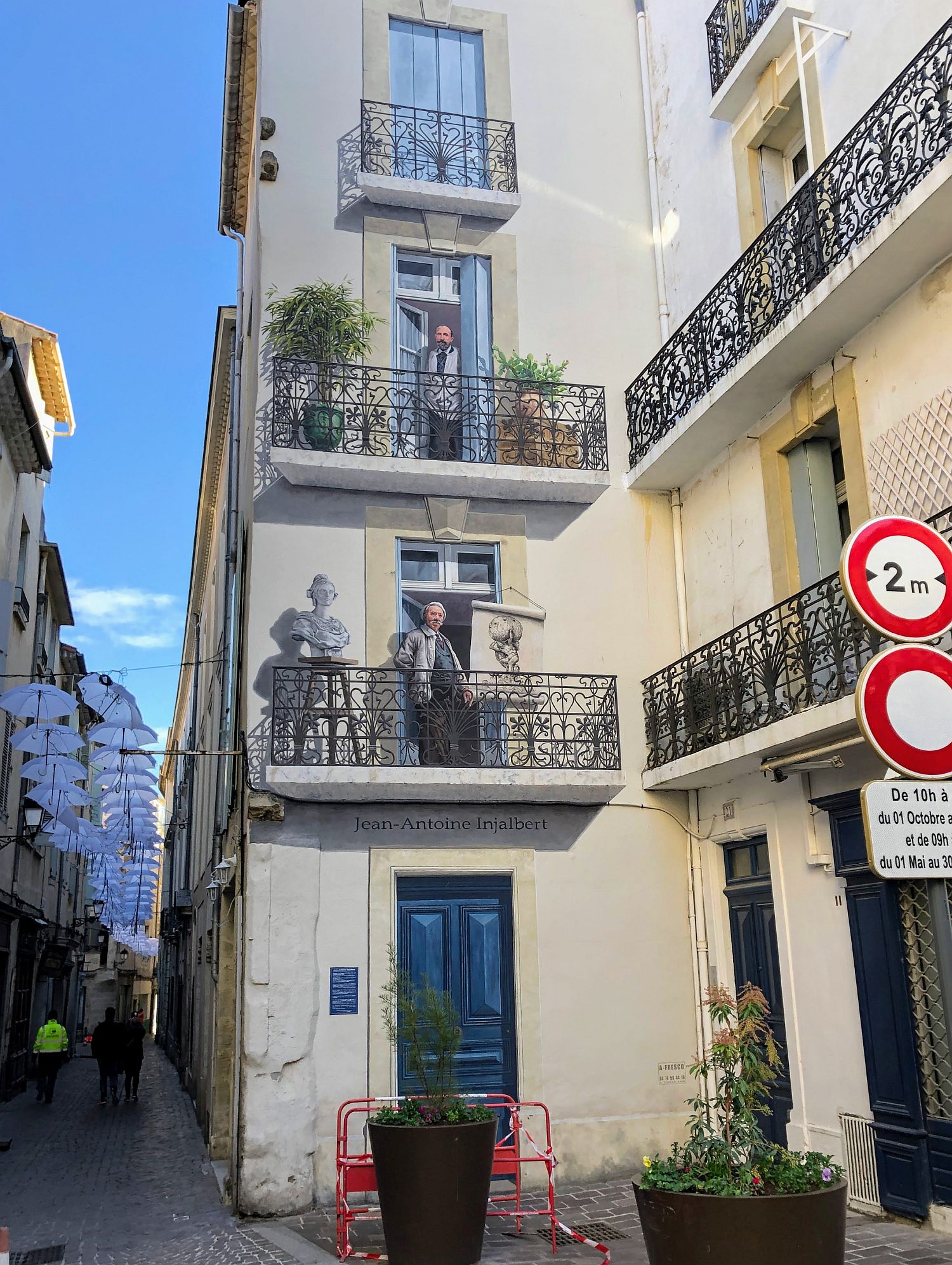
In fact, I naively walked by until I saw a couple of tourists taking a picture, so I backed up and realized: there are no balconies on that face at all! In fact, it is a flat building, and what you see is just a very clever painting with perspective.
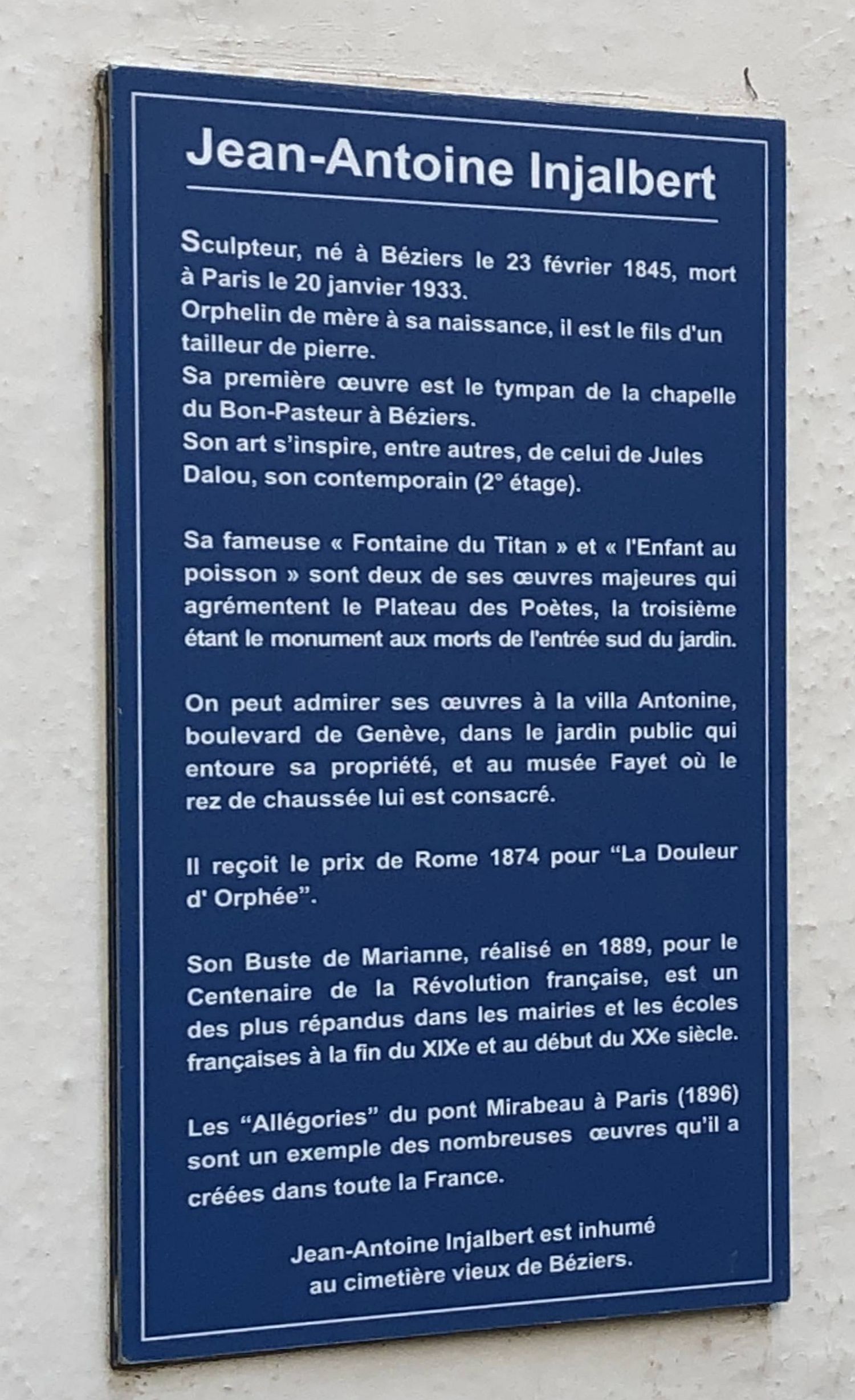
It’s a tribute to an artist who was born here, Jean-Antoine Injalbert. Funny thing, though, lest you jump to any conclusions: the artist was a famous French sculptor:
Here’s a pretty impressive snap of a downtown square in the southern French city of Arles, taken at around noon time – and as you can see, what should be a bustling, hectic square filled with people stands essentially empty:

I really like the way this snap turned out, I did not post-processing on it whatever. It captures the L’Église Saint-Baudile de Nîmes in the southern French city of Nimes. I especially like the way that the yellows of the building contrast with the grays of the sky.
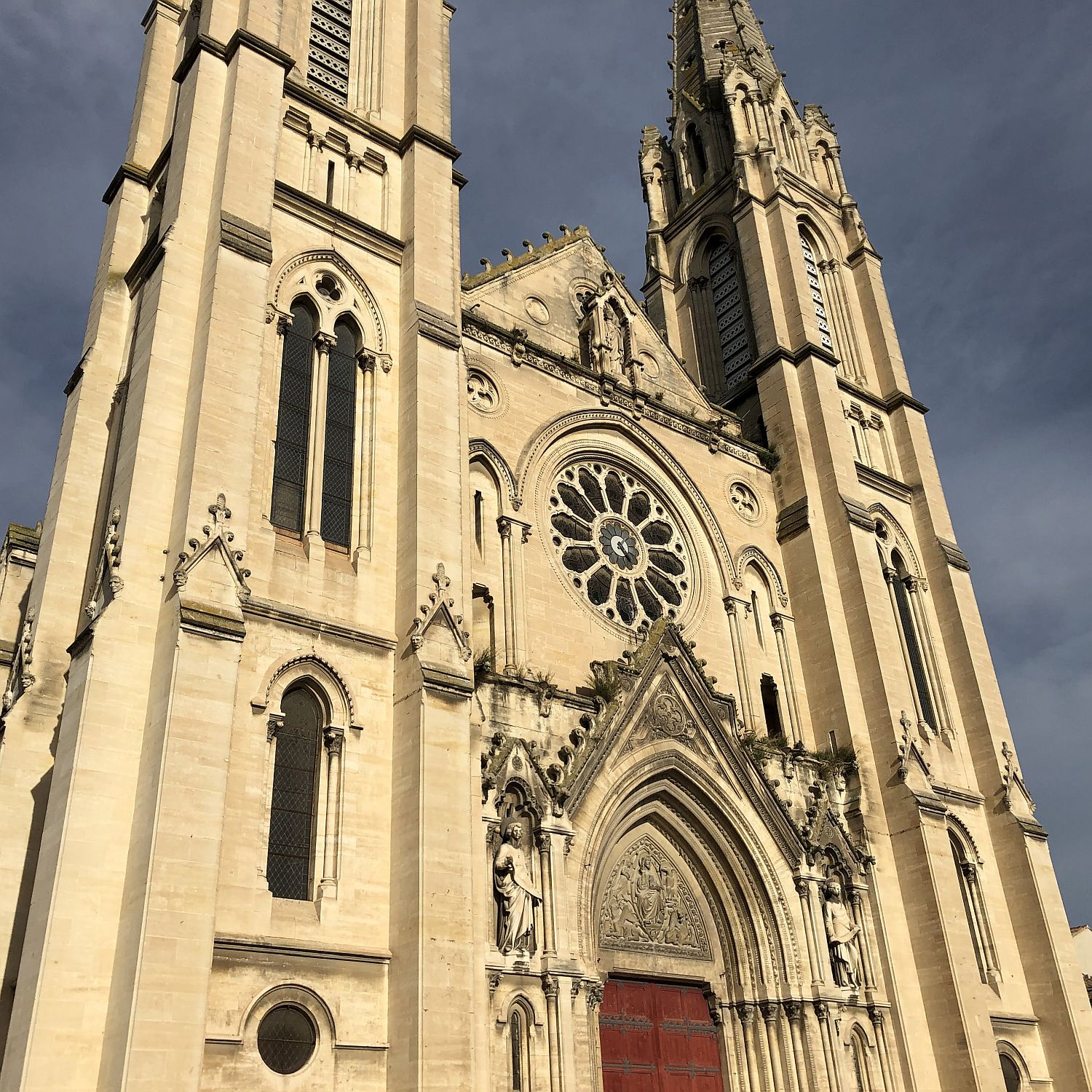
It’s quite a new cathedral, as far as cathedrals go, having been built in the latter part of the nineteenth century.
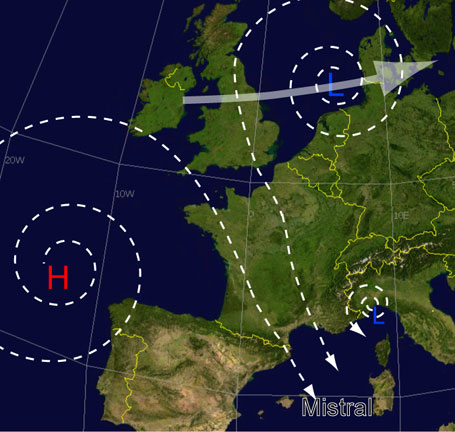
I call them Mistral trees – but I don’t know if anyone else does. That’s because the south of France is famous for a hurricane strength wind known as the Mistral, which at certain times of year (particularly winter) can actually force traffic on highways to stop.
It’s what they call a northwesterly wind – and that can be a bit confusing. It does not mean that the wind flows to the northwest, but rather emanates from the northwest.
Here’s a nice picture of how the wind flows:
From time to time you spot a tree that has grown up directly in the path of this strong wind, such as this tree here that I spotted in the southern French commune of Sainte-Marie-del-la-Mer,
I took this snap of a pyramid in the southern French city of Nimes
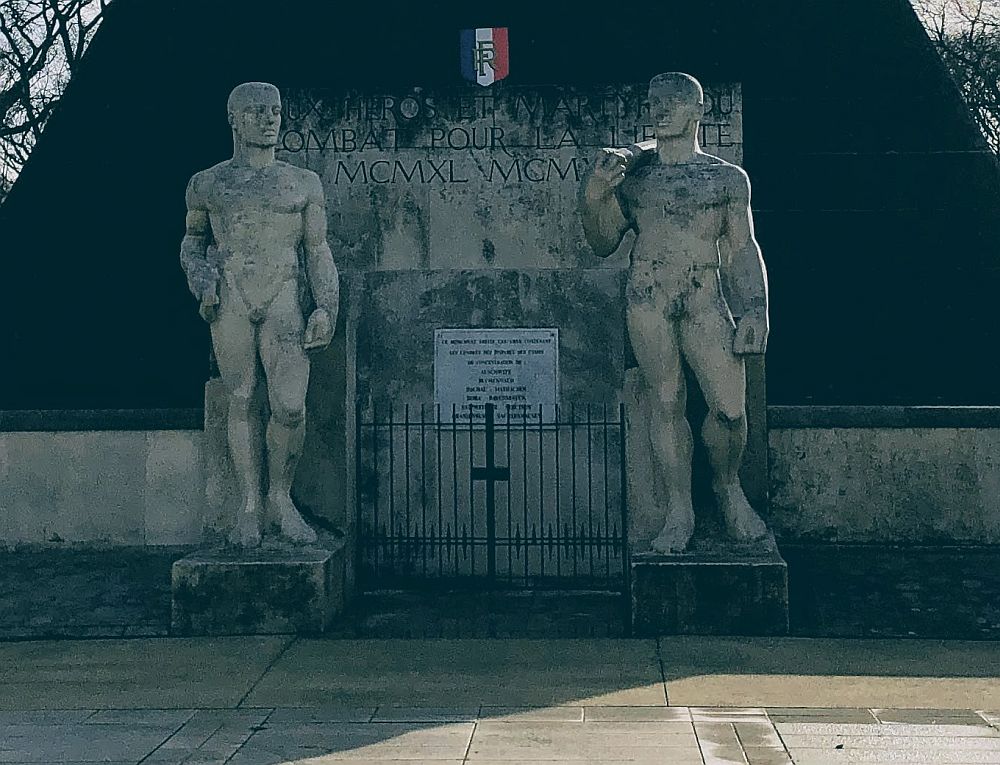
France is replete with public pyramids, perhaps the best well-known of them being the glass pyramid at the Louvre in Paris. $
Far from coincidence, it shows the influence that a secret society has had on the French government, dating back to the times when many historians now believe that Jesus escaped from persecution in the Middle East and eventually took up residence in the southern French village of Narbonne, together with his wife Mary Magdelene.
OK, I don’t know if he was or he wasn’t. Probably “good” for any Roman means they kept their slaves well-fed. Anway, most scholars claim that Antoninus Pius was one of the so-called “Gang of Five Good Emperors.” I captured this snap in the southern French city of Nimes,
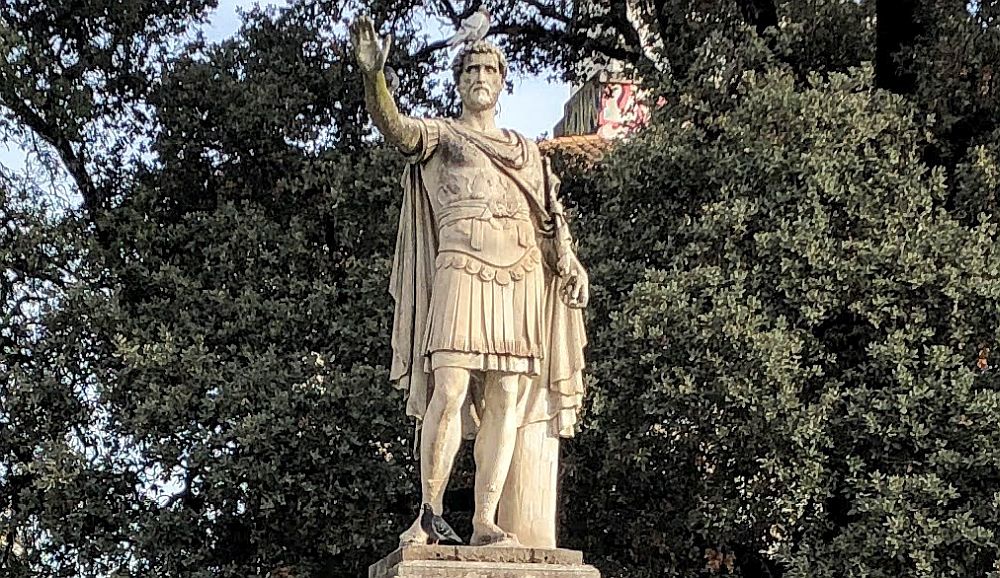
Interestingly, there is quite some historical evidence that I am the direct descendant of a famous Roman emperor, you can read more about it here.
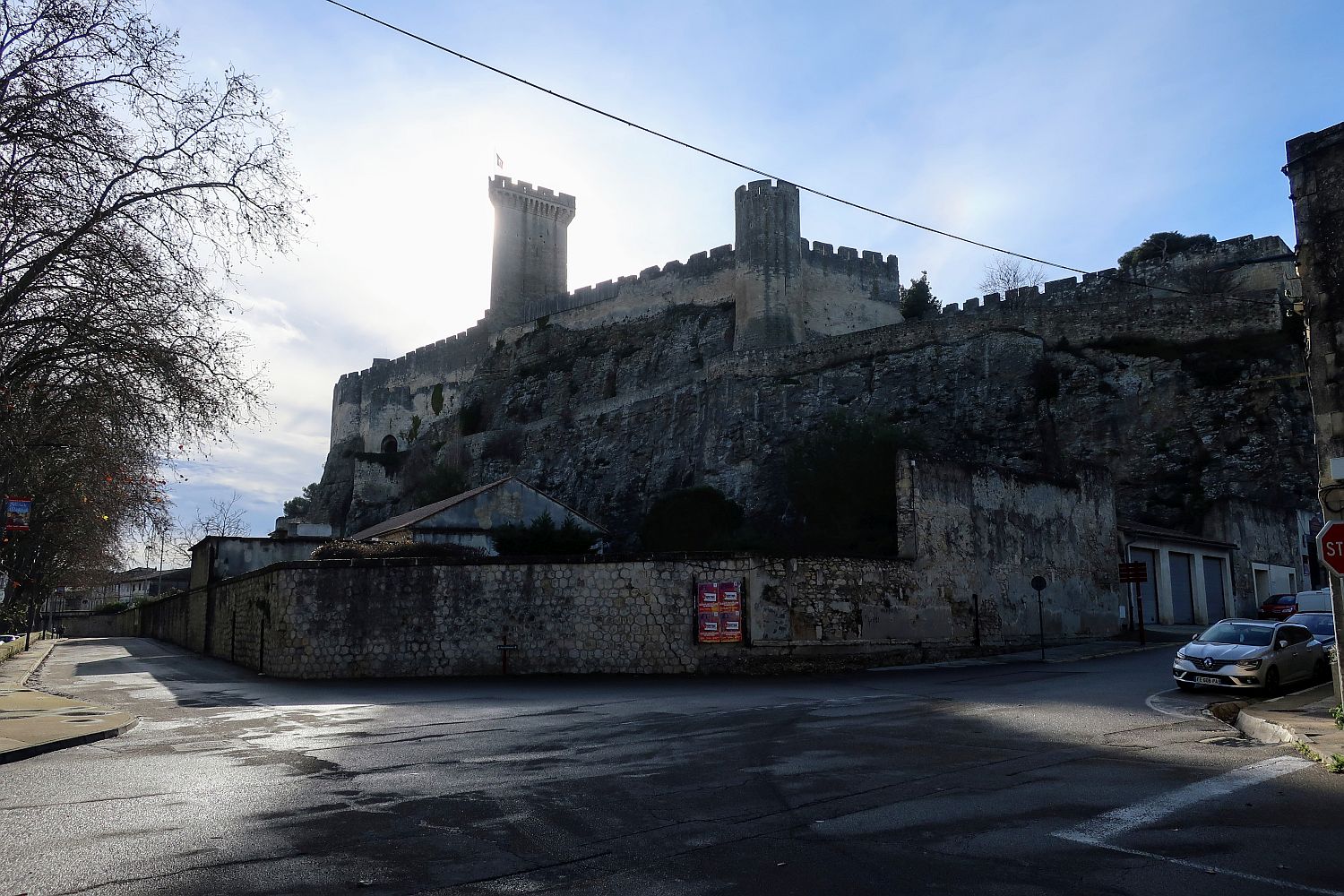
As artistic a snap as I thought I could take, with the sun just hidden behind the magnificent Château de Beaucaire, a medieval fortress in the southern French village of the same name,
Continuing the series, here are some underground garbage receptacles, just in front of the ramparts of a medieval fort, in the southern French village of Beaucaire, France

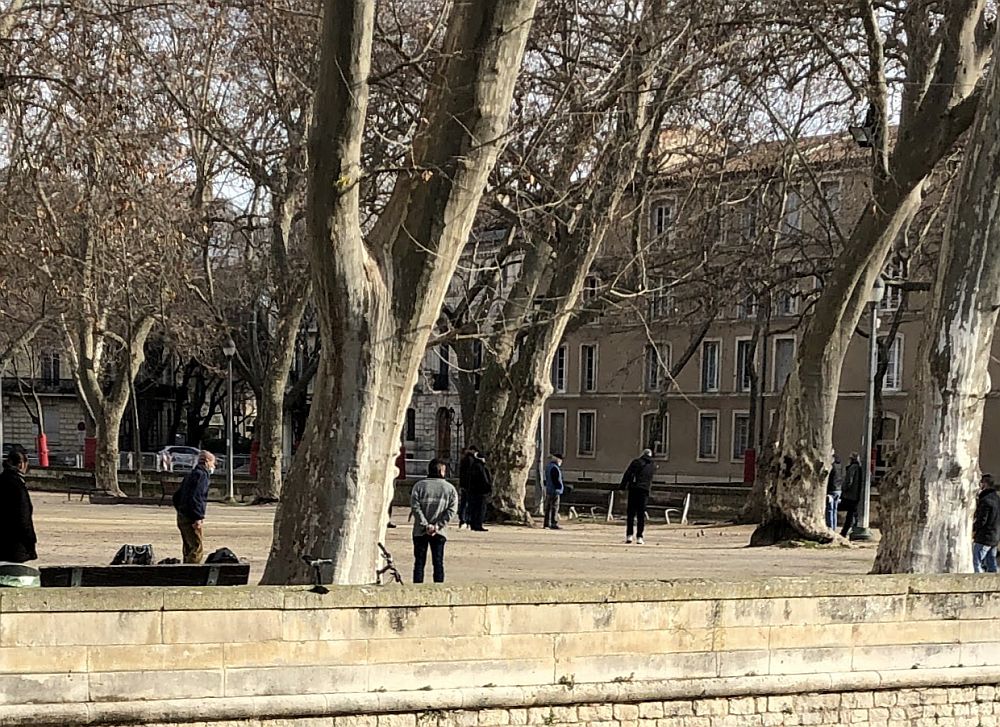
How can you not love a country where people get out an enjoy a very relaxing sport?