Google took the liberty of combining some separate photos I had – now the only thing missing is the chrome and loud stereo!
Interesting things
Weird plants
Air duct
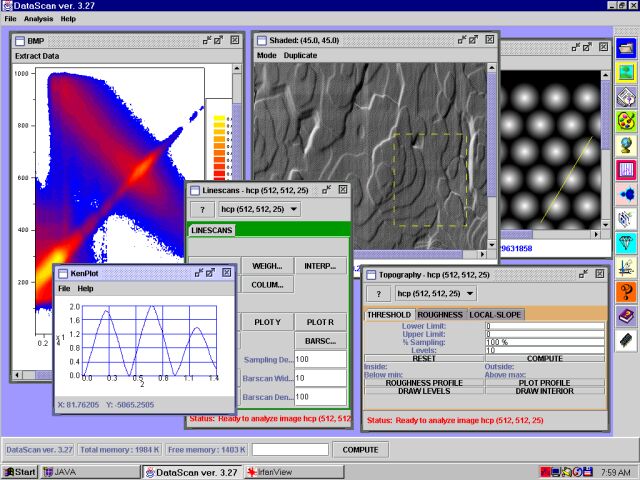
AMAZING! After 20 years it still runs!
Sorry if I have become a Java-hater, but I really did not expect a language with so many deprecations to run after all these years! As explained here I was one of the first people to write a rather large application using the relatively new “Swing” library,

If you are interested in downloading it, here’s the link: DataScan V357. Just don’t make fun of my dirty code!
A blog about a blog
I don’t normally publish book reviews or recommendations, only in very exceptional circumstances. A good friend of mine has started a blog — a real blog, not like mine, and if you like thinking about things you might enjoy it:
Plafond du bâtiment académique
Misplaced milk
Does Constructive Alignment fall short? Part III
Continuing the series, now I want to summarize where Constructive Alignment as a didactical tool falls short – and how I would fix it.
I said it in my last blog. Whereas John Biggs did a great job of connecting learning outcomes with learning activities and learning assessments, a connection to the real world — to the WHY — is completely missing.
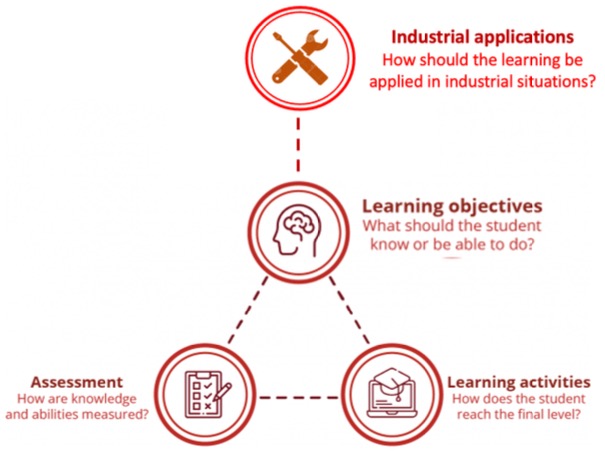
Fortunately, this seems very easy to fix, as shown here:
In other words, the real world goals — the WHY — feed into the learning outcomes. In my next blog I’ll give a concrete example of how this could look in a real-world teaching situation.
Does Constructive Alignment fall short? Part II
Continuing the series, I want to show why I think Constructive Alignment falls short – and how I would fix it.
Always start with the WHY.
Maybe there are teachers who teach in order to teach. Fair enough. But as a scientific and engineering oriented guy, I’ve always thought teaching has a very applied aspect. In this context (and I admit it is not the only one!) students should be getting skills and abilities that they can use in real world situations.
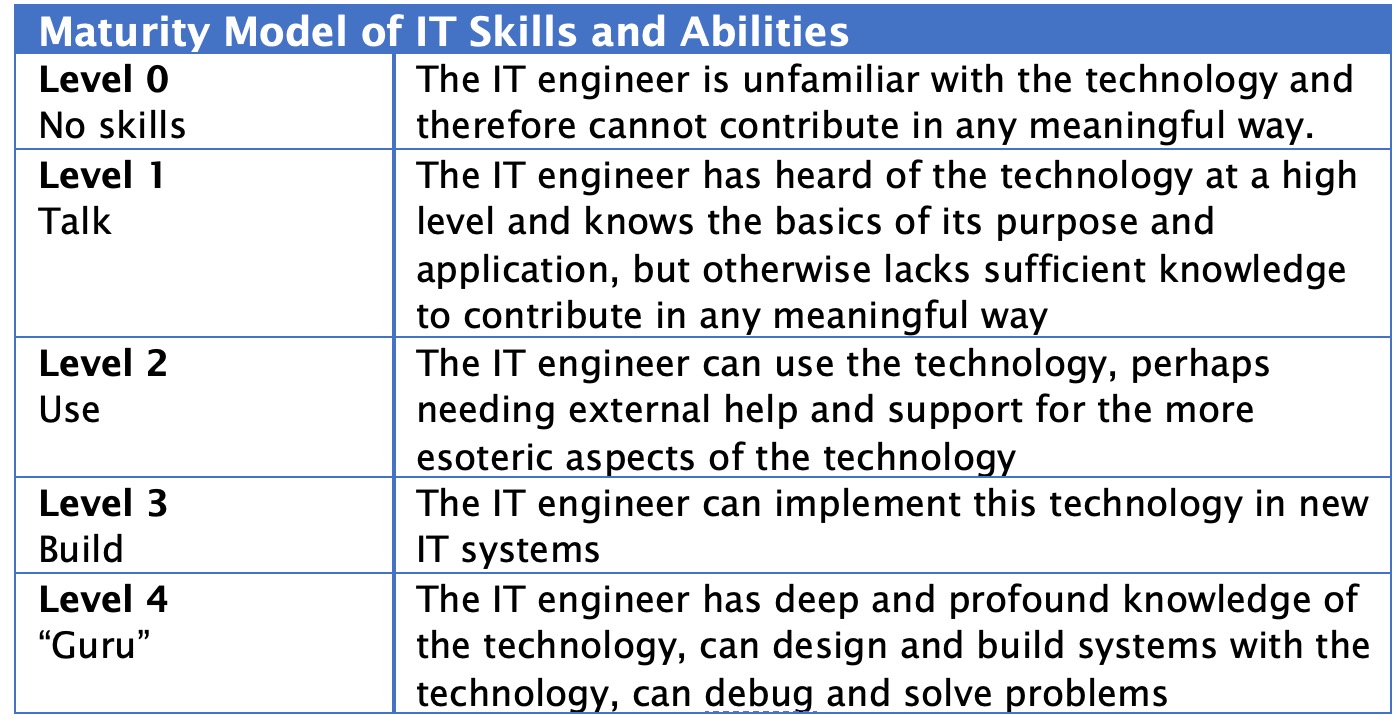
So in this blog, let’s focus on an IT student that graduates from an IT program and joins the IT industry. Working in this IT industry will require knowledge that she has learned. Probably there are existing maturity models that can classify this situation, but this one seems pretty reasonable to me:
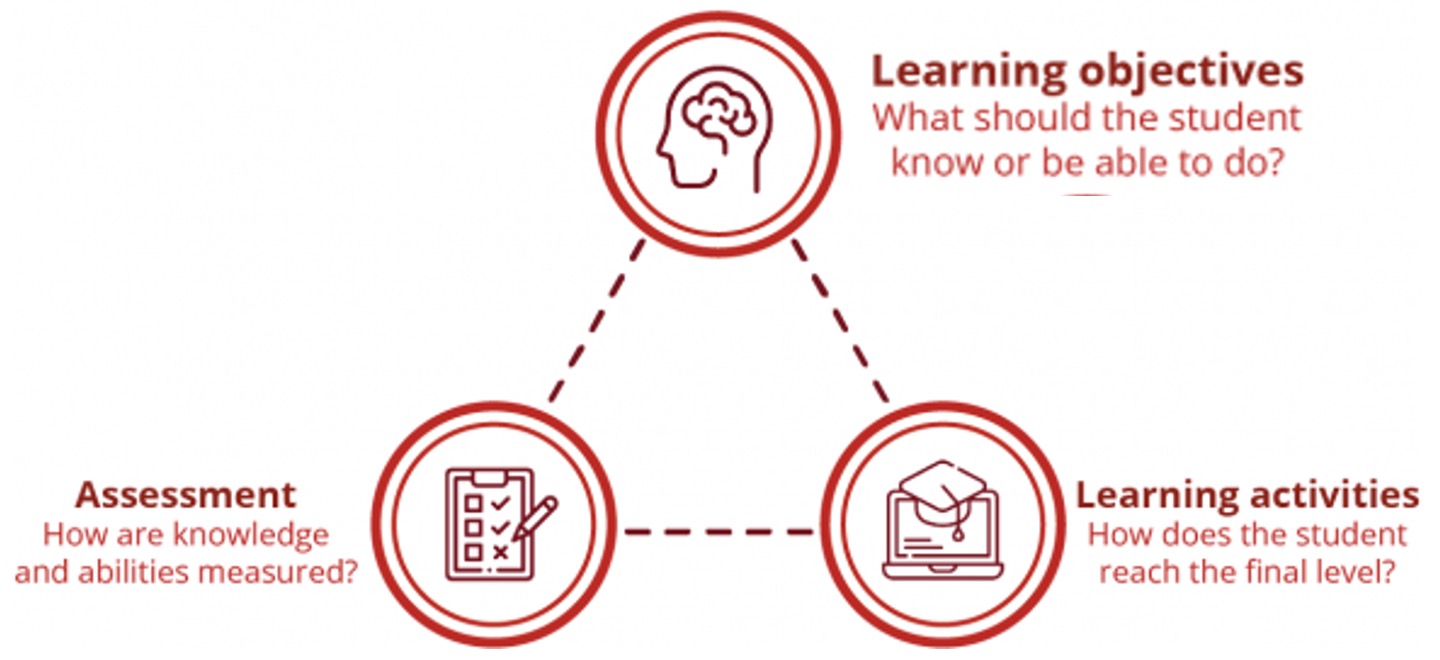
Now if you jump back to my first blog about Constructive Alignment, perhaps you can see where my discomfort is beginning. Constructive Alignment seems to be a very practical tool; indeed, the whole “didactical” world seems to love it! It clearly connects learning outcomes with learning activities and learning measurements.
But to my the most fundamental and important point of dissatisfaction: a connection between learning outcomes and real-world skills and abilities — in other words, the WHY for learning — is missing!
More on this in my next blog.
Does Constructive Alignment fall short? Part I
Let me start with a disclaimer.
DISCLAIMER: I spent more time in my life working with computers than any other topic – and I am no computer expect. I spent more formal time in my life studying physics – but I am no physics expert. So considering that I have only been dabbling in educational research (known as didactics – which sounds more scientific than I think it really is) for a few weeks, the reader is well-advised to take what follows with a massive 20-ton block of rocksalt!
OK, having appropriately disclaimed myself, in this blog I present a leading didactical idea called Constructive Alignment. In my next blog I’ll talk about why I don’t like it – and how I would improve it.
Within educational circles — and please let’s park the discussion about how scientific these circles really are! — the idea is known as Constructive Alignment. It’s due to a fellow named John Biggs, who even has his own website. As a simple guide to preparing very effective teaching materials, he proposed linking the learning goals and the learning activities and the learning measurements. In his own words, “In constructive alignment, we start with the outcomes we intend students to learn and align teaching and assessment to those outcomes.”
[ASIDE: If you have some time, surf to John’s website and you’ll be glad you did. He has a wonderful collection of essays and a general Asian perspective.]
I found this very pretty picture of Constructive Alignment here:
As far as I can tell from Mr. Google, whether it is scientifically justified or not (I’ve seen no experiments) this model seems to have found widespread application throughout the academic world.
In my next blog I’ll say why I don’t like it – and how I would change it.
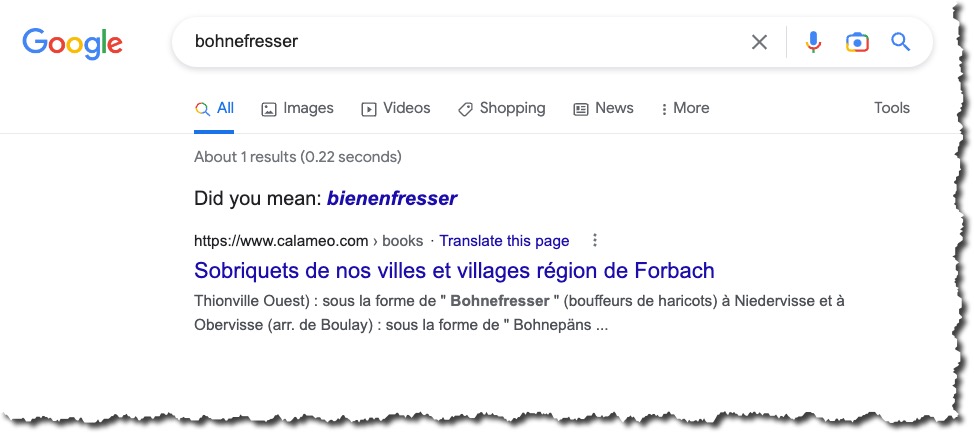
My first Googlewhackblatt – ever!
The idea of a Googlewhack has been around for a long time: it’s when you stumble on a search phrase, no quotes, that returns exactly one result. It’s called a Googlewhackblatt when you do it with just a single word as your search phrase.
Well, not only did I stumble across a Googlewhack, but I did it in one word!
The Euro Cruiser II
Continuing the series, here is the latest addition to my personal fleet of vehicles, parked in front of the mythical “Tell Platte,” where William Tell escaped from the boat of his captors and swam to shore:
This is a 2022 Kia XCeed and it is a “mild hybrid,” which means that it has a big battery in the back – not big enough to power the engine, but big enough to provide some eco-benefits.
What I particularly like about this car is its understated elegance. As an international assassin, my job takes me all over Europe and I often need to travel in style, but without the attention that might be caused if I had a Maybach or a Bentley. I also need enough space for any special equipment I may require, depending on the contract. This car perfectly fits the bill.
Les mystérieuses voies d’eau de Bienne
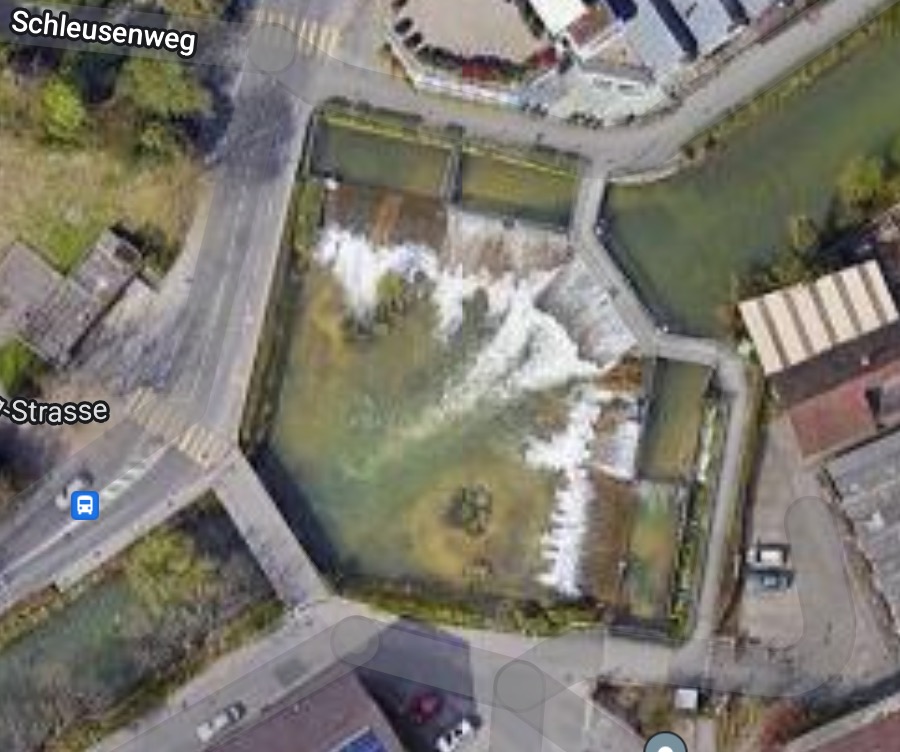
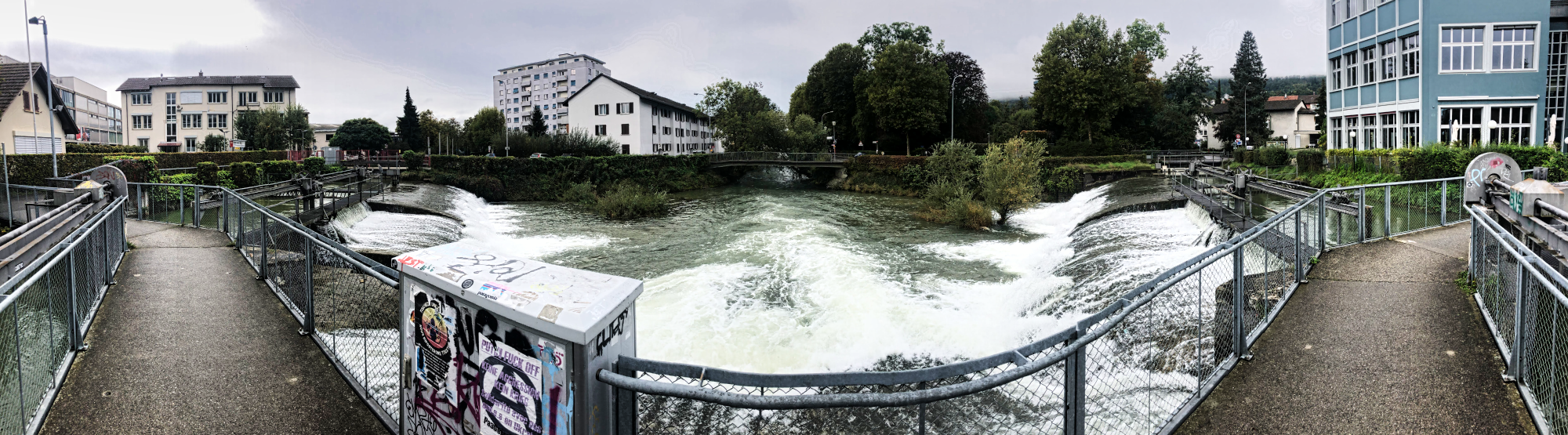
One of my passions is finding “hidden canals” – and in the Swiss city of Biel/Bienne, there is quite something going on that I just don’t understand.
There is an interesting spot where waterways converge. This is how it looks on Google Maps:
And this how it looks in real life:
But this Schleusenweg (“lock-way”) to the left just runs for a bit into the city, then disappears altogether.
Like Capt. Kirk said, “I don’t like mysteries. They give me a belly-ache, and right now I’ve got a beaute.”
Cet escalator descend profondément
Are slavery and the agile methodology topologically equivalent?
I was just writing a lesson about “computer drivers” and “database drivers” for my database class when the following idea occurred to me. Not sure if everyone will agree.
A driver is like a slavedriver
It sounds a lot like slavery, and it is. The driver does all the work. It does not ask any questions. It does not get paid. Most people don’t know it exists. And it only complains when it is asked to do something that it cannot. Probably one day, if you are born again, then in a future life it is better to be born as a computer rather than a driver. Unless you really like being a slave.
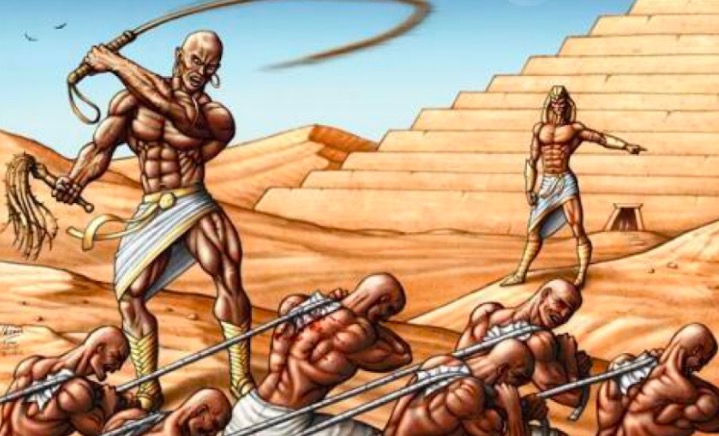
Here’s a good picture of a slavedriver:
The Product Owner (also called PO in the agile world) is the guy in the background wearing a gold armband and indicating where he wants the big stone moved to. He doesn’t care about the details: what kind of rock, how many slaves are needed, or how many ropes. He just knows where he wants the big stone.
The slavedriver (called ScrumMaster in the agile world) is the big bald guy with the earring holding a whip. The slavedriver gets his very generic instructions from the Product Owner, then uses his detailed knowledge of the specifics (type of rock, how much friction, how many slaves, what kinds of rope, whether to use a lubrication such as water or sand, etc.) to “motivate” his team to do what the Product Owner wants. It’s all about motivation.
If the people are all suffering, we call this slavery. If the people are all having a good time, we call this the Agile Methodology. But both are the same.
A mathematician would say “slavery and the agile methodology are topologically equivalent to each other.” In the field of computer science or enterprise architecture, we use the term “separation of concerns.” The Product Owner is concerned about getting the big stone to where he needs it; the slavedriver and slaves are concerned about the details to make that happen.
In short, the slavedriver makes the connection between the generic world (of the Product Owner) with the highly specific working world (of the slaves). The computer driver makes the connection between the generic world of the operating system, and the specific details of the hardware. And the database driver makes the connection between the generic world of the programming language, and the specific details of the specific database product.
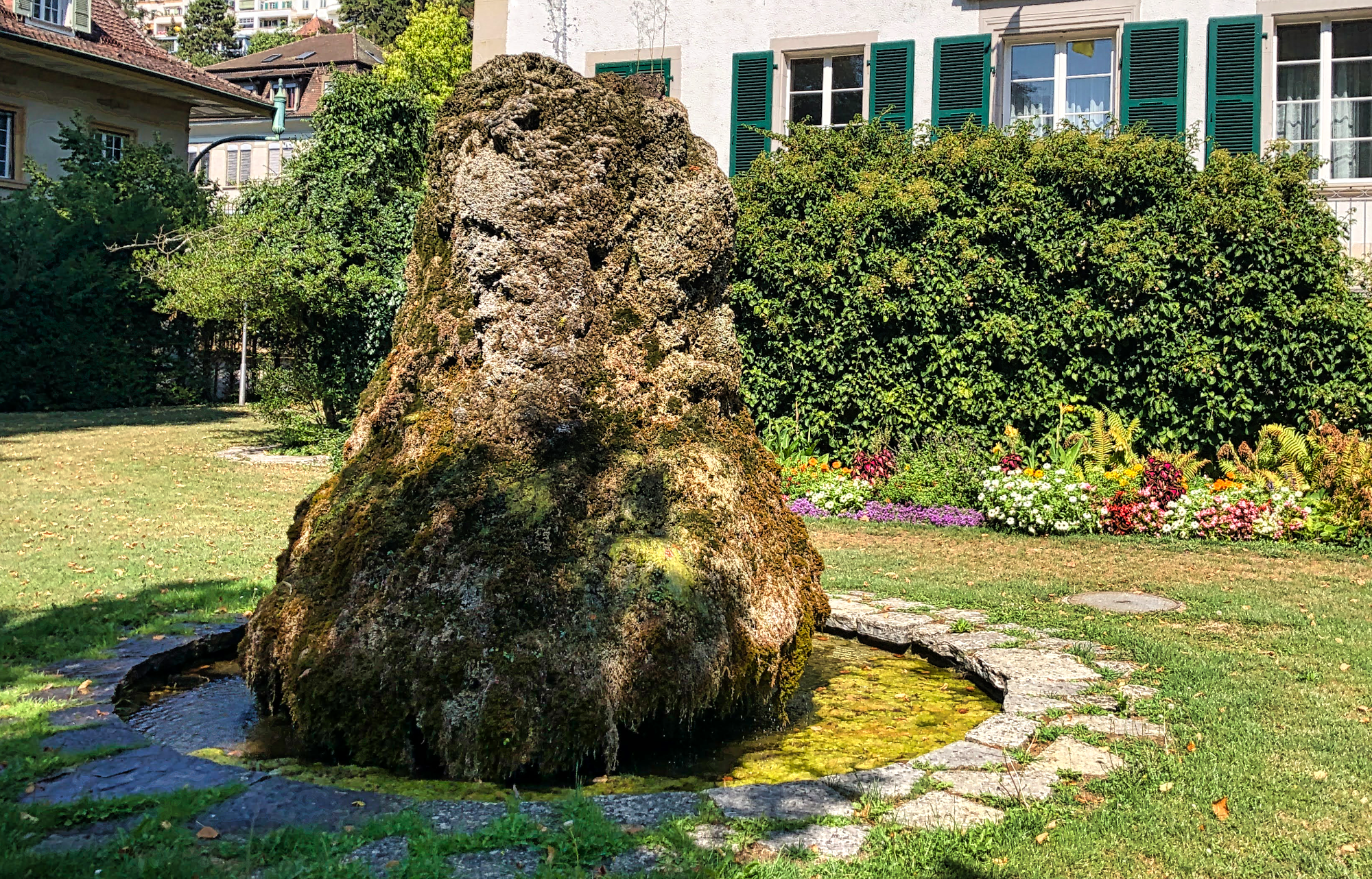
Pillar of Moss and Slime – 4
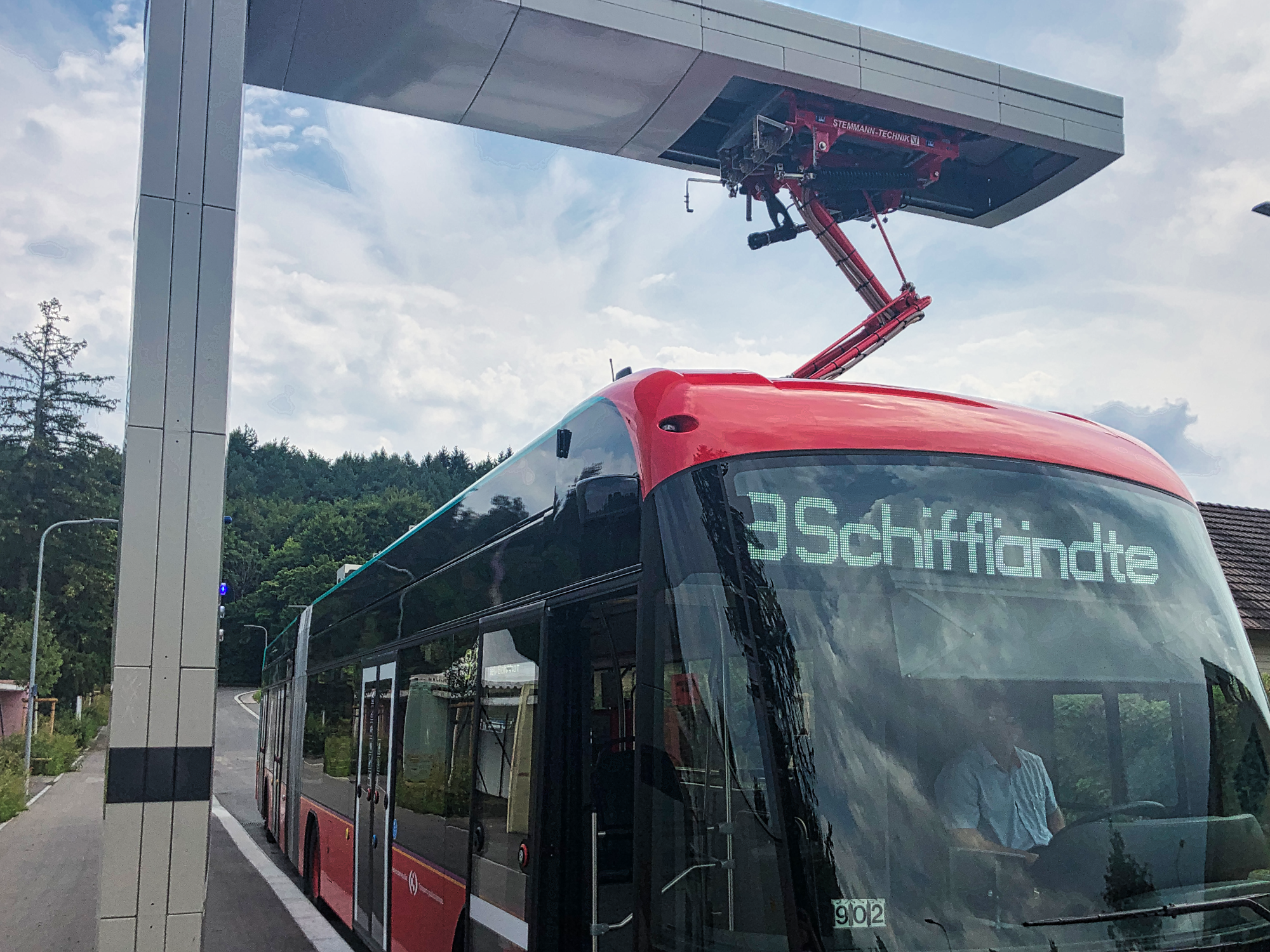
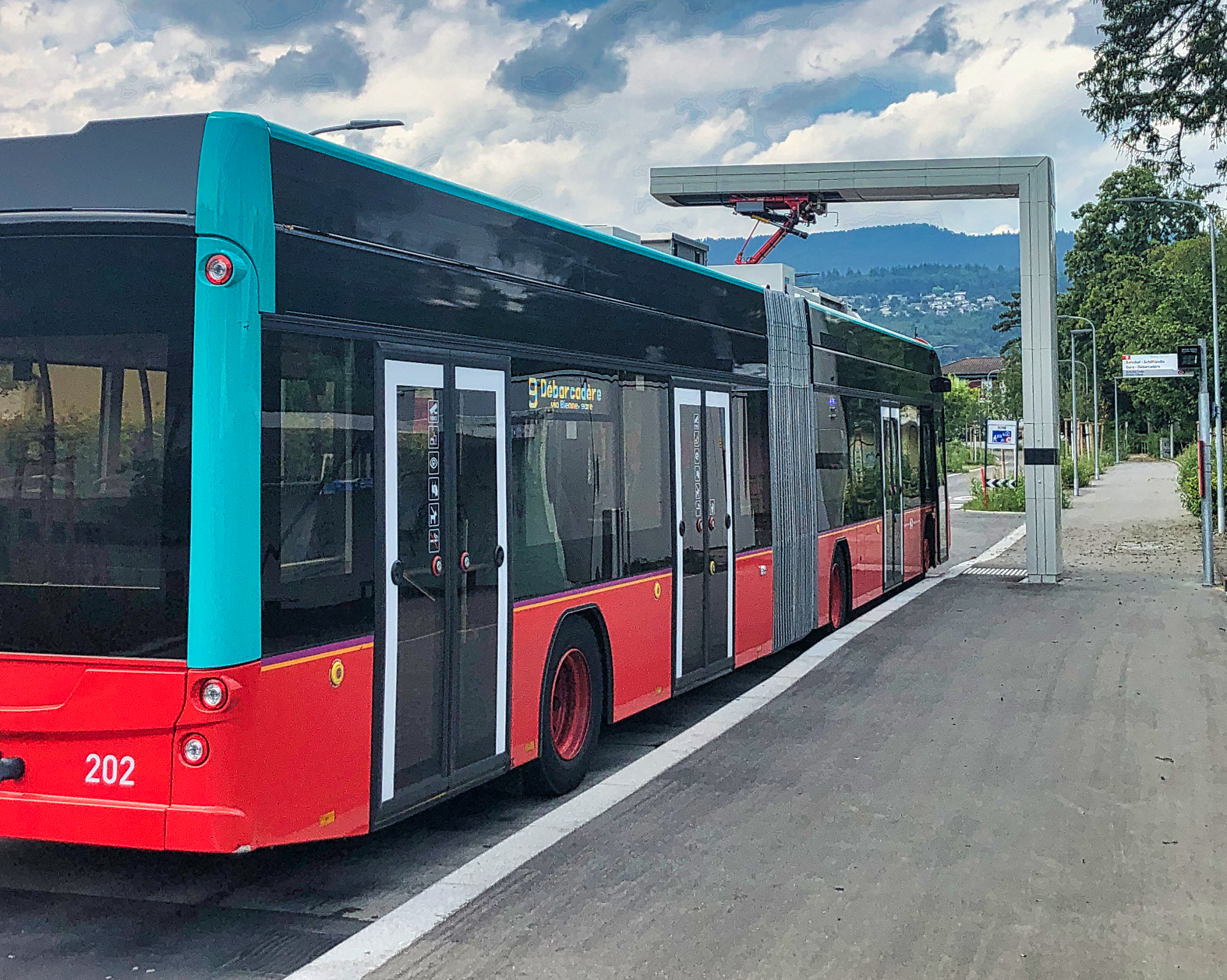
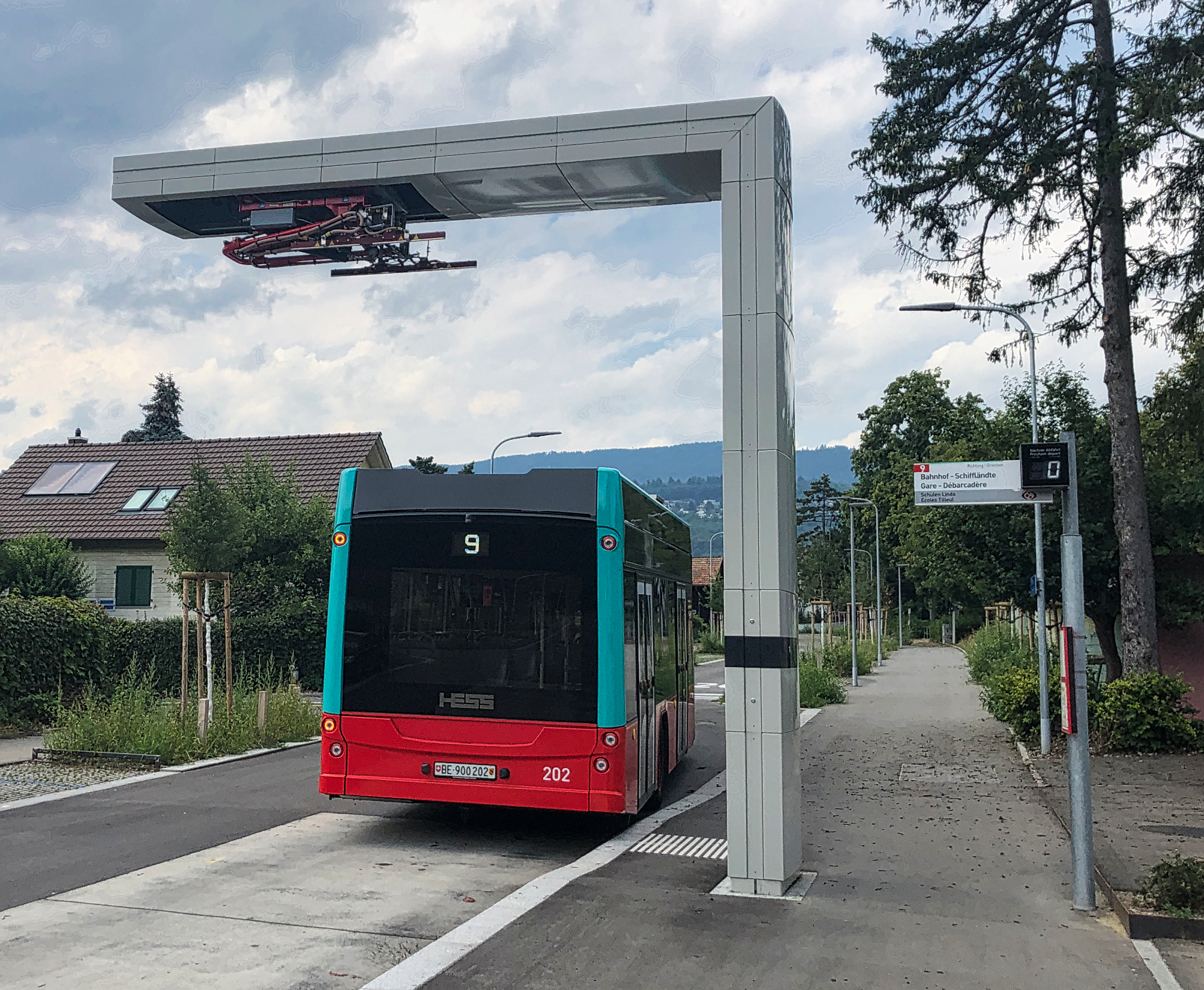
Bus juice
Modes of conveyance
video
Dune
Obviously not my image but from Dune, but I wanted to incorporate it into my collection since – for whatever reason – I find this to be one of the best and somehow most hauntings science fiction images I’ve seen in a long time!
Recently I’ve been running my own snaps through Lumina AI just to tweak the clarity and contrast a bit, so I did the same thing with this image.
Here’s a copy of the original:
Machine étrange dans le rond-point
U.S. vs. “the world”
Just spotted this in an online magazine, Visual Capitalist,

Bubble architecture in Domodossala – 7
The bubbles! The bubbles! Oh, the stories about bubbles that I could regale you with!
But this post is not about bubbles, but rather bubble architecture. And more specifically, Italian bubble architecture.
I’ve said that France is the all time master at turning beautiful historical buildings into hideous monstrosities by encasing parts of them – or sometimes all of them – in giant glass bubbles. There are very few exceptions where they get this mix right.
The Italians, it seems, have learned from the French mistakes and are creating their own beautiful bubble architectures, such as this one that I spotted in Domodossala:
For me the absolute nicest touch of the bubble is its base, which is a very smooth segue between the existing concrete paving blocks and the bubble itself.
Well, done, Italy!
Un radar?
Reflections of a Valley Guy — Part 7 “The Hollywood adventure continues”
A guest blog, by Chuck Ritley
I was riding high on heady fumes of stardom. Then came another pinnacle opportunity. From 1965 through 1970, comic actor Don Adams starred in a James-Bond-send-up TV series named Get Smart. He played an inept spy and the series had a big cult following.
Universal, to capitalize, decided to produce “The Return of Maxwell Smart”. And they asked me for a full blown computer lab and would I come down and help the set designers plan it out? My boss thought it was great, told me to take whatever I needed from inventory, and I left for Burbank with 4 field engineers and visions of getting my own Oscar.
Well, we cobbled up a lab, the studio prop guys added flashing lights, I wrote a bunch of nonsense programs, and the 4 FE’s sat around in case something burned out, and had their pictures taken with minor movie stars. Oh, the glamour of Hollywood. The movie plot line had Agent Smart use the computer to stop an evil genius from exploding a bomb that would leave everyone in the U.S. stark naked.
I knew this was the end of my Hollywood career, so I asked my boss: “When the movie comes out at our local theater, why don’t we rent the whole theater for one night and take the whole company, their families and make a party out of it?” (Ideas like this are the difference between me and Bill Gates.) My boss thought it was great, and started negotiating.
But Hollywood dreams shatter. Just as the movie was ready for release, Universal changed the title. Instead of “The Return of Maxwell Smart”, they named it “The Nude Bomb”. NOT a good follow-up to “E.T”. The movie was a bomb, and the company wanted some distance. No opening night theater party, no more movies for Chuck, only 3 confused lawyers trying to get our name removed from the credits.
Show biz! There’s nothing like it.
This guest blog was submitted by Chuck Ritley, an adjunct professor of computer science with several major universities in the San Antonio area.
Here are the links to the other blogs in this series:
Reflections of a Valley Guy – Part 1: “The Way It Was”
Reflections of a Valley Guy – Part 2: “First Wave of Characters”
Reflections of a Valley Guy – Part 3: “Evolution of the Geek”
Reflections of a Valley Guy – Part 4: “When Giant Frys.com Sold Pork Chops”
Reflections of a Valley Guy – Part 5: “Mr. Yee and the Albrae Street – Taiwan Connection”
Reflections of a Valley Guy – Part 6: “Hollywood discovers the Valley”
Reflections of a Valley Guy – Part 7: “The Hollywood adventures continue”