If you’ve been to the major pedestrian area in Barcelona known as Las Ramblas, then you know how it is.
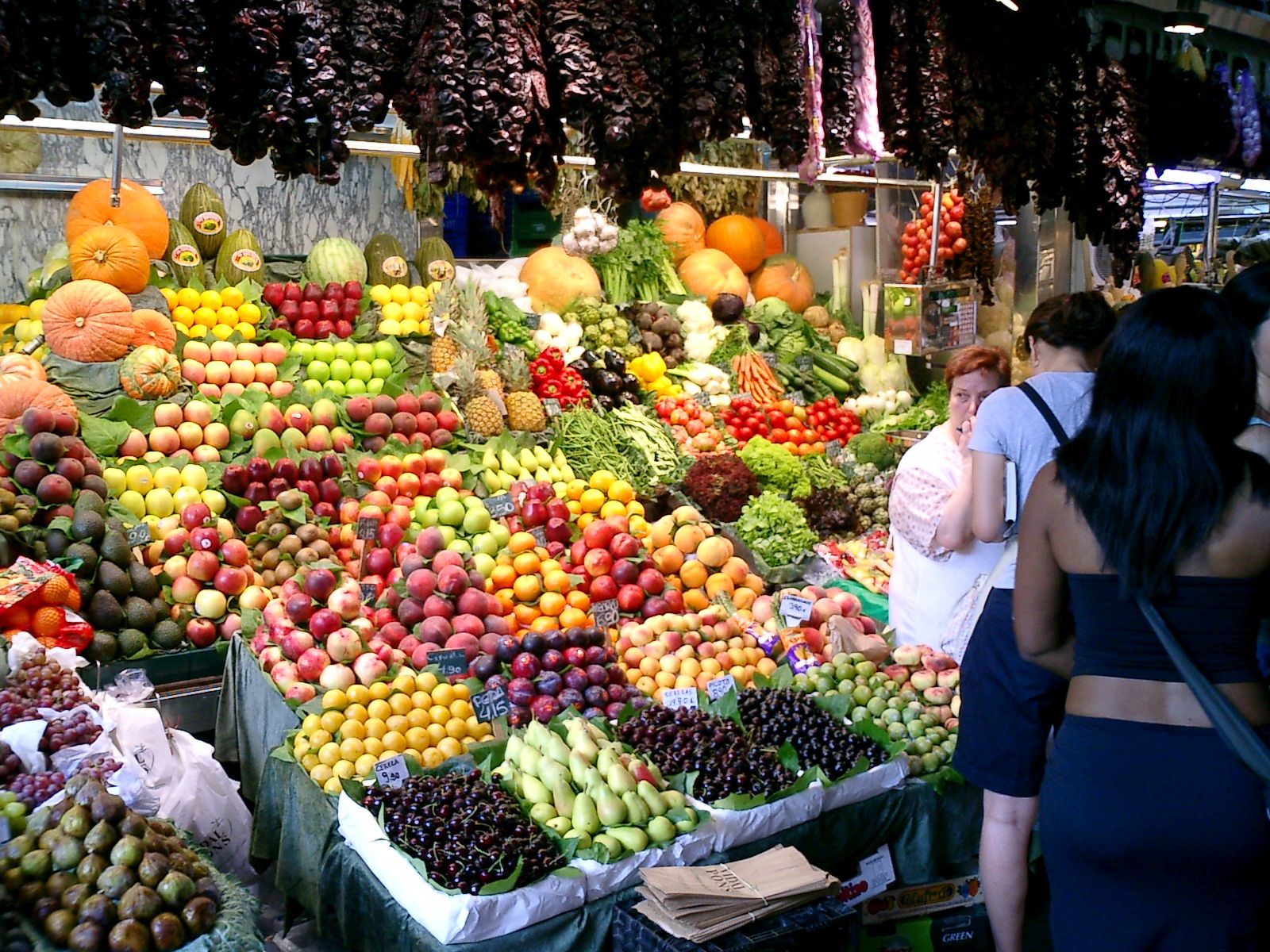
Barcelona fruits:
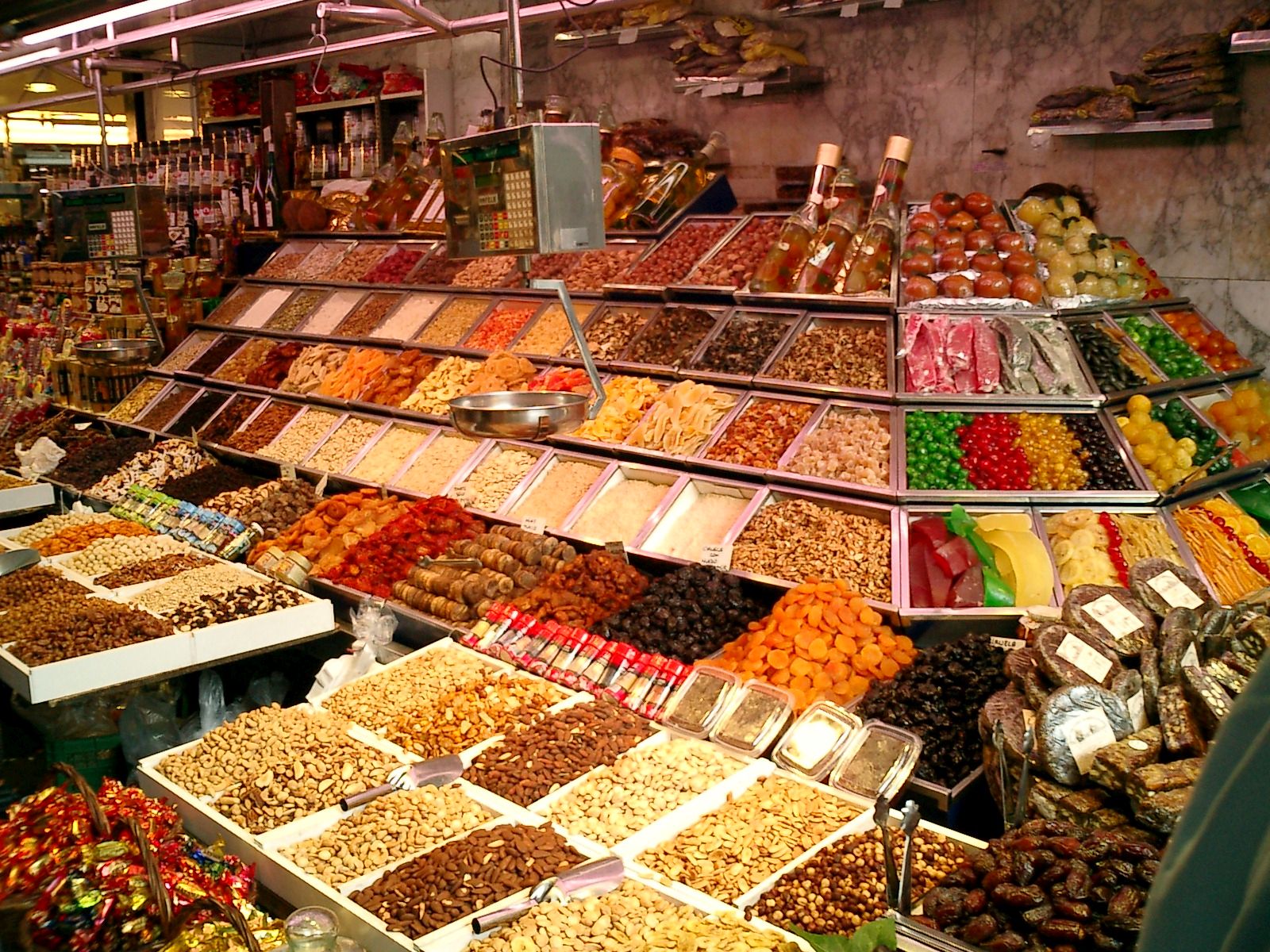
Barcelona nuts:
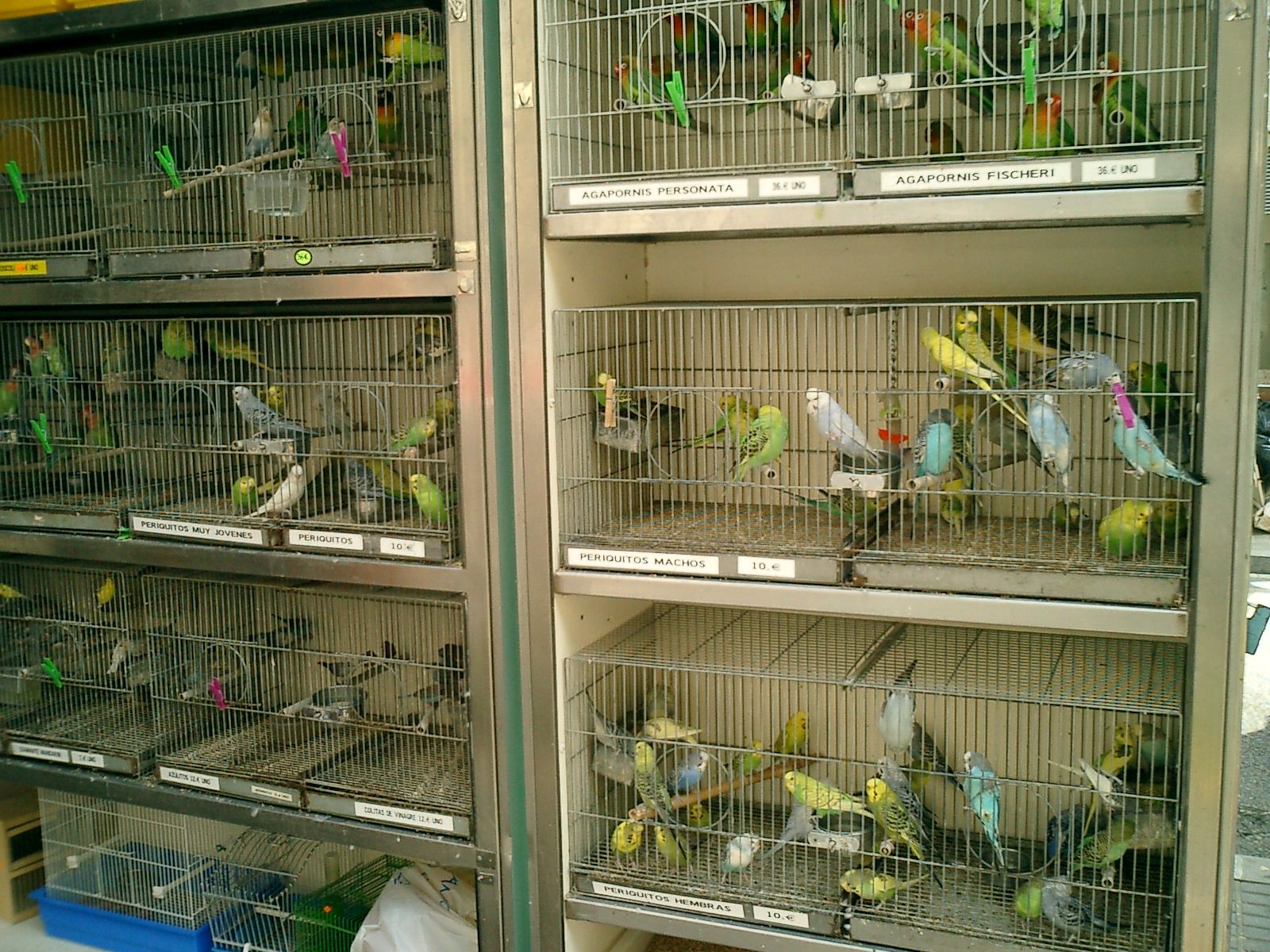
And Barcelona birds:
A renaissance man for the twenty-first century!
If you’ve been to the major pedestrian area in Barcelona known as Las Ramblas, then you know how it is.
Barcelona fruits:
Barcelona nuts:
And Barcelona birds:
The Saigon skyline, along the Saigon River no less, at night:
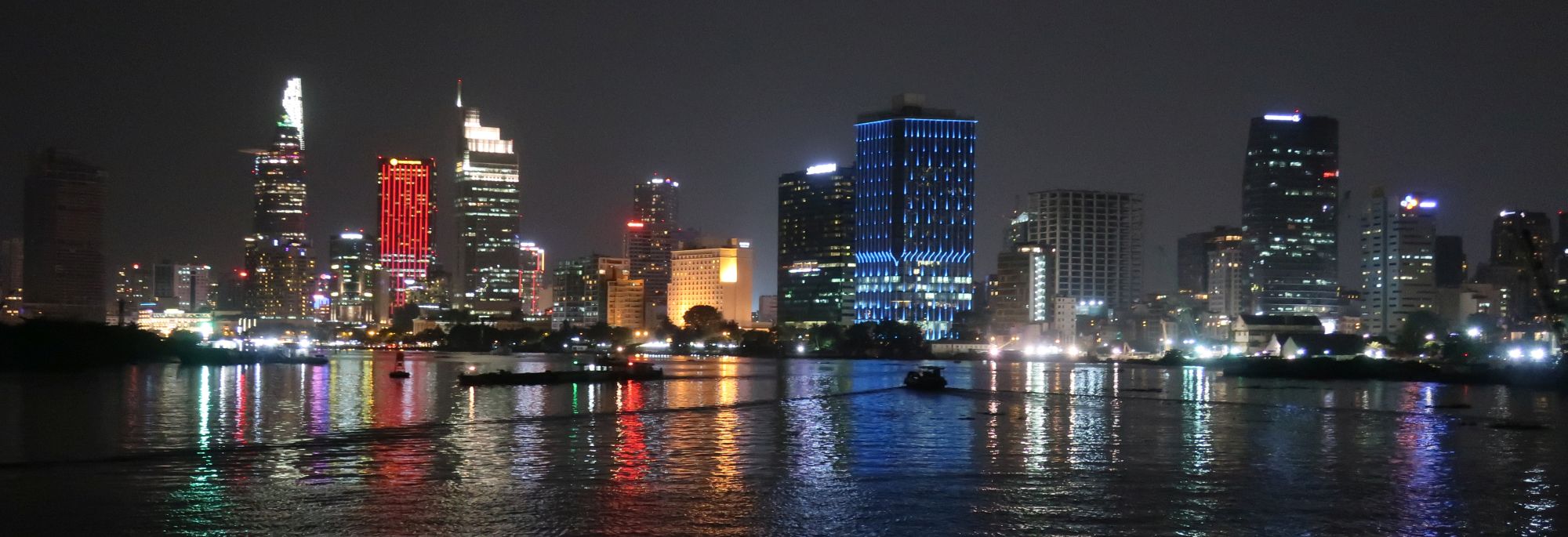
The development of ultrabright light emitting diodes has transformed how cities look at night.
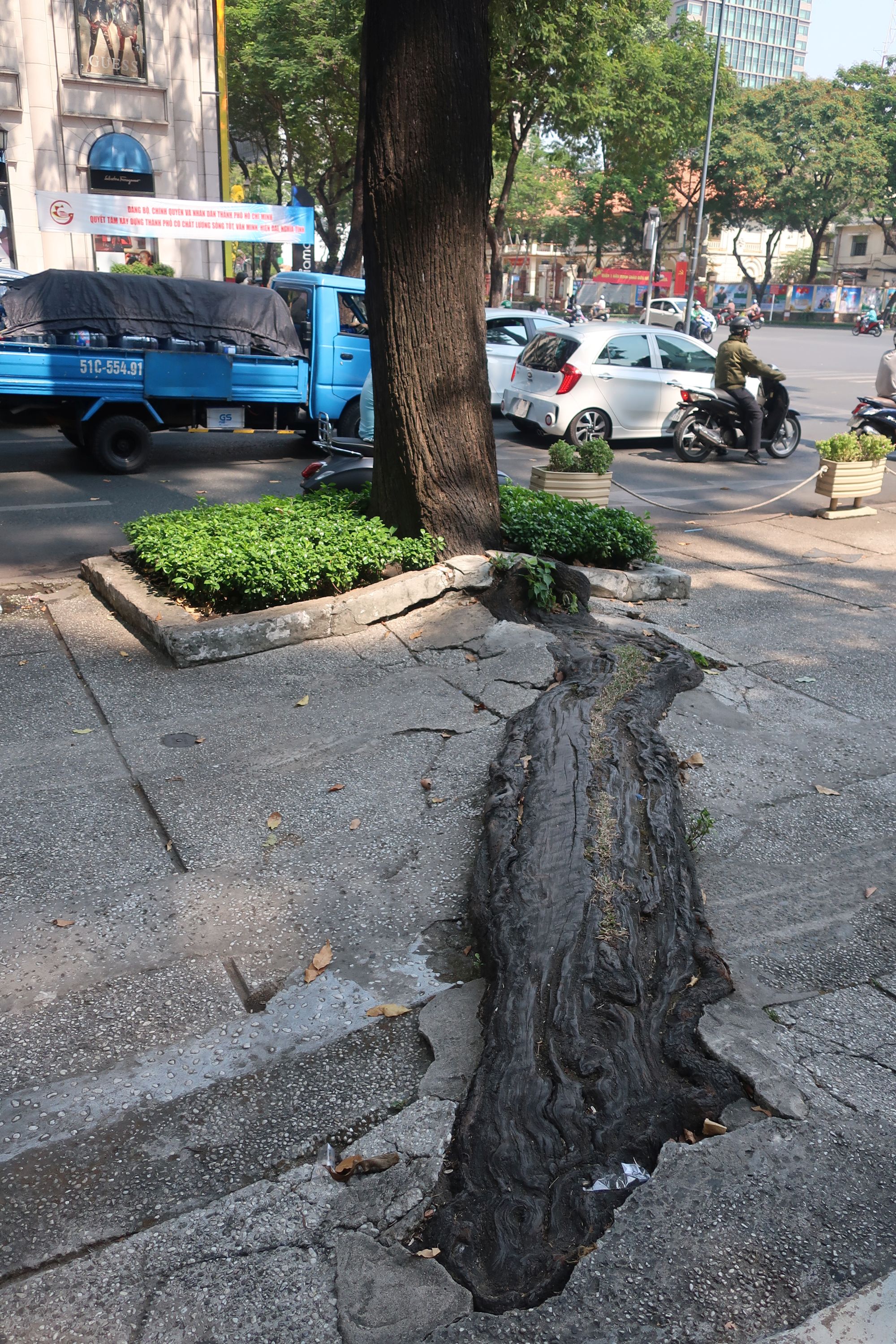
Continuing the series, when concrete meets roots in Saigon,
I am not the world’s biggest fan of museums, but I had a frightening, emotional reaction at the Einstein Museum in Bern, Museum, when I looked at this grammar school photo of Einstein’s class:

My reaction was frightening and emotional, because all of the dozens of schoolchildren at staring emotionless and straight faced at the camera, with only one notable exception: the young Einstein is smiling:

Interestingly, I’ve noticed this one time before. At a large Indian wedding a group of small children asked me to take their picture with my digital camera. After reviewing the picture some years later, I realized that only one of the children was smiling:

Could it be my path crossed with the next Albert Einstein?
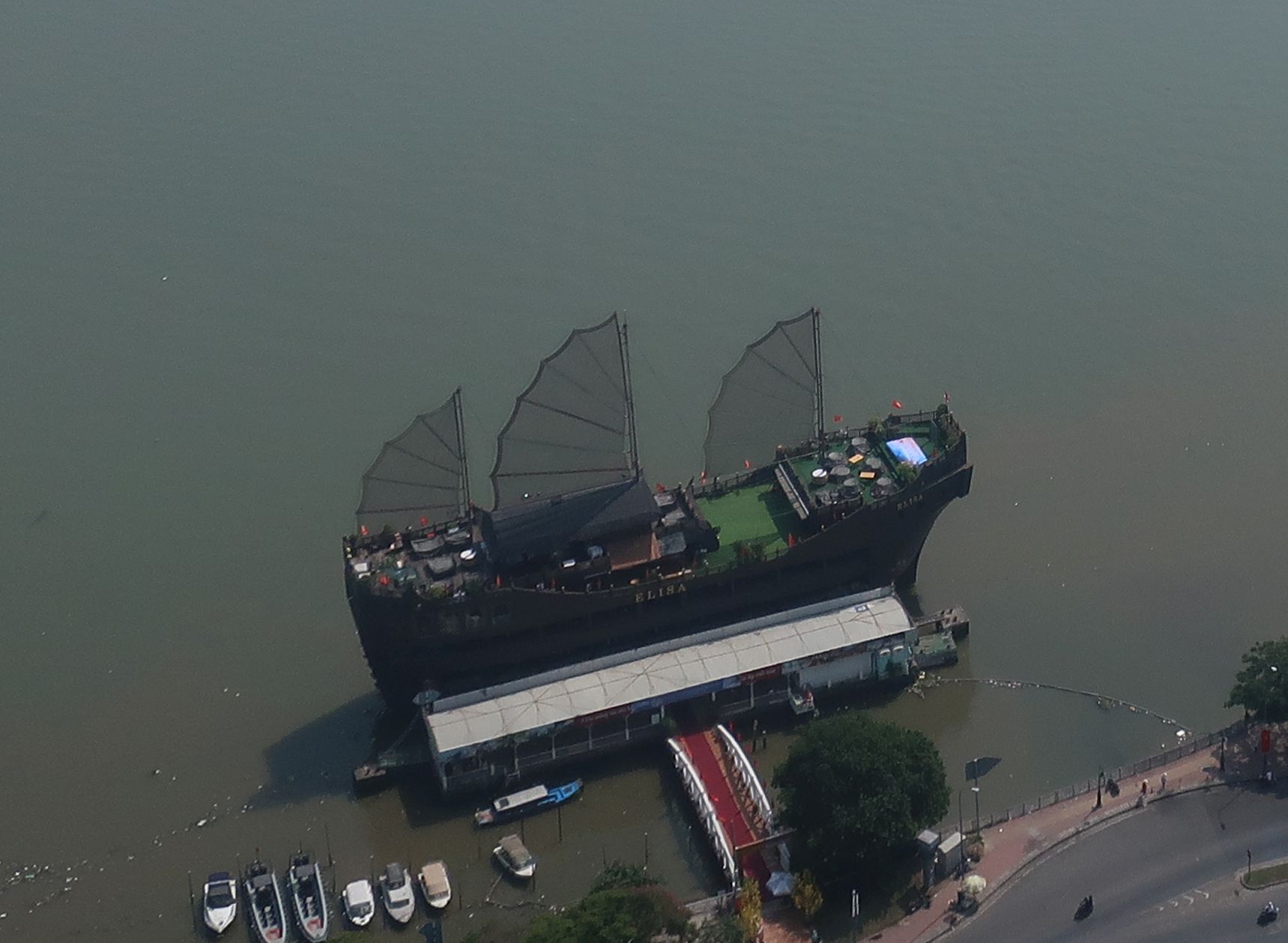
OK, it’s not a real Chinese junk – it’s a restaurant boat.
But be that as it may, here’s one view, taken during the day from the 50th story of the Bitexpo Financial Tower in Saigon:
And here’s another view, taken at night from the Saigon River itself:

When I arrive in a new place I’ve never visited, my antenna are stretched out, the gain is tuned to high, and I am looking for that first impression moment where something unique and new strikes my interest.
When arriving in the mega-city of Saigon in the south of Vietnam, that first impression moment unwound slowly but methodically in the first 15 minutes, when my taxi cab got stuck in traffic next to a telephone pole. At first, my eyes caught a jumbled mess of cables:
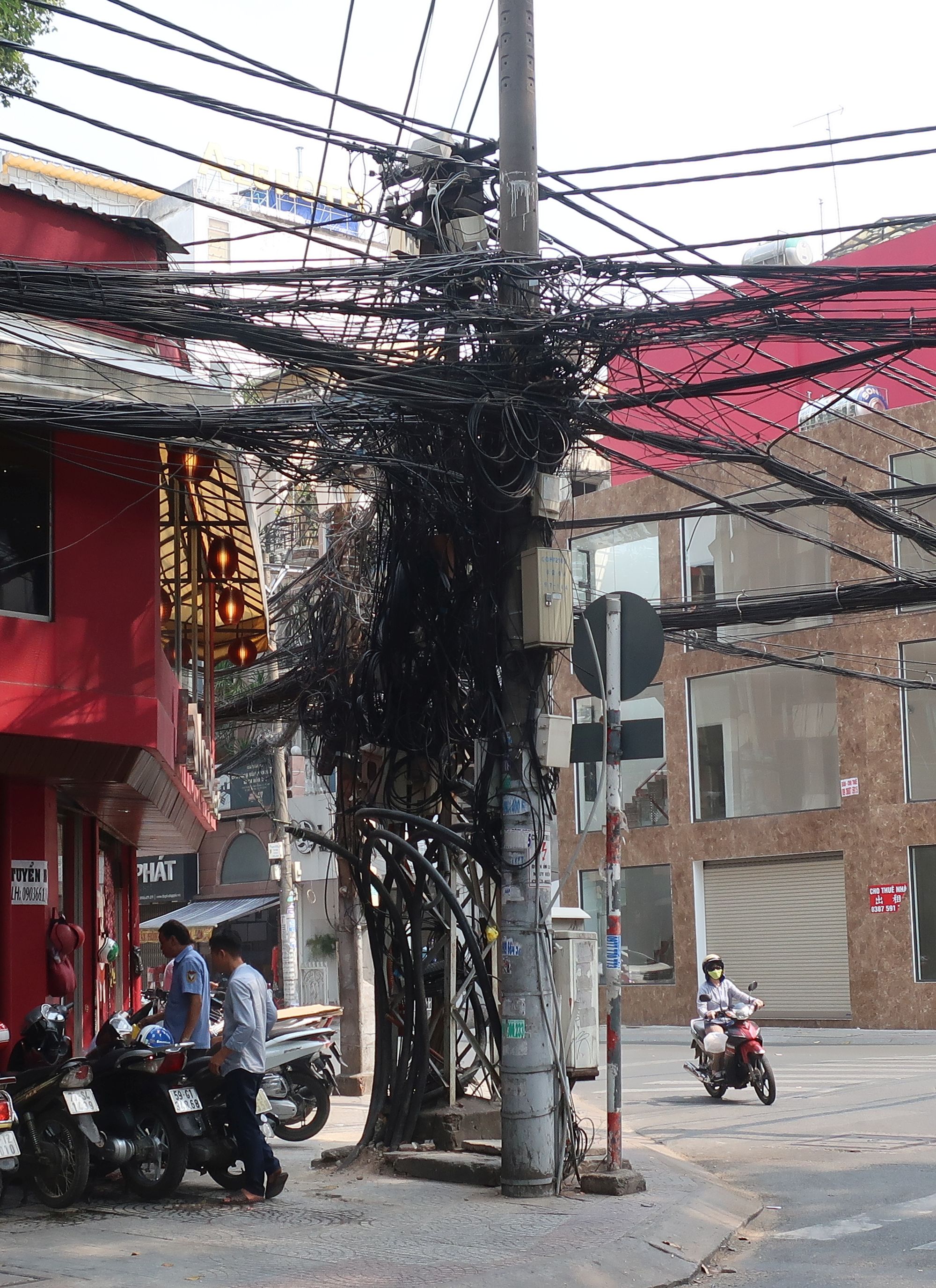
I’ve seen messy telephone cables all over the world, so to be honest this was nothing remarkable or new for me. But as I sat there patiently in traffic, starting at this pole for many minutes, my eyes scanned the area, took in the Big Picture, and I slowly came to an important realization.
This is what I saw as I expanded my gaze:
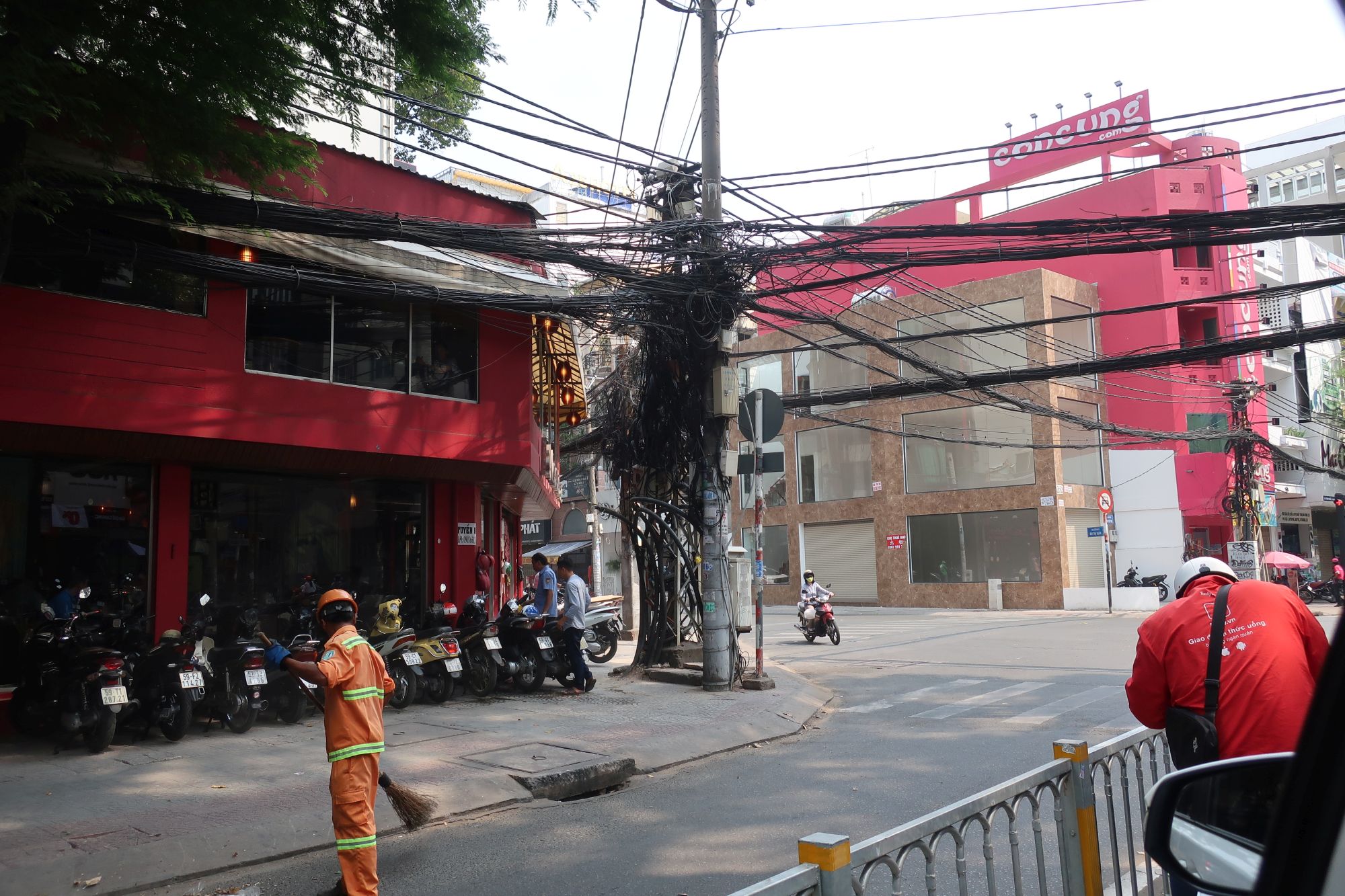
What occured to me was how much insight you can get into a culture just by looking at its telephone cables.
In this case in Saigon, the cables are all identical: black, approximately the same gauge, and all of very good quality. A stunning degree of structure, organization, and tidiness in the transmission: The cables coming into the pole are highly organized and carefully wrapped into a tight bundle, and the cables coming out of the pole are highly organized are carefully wrapped into a tight bundle. And a stunning degree of pragmatism, acceptance of non-conformance, and low stress at the interface: the cables fixed to the pole are in no way bent or stressed, and the pole almost seems happy to carry this mass of important lines that meet every which way but somehow go exactly where they need to go.
Continuing the series, a snap, then something AMAZING.
First, the snap:
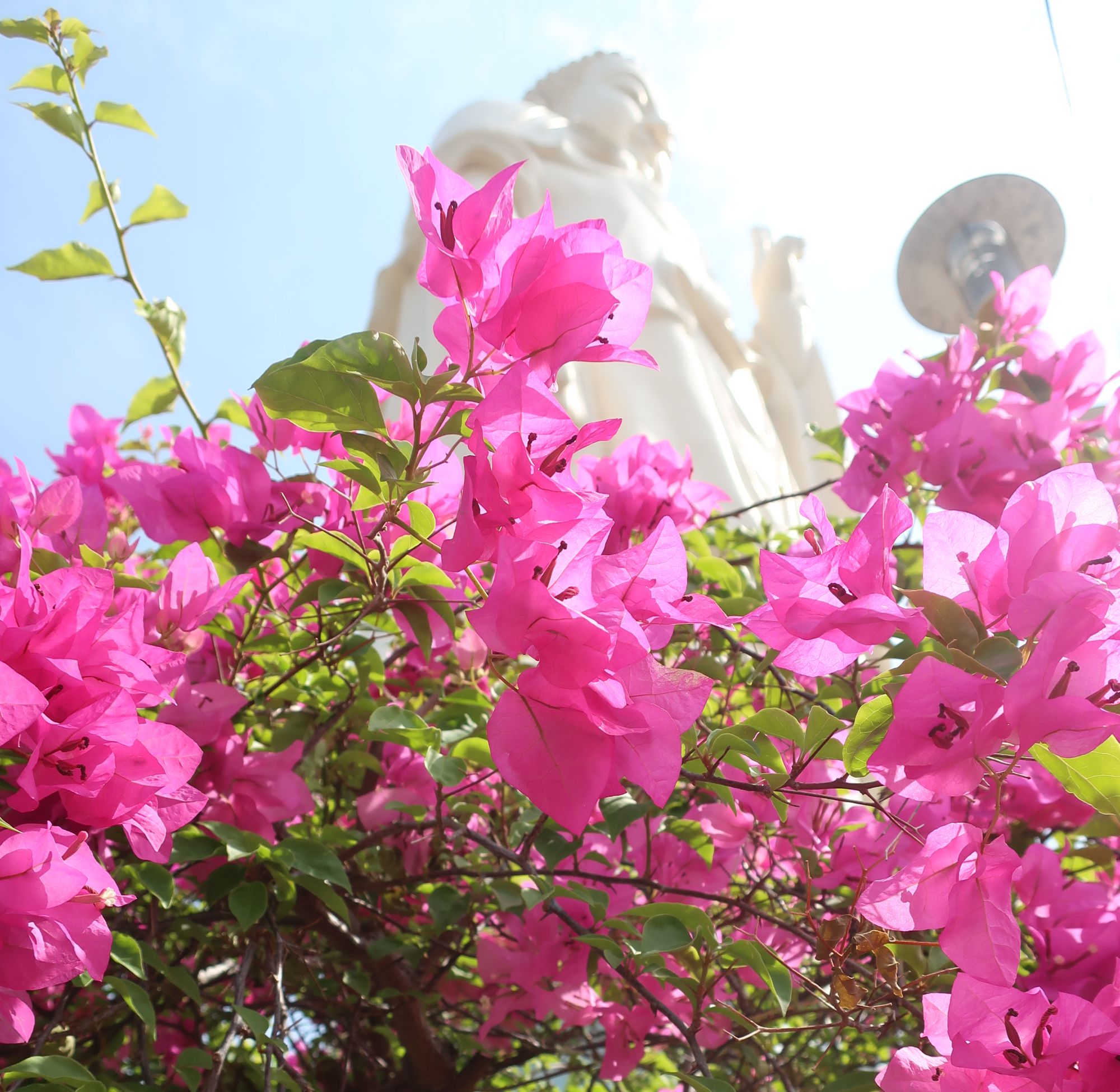
And now for something amazing. This snap was taken in the city of My Tho, near the Mekong Delta in Vietnam. But that is not what is amazing. What is amazing is that there is nothing native in this snap! Both Buddhism and pink Bougainvilleas have been imported into Vietnam a long, long time ago: Buddhism, by the migrating hoards of Buddhists; and Bougainvilleas by the French during their colonization of this region of Southeast Asia.
Somewhere in France, this snap reminded me of a kaleidoscope:
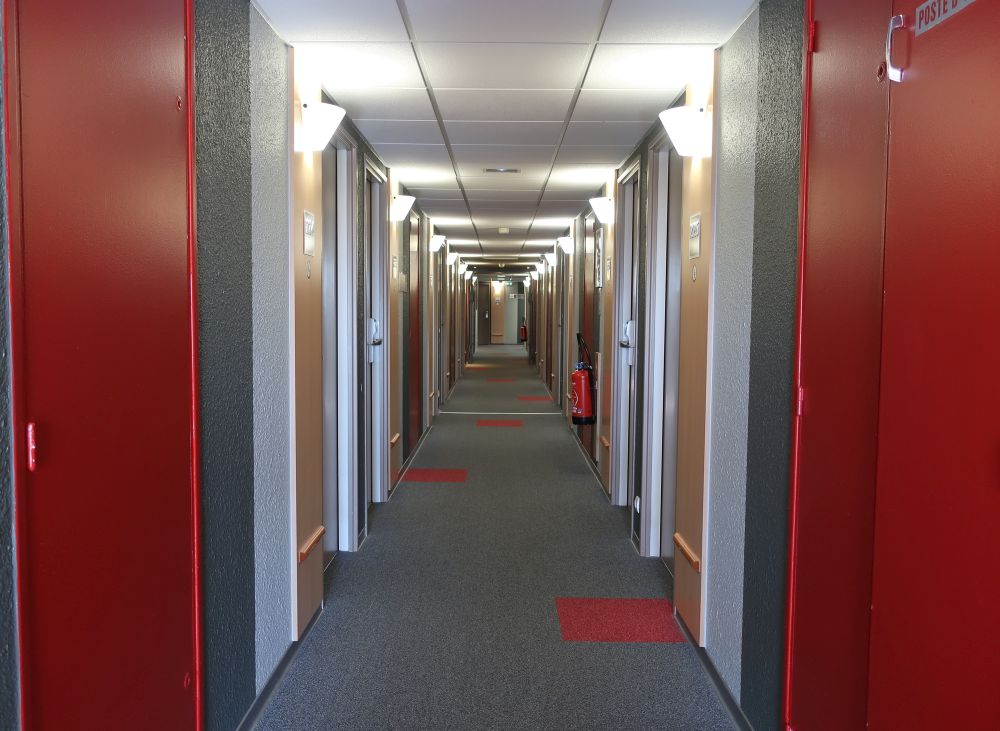
I looked it up, and I discovered that the kaleidoscope was patented in 1817.
I felt pretty honored and privileged to have been able to have taken this snap:

Here you see the Super Wolf Full Moon shining above the new Ho Chi Minh City skyline on the Saigon River in Vietnam.
The fellow with the circle around his head is Saint Laurent – but not THAT Saint Laurent that you are thinking about!
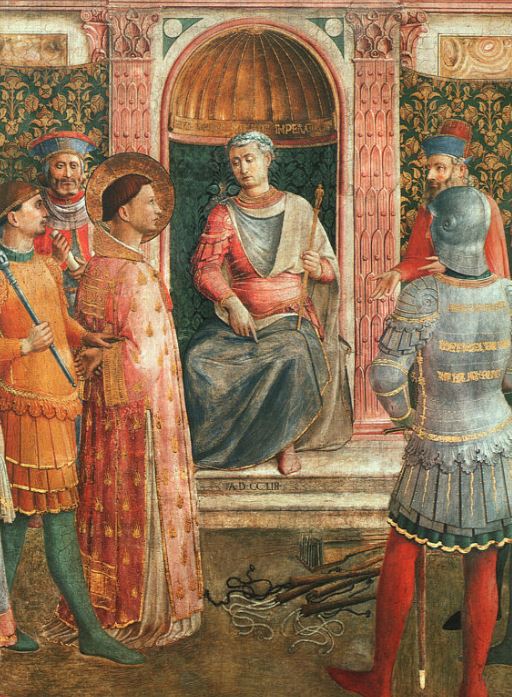
But what does Saint Laurent have to do with Southern France, you might ask?
While driving across a lonely rural road from Nimes (a French village that a lot of tourists visit) to Beaucaire (a French village that a lot of tourists don’t), I spotted what looked to be a old stone building deep in a farm field. Because there were no angry tourist-hating French farmers with pitchforks around – and because the Gendarmes were probably all busy elsewhere looking after the protesting Gilets Jaunes, I took the liberty if not the risk of trespassing on the farm to take this wonderful snap:
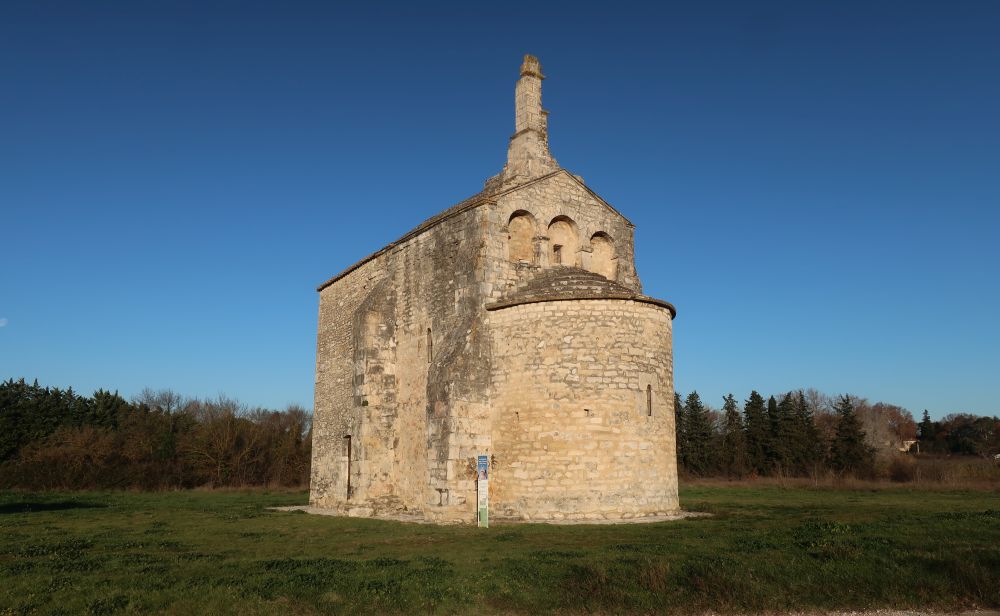
I like the way the sun reflects off the stone and really highlights the building.
Fortunately, there was a sign just outside, so I quickly came to know this was the Cathedral of Saint-Laurent, dating back to the 1100’s.

And what does any of this have to do with the development of human intelligence?
Turns out that Saint Laurent was martyred in 258 for refusing to hand over the church’s riches to the local Roman emperor. What makes this very interesting indeed is while he was being persecuted for refusing to hand over riches, Rome itself was being ravaged by one of the first instances of the bubonic plague, the so-called Plague of Cyprian that killed thousands of people every day.
This is an electron micrograph of the plague, Yersinius pestis:
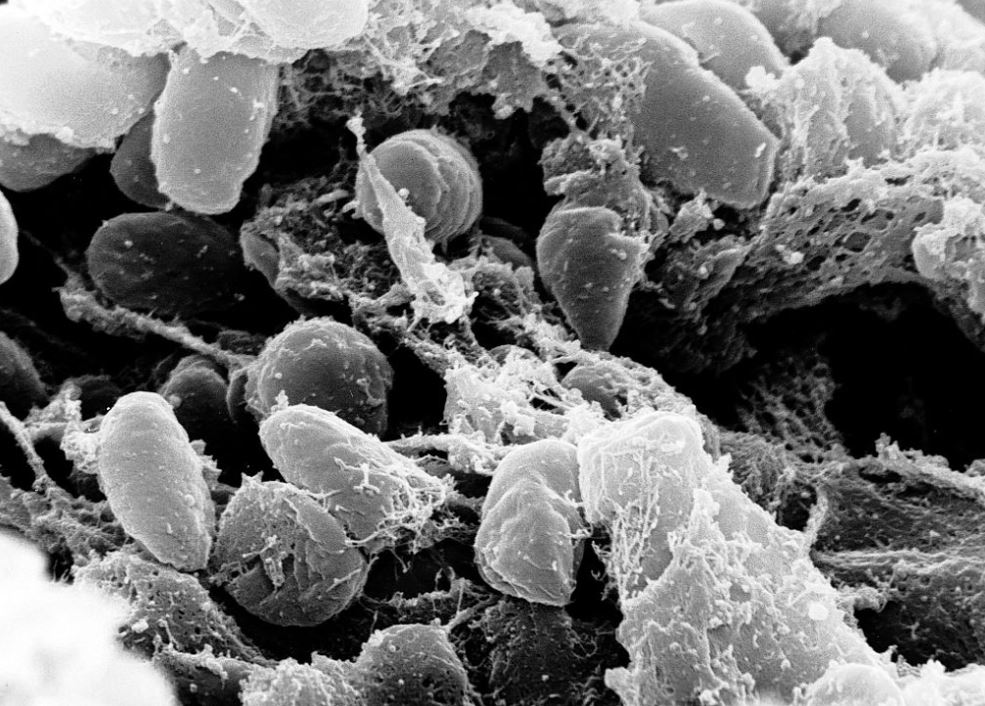
Interestingly, it has been show that Europeans today have increased resistance to this bacteria, most likely due to natural selection processes, i.e., the millions of people with less resistance were killed in the many outbreaks of the plague over the centuries.
This is what led me to speculate that, in a similar way, the Herpes virus has had a pronounced effect in the development of human intelligence.
While traipsing about the southern countryside in Provence, I spotted this cactus hiding out behind another plant:
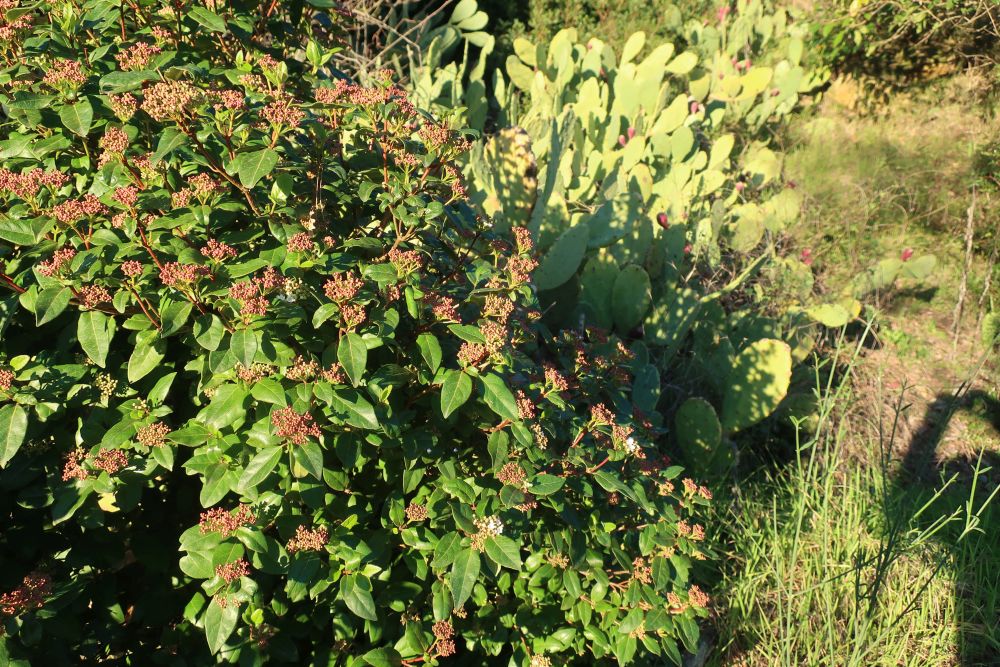
This is no ordinary French cactus – in fact, it isn’t French at all! It is a species of cactus known as the prickly pear, and it is in fact an invasive species that was introduced to Europe – from America – back in the sixteenth century.
Interestingly, like a fool, I tried to pick up one of the fruits and received about one thousand little stingers in my finger. I was able to remove most of them – but now, three weeks later, as I write this post, there is still one lodged in my finger and causing me pain. Not quite sure what will happen, since try as I might, I can’t seem to remove it – or even see it.
Continuing the series, this is a snap showing the medieval French village of Gordes,
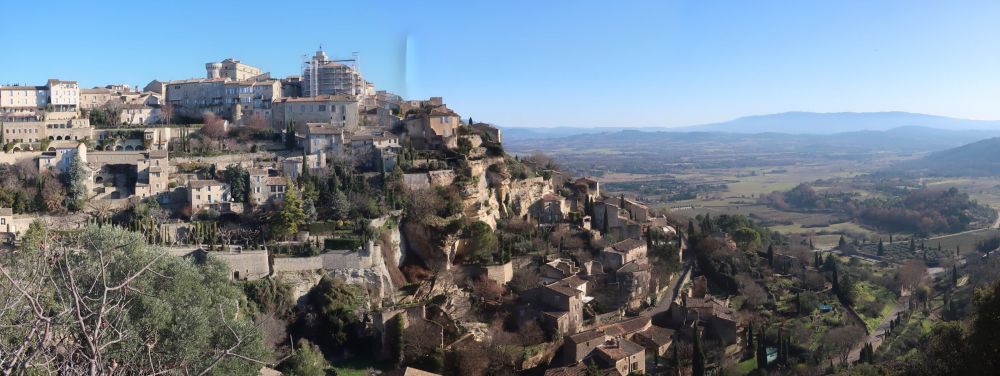
Just left of center you’ll notice a very obvious distortion in the fabric of spacetime. It is quite likely an intense gravitational rift opened at precisely the instant I took this snap – but no ordinary spacetime distortion was this, since the expected rainbow colors were not present. Most likely, the gravitational distortion which affected the light waves was accompanied by an intense magnetic field, and this triggered a massive anti-Stokes scattering phenomena which exactly compensated the light distortion.
But if you think this is amazing, then hold onto your hat: it gets even MORE amazing than this!
What is even MORE amazing than a spontaneous gravo-magnetic distortion of spacetime in a medieval village in France is that it occurred at precisely the location in which two separate photographs of the village were stitched together to create the panoramic picture shown above!
How amazing is THAT?!?!
For whatever reason, I don’t think my reasoning is that far away from what I‘ve seen some astrophysicists have used in discussing dark matter. In an upcoming blog I‘ll probably mention Mr. Occam and his Razor.
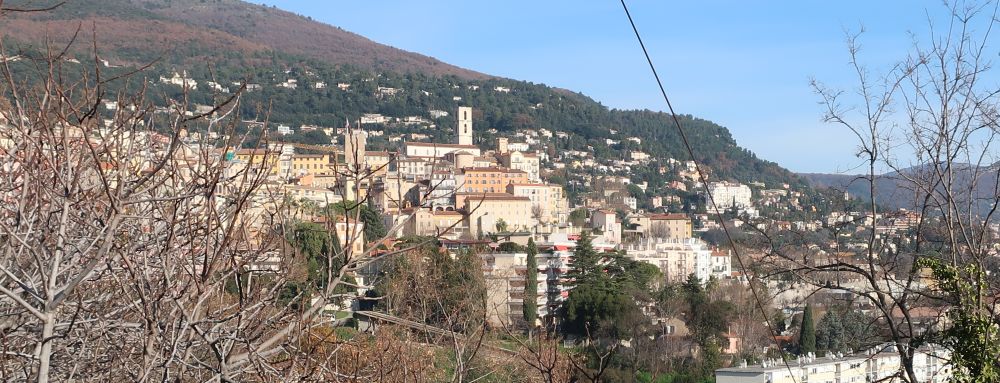
Continuing the series, this is a view of the center of the medieval village of Grasse,
Southern France has some amazing, amazing trees.
I’ve written about the amazing plane trees of Provence.
I’ve written about the amazing umbrella trees of Provence.
And now, standing at attention like massive soldiers before storming into battle . . . the amazing cypress trees of Provence:
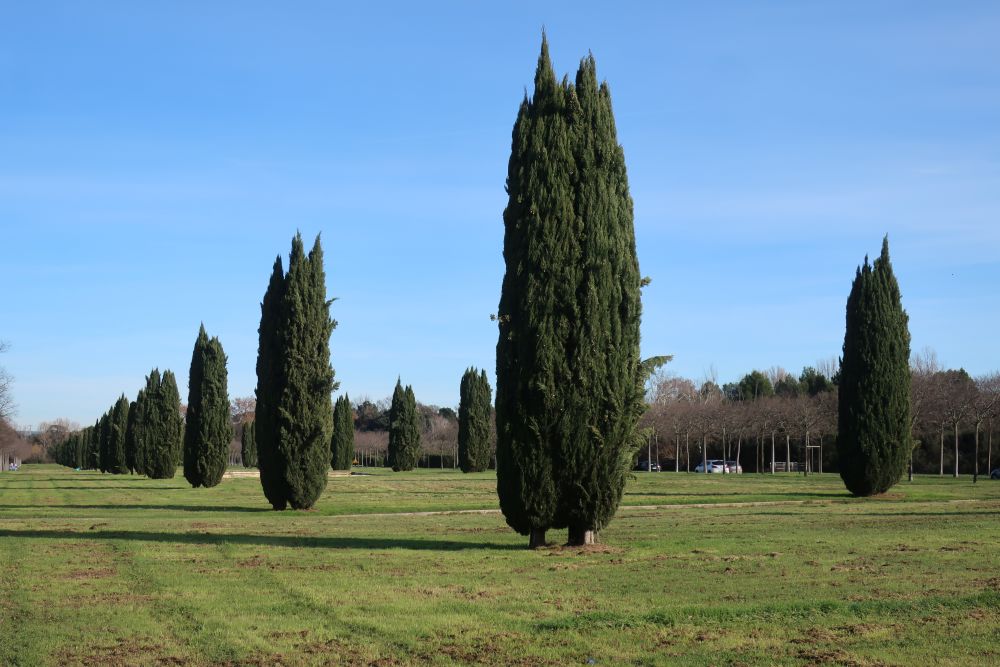
Interestingly, you can steal the unopened nuts off the trees, let them dry out the pop open at home, and grow your own cypress trees rather easily. I’ll show the steps in an upcoming blog entry!
A while ago I wrote about the amazing plane trees of Provence.
Well, Provence has a lot of amazing trees, as this snap shows:
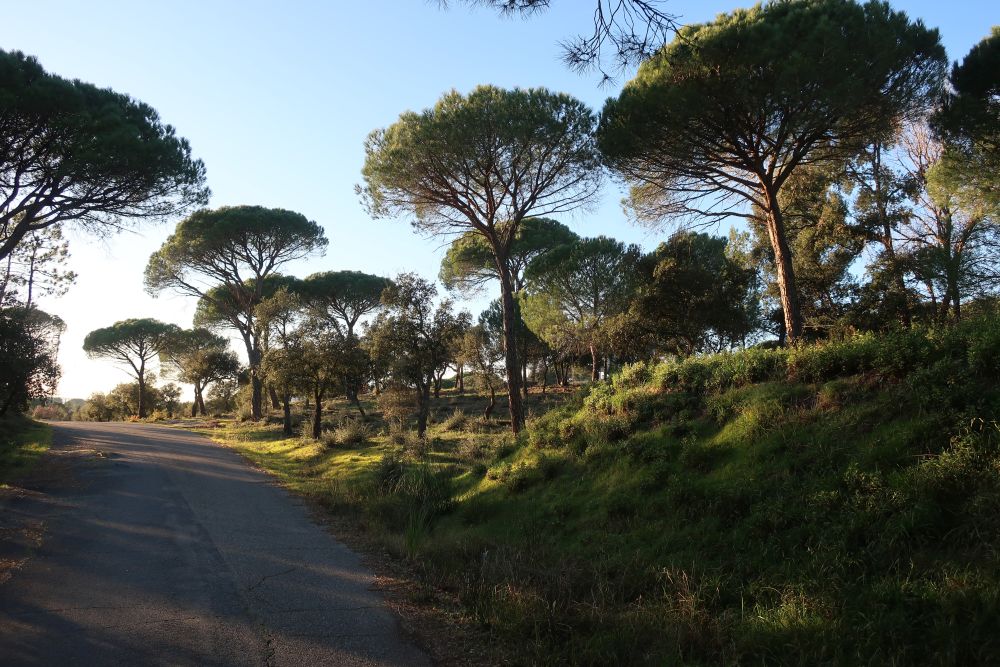
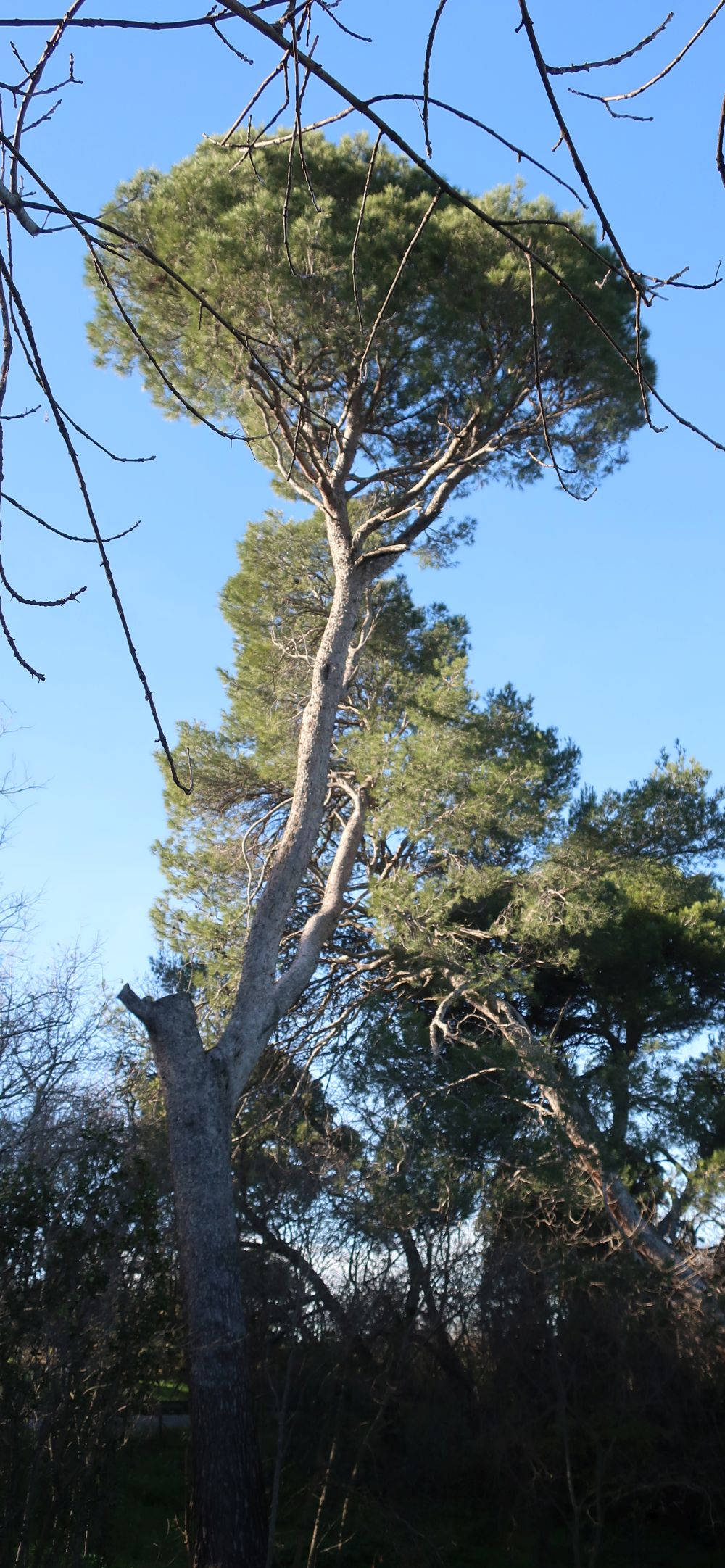
These are umbrella pines, or pin parasol.
Interestingly, this is always what I thought the Tesla trees (in the flame forests of Hyperion) would look like:
Answer, at least if you have never lived in India, VERY.
I lived in Bangalore for several years, and during that time my favorite place to eat lunch was a diner called Eden Park. Interestingly, Eden Park sits just across from a Zoroastrian temple – you don’t see many of them!
Anyway, here is a snap of me eating lunch with a friend:
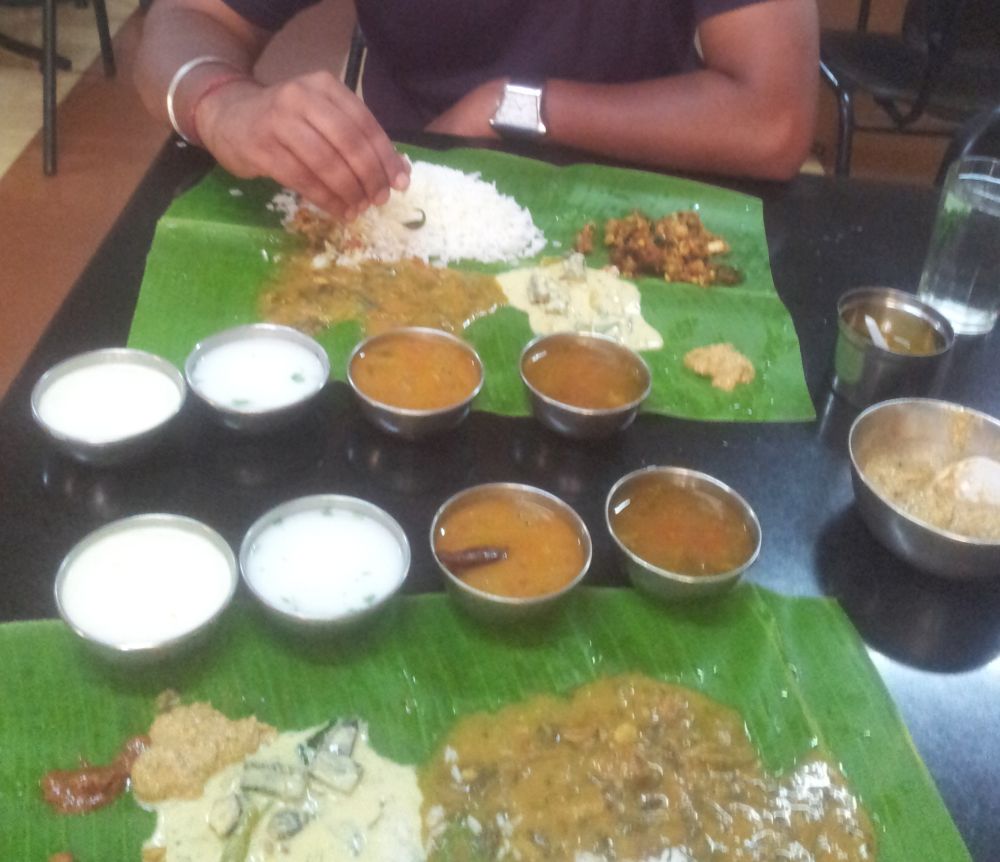
If you’ve never been to India, there is a lot going on in this snap that you probably don’t know about.
First, you’ll notice how my friend it sitting. I don’t know if I’d go so far to say it is rude to eat with your left hand, but a right hand approach is definitely the favored one, so the left hand is normally kept in the lap or off the table, unless it is absolutely positively needed for something. But it can be used and most people do use it from time to time.
Now onto the other features.
You’ll notice the food is on a wet banana leaf. The banana leaves are placed on the table dry, but then you use a bit of water to wash off the leave and brush the water onto the floor. I’ve been to banana plant plantations all over Southern India, where the banana leaves are harvested and sent to the restaurants.
It is an all-you-can eat deal – circulating waiters carry pots of steaming rice and toppings, and if you need either rice or more toppings, they will give them to you freely. The little orange tin on the left is sambar – a tamarind based sauce that it ubiquitous to South India, and the orange tin on the right is rasam, a (mostly but not exclusively) tamarind based soup. Interestingly, there is not much question about how to consume sambar: you mix it into your rice; if you tried to drink it like soup, I think that would be a bit like drinking a cup of ketchup. But rasam on the other hand, being much thinner, is a whole different cricket game: you can pour it over rice, dip something into eat, or (what I usually did) just drink it like soup.
It is a bit of a myth that you eat this exclusively with your fingers. I did – and many Southern Indians do – but there are both Northern and Southern Indians who prefer to eat with a utensil, such as a spoon. My Indian friends have told me that studies involving brain scans have shown that when you eat with your hands you get a greater food pleasure, due to the tactile sensations.
One of the white tins contains curded milk, similar to yoghurt. It can be mixed into the rice with sambar, but it can also be eaten at the end of the meal, with a bit of sugar poured on it, like a dessert.
And as for the toppings: one of them is universally a dhal (lentils), which is frequently the case in Indian cuisine, since dhals have a very high protein content, and this is important to a mostly vegetarian culture.
Sadly, what this snap does not show are my papadams, also known as papads. ,At this hotel at least they need to be ordered separately, and it is usual for people to eat one or two. (I have a friend in England who eats them, however, by the dozen.) They are essentially fried tortillas. They are not used to spoon up food – rather (and this is purely my own opinion) their crispy-crunchiness makes a great change to the sticky stewlike nature of the food, so by crunching on one every now and again during your meal, it somehow helps to clean your pallet. Interestingly, most papads in India are made by rural housewives as part of a cottage industry: they create them at home and then they are shipped to centers for redistribution.
This meal is known to the Bangalore locals as “veg meals” – not, interesting enough, a “veg meal” but rather the plural form is used. For example, to order this you would say to the waiter at the diner “I would like a veg meals please.” Except – you really wouldn’t: diners here are called hotels not diners, and this one serves veg meals exclusively during lunch, so you don’t need to order anything.
What this snap does not show – but what is also quite common – is that many religious people move a slight portion of their food to the top of the leaf and leave it there, uneaten, as an offering to their gods.
What this snap also does not show are a few other things on the table: a metal container of drinking water, and containers of Indian pickles that I have documented elsewhere.
So for people with no experience in India there are really a lot of things happening that Indians take for granted – and I am quite sure this is the case with American and Western foods that some Asians, on a first trip outside of Asia, may be unaware about: the many different pieces of silverware used in a multi-course meal are a good example.
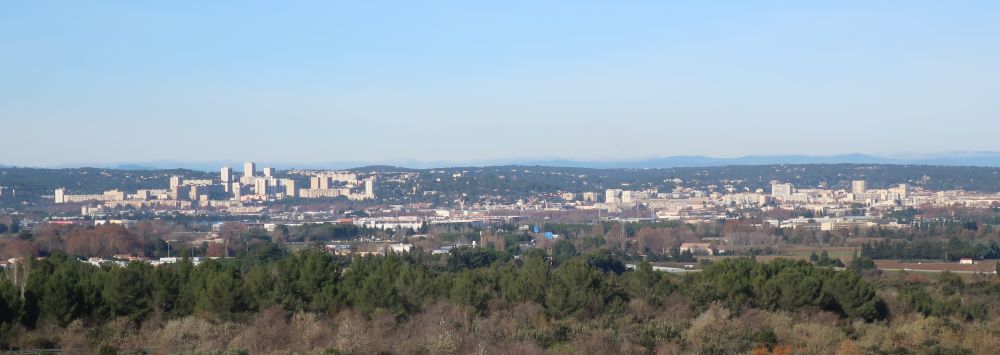
Southern France is amazing in the winter. It’s sunny – but even at its peak the sun is very low on the horizon.
So you get incredible views, such as this snap of Nimes shows:
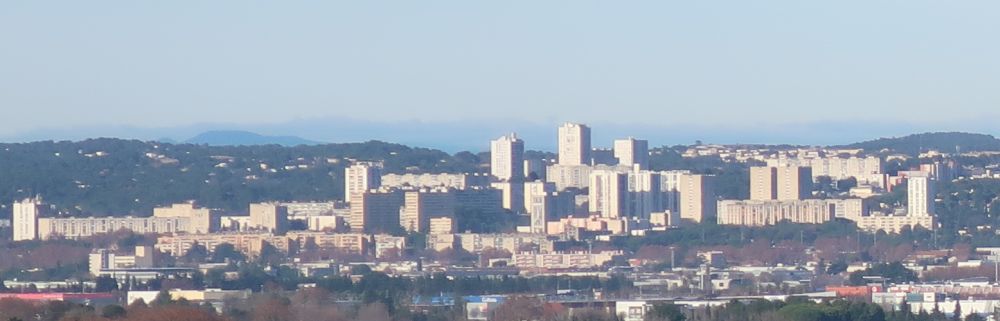
And as you can see here, the low midday sun near the horizon gives rise to some amazing shadows and light effects:
With this blog I would like to bring a true mystery to the attention of the art world – showing that one of the all time masters of art was, in fact, a con man.
First things first: this is the famous artist Vincent Van Gogh,
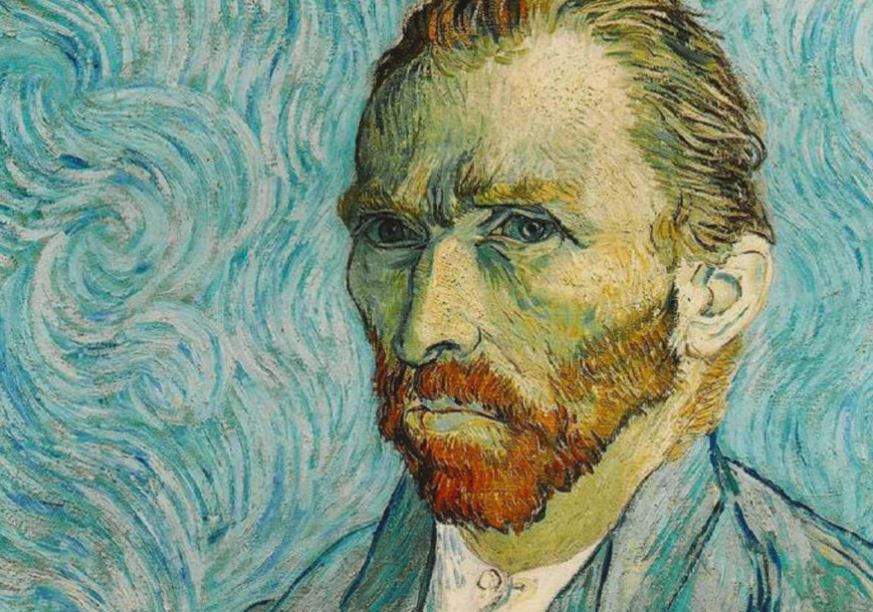
He lived in the south of France, and he made a number of paintings of tiny, almost microscopic horse-and-buggy on a mammoth drawbridge, just outside of the city of Arles:
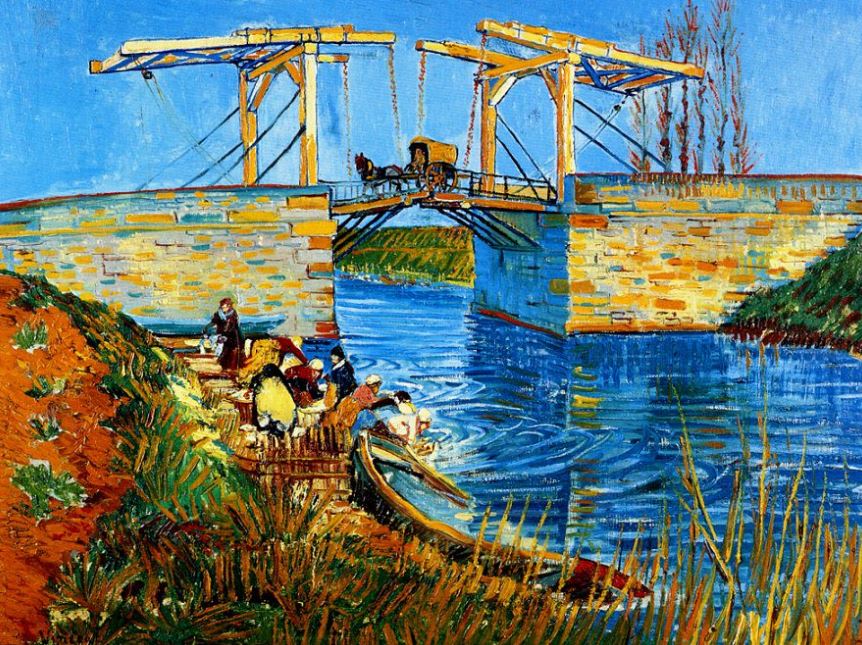
He did this paintings in the late 1800’s. Sadly, the Germans destroyed this bridge, along with many others, during World War II. But thankfully for tourists, a “bogus drawbridge” has been built to take its place. It is NOT easy to reach – well off the beaten path – so if you ever get here chances are, you’ll be the only one here to be looking at it!
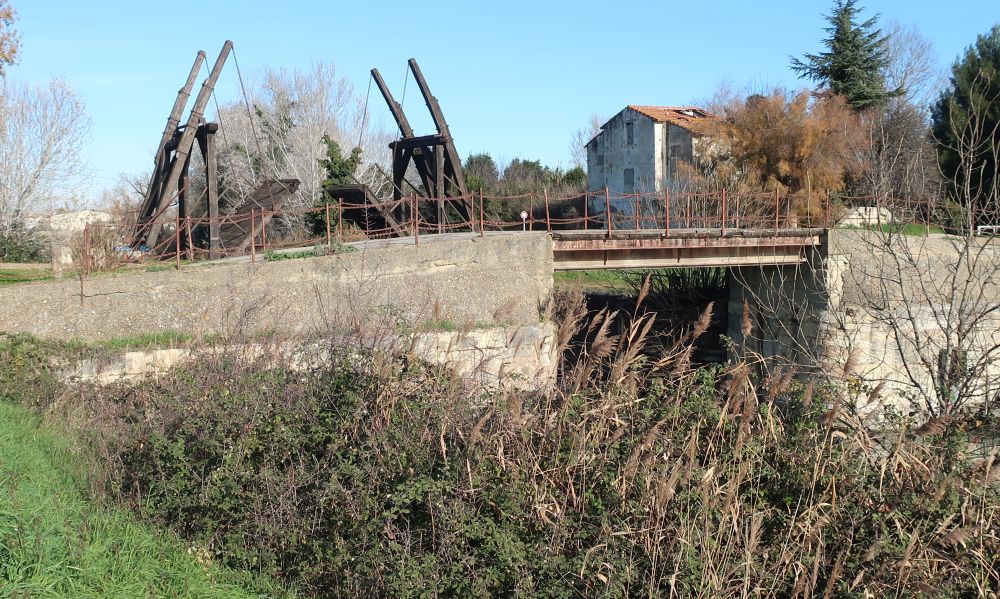
But now we get to the fun bit – unless you are an art historian, in which you might find my opinion on this to be offensive if not downright hypostasy.
If you compare the tiny size of this bogus bridge to that of the monster size drawbridge in his paintings, Van Gogh has grossly overestimated the size of the bridge – or else grossly underestimated the size of the horse-and-buggy crossing it. In both cases he made a gross error – and I find it amazing the public has not spotted this egregious error until now!
Continuing the series, it is quite usual in architecture for the front side of an object (the facade) to be the most embellished and visually interesting.
But sometimes that doesn’t happen.
In a recent blog I provided a good example of this by the amazing, incredible, almost unbelievable Wülflinger Unterführung – a passageway at the Winterthur train station whose very existence is clouded in intense mystery, and whose tiny design and very steep steps would prevent it from being implemented today:
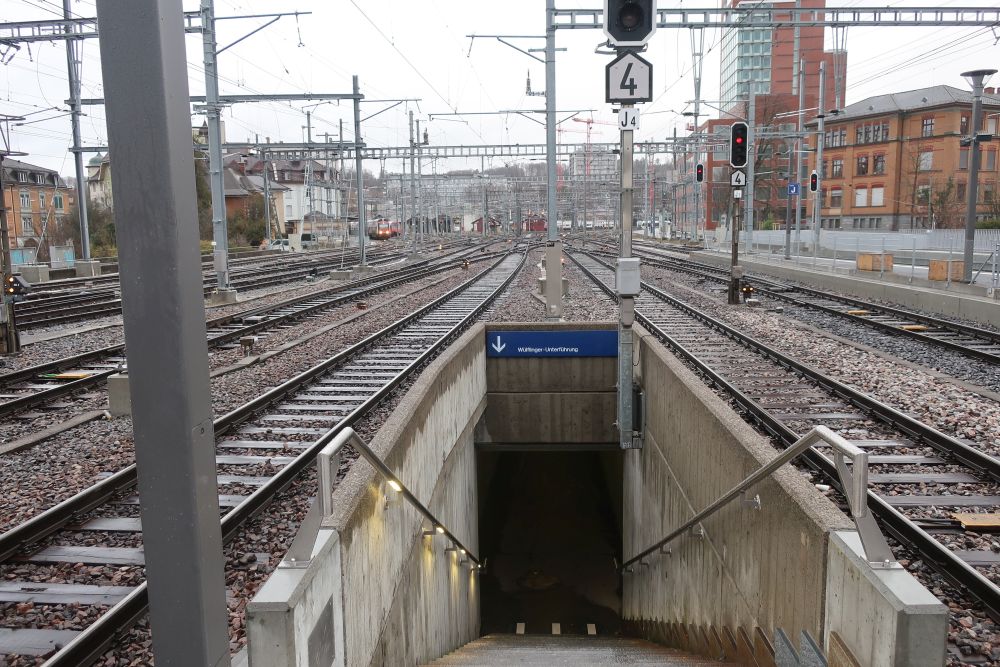
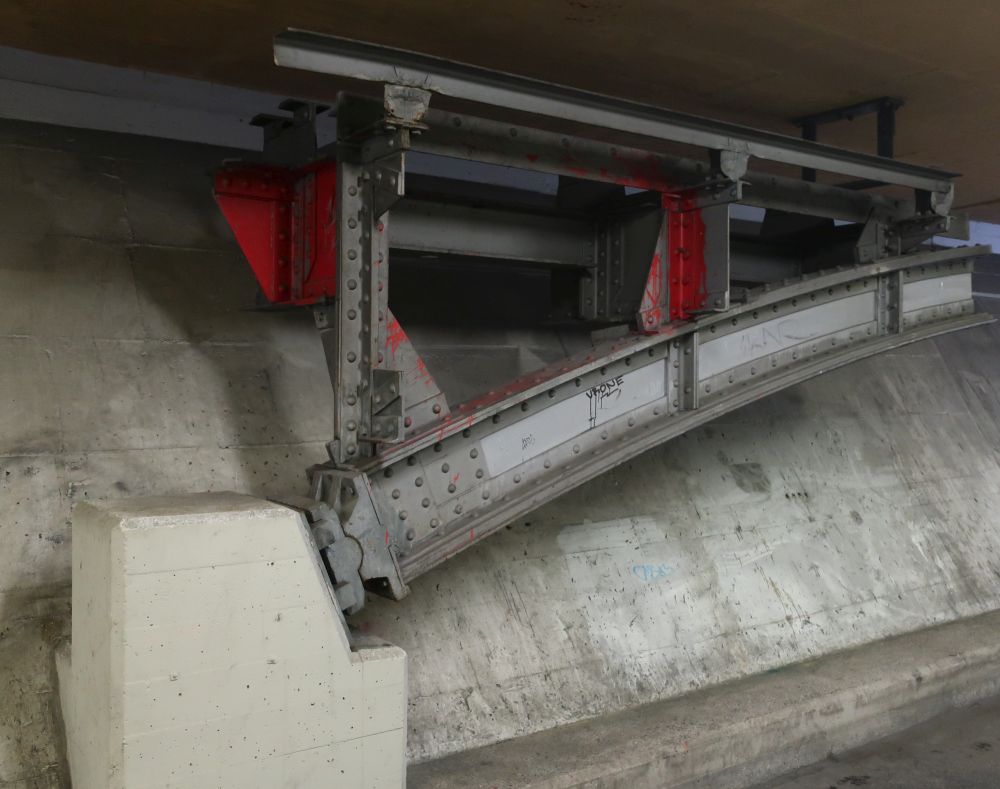
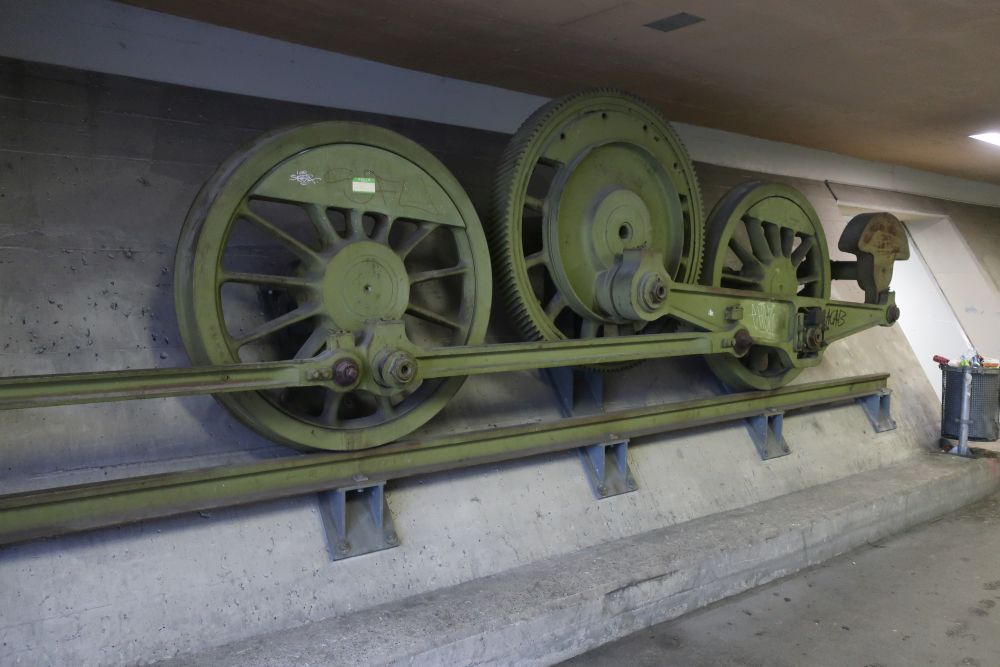
Well, if you find yourself in Winterthur – and if you are NOT afraid to enter deep, dark places, then you will be greeted by an amazing example of “backs are better than fronts.”
Because this is no ordinary passageway! It is lined with railroad-related works of art, such as this:
And this:
Continuing the series, in the event of a zombie apocalypse France is really the place you want to be.
There are now many “superstores” that are not accessible to people at all. You do all of your shopping online, 100%, then you drive to the warehouse where it is loaded automatically into your car:
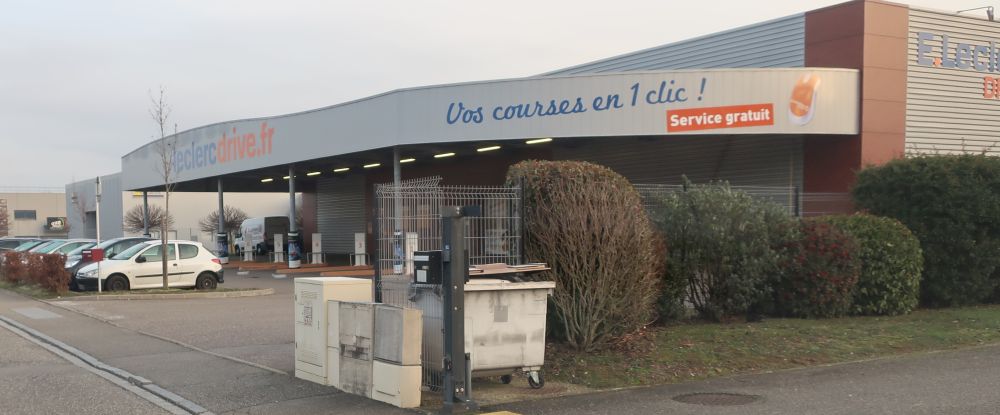
If you can open the trunk of your car remotely, then in fact you can obtain your groceries or other items without making any physical contact with either zombies or French citizens.
France would be almost the perfect country during the next global pandemic, since it’s possible – without too much inconvenience – to live life here without having to interact directly with other human beings.
Fully automated grocery stores are one example. You order your groceries on their website from your home, and when you drive to the store they are all ready to be loaded into your car.
The amazing French robo-hotels are yet another. The chain called B&B is one of my favorites (but there are many others):

The rooms don’t use a key for entry; rather, they have a little touchpad into which you enter a code to open them.
As shown above, and in more detail below, outside the hotel there is a kiosk. You can use your credit card to order and pay for your room – and the machine will print out a paper with the code to your door.

I spotted this fellow in my hotel room in southern Provence:
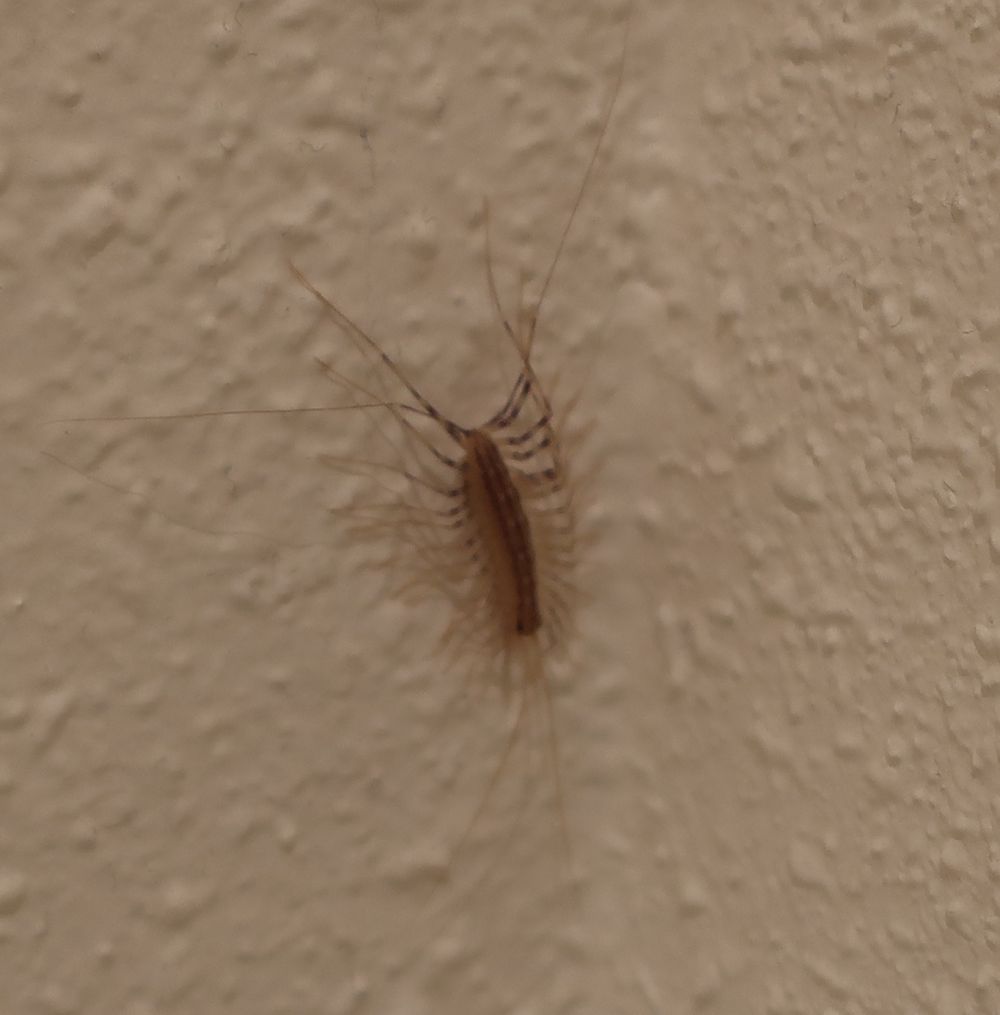
In English we call them centipedes, but in French they are known as “thousand paws.” Interestingly, there have been Cambrian age fossils dating back 400 million years, so these comprise a very old species indeed!
The French culture is obsessive compulsive in many regards.
For one, there are a few villages that are not just well known for a particular trade, but in fact are obsessive about it.
Theirs in central France is one example I’ve blogged about. 90% of all cutlery in France is made in the tiny village of Thiers.
Grasse in southern France is another. Here is a snap I took while in Grasse, overlooking the valley below:
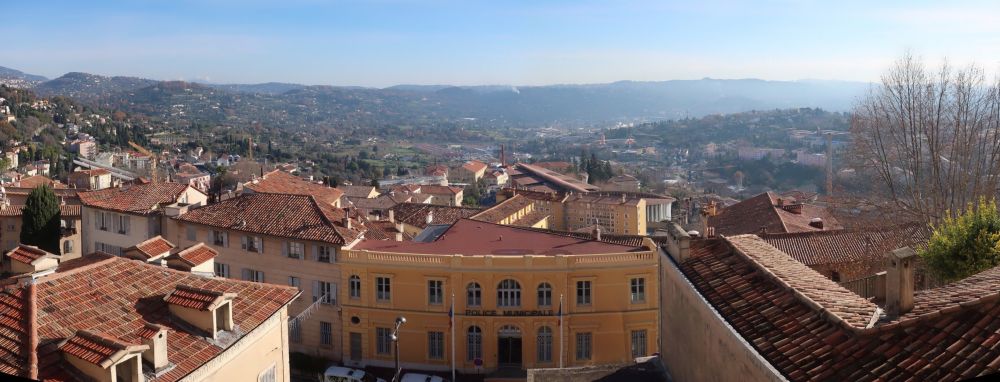
Grasse’s claim to fame is the perfume industry. Almost two thirds of all scents in France are manufactured here.
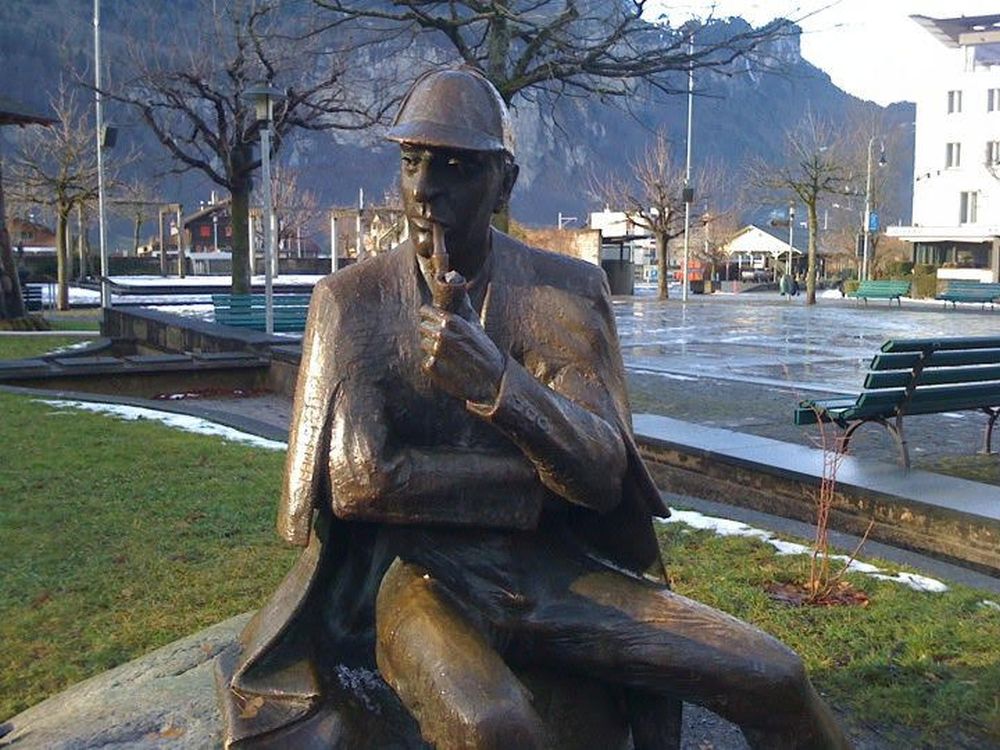
For a country where murders almost never happen, it was a bit strange that Moriarty tried to kill Sherlock Holmes here, of all places. The nearest village to the famous Reichenbach Falls (site of the deed) sits the city of Meiringen, that has fully capitalized on Sherlock fame: