The Journal – Dec. 15, 1983

The Journal

Kenneth A. Ritley — Independent Study High School Project, based on Daniel Defoe’s Robinson Crusoe


For reasons of posterity, I feel it justified to give freely my account of what happened to me, in the form of a journal which I kept all during that bewildering time.


Dec. 15, 1983

I am now glad to have regained my liberty, this fifteenth day in the last month of the nineteen hundred, fourscore and third year of our Lord.

I awoke in my cell a full and rested man, for the food served to us was impeccable and very strange for a jail, where I thought there would be no nourishment of any sort. Upon returning back to my room from the mess-hall, I saw my good barrister present some type of bill or writ to my jailor, another African, but one whom I did not care much for; upon the receipt of which he motioned to his associate-jailors that I be removed.

I was taken to still another room, where I was presented with a brown bag, in which were contained my possessions. I was also given a five-pound note, much to my surprise, for evidently they reconciled that some harm in my detainment might have come and they were sincere and wished forgiveness. I graciously accepted the money and my valuables, though many of them were not, and bid them escort me to the door where I was thus set free.

Of course I, Kenneth Ritley, being a charitable person, tried in every manner possible to give my African, the six men and one stranger, my barrister, the hand-washer manservant, and even the moron, some small monetary token of my gratitude, but they would have none of it and instead bid me that I should keep the money, which I did, and used it to live off of for near half of an active life, for five pounds was so extraordinary large a sum.


End of Journal

The Journal – Dec. 14, 1983

The Journal

Kenneth A. Ritley — Independent Study High School Project, based on Daniel Defoe’s Robinson Crusoe


For reasons of posterity, I feel it justified to give freely my account of what happened to me, in the form of a journal which I kept all during that bewildering time.


Dec. 14, 1983

I awoke this morning with a renewed freshness, such as the likes I have not seen for a good many years. Yet now I feel it proper and fitting to tell something of where I am presently at, though I know not why. I will then proceed to elaborate upon those events which, after leaving that “lounge area” that I described yesterday, eventually led to my disposal in these present circumstances.

I now gathered that I was confined in some jail! How mysterious can it be that God might feel compelled to have one such as I, who I before considered to be a pious and God-fearing man, observant of all the holydays and fasts, and resting every Sabbath; how He could have thought fit to have me snatched up en route to post a letter, which, by the way, I never did; subjected to a very bizarre set of circumstances I still cannot understand, and then, for almost no reason that I could plainly see, confined to a jail! How mysterious indeed!

My high regard of the men who brought me here soon began to falter, for it was quite unusual that I be jailed without any of the due proceedings I would come to suspect: no barrister was brought before me, neither a proper trial to establish my innocence or guilt, as the case may be. But look now how I talk! I say I might not be innocent, but surely I am, for what manner of law must I have broken to be jailed without any of the preliminaries I might expect!

Upon leaving that lounge area I recently told about, I was brought into a sitting room, where I stood and held a small placard to my breast. Then, in a sudden instant, a bright flash went off, a flash so bright, I believe, that had I been looking squarely at it I feel I would have been blinded for sure; and indeed, as it were, I was not looking squarely at it, yet after its occurrence I retained for several minutes the image of the flash in my eyes. I feel that this was not unlike the story the cannibals tell, for who of all but they would know best? — they tell that the eye retains its last image after death. This thought could scarce have reassured me any more, for it suggested to me just how near death I was for this to happen!

No longer was I acting in a passive manner as I had done before. I stood up and demanded, “Where hast thou brought me, and wherefore? I bid thee answer, knaves, that ye all not see such a man as I in violent turmoil and unrest!” I have never been very good at making threatening comments, but I realized that indeed I must have been better than I thought, for upon hearing these words that African, now with me in this room, remarked — and this I feel very reassuring, about with my threat, for pagans and Negroes were hardest to threaten, and I gathered he was both; he remarked, as I say, “Jss cool, jss cool. Jus’ relax, kay? Daint nufin dat yoh can do, cuz we goss da goods on ya, and yous in pooty deep trouba, heah? Yous calms down, an’ we gwyne take yoh pitchure.”

Though he spoke with a good many pagan words which I could not understand, I did gather that I was going to have my portrait done, no doubt in restitution for all the trouble they had caused me; yet I could have gathered that anyway, for I saw the artist’s light equipment and shades, though I saw not his canvas and easel.

I felt very sorry for having threatened them all in so violent a manner, especially when a man returned bearing my portrait. I was indeed fascinated by the skill with which he had captured my essence, and on such a tiny canvas, too, for it was only about two or three inches on a side! When I inquired if I could keep that portrait, which was indeed very glossy, no doubt covered over with a sealer of sorts, and was so flexible — indeed, I have never seen canvas like it; when I asked, as I say, I was told not, that it must be entered into a book. And what a huge book it was! for I then saw it and the scores and hundreds of pictures, as the African called it, within the book, and all of them bearing placards at their breasts. I then deduced, for I was not in the least lacking wits, that the purpose of the placards was for cataloguing all of the portraits; moreover, I figured that, after being asked to do so many sittings in such an unusual manner, the artists of course became good, for the likeness of me was as a mirror; and fast, for he wasted no time in handing me over the finished result; indeed so fast was he that I did not even see him at work.

After this I was incarcerated for the first time, for I am now, at present, writing during my second incarceration. I asked that man who sat beside me in the lounge room for the charges that, all of a sudden, must have been brought against me. He told them to me, in Latin, and I recognized them as words spoken similarly by one of the first six men — the same one, in fact, who graciously told me of my rights and not my wrongs. But as I could speak not a word of Latin, I knew not what charges were against me. (Apparently, too, that man knew not their meanings in the King’s English, or any other English, for that matter, for when I bid him repeat the words in my language, he must needs repeat them in Latin. If the reader of this passage survives me, for I feel uncertain as to my secure future, let him endeavor to learn the meanings in English of felony manslaughter.)

Here I sat in my jail for the first time, and pondered, too, as to what a nice jail it was, for there was a sink and mirror, and all manner of toiletries, and a bed, and bars instead of walls that I might have company. Indeed what a jail! for there was not so much as a rat I could see, nor any racks or stocks, nor trebuchets, nor Iron Maidens of Nuremberg, nor any of the various items I would expect to be here.

I was not here an hour when I was taken before a judge. I was surprised to see that he wore not a wig, nor any of the barristers present, and I thought how they should be disappointed, that is, dis-appointed, by the King if ever word of their actions got out. I was called to the witness stand, strange as it was, for I was able to sit. Following my good man’s bidding, for I now ascertained him to be some barrister, who by his actions was better suited to a life of solicitation, I spoke not a word, except for that “Fifth Amendment” phrase which I spoke earlier about. The magistrate must have known the implications of that phrase, for at once as I said it, he motioned the Bailiff to assist me off the stand, which he did and I was gracious and beholding that a man of such obvious importance as he would consent to help me.

The trial progressed, though most of it in Latin and, hence, incomprehensible to me; after which I was taken and placed in this cell, devoid of all my personal possessions, where I have for two more days sat, and a third, counting this day.


The Journal – Dec. 13, 1983

The Journal

Kenneth A. Ritley — Independent Study High School Project, based on Daniel Defoe’s Robinson Crusoe


For reasons of posterity, I feel it justified to give freely my account of what happened to me, in the form of a journal which I kept all during that bewildering time.


Dec. 13, 1983

Three days have passed since that terrible event; nay, shall I say disastrous event, which so quickly landed me in this incomprehensible, harsh environment. Never before did I scarce even consider that a happening such as that — That — could have so effectually rendered me, poor miserable Kenneth Ritley, in such a place so utterly devoid of all humanity and happiness as this. How might I have predicted its forthcoming?

Even when I muse over the actual circumstance of my arrest, my heart begins to pound and my breath to become shallow and quick, as if one of Satan’s demons stood over me that very instant, taunting my soul with his tail. I remember the large, black African dressed all in blue (and who, some years earlier, might have brought a fat Guinea or two on the open market, less handling costs, of course), how he so rapidly approached me and exposed his arms that I might see them, and be afraid, and cease my activity; and how, upon the termination of my activity just now mentioned, how he did push my body in a most uncomfortable way against the embankment and proceeded, in the due course of his search, to examine my person for any illegal possessions, which he found none, if I may say, after an unduly thorough endeavor.

Need I make mention of the thoughts which at this time began to cross my mind? Of those things which I might have done to be so deserving of his efforts, I thought about, but then one by one, and after some due consideration, for with my hands effectually bound I had an abundance of time in which to think, systematically eliminated bizarre or impossible, or highly improbable, to say the least. Yet all the while I could not refrain from sensing that that African had good cause, or shall I say that he thought he had good cause, for my detainment in so thorough and so violent a manner.

In a short while some audible and mechanical cries I heard signaled the arrival of more of the African’s kind, and as I looked up (for I was laying prone upon the ground, my hands bound behind my back) I saw their brightly-lit vehicles approach in the night. Blazing chariots of light, they were, crying and shrieking still louder as they neared, and setting afoot in my stomach no small amount of fear; and in my bladder, as well, for I soon began to think that I could not any longer, as they say, contain my emotions.

With their arrival, I ceased all my reflections upon my life and forgot the thought that it was God and His Providence that somehow brought all this down upon me. As those chariots, one by one, stopped on the roadside, their masters and chauffeurs, which by their dress alone were not indistinguishable, emerged and hastened on foot in their approach to me. Evidently, my tall African, as I began to think of him that way, in sight of the way he looked after me in the few short moments I knew him; as I say, my African payed particular good attention to his associates’ coming, as did I, and no doubt felt as much emotion in their presence, for as they met he stood with only the most perfect of posture and quickly proceeded to give an entire summary, brief but concise, of the events which led inevitably to my detainment; and all this he did without the least inkling of direction from his associates.

Upon some small conference between them all, for now there were six in all, they stood me up off the ground where I had lain and, with a bright candlestick in my face, proceeded to read to me a full account of the rights I had; this I found very reassuring, for not so much as once did they read to me any of my wrongs. Upon receiving from me my consent that I understood my rights (which indeed was something I felt very compelled to do, especially after the cordial way in which they elaborated upon all of my rights and none of my wrongs in the first place; and in the next place how they so graciously awaited a response from me); upon receiving this, as I say, they helped me into one of their chariots, though still with my hands bound, and chauffeured me off to their “station,” as they called it — a place which I at first incorrectly construed to be some center for the arrival and departure of coaches as public transportation. The bitter-will I harbored towards them, and especially to that African who handled me in so violent and rough a manner, soon subsided and was replaced instead by good-will, especially after I found that one of the men offered to sit beside me in the coach, or chariot, as I have called it, and so accompany me to the “station” in that manner, attentive to me to the last degree, moreso than any manservant I had seen or owned attended to his master. I found his attitude to be most gracious, and that he was especially interested to hear anything that I might say.

Indeed I thought still more highly of them for, as we arrived at the station, one of the first things they did was, much to my surprise, thoroughly and carefully wash my hands. (Oddly enough, a strange man working there, and who I had not as yet seen, took my hands and smeared them in some black ink; he was obviously some type of idiot, if not a true moron, but was quick to learn and when one of the other men looked upon him, this moron carefully dabbed my fingers onto some blotting paper and then, when he saw that not all of the ink was removed, gave me a moistened tissue with which I might remove what he did not.)

Shortly thereafter I was ushered into what I gather was some sort of lounge, for there was a table with a lamp, several chairs, which I did not at all find to be comfortable; and there were several very odd-looking quills, though not so much as one bottle of ink to be found.

Into this room came with me the six men and African I had before seen, two other men (one of which was dressed in the same manner as were the six and the African), and yet another man who sat not at all with the other men, but with me.

What next occurred seemed very puzzling to me, and to this very day I still cannot figure why it happened. One of the first six men I had seen, and who had brought me to this “station,” as they called it, though I could see no other such carriages nor chariots nor coaches of any sort hereabouts; this man asked me a question. I cannot recall what he asked of me, but this is of no concern, for the man sitting beside me, and who I had now gathered was acting in my behalf, told the other men that I should not answer that question, “lest it would contradict ‘the Fifth Amendment’.” This continued, and with every question asked, my friend, for this was as I now thought of him, remarked those selfsame words. This to me seemed very odd, in the first place that the men would continue to ask questions when they knew full well, or at least could predict with some degree of accuracy, what that man’s reply would be; and in the next place, that such a strange amendment would exist, that would prohibit me from answering any questions; I thought at long last that they should consider having so silly an amendment as that was, abolished.

All the while I could not as yet ascertain why I was being held against my will, or by whom, and whether any small hope for my recovery and deliverance from the place which I was at was in store for me in my near future.

Alas now, this thirteenth day of the last month of this nineteen hundred, three and fourscore year of our Lord, being evening, I tire and can scarce go on.

Amazing how time flies – 2

Continuing the series, here’s a current lifetime snapshop of my scientific articles:

I guess I was never too keen on having a huge number of citations for any particular article – it makes me much more proud to see the staying power of some of these; that is, over 30 years have gone by since I started publishing, and over 20 years have gone by since I stopped – and still at least a handful of people find my little contributions to be useful enough to cite!

Amazing how time flies

It‘s fair to say I stopped being an employed, practicing physicist in the year 2000, when I left the Max-Plack-Institute for Metals Research and joined Hewlett Packard Consulting & Integration.

According to Google Scholar I have published 45 „things“ that Google records in their list, most of them scientific papers but a few of them other things, such as proceedings of scientific conferences.

Nowadays, even more important than the number of articles that a scientist publishes is often the „citation index“ – or, the number of times another scientist has cited their work.  According to Google Scholar, here‘s what my citation index looks like over time:

The graph shows how many papers written by other scientists cited my work.

If you ask me, it‘s pretty incredible. Even though I have been publishing papers since the mid-1990‘s, and even though I stopped doing scientific research in the year 2000 – it seems the peak of my citations only occurred some years afterwards. There are lots of reasons for that – you have to pick things apart at the level of individual papers and collaborators – but I find it interesting nonetheless: if true more broadly, it means that scientists are not famous for what they do right now, but for what their work will lead to in a few years‘ time!

Cold fusion: A LESSON from Kelvin Lynn, and a STORY

Recently, my friend and mentor Kelvin Lynn for over 30 years passed away. In so many professional and personal ways I would not be who I am today without the strong positive influence of Kelvin. He mainly taught me it’s never about the subject or how you approach it, whatever that subject might be – it’s about the people you encounter on your journey and how you treat them. Recently, one of his other mentees Marc Weber – now a world renowned  physics professor in Washington – recounted some early stories of our first years with Kelvin. What follows below is one of those stories, namely, my own.


In 1989 I was a young 24-year-old aspiring physicist who wanted to change his specialty, and Kelvin spared no efforts to help me out, to help me find a new grad school, and invited me to Brookhaven National Laboratory on Long Island, in New York, to work for him as a lab technician until things got settled. The first task he assigned to me: help him research „cold fusion,“ a phenomenon recently reported by two chemists in Utah, in which they claimed nuclear fusion (like in the sun) could be created with a little battery and an electrochemical cell.  I always guessed it was this combination of the Utah connection together with the promise of a Nobel prize that drove Kelvin‘s special passion to tackle this topic. But I don‘t think Kelvin worked on anything without passion – and for a brief while, this was at the top of his passion list.

First, an important lesson he taught me in the beginning. Like 99.9% of the physics community, I believed cold fusion was pseudo-science: a made-up lie or an egregious goof, not worth anyone‘s time to study further. Kelvin corrected me at once, and in a stern way to let me know how serious this was: not only did he say public opinion must not influence us in any way, but he told me our job as serious experimental scientists was exactly to investigate phenomena and, if they did not exist, absolutely prove it beyond a shadow of a doubt. Reproducibility was crucial in the process.

Those were two major lessons I’ve carried with me ever since.

But then, a funny story for anyone who knew how fast Kelvin could think and react. As part of our experiment we built a huge water bath the size of a large bathtub, and we filled it with electrochemical cells like they use for electric plating of metals. This was supposedly how cold fusion could be triggered, with a battery, inside of these cells. All the electrical power meant that our bathtub full of water was at a very warm and comfortable 70 – 80 degrees F, just like an aquarium. So as a creative-but-still-quite-juvenile 24-year-old I thought: wouldn‘t it be cool to add a few goldfish?  They would not disturb our experiment in any way, but our laboratory would be nicer with some pretty fish swimming around in the bathtub.

Here is a picture of me, in our Cold Fusion laboratory, holding one of our most precious cold fusion electrochemical cells. I had the priviledge of helping a real glassblower create this piece, which took nearly one full day.

So I went to the pet store together with another student, Peter Dull, to buy a few goldfish. (Peter also thought it would be a fun idea.)

Anyway, a day later and before Kelvin could find out about the fish, the Director of Brookhaven National Laboratory decided to personally visit our laboratory and experiment together with a group of BNL‘s highest ranked Senior Scientists. This was the first time Kelvin learned about or saw the fish.  The Director was shocked to see goldfish in a physics laboratory – as I recall, the Director screamed more than a few obscenities! The other Senior Scientists were similarly shocked. But Kelvin did not miss a beat! In a very calm voice he corrected the Director: cold fusion had the potential to be so dangerous to human life that we felt obligated to add the goldfish, to act as our canaries-in-the-mine in case any hazardous radiation was released!  Of course, neutrons were expected as a key signature from cold fusion (just like regular fusion).

Under pressure, Kelvin could sell anything, to anyone, at any time. So it was no surprise the Director and the Senior Scientists believed this – well, mostly –  and the talk quickly changed to more serious subjects.

By the way, Peter Dull was one of many, many of Kelvin‘s students went on to have a stunning international career. Now a medical doctor, Peter worked for the Center for Disease Control (CDC) and was in charge of managing the SARS virus outbreak some years ago. And today Peter works directly for Bill Gates, in charge of all immunization research for the Gates Foundation. I never believed Kelvin picked superstars for his team – I am living proof of that. Rather, a few years working closely with Kelvin could turn some people like Peter and many, many others into superstars.

Kelvin Lynn paid forward the gift from one of his early teachers who noticed the spark of scientific curiosity in a kid running wild in the hills of South Dakota.

Epilogue: The goldfish became even more famous. Turning belly-up due to cold fusion would show their lighter color side. So a simple photo-detector would suffice rather than expensive neutron detectors. Well, as Nature will have it, the fish perished rapidly. It turns out, however, they did not succumb to neutron radiation but got entangled in the propeller of the water circulation system to keep the tank temperature homogeneous.


GUEST BLOG: Tasks I hate to do

A guest blog, by Arlene Ritley

Everyone has something they hate to do around the house.  So those particular tasks are often put off until the need arises, or the funds are available to hire someone to do them.

My husband would rather have a root canal then do the dusting.  I, on the other hand like to dust.  And if I may say so, I do a great job with a dust cloth and a can or bottle of spray wax.  Proper way to dust is the one chore in my family that has been handed down from one generation to the next.

But to get back to the topic “tasks I hate to do”.  I have two tasks I absolutely hate to do and that is

  • Clean the oven
  • Clean the refrigerator

AH you say.  Only two tasks you hate to do.  Yes only two as I have, over the years, delegated more of these “hate to do” tasks to others in my family.

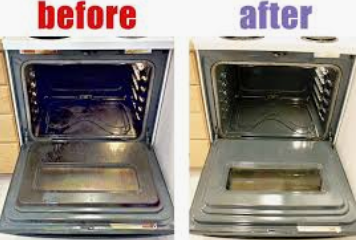
Cleaning the oven

Cleaning the oven is easy to do now if you own a self cleaning oven.

Not so easy to do if you do not have a self cleaning oven.  What I did years ago when stoves had to be cleaned by hand, was wipe up spills with a damp paper towel.  Then when my oven could no longer pass a sanitation inspection, for example my mother or mother-in-law were coming for an extended visit; I had no choice but to

SELL THE HOUSE

I actually did this twice during my early years.

Cleaning the refrigerator

Cleaning the refrigerator is a little more complicated and one I absolutely hate to do.

Take all the food out a shelf at a time.  Wash – Dry – Put the food back where it was, throwing out expired and unused bottles and jars.  Shelf, by shelf, by shelf.  That’s only the refrigerator.  You can’t forget the freezer.  But I found a way to get the task done.

A POWER OUTAGE!

One that lasted for a day and a half.  All the food went bad and had to be removed.  While my husband bagged up the food I cleaned and sanitized the entire refrigerator, in and out.  When I was finished my refrigerator sparkled like a diamond.  Power outages happen more frequently now with Global Warming.  When and if this happens again, you’ll know where I am and what I’m doing.

The moral of this story is . . .

     . . . delegate tasks you hate to do to someone else, then

     . . . find a creative and out of the box way to do the few tasks you hate.


This guest blog was submitted by Arlene Ritley, an editor with the Island Moon Newspaper – one of South Texas’s largest community newspapers.

My time in Драгалевци – living side-by-side with the Russian mafia

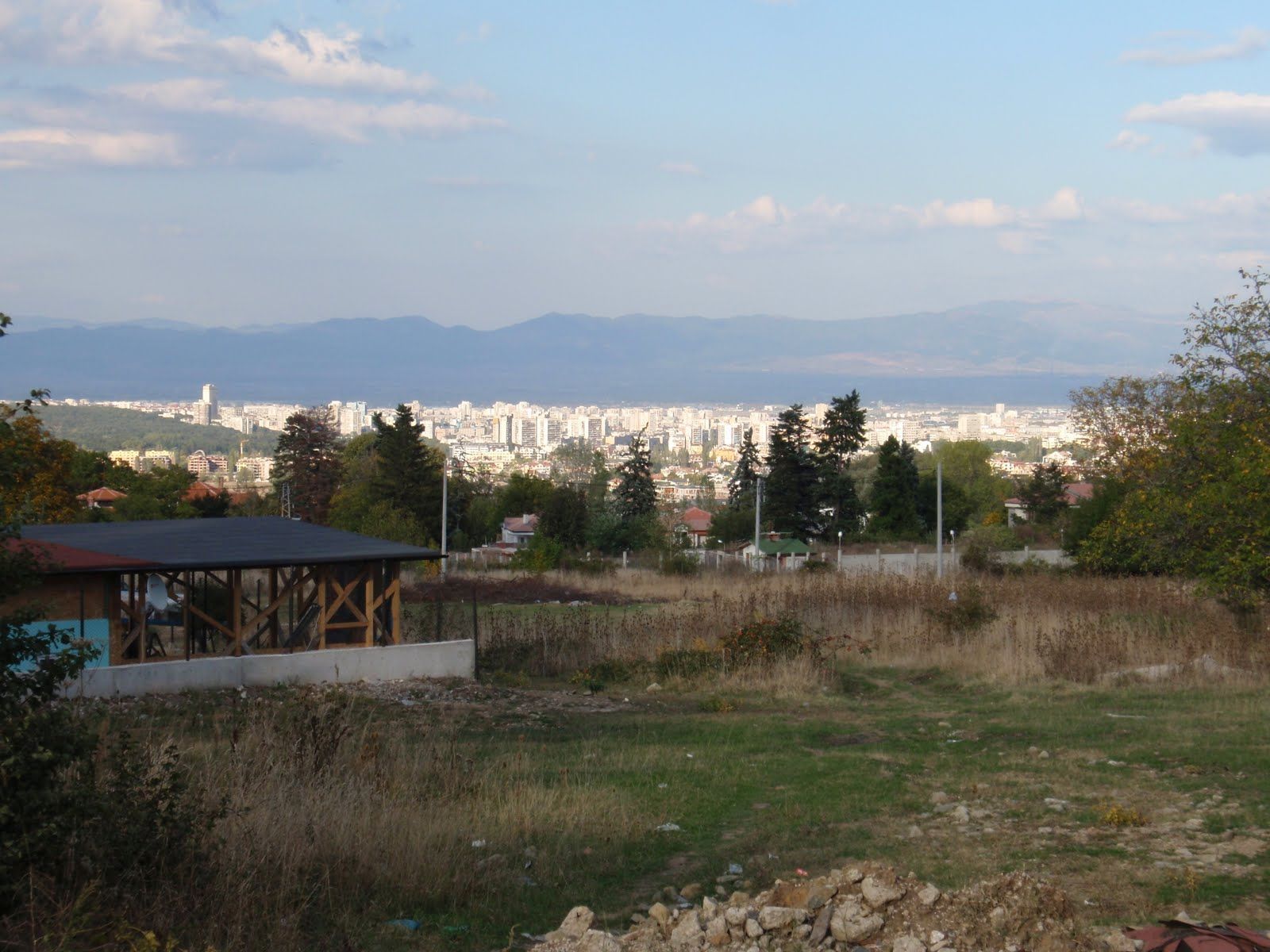
For a while I lived among the Russian mafia in a very usual neighborhood at the southern edge of the capital city of Sofia in the wonderful country of Bulgaria. The neighborhood was called Драгалевци, or Dragalevtsi.

Here is a view from Dragalevtsi looking towards downtown Sofia:

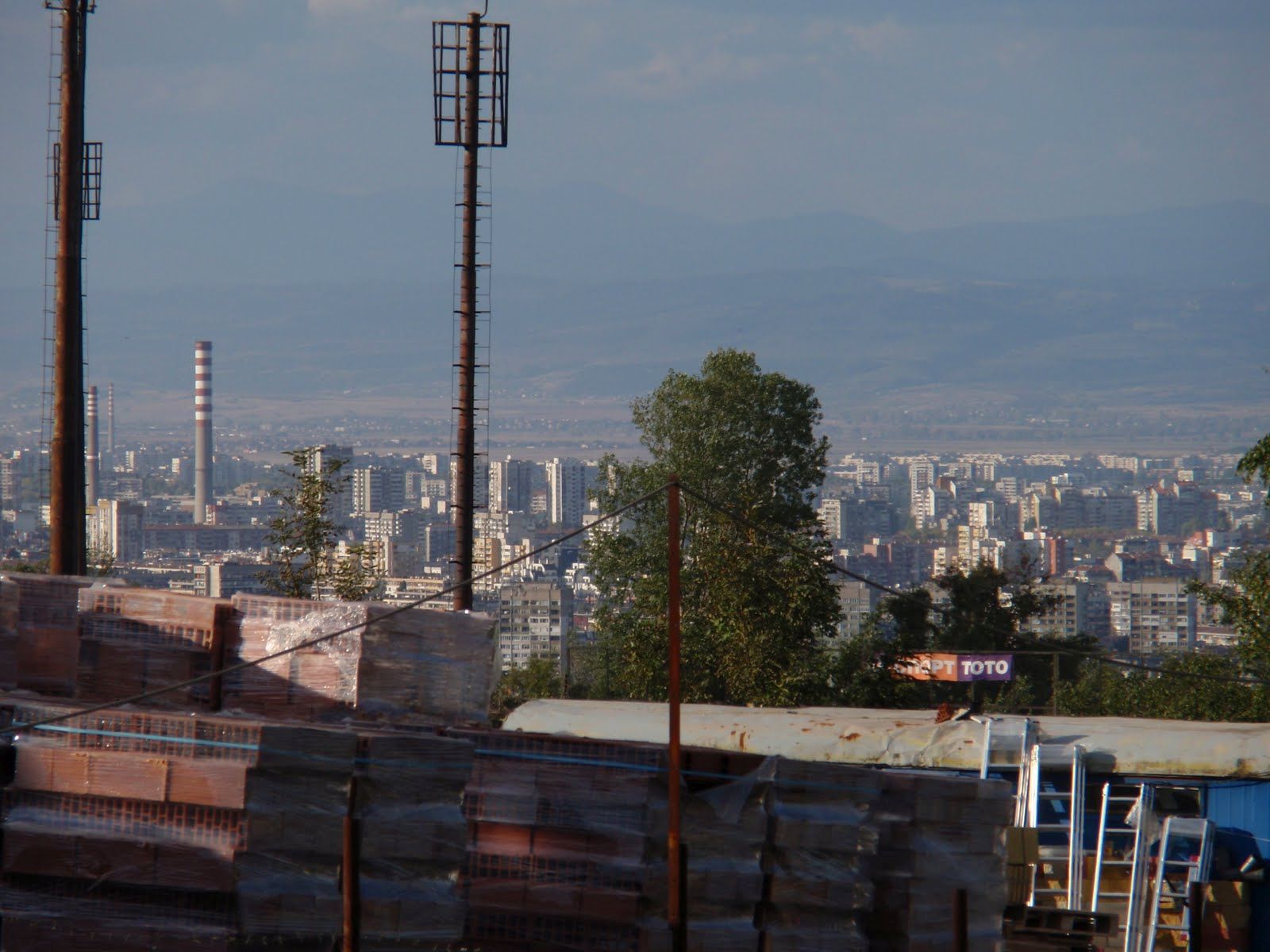
And here is another view looking down towards Sofia:

By the way, those are the Balkan Mountains off to the distance in the north.

But what does this have to do with the Russian mafia, you might ask?

Well, Bulgaria – next to Turkey – which itself is next to the Middle East – is not only infamous as Europe’s most corrupt country, but in fact infamous because it’s a major gateway into Europe for  illegal things like drugs, and a major gateway out of Europe for illegal things like smuggled women.

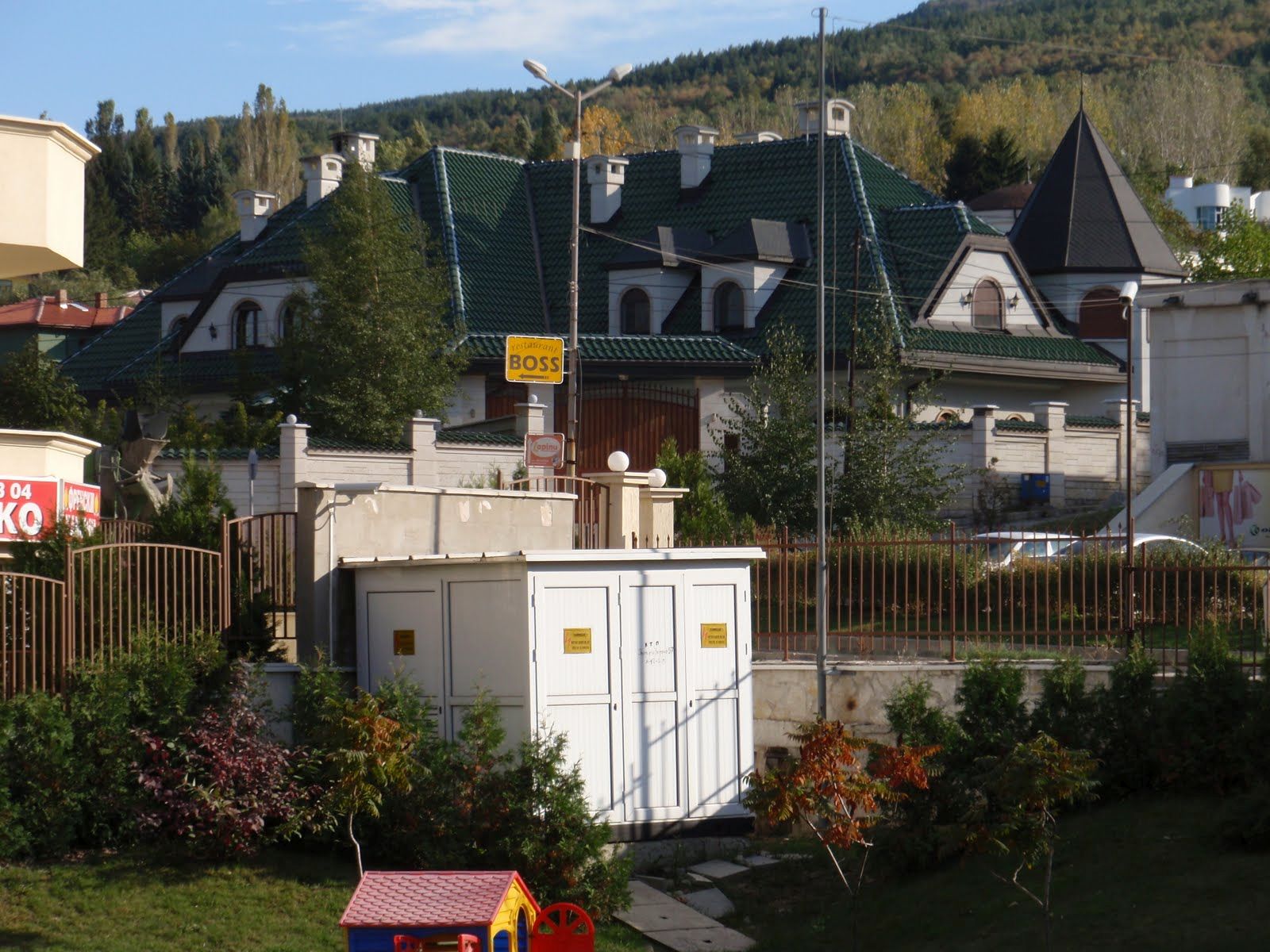
Of course, no self-respecting Russian mafioso would spend too much time in any of the hotels in Sofia, so they all lived in massive chalets they built in the neighborhood of Dragalevtsi. This made Dragalevtsi into something of the Beverly Hills of Sofia. I don’t think any of them lived here full-time – mainly, I assume, they stayed here during business trips.

Anyway, here is a snap of one of these chalets taken from my apartment:

I always thought it would be wonderful to count a few powerful Russian mafioso’s among my friends, so since I was living next to them, I did everything I could to meet them!

Sadly, with little success.

The Russian mafia are people like anyone else, and from time to time I’d see one of them shopping in the posh local Dragalevtsi supermarket, called Супермаркет МАКС, or “Supermarket MAX.” Whereas normal supermarkets in Sofia catered to the Bulgarian locals, who on average earned around EUR 250 / month – in fact this supermarket specialized in caviar and Cuban cigars and many other things that normal Bulgarians could not afford.

The mafia were easy to spot: in the parking lot I’d see a large, armored Rolls-Royce – engine running – with the driver wearing white gloves. More often then not my mobile phone would stop working – I think they carried mobile phone jammers in their cars. And standing next to them in the supermarket would be two enormous Russian bodyguards, with the obligatory black leather trenchcoats.

I tried. And I tried and I tried and I tried. And sadly, there was only a single time I could start a conversation with one of these guys. In fact, he came up to me, and in surprisingly good English he remarked that I looked like a foreigner – I told him I worked for Hewlett-Packard as an IT guy. I was hoping he would invite me over for a cigar and brandy.

But sadly, he just shrugged and walked away.

(Interesting aside: on the weekends I’d usually rent a car from Herz, then go exploring the Bulgarian countryside. The fellow at Herz told me that the rental cars will never be stolen, because of the Herz label on the back: the rental car companies all have contracts with the mafia. But, he told me, should the car be stolen, under no circumstances should I call the police. Instead he gave me a private telephone number, and he told me the car would be returned in less than 24 hours! It was a very interesting time for me – the Bulgarians are incredible, great, passionate people. But I also have more great experiences involving corruption than I could ever tell!)

Ask Mr. Tradecraft – 5

Dear Mr. Tradecraft, Ken mentioned you’ve done “wet work.” Can you share any details? – Mediocre Operator Learning Everyday

MrTradecraft

Dear MOLE.

Am chuffed to bits – been waiting for this question for a while!

For the record, MOLE, I’ve never done any “wet work.”

There‘s a big difference between taking the taking of  human life inside of a Red Zone and outside of one.  Outside of a Red Zone (and here I mean yours naturally, your’s, not your target‘s), wet work refers either assassination (for sending a messing) or disappearance (when no one else should know). Within a Red Zone, the term wet work does not apply; it‘s self-defence. Sadly, I‘ve had to defend myself several times. Gladly, in my 37+ year career, the number‘s been fewer than the fingers on one hand.


Note from Ken: I’ve known him for years, but I never know when I’ll hear from him. Gladly, he’s back, not sure for how long, and I hope he has time to start emptying his mailbox.

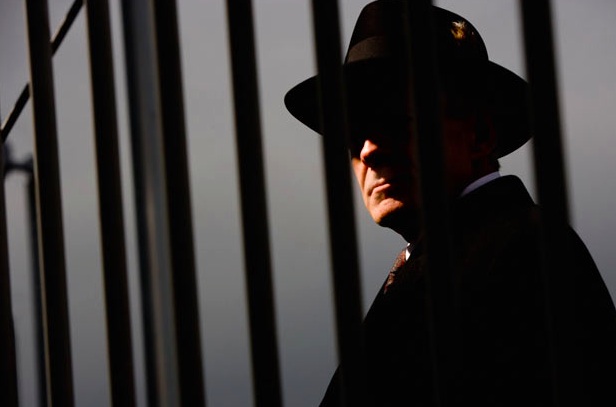
After many decades, Mr. Tradecraft remains a much-sought-after operator for the most demanding contracts with governments, corporations, and private parties alike. He has over 30 years of international field experience that span the whole spectrum of clandestine services, from cut-outs, snatch-and-grabs, bag jobs, surveillance, to wet work — much of it spent in red zones. His retirement increasingly near, Ask Mr. Tradecraft is the pro bono way he gives back to the community. If you’d like to ask him a question, please submit it to Ken – but due to obvious reasons there may be a wait of many months before he can respond to your question.


“The Breisach Encounter”

Continuing the series . . .

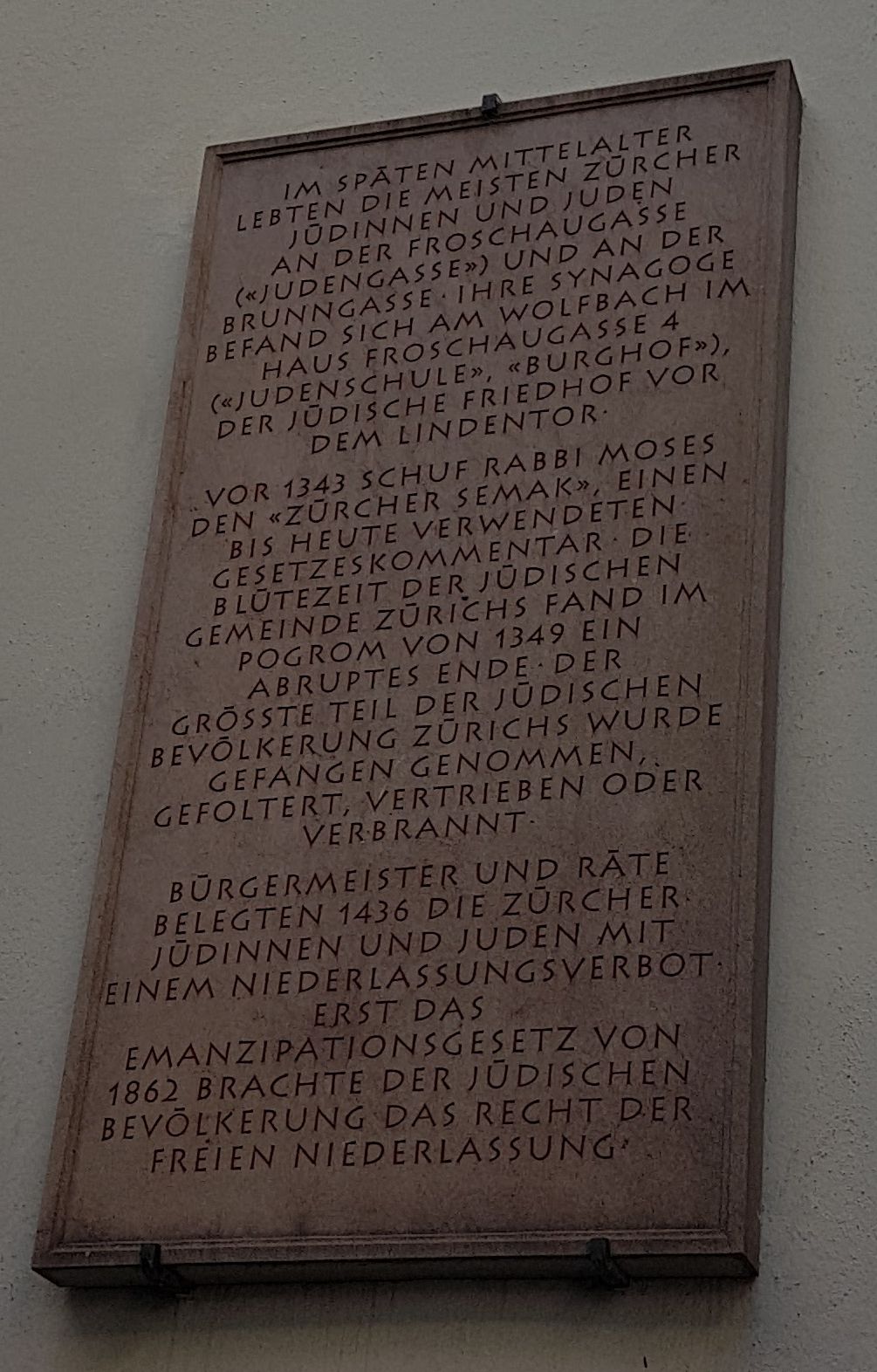
One of my hobbies is exploring the Jewish past of Switzerland, as I’ve shown here and here. This is very interesting to me because, as part Gypsy myself, I find it interesting how itinerant people have been treated in medieval times.

Another of my hobbies is exploring the small villages along the Rhein. I find this interesting because historically the Rhein River had a tremendous meander which was removed via canals in modern times. This means there are medieval river villages and river relics that are now located far from the river.

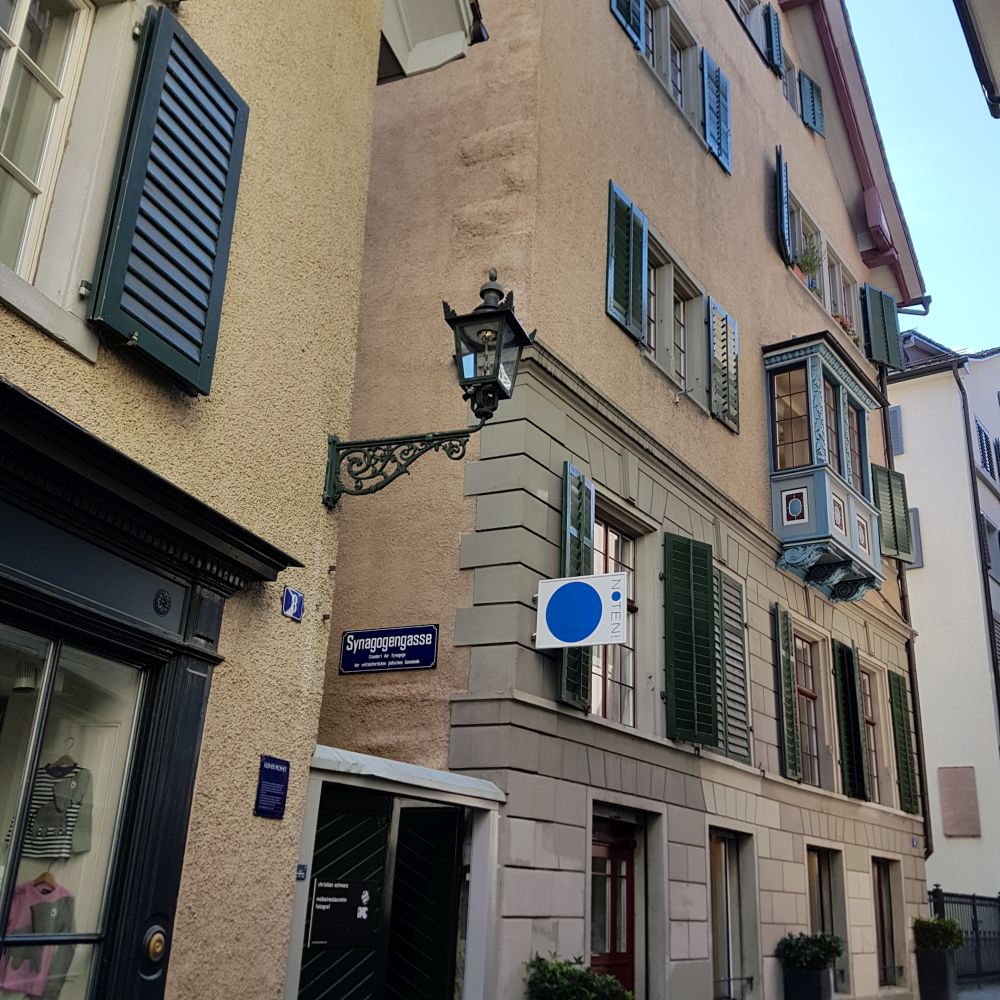
Recently I was in one of these, Breisach in Germany, where I stopped to drink a coffee and smoke a cigar and reflect on my encounter with the Head of the Mossad, Gabriel Allon, at the old Synagogengasse in Zürich. Here my father tells the background story.


“Gabriel”, said a frustrated Mikhail,   “just what in the hell are we doing in Breisach?  There have to be a thousand better places in Germany for a safe house for our meeting.”

“Perhaps”, said Gabriel, “but not this close to the French border.  You never know when you need to cross over.  We’re still not very high on the German popularity list, and . . . .  Oh NO!  It’s him again!  NO!”

Mikhail jumped at Gabriel’s words.

Gabriel whispered hoarsely:  “Across the square, about 50 meters away, at your 11 o’clock.  The tall guy, baseball cap, sitting at the café with the espresso and cigar – and taking pictures.  Turn around – quick.  I have no desire to be photographed.  Very casually let’s walk south a bit.”

“Who is this guy?  Should I worry?” said Mikhail.

“Remember that I told you about him a couple of months back.  I had that meeting at the Synagogengasse in Zurich.  He’s the guy who’s a friend of you-know-who”, Gabriel responded.

“Tradecraft?”

“Exactly.  Old Mr. T”.

Mikhail’s brow furrowed: “You think someone has hired the T-Man to check us out?”

“Unlikely.  He never works for that side.  Mr. T has his scruples.  It’s just that the guy saw me then and I don’t want him to see me again”, said Gabriel.

Mikhail frowned. “Perhaps I should take him out.”

“No – you idiot.  Look —  this guy runs a blog.  At odd intervals, Tradecraft runs a column there answering questions, so the blog invites people to send in questions and he’ll eventually answer them.”

“So that means Mr. T uses that blog column as his mail-drop?”

“Possibly — Probably — Most likely — For Certain.  But the point is, it means that the guy over there – he calls himself Ken – is close enough to Tradecraft to carry on a dialogue – and feel secure.  He’s Mr. T’s pal.  In Zurich I had a Beretta in his ribs and he just pushed it away and called me a jackass.  Do you know of anyone else who Mr. T trusts like that?  The T-Man doesn’t have many friends.  Once he trusts a guy, bonds with him, nobody had better mess with that guy.  That’s Mr. T’s way.”

“I agree,“ said Mikhail, “that the T-man trusts hardly anyone.”

“So think about it, Mikhail.  If you  threaten this guy, or take him out, guess who will come after you?  I know you took out Tariq and Ivan, but Mr. T plays in a higher league. There’s no place you could run to.  Mr. T would declare war on The Office and I don’t need that – nor do I need this Ken taking our picture.

We don’t want to be an item in his blog.  Let’s just go get some lunch and let the blog guy take his pictures and move on.”

Training with the U.S. Special Forces

At least, I think they were U.S. Special Forces. In 1998 I was working at the Max-Planck-Institute, a huge scientific complex which sits alone in a huge woods in southern Germany.

Well, almost alone: right next to it sits Patch Barracks, the Headquarters for the U.S. military in Europe, and also the location of a troop of Special Forces soldiers (one of whom is even today a very good friend of mine).


Each day at lunchtime I’d go running in the woods, usually about 4 miles, but I almost never saw any soldiers. I guess soldiers don’t like running in the woods.

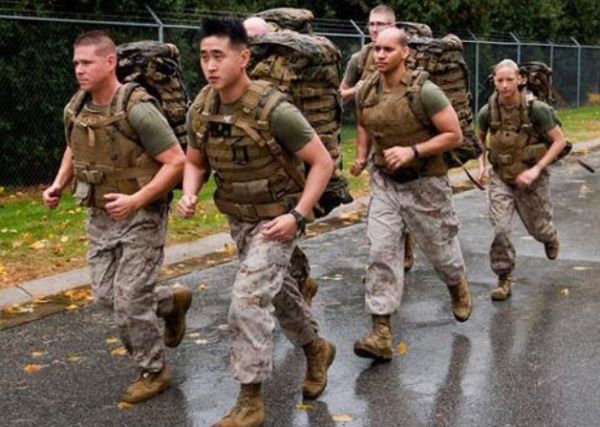
Anyway, one day I was finishing up my run with a sprint, when suddenly, out of nowhere, came a huge group of 10 soldiers wearing camouflaged clothes, backpacks, and boots. They were running in boots! But these crazy guys were not just running in boots, they were doing at least a 5-6 minute mile – with backpacks and in boots! This is not them, but this is what it looked like:

The strange thing about it was we literally ran into each other, and I suddenly found myself running along side them, mixed into their group. One by one they realized I was there, and they started snickering and smiling to each other. I wanted to stop – I badly wanted to stop. I had already done 4 miles and a sprint – I reached my limit and I could not run anymore.

Now, I am a wimp – but I am still a man. And there is no fucking way in hell I was going to give up in front of these guys and have these guys keep running! So as much as I wanted to stop I kept running. And soon I started praying that they would stop, because my energy was long gone and I could not run anymore and there was no fucking way I was going to stop.

Fortunately after about a mile the path forked, and when the soldiers veered left, I veered right – and kept right on running until they were out of sight. I collapsed to my knees, and for 5 minutes I lay on the ground and fought the urge to vomit. I had no idea why I wanted to vomit, but I later found out . . . vomiting is not a good thing.

Still, I was pretty proud! I did not stop in front of them!

Ask. Mr. Tradecraft – A word about my friend

Yes, he really exists. And it’s important because a few posts coming up touch on very sensitive topics (such as wet work). I’ve promised him not to edit any of his contributions, although naturally that last one (4) was a tad embarrassing for me – he’s requested that I print my recollection of events and I eventually will.


Note from Ken: I’ve known him for years, but I never know when I’ll hear from him. Gladly, he’s back, not sure for how long, and I hope he has time to start emptying his mailbox.

After many decades, Mr. Tradecraft remains a much-sought-after operator for the most demanding contracts with governments, corporations, and private parties alike. He has over 30 years of international field experience that span the whole spectrum of clandestine services, from cut-outs, snatch-and-grabs, bag jobs, surveillance, to wet work — much of it spent in red zones. His retirement increasingly near, Ask Mr. Tradecraft is the pro bono way he gives back to the community. If you’d like to ask him a question, please submit it to Ken – but due to obvious reasons there may be a wait of many months before he can respond to your question.


9? How can she possibly have 9?

I recently posted a blog about the Indian goddess Durga (one of the must-know Hindu gods for anyone planning a trip to India) and this the photo I showed:

I didn’t think anything of it. But my father flipped out!  Just after seeing it he broke out in a cold sweat – he could not sleep, he could not eat.

For you see, my father is walking weapon, a deadly combination of IT professor and retired Marine Corps “master sniper” who keeps his ultra-long-distance sniping skills very much current indeed. (Aside: he would take me as a small 9-year-old boy to the shooting range, where trained me to hit ping-pong balls and glass marbles at 1’500 meters using a Winchester M1 Garand antique Sniper rifle using metal sights.  At 10 years old he helped me make my first Ghillie suit.) It’s those awesome sniper eyes that caused him to flip out.

“She has NINE arms!” he exploded to me on the phone, “NINE of them! That’s can’t be!  Eight, ok.  Ten – maybe – twelve, if she was a very, very powerful goddess. But the Durga you showed has NINE!”

“Relax, Pops” – actually I never call him pops, but I thought it was a good time to start, “I will look into it and get back to you.

So I rolled up my sleeves and went to work. I surfed and I Googled and I Binged and I “Wolfram Alpha’d” – no references to nine-arm Gods. So I reached out to my network: I have a large network of very devout Hindu scholars as friends. One of my best friends and religious scholar in general, Jim (his real name is Prabir) answered me in Facebook: I think the number of hands have metaphorical purpose. Indicative of some Divine person who has all the skills as denoted by hands. It also symbolizes the effort it takes to destroy evil in this world even temporarily. My response: go stuff a sock in it (or something to that effect), you don’t have a clue! He agreed – he didn’t know.

Here’s what I’ve learned: Durga can appear in any one of nine different forms (Skondamata, Kusumanda, Shailaputri, Kaalratri, Brahmacharini, Maha Gauri, Katyayani, Chandraghanta, and Siddhidatri), and she can have between 8 and 18 arms. But . . . no 9 arm avatar of Durga is known.

According to my friend Jim: Most likely just an artist’s goof.


TOP SECRET – Full Disclosure!

I am not a spy, secret agent, terrorist, or anything like that. And I am not a paramilitary operator or mercenary, although people often think that when they see my enormous physical strength and lightning quick reflexes.

However, I have had – through no fault or desire of my own – more than my fair share of encounters with people who live in this secret underworld.

The other parts of my homepage and blog have been written for fun. But the stories I am now disclosing here are all true, and I am disclosing them for one purpose only: to save my life. Only by FULL DISCLOSURE can you be sure — after seeing what I have seen and learning what I have learned — that you will not one day simply disappear.

You’ve already read several blogs from my clandestine friend (Mr. Tradecraft) – now please stay tuned to read about my adventures.


A Texas Safari

A guest blog, by Charles Ritley

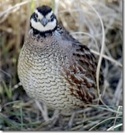
South Texas, East of San Antonio, is a giant cattle ranch: grassland chock full of quail and deer—and those who hunt them. While Californians discuss ways to save endangered species, Texans swap recipes for cooking them.

But hunting, like golf, is a socio-drinking experience. Guys form clubs that sub-lease tracts on the large ranches—-and build fancy clubhouses, with overnight accommodations, air conditioning, and satellite dishes. They co-exist well with the cattle, it’s extra income for the rancher, and the basic ground rules are: OK to shoot quail, OK to shoot deer, not OK to shoot cow. (But after you pay the rancher, you may keep the cow.)

Now, I don’t hunt. I did hunt when I was a kid, because everyone did. I was a trap shooter for many years and president of a trap club —- but in my later years I chose not to kill things.

But I had a client who wanted to go hunting. I knew a local business who had part of a game lease, and asked them to help. They set up a quail hunt on a big ranch, and I went along as my client’s bodyguard.

QuailThis hunt was a circus. They had a large 4-wheel drive truck with two chairs bolted to the front, where hunters sat, and two bolted to the sides. In the bed of the truck: extra passengers, the dogs, and their handler. Plus, it held 4 people in the cab. Periodically, when they passed a likely spot, the truck stopped, everyone dismounted, and the dogs were set loose to sniff out and flush quail.

(Now this whole thing made no sense to me. I grew up hunting birds. They have a very sharp sense of hearing. A quail can hear a truck this size when it’s two miles away. But, I withheld my advice. I was just another outsider.)

Eventually, the dogs would flush something, birds would scatter through the sky in all directions, and everyone would start blasting away. (Like London in 1940, but without the sirens and searchlights.)

GinThen everyone would pile back into the truck, where they had: 2 liters of gin, a large bag of limes, and a couple of jugs of tonic water, and proceed to make a round of Gin and Tonics. (One part gin, two parts tonic, one slice of lime.)

After several stops, about a hundred rounds were fired, no birds were harmed, and everyone had consumed at least one G-and-T per stop. At this point, my client—-a nice guy and a close friend—-said he wanted to come because he once sold shotguns but had never been hunting. But now he had enough. In fact, he was scared – really scared. So, I had a conversation with our hosts, but their engines were running, and they weren’t about to stop. So, the client and I just stayed close to the truck and out of what we believed to be the line of fire.

But then another problem arose: when the guys climbed back into the truck, some were full of gin and didn’t bother unloading their shotguns. Now, trust me, you do not want to be bouncing along a pot-holed trail in a 4-wheel drive truck in compound low, crammed into a cab with 4 guys full of gin and 4 loaded shotguns. You really, really, really don’t. So the client and I—-claiming we wanted a better view, jumped up into the bed of the truck with the dogs. The dogs, at least, were stone sober. And unarmed.

Shells

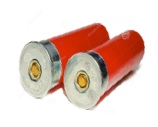
They got a few quail that day, and as I recall they were thrown away. Quail are good to eat, if you pick out the shot, and no one would do that. Eventually, the gin ran out and we headed home. The client and I fired a few rounds into the air, just to act like good ole boys, but I managed to do no harm to anything or anyone. The client, however, did manage to hit–quite by accident–some kind of little wild canary. It kind of exploded in this yellow poof. He felt rather bad about it.


This guest blog was submitted by Charles Ritley, an adjunct professor of computer science with several major universities in the San Antonio area.


Hilton Head

HH1

Hilton Head Island – the “low country” home of the famous movie stars, vacation retreat of U.S. Presidents – but I shall always remember it as the place where the police tried to arrest me for driving a Honda in a neighborhood where there are only supposed to be Mercedes.

This has happened to me now twice: in HH, and in the Hamptons on Long Island – an occupational hazard of having friends who number among the mega-wealthy!

Indian Tales 1: Shopping in Dehli with an Auto Wallah

AutoDriver

During my first trip to Dehli, in the middle of the hot summer, an auto rickshaw driver was surprisingly honest with me: he asked if he could drive me to a store for tourists, because he would receive a 100 Rs “commission” from the owners for each tourist he delivered there. It was the “off season,” he said, and he needed the extra money for his family.

I have NEVER seen such honesty and openness from an auto wallah before!

So I made a deal with him: he would drive me to as many of these tourists stores as he could: I’d shop for a few minutes then buy nothing and leave, he’d collect 100 Rs from each store we visited — and at the end of the day, we would split the proceeds 50%/50%.

After a few hours we hit nearly 15 different stores, my voice was hoarse from 15 repetitions of the question “Do you have any little paper maché elephants made in Kashmir?” and his pockets were full of money!  Because I didn’t need the money but wanted the fun, I then told him he could keep it all, because he was so honest and open.

He was really happy with this, and we spent another 2 hours in which he took me on the best auto tour of Dehli anyone is ever likely to get, even stopping to drink tea with his other auto wallah friends near this great big stone arch-thing.

Motto: The people who want to take advantage of you can often turn out to be very nice people – and sometimes you can have a lot of fun by turning the tables and taking advantage of the system itself!

Amazing coincidence!

Scientists will tell you there is nothing special about coincidences. As we live our lives we experience a continuous stream of sensory inputs – so it’s only natural and expected that from time to time that our internal pattern recognition systems will alert us that some random event triggers a meaningful response.

But still and all . . . I find the following story almost too incredible to be true.

Hiranandani

Just a few weeks ago I was was in Mumbai. With well over 15 million inhabitants it’s slated to become the world’s largest mega-city by the year 2020.  And on one evening I was enjoying the warm weather, walking down a street in the posh district of Hiranandani, when I accidentally ran into a friend and previous colleague of mine, Sandhya!  The last time we had seen each other was in 2007 – when she and I were both in Bangalore, a city some 500 km to the south of Mumbai.  I had no idea she moved to Mumbai, and she had no idea I was there on business.

Is this an amazing coincidence?!

We agreed to meet a few days later for coffee. At the time, back in the day, she was the best software engineer I knew. (At a very young age she absolutely mastered a very complex document management system, Documentum.) And I was both impressed and thrilled that she continued in her career, now a senior project manager leading huge international projects with dozens of people for the Indian company Cognizant!  Way to go, Sandhya!