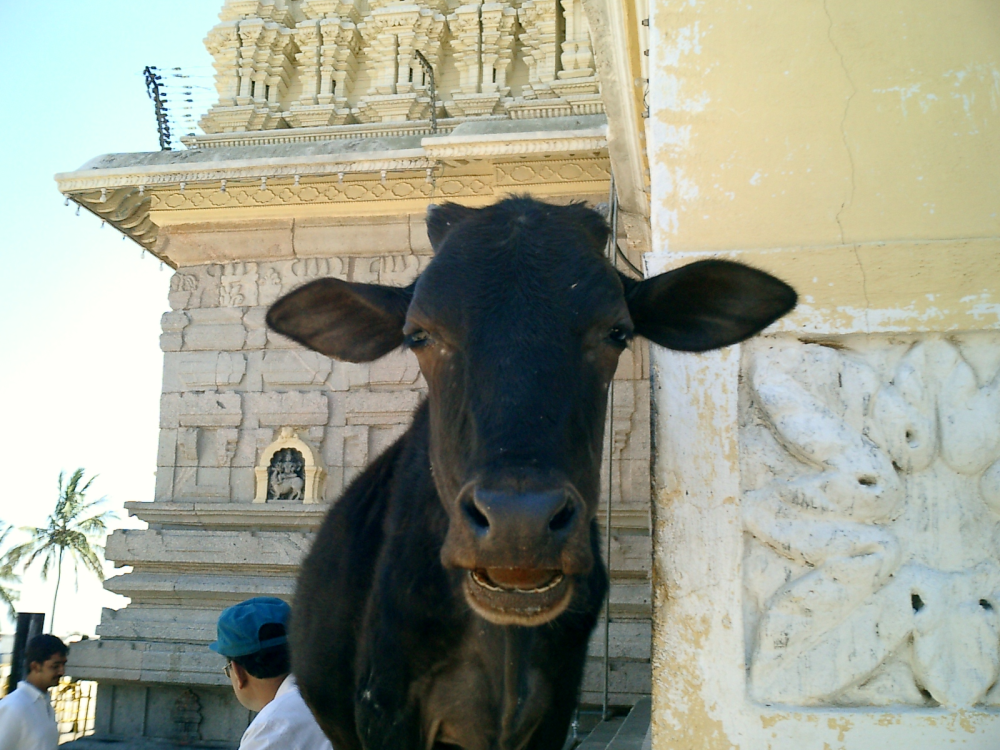
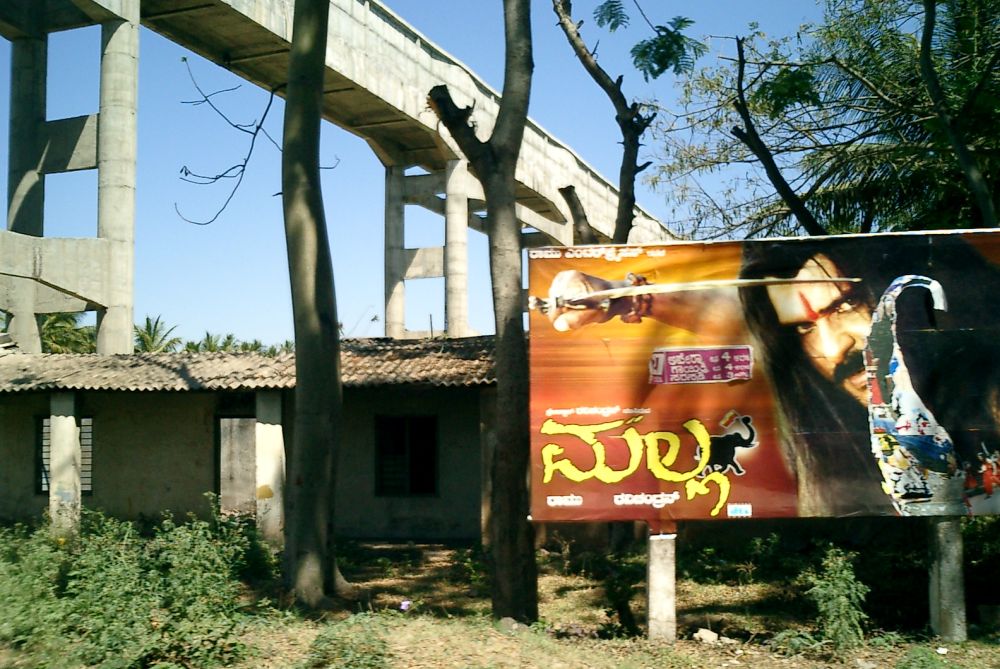
I took this snap just north of Bangalore, on the way to the so-called Nandi Hills.
You can see my other Amazing Ants photographs here:
A renaissance man for the twenty-first century!
I took this snap just north of Bangalore, on the way to the so-called Nandi Hills.
You can see my other Amazing Ants photographs here:
I am not a spy, secret agent, terrorist, or anything like that. And I am not a paramilitary operator or mercenary, although people often think that when they see my enormous physical strength and lightning quick reflexes.
However, I have had – through no fault or desire of my own – more than my fair share of encounters with people who live in this secret underworld.
The other parts of my homepage and blog have been written for fun. But the stories I am now disclosing here are all true, and I am disclosing them for one purpose only: to save my life. Only by FULL DISCLOSURE can you be sure — after seeing what I have seen and learning what I have learned — that you will not one day simply disappear.
You’ve already read several blogs from my clandestine friend (Mr. Tradecraft) – now please stay tuned to read about my adventures.
These are the famous Apostles, Saint James, Saint Peter, and Saint Thomas:
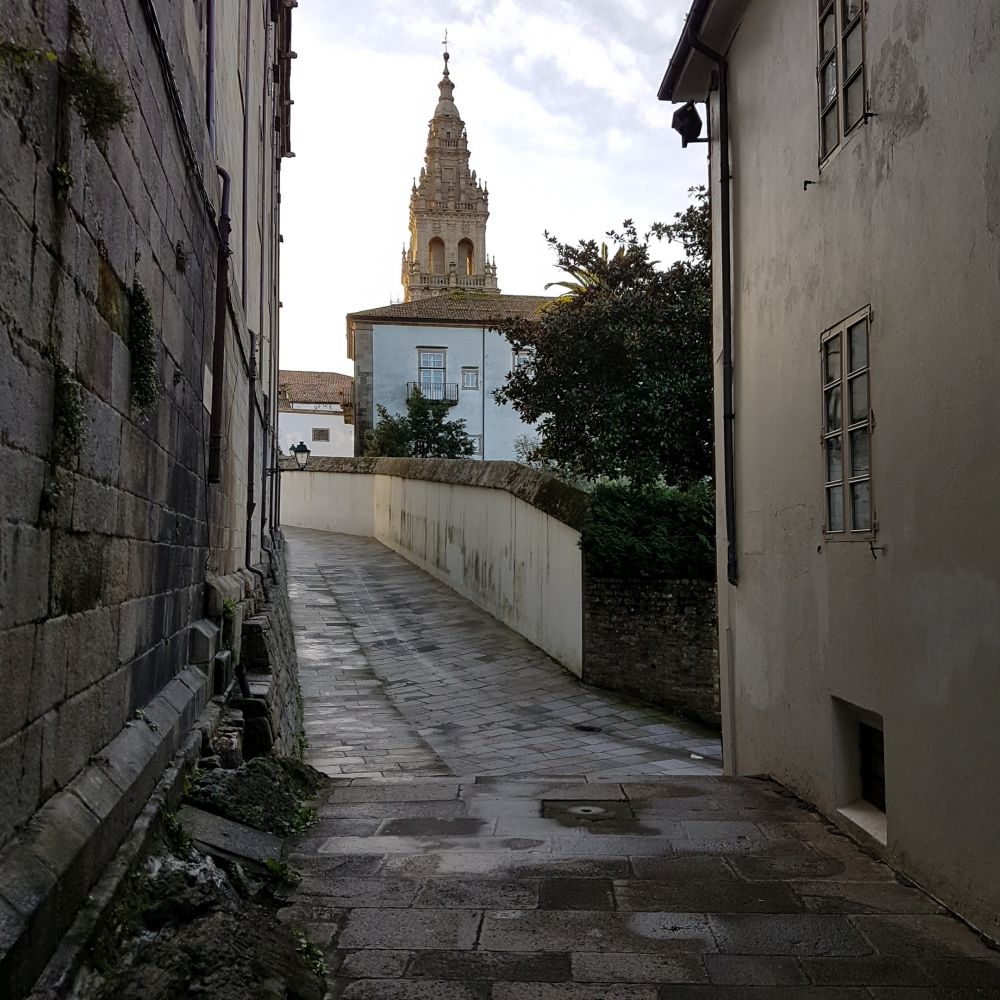
Technically, I am referring to Saint James, son of Zebedee, since there is a second apostle also named James. The Spanish people call Saint James by a different name, Santiago, and he is buried in a cathedral I visited in the Galician city of Santiago de Compostela:
Saint Peter is probably the most famous saint, having been killed not just by crucifixion, but by crucixion-upside-down, in this Roman square that I visited, now known as Saint Peter’s Basilica:
But I’m not sure if anyone really knows where Saint Thomas is buried. According to the locals, Saint Thomas travelled to India and eventually reached Chennai, having died and been buried somewhere quite close. There is a famous church I visited there, known Saint Thomas Mount:
Saint Thomas is known as the Patron Saint of India – but unfortunately there is some dispute as to whether these claims are true. I hope they are true, because it would make the people who believe them very happy.
So by coincidence and not by plan, I’ve visited what may be the final resting place of 25% of the twelve Apostles.
In biology there is the concept of convergent evolution:
In software engineering there is the concept of a design pattern:
During recent trips to both Spain and Texas, it made me first realize that both convergent evolution and design patterns are describing something very similar. Have a look at this:
Spain is filled with Spaniards, and as everyone knows Spaniards are very tiny people. So until recently they drove very tiny cars. But recently Spaniards are getting bigger. I took this picture in Spain, which now seems to be representative of how Spaniards park their cars:
Texas is filled with Texans, and as everyone knows Texans are very big people indeed. But in recent times, Texans have been getting even bigger. I took this picture in Texas, which now seems to be representative of how Texans park their “dualies” (as they call pickup trucks with dual rear tires):
Convergent evolution (biology) or design pattern (software engineering) – you be the judge!
This is the Burj Khalifa. At 2’788 feet, it is the tallest structure in the world.
I was on holiday here during the hot summer month of August – which, by the way, is a great time to get good deals on airfare and five star hotels!
And this is the Tokyo Sky-Tree. Coming in at 2’080 feet, it is the second tallest structure in the world. I took this picture during the peak of winter season in Tokyo – also a great way to save money on airfare and hotels.
So I guess I am quite fortunate to have seen the top two tallest structures in the world!
This is Hannibal:
And this is Salamanca, in western Spain:
The cathedral somehow looks a bit tilted, so here is a second photo to assure you that it is not tilted. It also shows the Roman Bridge, which (unbelievably!) was built in the first century AD:
I believe this is the first city that I’ve ever visited that was originally conquered by Hannibal. Needless to say, I could not find any elephant footprints anywhere, although if you have sharp enough eyes, you can see some storks:
The famous fictional books All Creatures Great and Small, by James Herriot and set in the Yorkshire village of Darroughby were actually written by Alfred Wight and were based on his veternary practice in Thirsk, Yorkshire. Thanks to a good friend I got a wonderful chance to see this town.
This is a historical picture of Thirsk, what James Herriot before WWII would have seen:
And this is Thirsk today:
So you can see, it hasn’t changed much. Interestingly, Dr. Wight wasn’t intentionally trying to trick anyone. There were very strict laws in England at the time that prevented doctors and veterinarians from advertising, so it was necessary for him to change the names and places.
PS. What I find fascinating is the color variation you can see on the lower photograph, which approximately follows the original road shown in the top drawing. Are we seeing visible signs of the archeology? Only one way to find out: dig a test trench!
If you are ever in the southwest of France, do not hesistate to visit Rennes-le-Chateau. Although the tourists flock to the nearby historical city of Carcasonne, Rennes-le-Chateau will impress you even more.
What is this place? It is an unbelievably isolated hill station that has a 360-degree panoramic view of the Languedoc region in Southern France. It’s a long, lonely one-hour drive up a very steep one lane road.
Historically, the book The Holy Blood and the Holy Grail (and later, the book-turned-movie The Da Vinci Code) put Rennes-le-Chateau on the map. According to this book, the local priest in the 19th century discovered a buried treasure that gave evidence that Jesus and his wife (Mary Magdalene) settled in southern France.
Is the story real? Who knows? But . . . if you travel to Rennes-le-Chateau you will realize how unbelievably hidden and remote this place is – so in my view, it would make a wonderful location for a buried treasure, if one ever existed.
Nancy in eastern France is well worth a visit, due to its rich history and old buildings. But the most fascinating thing I like about it is its very unique public transportation system, known as “tramway on wheels.”
Built by Bombardier, these trams are really more like buses then trains, since the power is provided by two overhead lines (not a single line with the rails acting as ground).
This is me, sometime in the early 1990s, holding my very rare 1917 Nitro Express elephant gun, chambered in the uncommon 3.25 inch .577 (not shown) and being paddled deep into the jungle of an unnamed Asian country by my buana, on the hunt for the rare albino elephant.
In recent years the rise of eco-tourism has significantly raised my costs and ruined the fun of exotic big game hunting for me.
There is something quite frustrating about some local South Indian farmers I’ve met.
But first, this is the largest ant mound I’ve seen in India (or anywhere else for that matter):
I spotted this one just outside of Tiruchappalli (or more commonly called Trichy, as the locals call it). If you don’t know it, Trichy is famous for its white rice – and the locals say the taste is so good because of the special properties of the soil. So, I guess it would only be natural that the ants enjoy this great soil and build super-mounds like this one!
But what’s so frustrating about some local South Indian farmers? I could never find any farmers (or locals for that matter) who referred to these as “ant mounds” or “termite mounds.” If you ask the locals, they will always tell you they are “snake houses.” OK, probably they make nice homes for snakes – I don’t dispute that. But it always makes me wonder if they know who the builder was, not just some of the tenants!
You can see my other Amazing Ants photographs here:
While driving through Lorraine, France, I discovered many, many bunkers that looked identical, like this:
But as you may know, Lorraine is quite far from the German border and the famous Maginot Line, which was a series of bunkers to defend France against the German army in World War II.
So what are these bunkers, and why were they built?
After a bit of Internet research, I discovered that this area in Lorraine was the previous boundary between France and Germany, dating back the FIRST world war, World War I. In fact, France invaded Germany here, and the Germans built a series of fortifications to defend against the French. The previous link shows a terrific map of the border:
On the one hand, it is too bad that historical artifacts like the ones I saw are not labelled, so visitors can learn why they are there. But on the other hand, with the help of the Internet a little “amateur archeology” is fun . . . and I didn’t have to dig a test pit or extend the trench.
(PS. There are still some interesting mysteries. For example, why were all the bunkers identical? Probably to make building them fast and easy – but did the German army have a “bunker kit” that distributed the materials to the various construction sites? Or, were the bunkers all built by the same team?)
I am not a Mormon. But as fate would have it, in both Northern California and Washington DC I was travelling by automobile and got lost, and both times I wound up at an impressive Mormon temple. This one is in Northern California,
and this one is in the Washington DC area.
Well, technically termites, not ants – and despite having lived a few years in Southern India, I still never learned much about the various species – but you can generally recognize them by the shape of their mounds. I discovered this one somewhere between Bangalore and Shravanabelagola.
I remember reading somewhere that these mounds grow on average as little as 1 cm per year – and if that’s true, these are very old mounds.
You can see my other Amazing Ants photographs here:
While travelling through Rajasthan I was able to watch the sunset from Mount Abu. I am not sure why, but watching the sunset from Mount Abu is famous, and lots of people come here to do it. I was there in high summer (temperatures over 40 C, although much cooler on the hill station), and all the haze you can see below is due to wildfires raging all over Rajasthan.
But what I really like is a photo that a family asked me to take of them. It was unplanned and unstaged and unscripted – and it was a bit unusual because they never asked me to send the picture to them, just to take it – but it makes a very nice “generations” picture:
Thionville, probably not in any tourist books, but a small and quiet town, definitely worth visiting if you are in this part of France.
Dear Mr. Tradecraft, I’m a middle-aged operator with experience now on three continents. On each of them, from older (and wiser) operators, I’ve heard rumors and speculation about something called Code 16. But nobody can tell me what it is – is this a special tactic? Perhaps a famous black operation? – Suspicious person yearning.
Dear SPY.
Neither. It’s an black-ops organization, but the details are not fully known.
Here’s what we know. Everyone’s heard of the Navy SEALS: take soldiers with world-class athletic ability, put them through insane training, and punish them in a “Hell Week” without sleep. Those that make it through become the world’s top warriors – or so they say. In 1996 an analyst in the psychology group of the Center for Naval Analysis studied all graduating SEALs and those who dropped out. She found an amazing correlation: the candidates who dropped out during Hell Week had an intelligence quota of 16 points higher than those who made it through or dropped out earlier. For non-experts, that’s the difference between average and genius. Thus was born the idea for Code 16.
Think about it: find soldiers who’ll die to carry out orders and what do you have? Super soldiers willing to follow orders and die. And of course that’s good – sometimes you need that. But find soldiers who drop out just before the end and what do you have? The same super soldiers, but those who can think, who need to see the Big Picture; those who also value their own lives and well-being. As any operator knows, those are more valuable traits for our line of work. Presumably, a select group of these “last dropouts” is handpicked to join Code 16 – probably those with skills in multiple languages.
Who runs Code 16? Nobody knows, but the current speculation is a joint U.S. / French group with a focus on Northern Africa.
Where are they based? Nobody knows, but my guess is a big city – partly for urban training opportunities. But also the best way to hide a group of men with strange body language is probably in plain sight.
How do you identify them? That’s probably the easy part. If you have access to a wire news search engine (like the newspapers use), search the obituaries for young men, early 30’s, Navy enlisted (or my guess: French Foreign Legion as well), dropped out of the program, and were killed – preferably cremated. Not all of them are Code 16 – but that’d be the place to start.
Note from Ken: I’ve known him for years, but I never know when I’ll hear from him. Gladly, he’s back, not sure for how long, and I hope he has time to start emptying his mailbox.
After many decades, Mr. Tradecraft remains a much-sought-after operator for the most demanding contracts with governments, corporations, and private parties alike. He has over 30 years of international field experience that span the whole spectrum of clandestine services, from cut-outs, snatch-and-grabs, bag jobs, surveillance, to wet work — much of it spent in red zones. His retirement increasingly near, Ask Mr. Tradecraft is the pro bono way he gives back to the community. If you’d like to ask him a question, please submit it to Ken – but due to obvious reasons there may be a wait of many months before he can respond to your question.
For more than I year I’ve been a big fan and user of the Swiss postal system’s electronic portal for snail mail. Any snail mail you get is not delivered to you directly, but instead it is re-routed to a special post office where it is opened and scanned. You are notified about any new snail mail via email – and you can look at your mail, delete it, or chose to have it snail mailed to you or anyone else.
Just when you think it can’t get any more innovative: MyPost24! This is an automated post office. It is a standalone collection of lockers – and with this system, you can receive packages or snail mail, or you can send packages or snail mail.
I can imagine they have systems like this in other countries . . . but it is wonderful to see how the Swiss are among the first adopters of new and innovative technologies!
I’ve lived in countries like India with an older history – but I’ve never lived in any country with more history than Switzerland. There is an historical artifact or monument or place on every corner.
So I was hardly surprised to see this historical plaque just a few kilometers from where I live, at the train station in Kempthal.
Everyone takes instant soups for granted these days, but this is the factory in Winterthur where Mr. Maggi, a Swiss entrepreneur, invented them:
Even today, and far more than in any other country in Europe, that spirit of invention and entrepreneurship pervades Switzerland – and it is a big reason I enjoy living here so much!